


















आप ChatGPT से पूछते हैं, “Credit Card को आसान भाषा में समझाओ”, और कुछ seconds में पूरा जवाब सामने आ जाता है।
फिर आप उसी topic को Class 8 के student के लिए समझाने को कहते हैं, तो language बदल जाती है। अगली बार उसी जानकारी को table, email या कहानी के रूप में माँगें, तो AI उसका format भी बदल देता है।
आखिर computer इतनी natural language में जवाब कैसे बना रहा है?
इस capability के पीछे एक important technology है—Large Language Model यानी LLM।
इसे समझने के बाद ChatGPT और दूसरे Generative AI tools का काम करना काफी हद तक आसान लगने लगता है।
इस लेख में आप क्या सीखेंगे?
- LLM का आसान मतलब
- Language Model कैसे सीखता
- Tokens क्या होते हैं
- Training कैसे होती है
- Parameters का मतलब
- ChatGPT जवाब कैसे बनाता
- Context Window क्या है
- LLM की मुख्य Limitations
Large Language Model को सबसे आसान तरीके से समझें
Large Language Model (LLM) क्या है?
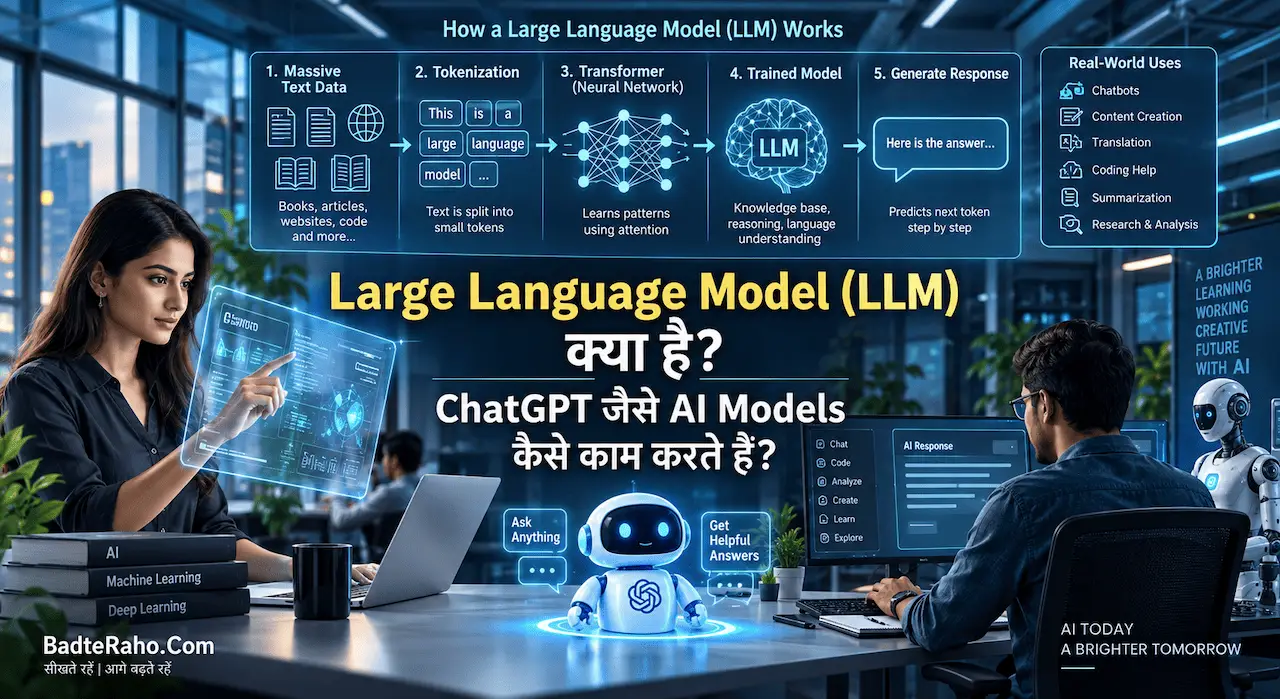
Large Language Model एक प्रकार का AI model है जिसे बहुत बड़ी मात्रा में language data से patterns सीखने के लिए train किया जाता है।
यह text के साथ कई तरह के काम कर सकता है, जैसे:
- सवालों के जवाब देना
- text summarize करना
- content draft करना
- language translate करना
- information explain करना
- code generate या explain करना
- text classify करना
- अलग tone में rewrite करना
“Large” शब्द आम तौर पर model के scale की तरफ इशारा करता है—जैसे बहुत सारे learned parameters, बड़ी training computation और बड़े datasets.
“Language Model” का basic काम language में patterns सीखना और context के आधार पर आगे आने वाले suitable tokens का अनुमान लगाना है।
इसे human brain की digital copy समझना सही नहीं होगा।
LLM mathematical patterns पर काम करता है। वह इंसान की तरह life experience, feelings या common-sense understanding के साथ language नहीं सीखता।
AI का broader concept समझने के लिए AI क्या है और कैसे काम करता है? Machine Learning से Generative AI तक आसान Guide useful starting point है।
Language Model आखिर करता क्या है?
एक छोटा example लेते हैं।
Sentence है:
“आज बहुत तेज़ बारिश हो रही है, इसलिए मैं छाता…”
आप naturally guess कर सकते हैं कि आगे “ले जाऊँगा”, “लेकर जाऊँगा” या ऐसा कोई phrase आ सकता है।
Language model भी broadly context में patterns देखकर अगले token की probability estimate करता है।
लेकिन modern LLM सिर्फ़ एक sentence नहीं देखता। वह काफी बड़ा context process कर सकता है और training में सीखे language patterns का इस्तेमाल करके पूरा paragraph, explanation या conversation generate कर सकता है।
यही simple next-token prediction बहुत बड़े scale पर surprisingly powerful capabilities पैदा कर सकता है।
LLM सीखता कैसे है?
Machine Learning में model को examples से patterns सीखने दिए जाते हैं।
LLM भी इसी broader idea पर आधारित है।
अगर Machine Learning की foundation clear नहीं है, तो Machine Learning क्या है? AI और ML में क्या फर्क है और यह कैसे काम करता है? पहले पढ़ सकते हैं।
LLM training को beginner level पर चार stages में समझ सकते हैं:
Training data
↓
Text को tokens में बदलना
↓
Patterns सीखना
↓
Parameters adjust होना
अब इन्हें एक-एक करके समझते हैं।
Training Data क्या होता है?
LLM को language patterns सीखने के लिए बड़ी मात्रा में text की जरूरत होती है।
Model और company के अनुसार training sources अलग हो सकते हैं। इनमें publicly available material, licensed content, specially prepared datasets या human-created training examples जैसे sources शामिल हो सकते हैं।
Training के दौरान model सिर्फ़ dictionary meanings नहीं सीख रहा होता।
वह patterns सीख सकता है जैसे:
कौन-से शब्द अक्सर साथ आते हैं.
Sentence structure कैसी होती है.
Question और answer का relation कैसा दिखता है.
Different writing styles कैसे अलग हैं.
Concepts language में किस तरह relate होते हैं.
Code की syntax कैसी होती है.
Important distinction यह है कि training data को किसी simple searchable library की तरह model के अंदर store मानना सही नहीं है।
Model training से statistical relationships सीखता है।
Tokens क्या होते हैं?
LLM text को हमेशा पूरे words के रूप में नहीं देखता।
Text छोटे units में divide किया जाता है जिन्हें tokens कहा जाता है।
Token हो सकता है:
- पूरा word
- word का हिस्सा
- punctuation
- number का हिस्सा
- कभी छोटे character groups
Example को सिर्फ़ conceptually समझें:
“Artificial Intelligence”
इसे model जरूरी नहीं कि exactly दो tokens में process करे। अलग tokenizer इसे अलग pieces में divide कर सकता है।
इसीलिए AI tools में कई बार usage या context limit words के बजाय tokens में बताई जाती है।
Simple rule:
Token = text का वह छोटा unit जिसे model process करता है।
Parameters क्या होते हैं?
LLM के बारे में सुनते समय आपने “billions of parameters” जैसे phrases देखे होंगे।
Parameters को model के अंदर मौजूद learned numerical values समझ सकते हैं।
Training के दौरान ये values adjust होती हैं ताकि model language patterns को बेहतर तरीके से represent कर सके।
Parameters को facts की individual list समझना गलत होगा।
ऐसा नहीं है कि:
Parameter 1 = Delhi भारत की राजधानी
Parameter 2 = पृथ्वी सूर्य के चारों तरफ घूमती है
Reality बहुत distributed और mathematical होती है।
बहुत सारे parameters मिलकर language और concepts के complex patterns represent करते हैं।
Model बड़ा होने पर parameters ज्यादा हो सकते हैं, लेकिन ज्यादा parameters अपने आप हर situation में बेहतर model की guarantee नहीं हैं।
Training quality, architecture, data, evaluation और model design भी important हैं।
Training के दौरान Model actually क्या करता है?
Beginner example लेते हैं।
Training text में sentence है:
“भारत की राजधानी नई दिल्ली है।”
Model को शुरुआत में ऐसा context मिल सकता है:
“भारत की राजधानी नई…”
अब उसे अगला token predict करना है।
अगर prediction गलत हुआ, तो training process error measure कर सकती है और model के parameters को थोड़ा adjust कर सकती है।
फिर यह process बहुत बड़े scale पर repeated examples के साथ होती रहती है।
धीरे-धीरे model language के complex patterns सीखता जाता है।
इसे ऐसे समझना useful है:
Input text
↓
Next token prediction
↓
Actual token से comparison
↓
Error calculate
↓
Parameters adjust
↓
फिर नया example
असल model training इससे कहीं ज्यादा technical और computationally intensive है, लेकिन basic idea समझने के लिए यह flow पर्याप्त है।
Transformer क्या है और LLM में इसका क्या role है?
Modern LLMs में Transformer architecture का बहुत बड़ा role रहा है।
Transformer की एक important capability है कि वह context में अलग-अलग tokens के बीच relationships को efficiently analyse कर सकता है।
इसे समझने के लिए sentence देखें:
“Ravi ने Aman को उसकी किताब वापस दी क्योंकि उसे अगले दिन exam देना था।”
यहाँ “उसे” किसकी तरफ refer कर रहा है?
Meaning समझने के लिए sentence के अलग parts के बीच relationship देखना पड़ता है।
Transformer-based models में attention mechanism context के relevant हिस्सों को weight देने में मदद करता है।
Beginner level पर इसे ऐसे समझें:
Model sentence के हर word को isolated तरीके से नहीं देखता। वह यह भी देखता है कि current context में कौन-से दूसरे tokens ज्यादा relevant हो सकते हैं।
इसका मतलब यह नहीं कि model human-style comprehension करता है, लेकिन context relationships handle करने की उसकी capability काफी powerful हो सकती है।
Training पूरी होने के बाद ChatGPT जवाब कैसे बनाता है?
अब सबसे interesting part आता है।
आप ChatGPT में prompt लिखते हैं:
Emergency Fund को ऐसे समझाओ जैसे मैं personal finance में beginner हूँ।
Model पहले आपके prompt को tokens में process करता है।
फिर context के आधार पर अगले suitable token की probability estimate करता है।
मान लीजिए possibilities broadly ऐसी हों:
“Emergency” — 8%
“एक” — 28%
“यह” — 20%
“मान” — 6%
दूसरे tokens — बाकी probability
System अपनी generation settings के आधार पर एक suitable token choose करता है।
फिर वही token context में जुड़ जाता है।
अब model अगला token predict करता है।
फिर अगला.
फिर अगला.
यह process बहुत तेज़ी से चलती है और आखिर में पूरा response दिखाई देता है।
इस stage को broadly inference कहा जाता है।
यानी:
Training में model patterns सीखता है।
Inference में वही trained model आपके input पर output generate करता है।
Generative AI की broader working Generative AI क्या है? ChatGPT और दूसरे AI Tools कैसे काम करते हैं? में detail से समझ सकते हैं।
एक ही सवाल पर अलग जवाब क्यों मिल सकता है?
क्योंकि model हमेशा एक fixed database answer copy नहीं कर रहा है।
वह probability के आधार पर response generate करता है।
Generation settings और conversation context के कारण same question पर:
wording बदल सकती है.
example बदल सकता है.
answer की structure बदल सकती है.
detail का level बदल सकता है.
इसलिए AI का जवाब calculator की तरह हर बार exactly identical होना जरूरी नहीं है।
Pre-training के बाद भी Model पर काम क्यों किया जाता है?
Raw language model language patterns सीख सकता है, लेकिन useful conversational assistant बनाने के लिए सिर्फ़ pre-training पर्याप्त नहीं होती।
Developers बाद में अलग techniques का इस्तेमाल करके model behaviour improve कर सकते हैं।
इनमें broadly शामिल हो सकते हैं:
instruction tuning.
human feedback.
preference-based training.
safety training.
specialized fine-tuning.
Goal यह हो सकता है कि model:
Instructions बेहतर follow करें.
harmful requests को appropriately handle करे.
answers को useful format में दे.
unwanted behaviour कम करे.
conversation में ज्यादा helpful बने.
इसीलिए base language model और उसके ऊपर बना user-facing AI assistant exactly एक ही चीज़ नहीं होते।
Prompt इतना Difference क्यों डालता है?
LLM का response उस context पर depend करता है जो उसे दिया गया है।
इसलिए:
Business ideas बताओ।
और:
मैं छोटे शहर में रहने वाला beginner हूँ। ₹20,000 तक budget में ऐसा service-based business शुरू करना चाहता हूँ जिसे घर से शुरू किया जा सके। 7 practical ideas दें और हर idea के साथ skill, target customer और पहला customer पाने का तरीका बताएं।
दोनों prompts का output काफी अलग हो सकता है।
दूसरे prompt में model को ज्यादा useful context मिला।
यही कारण है कि clear prompting practical AI skill बन गई है।
इस skill को detail में Prompt Engineering क्या है? AI से बेहतर जवाब पाने के लिए Prompt कैसे लिखें? में समझ सकते हैं।
Context Window क्या होता है?
LLM के लिए एक और important concept है—context window।
Simple language में यह उस amount of information की सीमा है जिसे model किसी interaction में एक साथ process कर सकता है।
Context में शामिल हो सकता है:
आपका current prompt.
conversation के पिछले messages.
uploaded document का relevant text.
system instructions.
tool से मिली information.
Exact context capacity अलग-अलग models में अलग हो सकती है।
Important बात:
Context window और permanent memory same चीज़ें नहीं हैं।
किसी conversation में model previous message use कर पा रहा है, इसका मतलब यह नहीं कि उसे आपकी हर बात हमेशा के लिए याद रहेगी।
Context बहुत लंबा हो जाए तो system को information manage, summarize या select करनी पड़ सकती है, depending on product implementation.
क्या LLM को Internet की सारी Information पता होती है?
नहीं।
यह common misunderstanding है।
एक trained LLM की knowledge उसके training process से आती है और वह automatically live internet database नहीं होता।
अगर किसी AI product को web search या external tools का access मिलता है, तो वह current information retrieve कर सकता है।
लेकिन:
LLM capability ≠ automatic live web access
इसे ऐसे समझें:
LLM language और learned knowledge का engine हो सकता है।
Web search एक अलग tool हो सकता है।
जब दोनों combine होते हैं, AI current sources खोजकर उनका उपयोग कर सकता है।
इसी तरह AI को files, calculator, code execution, email, calendar या databases जैसे tools भी दिए जा सकते हैं।
यह फर्क AI Agent क्या है? Chatbot से कितना अलग है और यह क्या-क्या कर सकता है? समझने में भी important है।
RAG क्या है और LLM को Documents से जवाब कैसे मिलता है?
कई AI systems में RAG — Retrieval-Augmented Generation जैसी approach का use किया जा सकता है।
मान लीजिए company के पास 500 internal policy documents हैं।
सिर्फ़ LLM की training पर depend करने के बजाय system पहले user के सवाल से relevant documents search कर सकता है।
फिर relevant information model के context में दी जाती है।
इसके बाद model उसी material के आधार पर answer generate करता है।
Simple flow:
User question
↓
Relevant documents search
↓
Useful text retrieve
↓
LLM को context मिले
↓
Answer generate हो
इससे company-specific या updated information के आधार पर जवाब देना आसान हो सकता है।
लेकिन RAG भी perfect नहीं है।
अगर wrong document retrieve हुआ, important section miss हुआ या model retrieved text को गलत interpret करे, तो answer फिर भी खराब हो सकता है।
इसलिए important information में verification की जरूरत बनी रहती है।
LLM गलत जवाब क्यों देता है?
अगर LLM इतना powerful है, तो hallucination क्यों होती है?
क्योंकि उसका fundamental generation process truth database lookup जैसा नहीं है।
वह context के आधार पर plausible language generate करता है।
कभी plausible sentence factual भी होता है।
कभी plausible लेकिन गलत।
Example:
AI ऐसी किताब का नाम बता सकता है जो exist ही नहीं करती.
गलत date दे सकता है.
दो अलग लोगों की details mix कर सकता है.
ऐसा feature बता सकता है जो product में available नहीं है.
fake citation बना सकता है.
यह problem AI Hallucination कहलाती है।
Detail में समझने के लिए AI Hallucination क्या है? ChatGPT गलत जवाब क्यों देता है और कैसे पहचानें? पढ़ सकते हैं।
Important rule:
Fluent answer = verified answer नहीं।
Language बहुत confident हो सकती है, फिर भी fact गलत हो सकता है।
LLM की 6 Important Limitations
1. हर जवाब सही नहीं होता
Fact-checking जरूरी है, खासकर finance, health, law, current affairs और important decisions में।
2. Latest Information हमेशा नहीं होती
Live information के लिए current source या web-connected tool की जरूरत हो सकती है।
3. Prompt का Context Matter करता है
Poor instruction से weak या irrelevant response मिल सकता है।
4. Bias हो सकता है
Training data में मौजूद patterns और biases output में reflect हो सकते हैं।
5. Confident Language Mislead कर सकती है
AI uncertainty को हमेशा naturally communicate नहीं करता।
6. Human Judgement का Replacement नहीं
AI draft, analysis और options दे सकता है, लेकिन sensitive decisions में responsibility इंसान की रहती है।
क्या LLM सच में हमारी Language “समझता” है?
इस सवाल का answer इस बात पर depend करता है कि “समझना” शब्द से आपका मतलब क्या है।
Practical level पर LLM:
context follow कर सकता है.
questions answer कर सकता है.
concepts compare कर सकता है.
Instructions apply कर सकता है.
language translate कर सकता है.
लेकिन इसे human understanding जैसा मानना misleading हो सकता है।
LLM के पास इंसान जैसी consciousness, personal experience या real-world life नहीं होती।
वह language और data में सीखे patterns के आधार पर काम करता है।
इसलिए बेहतर wording है:
LLM language context को process और model कर सकता है, लेकिन उसे इंसानी consciousness वाली understanding मानना सही नहीं है।
LLM और Generative AI एक ही चीज़ हैं?
नहीं।
LLM Generative AI का एक important type हो सकता है, लेकिन Generative AI उससे बड़ा concept है।
LLM mainly language-related generation से जुड़ा है।
Generative AI में systems हो सकते हैं जो generate करें:
- text
- image
- audio
- voice
- video
- music
- code
Modern AI products कई capabilities को भी combine कर सकते हैं।
उदाहरण के लिए, कोई multimodal system text के साथ image input भी process कर सकता है।
इसलिए हर Generative AI model LLM नहीं है।
लेकिन ChatGPT जैसे conversational AI products में LLM central technology हो सकता है।
Model, Chatbot और AI Assistant में Difference
इन तीन terms को mix करना आसान है।
LLM: underlying language model.
Chatbot: user से conversation करने वाला interface/system.
AI Assistant: ऐसा broader product जो conversation के साथ files, tools और दूसरे tasks में मदद कर सकता है.
Example के लिए:
एक LLM engine की तरह हो सकता है।
उसके ऊपर chatbot interface बनाया जा सकता है।
फिर उसी system को tools, web access, files और actions देकर advanced assistant बनाया जा सकता है।
इसीलिए “ChatGPT = सिर्फ़ LLM” कहना incomplete है।
User-facing AI product में model के अलावा कई दूसरी layers भी हो सकती हैं।
LLM का इस्तेमाल कहाँ हो रहा है?
LLMs का practical use कई areas में हो सकता है।
Students के लिए
Concept explanation, practice questions, notes और revision.
Business में
Customer replies, content drafts, summaries और internal knowledge search.
Career में
Resume review, interview practice और learning assistance.
Coding में
Code explanation, debugging suggestions और documentation.
Research में
Documents summarize करना, questions बनाना और information organize करना.
Daily Work में
Emails, meeting notes, planning और document drafting.
लेकिन हर use case में यही सवाल पूछना चाहिए:
AI output की गलती होने पर नुकसान कितना होगा?
Risk जितना ज्यादा हो, verification उतना मजबूत होना चाहिए।
Beginner को LLM के बारे में आखिर क्या याद रखना चाहिए?
पूरी technology याद रखने की जरूरत नहीं है।
सिर्फ़ ये छह बातें समझ लें:
LLM एक language-focused AI model है.
यह बड़ी मात्रा में text patterns से सीखता है.
Text को tokens में process करता है.
Training के दौरान parameters adjust होते हैं.
Response token-by-token generate होता है.
और output गलत भी हो सकता है.
अगर ये concepts clear हैं, तो ChatGPT, prompting, hallucination, AI agents और Generative AI जैसे topics समझना काफी आसान हो जाता है।
आख़िर में एक छोटी सी बात
Large Language Model को “हर सवाल का जवाब जानने वाली machine” समझना उसकी capability और limitation दोनों को गलत तरीके से देखना है।
LLM असल में language patterns सीखने वाला बहुत बड़ा machine-learning model है। आपके prompt और available context के आधार पर यह अगला suitable token predict करते-करते पूरा answer बनाता है।
इसी simple-looking mechanism से writing, translation, summarization, coding और conversation जैसी impressive capabilities निकल सकती हैं।
लेकिन वही system confident होकर गलत information भी generate कर सकता है।
इसलिए AI का सही इस्तेमाल सिर्फ़ यह जानना नहीं है कि prompt कहाँ लिखना है।
यह भी जानना जरूरी है कि model कैसे काम करता है, उसकी limits क्या हैं और कौन-सी information verify करनी चाहिए।
यही understanding आपको AI का सिर्फ़ user नहीं, बल्कि ज्यादा informed user बनाती है।