








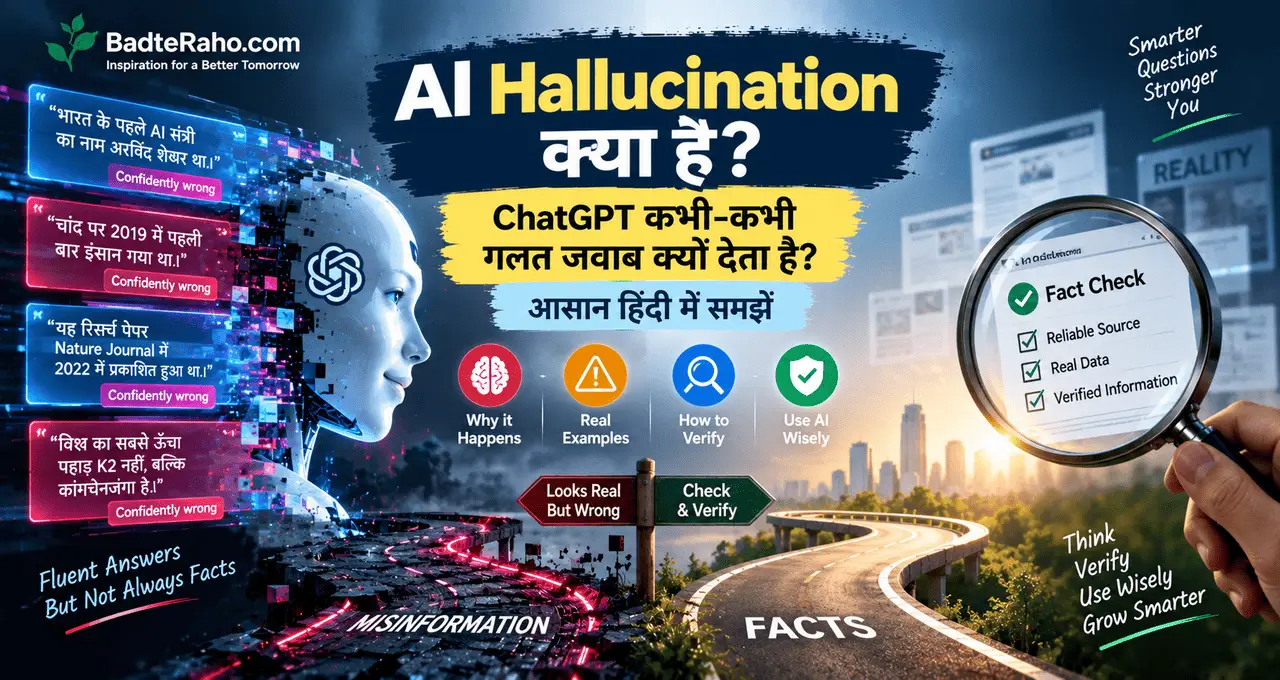
आप ChatGPT से किसी book का reference पूछते हैं।
वह author का नाम, publication year और title पूरे confidence के साथ बता देता है।
आप search करते हैं—ऐसी book मिलती ही नहीं।
यही AI की सबसे confusing problems में से एक है। जवाब इतना natural और confident होता है कि गलती तुरंत पकड़ में नहीं आती।
इसे अक्सर AI Hallucination कहा जाता है।
इसका मतलब यह नहीं कि AI जानबूझकर झूठ बोल रहा है। Problem यह है कि Generative AI कभी-कभी सही information की जगह ऐसा answer बना देता है जो believable तो लगता है, लेकिन factually गलत हो सकता है।
इस लेख में आप क्या सीखेंगे?
- AI Hallucination का मतलब
- गलत जवाब क्यों बनते
- Hallucination कैसे पहचानें
- Fake Sources से बचाव
- Facts कैसे Verify करें
- Better Prompts कैसे लिखें
- High-Risk Topics में सावधानी
- Useful Verification Prompts
AI Hallucination क्या है?
AI Hallucination उस situation को कहा जाता है जब AI ऐसा output generate करता है जो गलत, invented, misleading या available facts से unsupported हो।
यह कई रूपों में दिखाई दे सकता है।
AI:
- गलत date बता सकता है
- किसी व्यक्ति का fake quote बना सकता है
- ऐसी book या research paper का reference दे सकता है जो exist नहीं करता
- statistics invent कर सकता है
- किसी rule या law की गलत explanation दे सकता है
- product में ऐसा feature बता सकता है जो उसमें है ही नहीं
- किसी event को ऐसे describe कर सकता है जैसे वह सच में हुआ हो
सबसे important बात यह है कि hallucinated answer जरूरी नहीं कि strange लगे।
कई बार वह grammatically perfect, detailed और confident होता है।
इसी वजह से user के लिए उसे पहचानना मुश्किल हो सकता है।
अगर AI की basic working समझनी है तो AI क्या है और कैसे काम करता है? Machine Learning से Generative AI तक आसान Guide पहले पढ़ना useful रहेगा।
क्या AI जानबूझकर झूठ बोलता है?
नहीं, इसे इंसानों वाले “झूठ” के अर्थ में समझना सही नहीं होगा।
AI model के पास human intention, honesty या dishonesty उसी तरह नहीं होती।
Large Language Model का काम broadly context के आधार पर useful और likely text generate करना होता है।
यानी system यह नहीं सोच रहा होता:
“मुझे answer नहीं पता, इसलिए मैं झूठ बोल देता हूँ।”
कई बार model ऐसा continuation generate कर देता है जो language pattern के हिसाब से plausible लगता है, लेकिन reality से match नहीं करता।
इसीलिए AI Hallucination को confidently generated wrong information की problem की तरह समझना ज्यादा useful है।
ChatGPT जैसे AI जवाब कैसे बनाते हैं?
इस problem को समझने के लिए LLM की basic working समझना helpful है।
आप prompt देते हैं:
“भारत के पहले प्रधानमंत्री कौन थे?”
Model conversation context और अपने learned patterns के आधार पर अगला suitable text generate करता जाता है।
Simple factual questions में answer सही हो सकता है।
लेकिन problem तब बढ़ सकती है जब question:
बहुत specific हो,
rare information से जुड़ा हो,
latest information मांगे,
ambiguous हो,
या model के पास reliable context न हो।
ऐसी situation में model sometimes information gap को plausible text से fill कर सकता है।
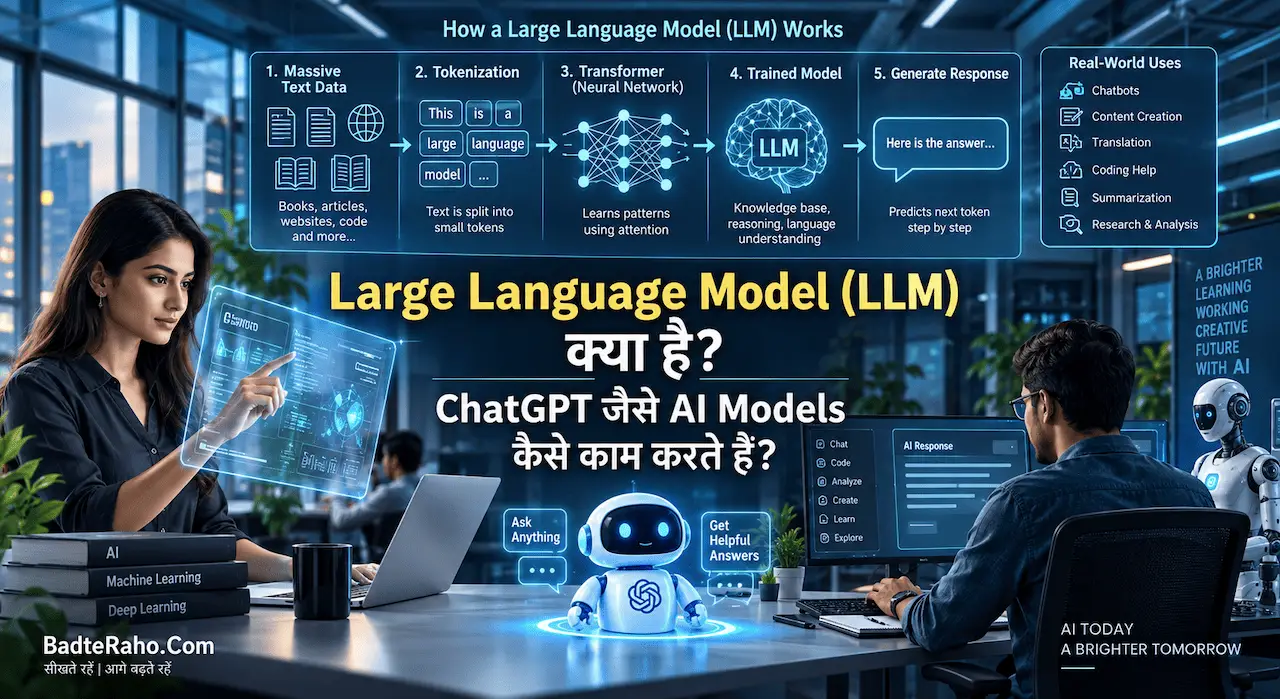
Large Language Models कैसे काम करते हैं, इसे Large Language Model (LLM) क्या है? ChatGPT जैसे AI Models कैसे काम करते हैं? में detail से समझ सकते हैं।
AI Hallucination क्यों होती है?
एक single reason नहीं है।
कई factors मिलकर गलत output का chance बढ़ा सकते हैं।
1. AI का Goal हमेशा “Truth Search” करना नहीं होता
Language model primarily text generate करता है।
अगर उसके पास direct verified database, live search या reliable source access नहीं है, तो वह learned patterns के आधार पर answer बना सकता है।
यही वजह है कि natural language और factual accuracy अलग-अलग चीजें हैं।
Answer पढ़ने में अच्छा लग सकता है।
लेकिन अच्छा लिखा हुआ answer जरूरी नहीं कि सही भी हो।
2. Training Data में हर Information नहीं होती
कोई भी AI model दुनिया की हर information नहीं जानता।
कुछ information:
rare हो सकती है,
नई हो सकती है,
private हो सकती है,
training में कम दिखाई दी हो सकती है,
या बहुत specific context से जुड़ी हो सकती है।
अगर model के पास strong pattern नहीं है, तो error का chance बढ़ सकता है।
यही कारण है कि obscure local facts, rare books, छोटी companies या बहुत specific historical details में extra verification useful है।
3. Question बहुत Ambiguous हो सकता है
Prompt है:
“उसका founder कौन था?”
लेकिन “उसका” किस company को refer कर रहा है?
अगर context clear नहीं है, तो AI guess कर सकता है।
Better prompt:
“OpenAI की स्थापना किन लोगों ने की थी? Answer देते समय names और year अलग-अलग बताओ।”
Clear prompt ambiguity कम कर सकता है।
लेकिन clear prompt hallucination को completely eliminate नहीं करता।
Prompt quality improve करने के लिए Prompt Engineering क्या है? AI से बेहतर जवाब पाने के लिए Prompt कैसे लिखें? useful रहेगा।
4. Latest Information Available नहीं हो सकती
आप पूछते हैं:
“आज इस company का CEO कौन है?”
अगर AI के पास current web access नहीं है या information outdated है, तो वह पुराना answer दे सकता है।
यह जरूरी नहीं कि classic hallucination ही हो।
कई बार answer सिर्फ़ outdated होता है।
लेकिन user के point of view से problem वही है—गलत information मिल रही है।
इसलिए current topics में हमेशा यह देखना जरूरी है कि answer live/current sources पर based है या नहीं।
Latest news, prices, government rules, product features और company roles जैसी information समय के साथ बदल सकती है।
5. AI कभी Fake Source भी बना सकता है
यह सबसे dangerous hallucination types में से एक है।
आप कहते हैं:
“इस statement के लिए research paper बताओ।”
AI ऐसा जवाब दे सकता है:
Author name.
Paper title.
Journal.
Year.
DOI जैसा दिखने वाला reference.
सब कुछ genuine जैसा लगता है।
लेकिन source exist नहीं करता।
Academic work, journalism या serious research में यही reason है कि references को manually verify करना बहुत जरूरी है।
Source का नाम देखकर trust न करें।
Source खोलकर confirm करें कि वह सच में मौजूद है और वही claim को support करता है।
6. Model User को Helpful दिखने की कोशिश कर सकता है
User answer चाहता है।
Model helpful response generate करना चाहता है।
लेकिन कभी-कभी “मुझे नहीं पता” कहने की जगह model incomplete knowledge के बावजूद answer produce कर सकता है।
Modern AI systems को uncertainty better express करने के लिए train किया जाता है, लेकिन mistakes फिर भी possible हैं।
इसलिए user को भी AI से uncertainty पूछनी चाहिए।
Example:
“अगर तुम्हें answer पर confidence कम है तो clearly बताओ।”
यह guarantee नहीं है, लेकिन useful signal मिल सकता है।
Hallucination और Normal Mistake में क्या फर्क है?
हर AI error hallucination नहीं होता।
Example:
आपने complex calculation दी और AI ने arithmetic mistake कर दी।
यह simple reasoning या calculation error हो सकती है।
लेकिन AI ने किसी non-existent research paper का पूरा citation बना दिया।
यह hallucination का ज्यादा clear example है।
Similarly:
Outdated CEO name = stale information हो सकती है।
Invented CEO name = hallucination हो सकती है।
Difference technical discussion में important हो सकता है, लेकिन practical user के लिए सबसे जरूरी सवाल है:
क्या answer reliable है और क्या इसे verify करना चाहिए?
AI Hallucination कैसी दिख सकती है?
कुछ common patterns हैं।
बहुत Specific लेकिन Unsupported Detail
AI exact date, percentage या quote दे रहा है, लेकिन source नहीं है।
Fake Citation
Paper, report या article का reference मिलता नहीं।
बदलता हुआ Answer
एक ही सवाल थोड़े अलग तरीके से पूछने पर facts बदल जाते हैं।
Confident Language
“यह निश्चित रूप से हुआ था।”
लेकिन evidence weak है।
Unknown Topic पर बहुत लंबा Answer
Model rare subject पर भी बिना hesitation detailed story बना देता है।
Source पूछने पर नया Source बनाना
पहले claim किया, फिर proof मांगने पर suspicious citation दिया।
इनमें से कोई एक sign automatically hallucination prove नहीं करता, लेकिन verification की जरूरत जरूर बढ़ाता है।
Example: Fake Book Reference कैसे बन सकती है?
मान लीजिए आप पूछते हैं:
“2021 में India में AI education पर प्रकाशित तीन Hindi books बताओ।”
अगर model के पास reliable book database नहीं है, तो वह plausible titles बना सकता है।
जैसे:
“AI और भारतीय शिक्षा”
“Digital Classroom का भविष्य”
“Artificial Intelligence for Students”
नाम believable हैं।
लेकिन यह जरूरी नहीं कि ये books सच में published हुई हों।
ऐसी list को सीधे article या assignment में डाल देना problem बन सकता है।
Better approach:
Book title verify करें.
Author verify करें.
Publisher verify करें.
ISBN जहाँ applicable हो, check करें.
Library या trusted book database देखें.
AI discovery में मदद कर सकता है।
Final verification अलग step होना चाहिए।
Students के लिए Hallucination क्यों Important है?
Student AI से पूछता है:
“इस chapter के important dates बताओ।”
Answer मिलता है।
Student बिना textbook check किए याद कर लेता है।
Exam में date गलत निकलती है।
Problem AI use करना नहीं था।
Problem verification नहीं करना था।
AI study partner हो सकता है, लेकिन syllabus, textbook और teacher की जगह final authority नहीं होना चाहिए।
Students के responsible AI use को AI से पढ़ाई कैसे करें? Students के लिए AI का सही इस्तेमाल और जरूरी सावधानियाँ में detail से समझाया गया है।
Bloggers और Content Creators को क्या सावधानी रखनी चाहिए?
AI-generated content publish करते समय hallucination बहुत important issue है।
मान लीजिए AI ने लिखा:
“2025 की एक report के अनुसार 78% Indian small businesses AI use कर रहे हैं।”
Statistic impressive लगता है।
लेकिन source पूछा तो पता चला report exist ही नहीं करती।
अगर blogger इसे publish कर देता है, तो misinformation उसके नाम से जाएगी।
इसलिए especially verify करें:
Statistics.
Dates.
Government schemes.
Company revenue.
Funding.
Founders.
Research findings.
Quotes.
Historical claims.
AI से article का structure और explanation लेना useful हो सकता है।
Facts publish करने से पहले verify करना जरूरी है।
Business में AI Hallucination से क्या Problem हो सकती है?
Small business owner AI से product description बनवाता है।
AI अपने आप लिख देता है:
“100% waterproof.”
लेकिन product सिर्फ़ splash-resistant है।
अब marketing attractive है, लेकिन claim गलत है।
या AI customer को return policy के बारे में ऐसा promise कर देता है जो business की actual policy में है ही नहीं।
इसलिए business में simple rule useful है:
AI language बनाए, business facts owner verify करे।
Customer replies, pricing, delivery promises और product features में final check human का होना चाहिए।
Medical, Legal और Financial Topics में Extra Care क्यों?
High-stakes topics में गलत information का नुकसान सिर्फ़ confusion तक limited नहीं रहता।
Medical information गलत हुई तो health risk हो सकता है।
Legal information गलत हुई तो decision प्रभावित हो सकता है।
Financial guidance गलत हुई तो पैसे का नुकसान हो सकता है।
इसलिए AI से ऐसे topics पर general explanation लेना अलग बात है।
Diagnosis, legal action या investment decision सिर्फ़ AI answer के आधार पर करना अलग है।
High-impact decision में qualified professional और authoritative source की जरूरत हो सकती है।
क्या Internet Access Hallucination खत्म कर देता है?
नहीं।
Live search या external tools accuracy improve कर सकते हैं क्योंकि model current sources देख सकता है।
लेकिन गलतियाँ फिर भी possible हैं।
AI:
wrong source चुन सकता है,
source गलत समझ सकता है,
old page use कर सकता है,
numbers गलत combine कर सकता है,
या source की बात से ज्यादा strong conclusion निकाल सकता है।
इसलिए “AI ने web search किया है” का मतलब automatically “100% correct” नहीं है।
Better question है:
क्या claim के पीछे reliable source है और क्या source वही बात कह रहा है?
AI के Answer को Verify करने का 5-Step तरीका
हर छोटी चीज़ verify करने की ज़रूरत नहीं है।
लेकिन important fact के लिए यह process useful है।
Step 1: Exact Claim पहचानें
क्या verify करना है?
“Company successful है” vague है।
“Company ने 2025 में ₹100 crore revenue किया” specific claim है।
Step 2: Primary Source खोजें
जहाँ possible हो:
Official website.
Government page.
Company filing.
Research paper.
Original report.
Step 3: दूसरी Reliable Source से Cross-Check करें
एक ही claim दूसरी जगह भी मिलता है?
Step 4: Date Check करें
Information current है या पुरानी?
Step 5: Number और Term समझें
Revenue और profit अलग हैं।
Funding और valuation अलग हैं।
Prediction और actual result अलग हैं।
Verification सिर्फ़ source ढूंढना नहीं है।
Source को सही तरह से समझना भी जरूरी है।
AI से खुद Verification में मदद कैसे लें?
Interesting बात यह है कि जिस AI से hallucination हो सकती है, उसी AI को verification assistant की तरह भी use किया जा सकता है—लेकिन final check फिर भी source से करना चाहिए।
नीचे कुछ practical prompts हैं।
6 Ready-to-Use AI Verification Prompts
1. Uncertain Facts पहचानने का Prompt
किसी AI-generated answer में risky claims ढूंढने के लिए:
नीचे दिए answer को review करो और उन statements की list बनाओ जिन्हें publish या use करने से पहले verify करना चाहिए। खासकर dates, statistics, names, quotes, research, laws और financial claims को अलग highlight करो: [Answer Paste करें]
यह आपको fact-checking priorities तय करने में मदद कर सकता है।
2. Assumptions पकड़ने का Prompt
जब AI बहुत confident answer दे रहा हो:
अपने पिछले answer में कौन-कौन सी assumptions की गई हैं? Facts, assumptions और opinions को तीन अलग groups में divide करो। जिन points पर confidence कम है, उन्हें clearly बताओ।
यह model को अपने answer की structure explain करने के लिए कहता है।
3. Fake Citation Risk Check
Research या source मिलने पर:
इन references में से किसी को भी सही assume मत करो। हर reference के लिए बताओ कि मुझे author, title, publication, year और URL/DOI में क्या verify करना चाहिए। अगर तुम्हें किसी source के existence पर confidence नहीं है तो साफ़ बताओ।
ध्यान रखें—AI का “यह source real है” कहना खुद final verification नहीं है।
4. Current Information Check
Latest facts के लिए:
इस सवाल का जवाब देने से पहले बताओ कि कौन-सी information time-sensitive है। अगर current source access नहीं है तो outdated fact को current fact की तरह present मत करना: [Question]
यह especially jobs, company positions, prices और policies में useful हो सकता है।
5. Counter-Check Prompt
एक-sided answer को challenge करने के लिए:
इस answer में कौन-से points गलत, incomplete या misleading हो सकते हैं? हर important claim के लिए ऐसा सवाल लिखो जिससे मैं उसे independent source से verify कर सकूँ: [Answer]
यह critical reading को improve करता है।
6. Student Fact-Check Prompt
Notes या revision के लिए:
नीचे मेरे study notes हैं। इन्हें सीधे correct मत मानो। ऐसे facts identify करो जिनमें date, definition, formula, name या historical detail verify करनी चाहिए। फिर मुझे बताओ कि textbook में क्या check करना है: [Notes]
यह prompt answer copy करने के बजाय verification habit बनाता है।
“Source दो” लिखना हमेशा Enough क्यों नहीं?
बहुत users सोचते हैं:
AI से source मांग लिया, अब information reliable है।
लेकिन hallucination में AI fake source भी बना सकता है।
इसलिए source मिलने के बाद check करें:
Link खुल रहा है?
Author real है?
Publication real है?
Article सच में वही claim करता है?
Date सही है?
Quote original context में वही meaning देता है?
Source किसी दूसरे low-quality page को repeat तो नहीं कर रहा है?
Citation दिखाई देना और citation valid होना अलग चीजें हैं।
AI से बेहतर Fact-Based Answer पाने के लिए Prompt कैसे लिखें?
Weak prompt:
“AI jobs की salary बताओ।”
Better:
“2026 में India के AI career roles की salary ranges explain करो। Exact number uncertain हो तो range दो। Current data verify किए बिना precise salary invent मत करना।”
Weak:
“इस company की success story बताओ।”
Better:
“इस company की story में verified facts और uncertain claims अलग रखो। Revenue, funding और valuation को mix मत करना।”
Prompt hallucination पूरी तरह खत्म नहीं करता।
लेकिन model को boundaries देने से output improve हो सकता है।
“I Don’t Know” वाला Answer भी Valuable है
AI से हम अक्सर perfect answer expect करते हैं।
लेकिन कभी-कभी सबसे useful answer है:
“मेरे पास reliable information नहीं है।”
अगर model uncertainty express करता है, तो यह failure नहीं है।
Problem तब है जब uncertain information certainty के साथ दी जाए।
इसलिए AI use करते समय सिर्फ़ answer की length और confidence से impress न हों।
Accuracy ज्यादा important है।
Short verified answer, long invented answer से बेहतर है।
कौन-सी Information हमेशा Verify करनी चाहिए?
कुछ categories में default verification habit रखना useful है:
- Medical diagnosis
- Medicine dosage
- Legal rules
- Tax information
- Government schemes
- Current prices
- Breaking news
- Election information
- Financial products
- Investment returns
- Company financials
- Academic citations
- Statistics
- Historical dates
- Direct quotes
Creative writing या brainstorming में factual verification की जरूरत कम हो सकती है।
लेकिन decision-making में ज्यादा।
Risk जितना बड़ा, verification उतनी strong।
AI Answer पर भरोसा कब किया जा सकता है?
यह black-and-white question नहीं है।
आप AI का use कई low-risk tasks में comfortably कर सकते हैं:
Paragraph rewrite.
Idea brainstorming.
Grammar improvement.
Simple explanation.
Meeting agenda.
Study questions.
Draft structure.
लेकिन अगर output का real-world consequence है, तो verification level बढ़ना चाहिए।
Example:
Instagram caption का first draft गलत हो गया—छोटा risk।
₹5 lakh investment decision गलत हो गया—बहुत बड़ा risk।
Use case ही तय करता है कि checking कितनी जरूरी है।
AI Hallucination से बचने की 8 Practical Habits
1. Exact Facts पर Source मांगें
लेकिन source खुद verify भी करें।
2. Current Information को Current Source से Check करें
Old knowledge पर depend न रहें।
3. बहुत Specific Numbers पर सावधान रहें
Precise number impressive लग सकता है, लेकिन invented भी हो सकता है।
4. Second Opinion लें
Important fact multiple reliable sources से compare करें।
5. AI को Uncertainty बताने को कहें
Confidence और limitation पूछें।
6. Primary Source Prefer करें
Original report या official data ज्यादा useful हो सकता है।
7. High-Stakes Decision AI पर Alone न छोड़ें
Human expert की जरूरत समझें।
8. Confident Tone को Evidence न मानें
Writing quality truth का proof नहीं।
अगर AI हर बार अलग answer दे रहा है तो क्या करें?
मान लीजिए आपने एक fact पूछा।
पहले answer में 2019.
दूसरे में 2020.
तीसरे में 2021.
यह strong signal है कि model reliable certainty के साथ answer नहीं दे पा रहा।
ऐसी situation में बार-बार prompt बदलकर desired answer निकालने की कोशिश न करें।
External source check करें।
AI inconsistency खुद useful warning हो सकती है।
File Upload करने पर भी Hallucination हो सकती है?
हाँ।
अगर आपने PDF या document upload किया है, तो AI उस file पर based answer देने में useful हो सकता है।
लेकिन फिर भी यह possible है कि:
कुछ section miss हो जाए,
number गलत पढ़ा जाए,
context mix हो जाए,
या answer में document के बाहर की assumption जुड़ जाए।
इसलिए important काम में पूछें:
“Answer सिर्फ़ uploaded document के आधार पर दो।”
और relevant page/section cross-check करें।
ChatGPT में documents के practical use के लिए ChatGPT में File Upload करके क्या-क्या कर सकते हैं? PDF और Documents से काम लेने का तरीका helpful रहेगा।
AI Hallucination को Completely खत्म किया जा सकता है?
अभी practical answer है—नहीं।
Better models, retrieval systems, search tools, structured databases और improved training hallucination कम कर सकते हैं।
लेकिन zero-error AI assume करना safe नहीं है।
Especially open-ended Generative AI में uncertainty हमेशा consideration रहनी चाहिए।
इसलिए future सिर्फ़ “AI ज्यादा accurate होगा” पर depend नहीं करेगा।
Users को भी AI literacy सीखनी होगी।
यानी:
कब trust करना है,
कब verify करना है,
और कब expert की जरूरत है?
आज से क्या करें?
अगली बार AI आपको कोई specific fact दे, तो तुरंत copy न करें।
तीन सवाल पूछें:
क्या यह fact important है?
अगर यह गलत हुआ तो नुकसान कितना होगा?
मैं इसे कहाँ verify कर सकता हूँ?
अगर answer article, assignment, business decision, health, money या official information में use होना है, तो source check करें।
और अगर AI किसी ऐसे topic पर बहुत confident है जिसके बारे में reliable information मिल ही नहीं रही, तो confidence को warning समझें—proof नहीं।
आख़िर में एक छोटी सी बात
AI की सबसे बड़ी strengths में से एक है कि वह बहुत जल्दी useful-looking answer बना सकता है।
और यही उसकी एक बड़ी weakness भी बन सकती है।
क्योंकि गलत answer भी उतनी ही fluency से लिखा जा सकता है जितना सही answer।
इसलिए AI literacy का मतलब सिर्फ़ अच्छे prompts लिखना नहीं है।
यह भी समझना है कि कब AI की बात पर सवाल उठाना चाहिए।
ChatGPT से मदद लें।
Ideas लें।
Explanation लें।
Draft बनवाएँ।
लेकिन important facts पर verification की habit रखें।
AI को smart assistant की तरह use करें—final authority की तरह नहीं।
क्या आपके साथ कभी ऐसा हुआ है कि AI ने कोई fact, source या date पूरे confidence के साथ बताई हो और बाद में वह गलत निकली हो? अपना experience, feedback या सवाल comment में जरूर share करें।