






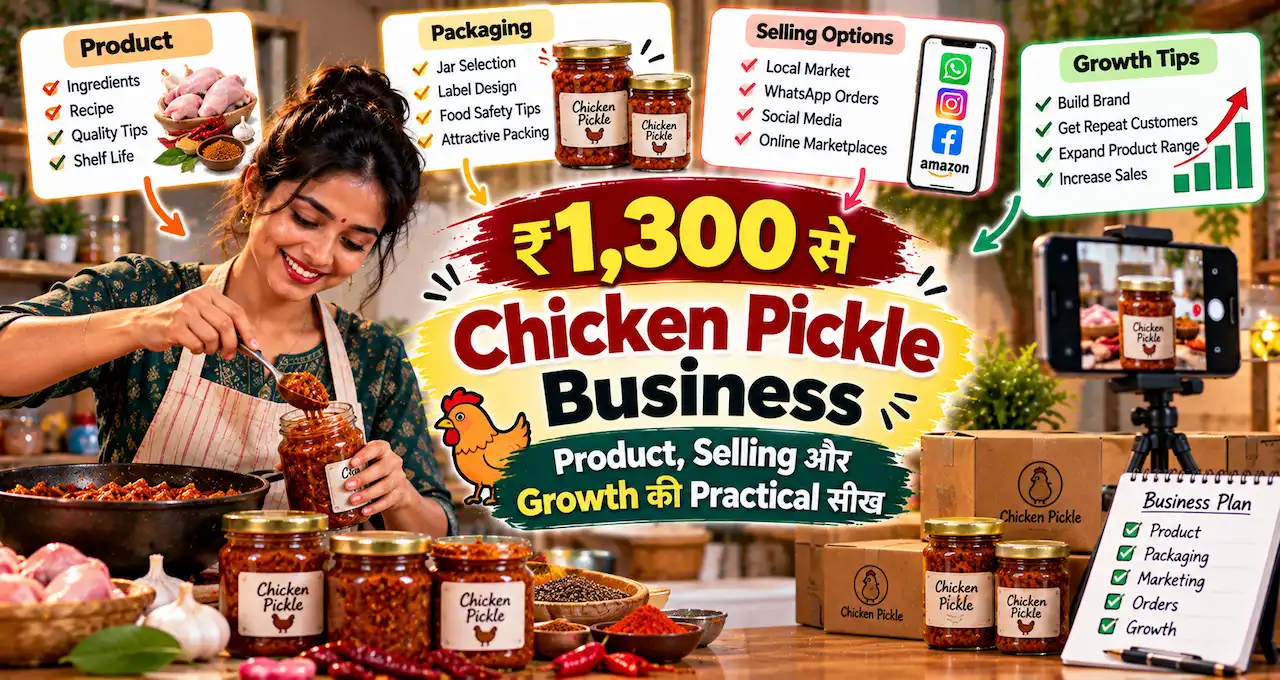



Chicken pickle business बहुत छोटे test batch से शुरू किया जा सकता है, लेकिन ₹1,300 जैसी रकम को fixed startup cost नहीं मानना चाहिए।
Raw chicken, oil, मसाले, jars, fuel और local prices हर शहर में अलग होते हैं। इसलिए इस article में ₹1,300 को सिर्फ़ एक micro-batch example की तरह use करेंगे—ताकि समझ सकें कि product test, costing, selling और repeat orders का basic cycle कैसे बन सकता है।
Goal “कम पैसे में overnight profit” नहीं, बल्कि small batch से controlled learning लेना है।
इस लेख में आप क्या सीखेंगे?
- Small batch plan बनाना
- Costing सही करना
- Food safety समझना
- पहले customers पाना
- Repeat orders track करना
- Growth controlled रखना
₹1,300 वाला Example कैसे समझें?
मान लीजिए कोई beginner सिर्फ़ testing के लिए छोटा batch बनाना चाहता है। Illustrative budget ऐसा हो सकता है:
| Item | Example Cost |
|---|---|
| Chicken | ₹500 |
| Oil + spices | ₹300 |
| Jars/containers | ₹250 |
| Labels/packing | ₹100 |
| Fuel/misc. | ₹150 |
| Total | ₹1,300 |
यह सिर्फ़ example है। आपके actual cost में chicken quality, oil type, spice quantity, jar size, electricity, gas, delivery और local rates के कारण काफी difference हो सकता है।
इसलिए first rule है: headline budget copy न करें; अपना actual batch cost लिखें।
Step 1: पहले Product Standardize करें
Food business में taste repeatable होना जरूरी है। अगर first batch spicy और second batch mild है, तो repeat customer का trust कम हो सकता है।
हर test batch में note करें:
- Chicken quantity.
- Oil quantity.
- Masala quantity.
- Cooking time.
- Final batch weight.
- Number of jars filled.
- Storage method.
Recipe secret रखना अलग बात है; internal process लिखना quality consistency के लिए useful है।
Step 2: Food Safety को Marketing से पहले रखें
Chicken highly perishable food है। इसलिए preparation hygiene, cooking, contamination control, packaging और storage instructions को lightly नहीं लेना चाहिए।
Food business शुरू करने से पहले applicable FSSAI registration/licensing और current food-safety requirements official sources से verify करें। Exact requirement business size, turnover, activity और location पर depend कर सकती है।
Useful official starting points:
AI से shelf life guess करवाना, “preservative-free” लिखना या fake FSSAI number बनाना बिल्कुल avoid करें।
Step 3: Small Batch का Real Cost कैसे निकालें?
सिर्फ़ chicken + मसाले जोड़ना enough नहीं है। Costing में include करें:
- Raw ingredients.
- Oil.
- Spices.
- Gas/electricity.
- Jar and lid.
- Label.
- Outer packing.
- Delivery contribution.
- Wastage.
- Payment charges, अगर हों.
Example:
Total batch cost = ₹1,300
Usable jars = 8
Base cost per jar = ₹1,300 ÷ 8 = ₹162.50
लेकिन selling price decide करने से पहले labour, delivery और expected margin भी देखने होंगे। ₹162.50 को final selling price समझना गलत होगा।
Step 4: पहले 5–10 Customers कहाँ से मिल सकते हैं?
पहले batch में large ad campaign की जरूरत नहीं है। Known network से controlled testing ज्यादा useful हो सकती है:
- Friends/family—लेकिन paid order लें.
- Neighbours.
- Local WhatsApp groups, permission के साथ.
- Office/community contacts.
- Existing home-food customers.
“Free sample सबको” देने की बजाय small paid trial pack stronger demand signal देता है।
घर की बनी चीज़ों को online बेचने का broader workflow homemade products online selling guide में समझाया गया है।
Step 5: Trial Pack क्यों Useful हो सकता है?
Full-size jar पहली purchase में customer के लिए commitment हो सकता है। अगर economics allow करती है, तो smaller trial pack test किया जा सकता है।
Trial pack से तीन चीजें सीख सकते हैं:
- Taste acceptance.
- Price sensitivity.
- Repeat-order intent.
लेकिन packaging cost small pack में proportionally ज्यादा हो सकती है। इसलिए “small = cheap” assume न करें।
Step 6: Customer Feedback कैसे लें?
“कैसा लगा?” से ज्यादा specific questions पूछें:
- Salt/spice level कैसा लगा?
- Texture कैसा था?
- Oil level ठीक लगा?
- Pack size practical है?
- Price reasonable लगा?
- Storage instructions clear थीं?
- क्या दोबारा order करेंगे?
Feedback को note करें, लेकिन एक customer की preference पर पूरी recipe तुरंत न बदलें। Repeated patterns देखें।
Step 7: WhatsApp पर Product कैसे Present करें?
Simple product card में रखें:
- Product name.
- Pack size.
- Actual price.
- Ingredients.
- Storage instruction.
- Order method.
- Delivery area.
- Applicable food-business details, अगर required.
Marketing prompts के लिए Pickle Business के 20 AI Prompts useful next step है।
Photos और Videos कैसे बनाएं?
Food product के लिए clean, honest visuals ज्यादा important हैं।
Shot ideas:
- Sealed jar front view.
- Label close-up.
- Serving spoon shot.
- Texture close-up.
- Packing process.
- Order-ready jars.
AI-generated food image को actual product photo जैसा present न करें। Customer को वही product दिखना चाहिए जो उसे मिलेगा।
पहला Profit देखकर तुरंत Scale क्यों नहीं करना चाहिए?
मान लीजिए test batch बिक गया। इसका मतलब यह नहीं कि तुरंत 10x quantity बनानी चाहिए। पहले देखें:
- कितने paid customers थे?
- कितनों ने repeat order किया?
- क्या कोई complaint आई?
- Actual margin कितना था?
- Delivery manageable रही?
- Product consistency बनी रही?
Small batch का purpose demand और process दोनों test करना है।
Repeat Orders ही सबसे Important Signal क्यों हैं?
First order curiosity से आ सकता है। Repeat order stronger signal है कि customer product को actual use में value देता है।
Simple tracker:
| Customer | First Order | Feedback | Repeat Order |
|---|---|---|---|
| A | Yes | Spice good | Yes |
| B | Yes | Pack small | No |
Customer follow-up और repeat-order communication improve करने के लिए AI Sales Follow-up guide useful है।
Growth का Next Step क्या हो सकता है?
जब product repeatable हो और demand signal मिले, तब धीरे-धीरे:
- Better labels.
- 2 pack sizes.
- Consistent jars.
- Simple order form.
- Google Business Profile.
- Local retailer trial.
- Festival bundles.
एक साथ flavours, sizes और channels बढ़ाने से complexity बढ़ सकती है। पहले best-selling variant को stable करें।
Retailer को बेचने से पहले क्या तैयार रखें?
Retailer आम तौर पर पूछ सकता है:
- MRP/selling price.
- Retail margin.
- Pack size.
- Shelf/storage information.
- Minimum order.
- Replacement policy.
- Supply frequency.
इनमें कोई number invent न करें। पहले actual unit economics बनाएं।
Business Name और Branding कब करें?
Logo बनाना first step नहीं है। Product consistency और paid demand पहले test करें।
Branding तब useful होती है जब:
- Repeat orders आ रहे हों.
- Packaging stable हो.
- Product name fixed हो.
- Customer contact process clear हो.
Business planning की broader foundation के लिए Business शुरू करने का practical roadmap useful है।
AI कहाँ help कर सकता है?
AI से:
- Product description draft.
- WhatsApp copy.
- Caption ideas.
- FAQ.
- Follow-up messages.
- Offer calculations.
- Retailer pitch structure.
लेकिन AI food safety, shelf life, actual ingredients, compliance या customer review invent नहीं कर सकता। हर business fact manually verify करें।
30-Day Small-Batch Growth Plan
Week 1: Recipe/process standardize करें और cost sheet बनाएं.
Week 2: Small paid test batch बेचें.
Week 3: Feedback और repeat orders track करें.
Week 4: Best pack/price combination decide करें और next batch controlled तरीके से बढ़ाएं.
अगर repeat demand weak है, तो scale रोकें और product, price या target customer पर वापस जाएँ।
Common Mistakes
- ₹1,300 को universal startup cost मानना.
- Food safety/compliance ignore करना.
- All costs include किए बिना price तय करना.
- Free feedback को demand proof मानना.
- Actual product की बजाय AI food image दिखाना.
- One successful batch के बाद बहुत ज्यादा inventory बनाना.
- Shelf life guess करना.
- Fake health claims लिखना.
Product Validation के लिए 3 अलग Tests करें।
एक ही paid batch से final conclusion न निकालें। तीन अलग चीजें test करें:
Taste Test: क्या customers flavour, spice level और texture consistently पसंद कर रहे हैं?
Price Test: क्या customer actual selling price पर order करता है, या सिर्फ़ discount/free sample पर?
Repeat Test: क्या customer कुछ दिनों/हफ्तों बाद दोबारा order करता है?
इन तीनों में repeat order सबसे useful signal हो सकता है, क्योंकि यह curiosity से आगे actual product usage दिखाता है।
Batch Log क्यों जरूरी है?
हर batch को number दें: Batch 01, Batch 02, Batch 03। फिर internal log में note करें:
- Preparation date.
- Raw material source.
- Ingredient quantities.
- Final usable quantity.
- Number of jars.
- Customer complaints, अगर कोई हों.
- Feedback pattern.
यह professional factory system नहीं, simple discipline है। अगर किसी batch में problem आए तो आपको पता रहेगा कि कौन-सा process अलग था।
Packaging सिर्फ़ सुंदर नहीं, Practical भी हो
Jar चुनते समय सिर्फ़ look न देखें। Lid fit, leakage risk, handling, label adhesion और delivery practicality भी देखें।
Local delivery में भी test करें कि jar upright रहने पर leak तो नहीं करता, outer packing पर्याप्त है या नहीं और customer तक पहुँचते समय label खराब तो नहीं होता।
अगर courier/shipping plan कर रहे हैं, तो food shipping, packaging और carrier rules अलग से verify करें। सिर्फ़ local hand-delivery वाला packaging setup long-distance courier के लिए automatically suitable नहीं होगा।
Complaint आए तो क्या करें?
Food complaint को defensive तरीके से handle न करें। Order detail, batch detail और problem पूछें। अगर customer food-safety concern बताता है तो इसे priority issue मानें और applicable business policy/FSSAI guidance के अनुसार action लें।
Simple response structure:
- Complaint acknowledge करें.
- Order/batch detail लें.
- Photo/details माँगें, अगर relevant हो.
- Replacement/refund policy clear करें.
- Same batch के दूसरे orders review करें.
- Problem serious लगे तो sale temporarily रोककर investigate करें.
“Customer गलत है” assume करना और complaint ignore करना long-term brand risk है।
Pricing में Margin को अलग से Track करें
Sales और profit same नहीं हैं। अगर एक jar ₹250 में बिक रहा है और total unit cost ₹190 है, तो gross difference ₹60 है—लेकिन इसमें आपकी labour, delivery time, payment fee या unsold stock पूरी तरह include न भी हो सकते हैं।
इसलिए monthly sheet रखें:
Total sales
− Ingredient cost
− Packaging
− Delivery contribution
− Marketing cost
− Other expenses
=
Approximate business surplus
यह accounting/tax statement का substitute नहीं, internal decision tool है।
कब Scale करना और कब Pause करना चाहिए?
Scale consider करें जब:
- Recipe/process repeatable हो.
- Repeat orders दिख रहे हों.
- Complaints manageable हों.
- Unit economics positive हों.
- Compliance requirements clear हों.
Pause करें जब:
- Product consistency unstable हो.
- Storage/safety confusion हो.
- Customers price reject कर रहे हों.
- Delivery cost margin खा रही हो.
- आप demand से ज्यादा stock बना रहे हों.
Pause failure नहीं है। Small-batch business का फायदा ही यही है कि बड़ा नुकसान होने से पहले process improve किया जा सकता है।
Order Cut-Off और Batch Discipline क्यों रखें?
Small food business में हर order पर अलग batch बनाना operationally मुश्किल हो सकता है। शुरुआत में fixed order cut-off और limited batch day रखने से ingredients, preparation और delivery planning आसान होती है। ऐसा schedule तभी रखें जब आपकी actual capacity और food-safety process उसे support करें।
Demand से ज्यादा batch न बनाएं। पहले confirmed paid orders, expected repeat demand और safe storage capacity देखकर quantity तय करें। इससे wastage और unnecessary inventory risk कम रहता है।
आख़िर में एक छोटी सी बात
Chicken pickle business की practical सीख यह है कि small batch आपको कम risk में product, price और customer response test करने देता है। ₹1,300 सिर्फ़ illustrative starting example है; actual business cost हमेशा आपके ingredients, packaging और local rates से निकलेगी।
पहले process और food safety को stable करें, फिर paid orders और repeat demand देखकर धीरे-धीरे scale करें।
आप chicken pickle business में पहले किस चीज़ का test करना चाहेंगे—recipe, pack size, pricing या local demand? Comments में बताइए। अगर यह framework useful लगा, तो इसे किसी ऐसे व्यक्ति के साथ share करें जो home food business शुरू करने की सोच रहा है।