





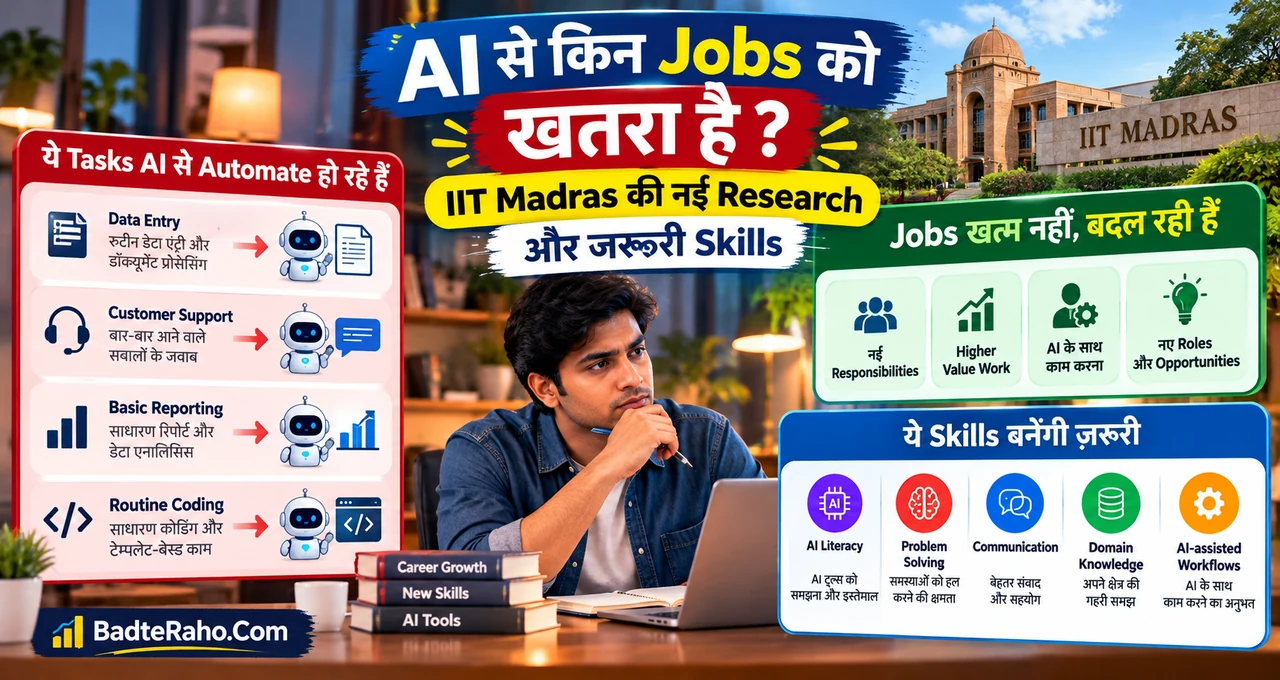





AI किसी task को automate कर दे तो इसका मतलब पूरी job खत्म होना नहीं है—IIT Madras की नई research यही distinction सामने रखती है।
Centre for Responsible AI (CeRAI), IIT Madras की white paper “How AI Is Reconfiguring Work in India” jobs को task, job, occupation और wider labour-market outcome के अलग levels पर analyze करती है। Research के मुताबिक AI का impact सिर्फ technology की capability से तय नहीं होगा; cost, regulation, safety, organisation design और workers की adaptability भी equally important हैं।
Students, freshers और working professionals के लिए सबसे useful takeaway fear नहीं, skill planning है। Routine tasks automate हो सकते हैं, लेकिन new responsibilities और new roles भी बन सकते हैं।
अब देखते हैं कि किन tasks पर pressure बढ़ सकता है और कौन-सी skills career को stronger बना सकती हैं।
इस लेख में आप क्या सीखेंगे?
- IIT Madras research का main finding
- Task automation और job loss का फर्क
- किन routine tasks पर ज्यादा असर हो सकता है
- Freshers और entry-level roles के लिए risk
- कौन-सी skills ज्यादा important होंगी
- Practical reskilling roadmap कैसे बनाएं
IIT Madras की नई AI Jobs Research क्या कहती है?
CeRAI की white paper broad claim नहीं करती कि AI सभी jobs खत्म कर देगा। इसका central argument है कि employment impact समझने के लिए individual tasks से शुरुआत करनी चाहिए।
Careers360 की 26 October report के अनुसार paper call centres, banking, software development, manufacturing, law, creative industries और small businesses सहित कई sectors को examine करती है।
Research कहती है कि किसी एक task में AI की capability देखकर पूरी profession के disappearance का conclusion निकालना गलत हो सकता है। Organisation उस capability को कैसे deploy करती है, यही actual outcome तय करेगा।
इसीलिए paper augmentation, job redesign, displacement और new roles को अलग pathways के रूप में देखती है।
AI Task Automate होने का मतलब Job खत्म होना क्यों नहीं?
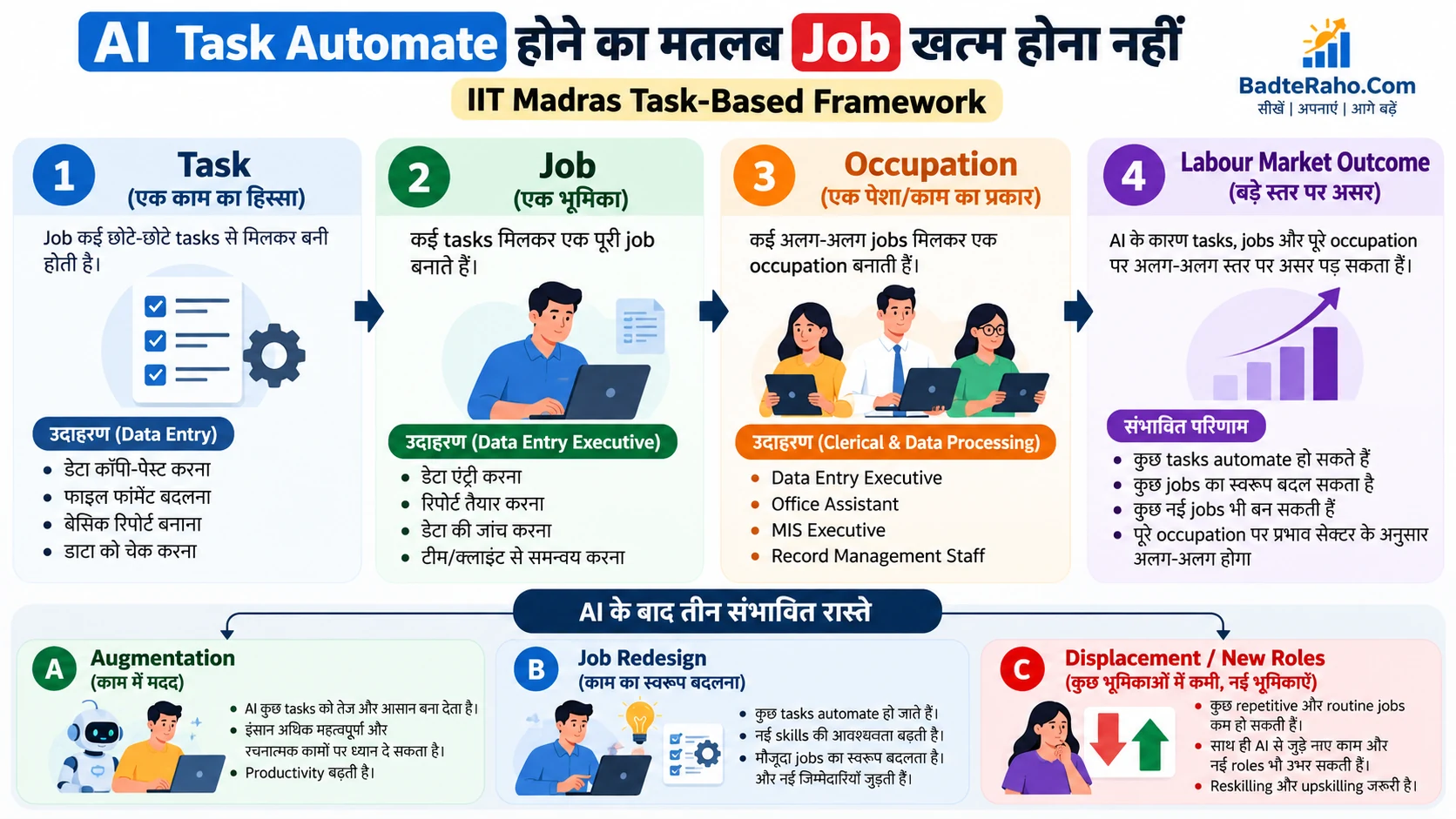
एक job कई tasks से मिलकर बनती है। Data-entry executive सिर्फ data copy नहीं करता; validation, exception handling, coordination, reporting और client communication भी कर सकता है।
अगर AI data copy और formatting automate कर दे, तो job का routine हिस्सा कम हो सकता है लेकिन बाकी responsibilities बनी रह सकती हैं। Organisation उस role को higher-value work की तरफ redesign कर सकती है।
कभी-कभी automation headcount कम कर सकती है। दूसरी situation में same worker AI tool के साथ ज्यादा output दे सकता है। तीसरी situation में entirely new monitoring या AI-operations role बन सकता है।
यही reason है कि “AI यह task कर सकता है” और “यह job खत्म हो जाएगी” दोनों statements equivalent नहीं हैं।
किन Tasks पर AI का सबसे पहले असर दिख सकता है?
Research task-based view को support करती है, इसलिए routine, repeatable और clearly defined work generally ज्यादा exposed हो सकता है।
Examples में structured data entry, repetitive customer queries, standard report drafting, document summarisation, basic coding templates और rule-based processing शामिल हो सकते हैं।
लेकिन exposure sector और workflow पर depend करेगा। वही task regulated banking environment में अलग process से चलेगा और small business में अलग तरीके से।
AI adoption की cost, quality, reliability और accountability भी decide करेगी कि company automation कितनी तेजी से implement करती है।
Data Entry और Basic Reporting Roles पर क्या असर हो सकता है?
Data-entry work में copy-paste, form filling, basic categorisation और standard formatting जैसे tasks AI और automation tools के लिए relatively suitable हैं।
इसका मतलब worker की value validation, exception detection, domain understanding और quality control की तरफ shift हो सकती है। सिर्फ typing speed पर depend career ज्यादा vulnerable हो सकता है।
Basic reporting में AI draft बना सकता है, लेकिन manager को correct metric choose करना, anomaly समझना और business context explain करना अभी भी जरूरी हो सकता है।
इसलिए spreadsheet literacy के साथ analytical thinking सीखना stronger combination है।
Customer Support Jobs पूरी तरह खत्म होंगी?
Simple FAQs, order status और basic troubleshooting जैसे repeated interactions chatbot या AI assistant handle कर सकते हैं। इससे frontline support work का composition बदल सकता है।
लेकिन angry customer, unusual problem, negotiation, empathy और cross-team escalation जैसी situations human judgement demand कर सकती हैं।
Future support role सिर्फ “question का answer देना” नहीं, बल्कि AI-generated responses verify करना, complex cases संभालना और customer trust manage करना हो सकता है।
AI और human workflow का balance company, product complexity और service expectations पर depend करेगा।
Routine Coding पर कितना Risk है?
AI coding tools boilerplate code, test generation, documentation और common bug fixes में तेजी ला रहे हैं। Entry-level developer का कुछ repetitive work automate हो सकता है।
लेकिन software engineering में requirement understanding, architecture, security, integration, debugging और production responsibility भी शामिल हैं।
Developer के लिए सिर्फ syntax याद रखना कम differentiating skill बनेगा। Problem decomposition, code review, system thinking और AI-generated code verify करना ज्यादा important हो सकता है।
BadteRaho पर Forward Deployed Engineer जैसी नई AI-linked roles का example दिखाता है कि technology change कुछ पुराने tasks कम करने के साथ नए responsibilities भी create कर सकती है।
Entry-Level Jobs को लेकर चिंता क्यों है?
Freshers अक्सर repetitive tasks करते हुए domain और workplace experience build करते हैं। अगर company वही tasks automation को दे दे, तो traditional learning ladder कमजोर हो सकती है।
Example: junior analyst basic data cleaning और reports से start करता है। अगर AI यह work instantly कर दे, तो organisation को fresher को directly higher-level judgement tasks के लिए train करना पड़ेगा।
Problem यह नहीं कि junior employee की जरूरत automatically खत्म हो जाएगी। Challenge यह है कि experience gain करने का पुराना रास्ता बदल सकता है।
Companies को apprenticeship, supervised AI workflows और structured training redesign करनी पड़ सकती है।
Freshers को कौन-सी Skills सीखनी चाहिए?
पहली skill है AI literacy—कौन-सा tool क्या कर सकता है, उसकी limitation क्या है और output verify कैसे करना है।
दूसरी है problem-solving। अगर सिर्फ prompt copy करना आता है लेकिन सही problem define नहीं कर सकते, तो AI advantage limited रहेगा।
तीसरी communication है। Client, manager और team के साथ requirement clarify करना और result explain करना automation से अलग human value देता है।
चौथी domain knowledge है। Finance, healthcare, marketing, manufacturing या law में context समझने वाला person generic AI output से बेहतर decision कर सकता है।
पाँचवीं skill AI-assisted workflow है—AI को tool की तरह use करना, final authority की तरह नहीं।
Managers और Companies को क्या बदलना चाहिए?
अगर organisation entry-level repetitive tasks automate करती है, तो training model भी redesign करना होगा। Junior employee को सिर्फ वही काम देना जो AI पहले ही कर सकता है, long-term learning के लिए useful नहीं रहेगा।
Managers को supervised AI workflows, real problem-solving assignments और structured feedback देना होगा ताकि fresher judgement build कर सके। Human review, error analysis और customer context जैसी responsibilities training का हिस्सा बन सकती हैं।
Research का broader message यही है कि AI adoption सिर्फ software खरीदने का decision नहीं; job design और workforce development का decision भी है।
Working Professionals को Reskill कैसे करना चाहिए?
Reskilling का मतलब हर professional को machine-learning engineer बनना नहीं है। पहले अपने current role के tasks लिखें और identify करें कि कौन repetitive, कौन judgement-based और कौन relationship-based है।
फिर repetitive tasks में approved AI tools test करें। Saved time को higher-value responsibilities सीखने में use करें।
अगर आप accountant हैं, तो AI-assisted reconciliation के साथ tax rules और client advisory deepen करें। Marketer हैं, तो basic copy generation के साथ strategy, positioning और experimentation skills improve करें।
Career growth के लिए India में AI-linked jobs और salary landscape देखना भी useful हो सकता है, लेकिन role choose करते समय सिर्फ salary नहीं, skills fit और learning curve भी देखें।
Small Businesses के लिए Research का क्या मतलब है?
White paper affordable, task-focused AI tools को small businesses के लिए useful मानती है। छोटे business को expensive full automation की जरूरत नहीं; selected repetitive tasks से शुरुआत हो सकती है।
Invoice data organise करना, customer queries categorise करना या standard content draft करना productivity improve कर सकता है।
लेकिन owner को quality, trust और accountability maintain करनी होगी। Customer-facing response या financial decision बिना review automate करना risk create कर सकता है।
AI adoption का purpose staff हटाना नहीं, limited team को higher-value work के लिए free करना भी हो सकता है।
AI से New Jobs भी बन सकती हैं?
हाँ, research augmentation और new roles दोनों possibilities discuss करती है। AI systems deploy होने पर monitoring, governance, data quality, human review, integration और specialised domain roles की जरूरत बढ़ सकती है।
कुछ roles existing profession के अंदर evolve होंगे। Example: customer-support supervisor AI conversations audit कर सकता है, developer AI-generated code review कर सकता है और HR professional AI-assisted screening fairness check कर सकता है।
New job titles का exact shape अभी develop होगा, लेकिन adaptability recurring theme है।
क्या Degree की Value कम हो जाएगी?
Research degree को irrelevant नहीं बताती। ज्यादा practical conclusion यह है कि degree के साथ demonstrable skills और AI-assisted work capability important होती जाएगी।
Freshers को academic knowledge को projects, internships, case studies और tool-based workflows के साथ combine करना चाहिए।
Interview में “मैं AI use करता हूँ” कहना enough नहीं होगा। यह दिखाना ज्यादा useful है कि आपने AI output verify कैसे किया, problem solve कैसे की और error होने पर क्या process रखा।
Career बचाने के लिए 90-Day Roadmap
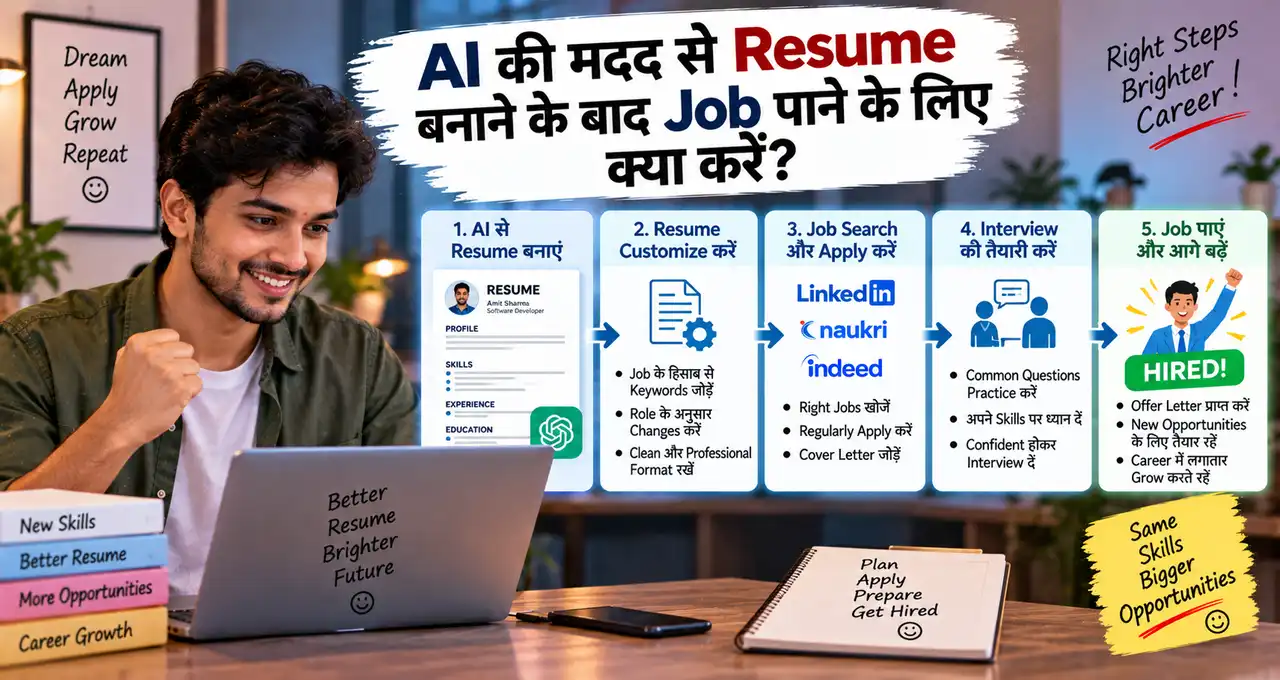
पहले 30 दिन: अपने role के 10–15 recurring tasks लिखें। दो AI tools चुनें और low-risk tasks पर उनका practical use सीखें।
अगले 30 दिन: एक domain skill deepen करें—जैसे Excel analysis, SQL, customer communication, finance basics, design system या coding fundamentals।
आखिरी 30 दिन: एक portfolio project बनाएं जिसमें AI के साथ आपका judgement भी visible हो। सिर्फ generated output नहीं, process और verification explain करें।
इस roadmap का goal “AI से बचना” नहीं, बल्कि AI के साथ higher-value worker बनना है।
Job Change कब Consider करें?
अगर आपके role का लगभग पूरा काम repetitive और rule-based है, organisation automation aggressively implement कर रही है और upskilling path नहीं दे रही, तो adjacent role explore करना practical हो सकता है।
लेकिन panic switch avoid करें। पहले देखें कि same industry में role redesign, supervision, customer-facing work या domain-specialist position available है या नहीं।
Career decision headlines से नहीं, actual task mix और learning opportunities से लेना बेहतर है।
अभी सबसे जरूरी बात क्या याद रखें?
IIT Madras research fear-based “AI सब jobs ले लेगा” narrative को simplify करती है। AI का असर task से शुरू होता है और organisation choices के through job level तक पहुँचता है।
Routine work pressure में आ सकता है, लेकिन augmentation, role redesign और new opportunities भी possible हैं।
Professionals के लिए सबसे strong protection adaptable skill stack है—AI literacy, domain knowledge, communication, problem-solving और verification।
आख़िर में एक छोटी सी बात
AI future of work को जरूर बदल रहा है, लेकिन career outcome सिर्फ technology तय नहीं करेगी। Companies jobs कैसे redesign करती हैं और workers नई responsibilities के लिए कितनी जल्दी prepare होते हैं, उतना ही important होगा।
Freshers और professionals के लिए best response fear नहीं, structured reskilling है।
अपने current role के repetitive tasks की list आज ही बनाइए और देखें AI कहाँ मदद कर सकता है। फिर वही समय एक ऐसी skill में invest करें जिसे judgement, context और communication की जरूरत हो।