






















₹50,000 का credit-card bill आया और app में “Minimum Due” सिर्फ़ कुछ हज़ार रुपये दिखा—यहीं सबसे बड़ी confusion शुरू होती है।
Minimum Due भरना पूरा bill चुकाना नहीं है। अगर Total Amount Due पूरा clear नहीं होता, तो interest-free credit period खत्म हो सकता है और बाकी outstanding पर interest लग सकता है।
इस guide में ₹50,000 के simple example से समझेंगे कि Minimum Due भरने के बाद क्या बचता है, interest कैसे सोचें और अगला bill क्यों तेजी से बढ़ सकता है।
इस लेख में आप क्या सीखेंगे?
- Minimum और Total Due फर्क
- ₹50,000 bill practical example
- Partial payment interest impact
- New purchases का असर
- Minimum Due risk समझना
Credit Card Minimum Due क्या है?
Credit-card statement में आम तौर पर Total Amount Due और Minimum Amount Due अलग-अलग दिखते हैं। Total Amount Due वह full statement balance है जिसे due date तक चुकाने पर सामान्य purchase transactions के लिए interest-free benefit बनाए रखने का लक्ष्य होता है, subject to card terms.
Minimum Amount Due वह छोटा amount है जो issuer statement में दिखाता है। इसका calculation issuer के terms, EMI, fees, previous dues और transaction mix के आधार पर बदल सकता है। इसलिए “Minimum Due हमेशा bill का 5% होता है” जैसी fixed rule मानना सही नहीं है।
Credit card basics पहले समझने हों तो credit card कैसे काम करता है वाली guide useful रहेगी।
₹50,000 Bill का Simple Example
मान लीजिए statement में:
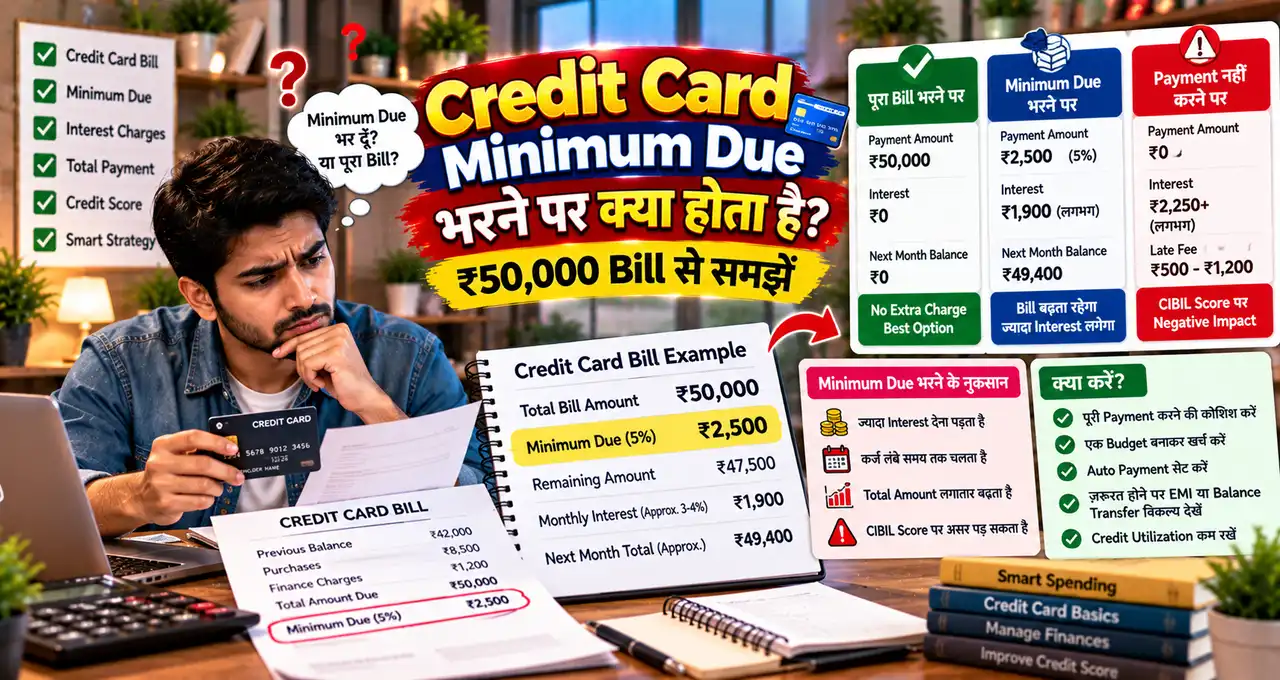
- Total Amount Due: ₹50,000
- Minimum Amount Due: ₹2,500 — सिर्फ़ illustrative assumption
- Due Date: 20 November
अगर आप due date तक सिर्फ़ ₹2,500 भरते हैं, तो ₹47,500 principal/outstanding balance बचता है, subject to refunds, reversals, fees, EMI components और issuer allocation rules।
यह ₹47,500 अगले cycle में simply “free loan” की तरह नहीं बैठा रहता। RBI की credit-card FAQ के अनुसार, अगर Total Amount Due due date तक clear नहीं होता, तो interest-free credit period खो सकता है और interest outstanding amount पर transaction date से लगाया जा सकता है, payments/refunds/reversals को adjust करने के बाद।
Minimum Due भरने पर Interest कितना हो सकता है?
Actual finance charge आपके card के APR, transaction dates, payment dates और issuer methodology पर depend करेगा। इसलिए अपने statement और Most Important Terms & Conditions में APR जरूर देखें।
सिर्फ़ scale समझने के लिए एक hypothetical calculation लेते हैं। मान लें monthly finance rate 3.5% है और simplified calculation में ₹47,500 एक महीने तक outstanding रहता है:
₹47,500 × 3.5% = लगभग ₹1,662.50
यह actual bill calculation नहीं है। Real statement में transaction-wise dates, payment adjustment, GST/taxes, fees और other terms के कारण amount अलग हो सकता है।
यही वजह है कि Minimum Due छोटा दिखने के बावजूद outstanding balance महंगा हो सकता है।
RBI क्या कहता है?
Reserve Bank of India की current credit/debit card FAQ partial payment पर साफ करती है कि अगर cardholder Total Amount Due due date तक clear नहीं करता, तो interest-free credit period खो सकता है। Interest outstanding amount पर transaction date से levy हो सकता है, payments, refunds और reversed transactions के adjustments के बाद।
RBI यह भी कहता है कि late-payment fee और delay-related charges outstanding amount पर due date के बाद लागू होने चाहिए, total amount due पर नहीं। Unpaid taxes/levies/charges को capitalize करके उन पर further interest/charges नहीं लगाया जाना चाहिए।
इन rules का practical मतलब यह है कि statement में सिर्फ़ “Minimum Due” देखकर cost estimate नहीं किया जा सकता। APR और issuer terms पढ़ना जरूरी है।
Minimum Due और Full Payment में असली Difference
Full payment: Statement का Total Amount Due due date तक clear करने का लक्ष्य रखता है। Normal purchase cycle में इससे interest-free period का benefit बनाए रखने में मदद मिलती है, subject to issuer terms.
Minimum payment: Bill का छोटा हिस्सा pay होता है, लेकिन बाकी outstanding carry forward होता है। Total Amount Due clear नहीं होने से interest cost शुरू हो सकती है।
इसलिए “मैंने Minimum Due भर दिया, मतलब bill paid है” गलत mental model है। सही mental model है: “मैंने full bill का सिर्फ़ एक हिस्सा चुकाया है.”
अगले महीने New Purchase करने पर क्या हो सकता है?
जब previous statement balance outstanding रहता है, तो interest-free period का benefit प्रभावित हो सकता है। New purchases की exact interest treatment issuer terms और card agreement पर depend करती है।
इसलिए Minimum Due pay करने के बाद card से नई non-essential shopping जारी रखना outstanding को तेजी से बढ़ा सकता है। पहले existing balance clear करने की plan बनाना ज्यादा sensible है।
Cashback या discounts देखकर extra spend करने से बचें। Offer तभी saving है जब purchase जरूरी हो और bill comfortably repay किया जा सके।
₹50,000 Bill को 3 Scenarios से समझें
Scenario 1: Full ₹50,000 Pay कर दिया
Due date तक full statement amount clear हो गया। Normal purchase transactions के लिए यही सबसे clean repayment approach है, subject to card terms.
Scenario 2: सिर्फ़ ₹2,500 Minimum Due Pay किया
Illustrative example में ₹47,500 outstanding बचा। Finance charges लग सकते हैं और अगला bill existing balance + applicable interest/charges + new transactions से बन सकता है।
Scenario 3: ₹30,000 Pay किया
यह Minimum Due से काफी ज्यादा है, लेकिन Total Amount Due अभी भी पूरा clear नहीं हुआ। Outstanding ₹20,000 बचता है और interest-free period का loss फिर भी relevant हो सकता है। Partial payment ज्यादा होने से outstanding कम होता है, लेकिन “full-payment benefit” automatically वापस नहीं आता।
Minimum Due कब Useful हो सकता है?
अगर temporary cash-flow emergency है और full bill तुरंत possible नहीं, तो statement में required minimum amount miss करने की बजाय available amount समय पर pay करना practical damage-control step हो सकता है। लेकिन इसे long-term repayment strategy न बनाएं।
ऐसी unexpected जरूरतों के लिए अलग emergency fund बनाना credit-card debt पर dependence कम कर सकता है।
Priority यह होनी चाहिए:
- नई discretionary card spending रोकें।
- Outstanding balance का exact amount देखें।
- Issuer APR और charges check करें।
- जितना possible हो Minimum Due से ज्यादा pay करें।
- Clear repayment date तय करें।
अगर debt कई महीनों से carry हो रहा है, तो issuer से available repayment/EMI options की terms पूछें और total cost compare करें। सिर्फ़ lower monthly amount देखकर decision न लें।
क्या Minimum Due भरने से Credit Score Safe रहता है?
Credit score सिर्फ़ एक payment पर depend नहीं करता। Payment history, utilization, account behavior और bureau reporting सहित कई factors relevant हो सकते हैं।
Minimum Due भरना full repayment के बराबर नहीं है और high outstanding utilization आपकी overall credit profile को प्रभावित कर सकता है। Credit score की basics समझने के लिए CIBIL और credit score guide पढ़ सकते हैं।
Exact bureau impact को oversimplify न करें; अलग issuers अलग reporting cycles में data report करते हैं।
Statement में कौन-सी 7 चीजें Check करें?
- Total Amount Due
- Minimum Amount Due
- Payment Due Date
- Annualized Percentage Rate (APR)
- Finance charge calculation method
- Late-payment / other applicable charges
- Previous balance, payments, refunds और EMIs
Statement पढ़ते समय सिर्फ़ बड़ी “Pay Now” button नहीं, detailed statement PDF भी देखें। वहाँ cost structure ज्यादा clearly दिख सकता है।
Minimum Due Trap से बचने के Practical Rules
Rule 1: Credit limit को spending budget मत समझें। Limit ₹1 lakh है, इसका मतलब ₹1 lakh comfortably repay कर सकते हैं—यह जरूरी नहीं।
Rule 2: Statement आते ही Total Amount Due और due date note करें।
Rule 3: Full payment possible न हो तो नई discretionary purchases रोकें।
Rule 4: APR को monthly rate से confuse न करें। Statement/MITC में annualized rate देखें।
Rule 5: Payment plan में interest cost भी जोड़ें, सिर्फ़ principal नहीं। Broader money management के लिए personal finance basics समझना भी useful है।
एक Simple Repayment Planning Example
मान लें ₹50,000 outstanding है और अगले महीने आप ₹25,000 arrange कर सकते हैं। Budget बनाते समय यह मत मानें कि बाकी exactly ₹25,000 रहेगा। Finance charges और applicable taxes/fees के कारण payable amount बढ़ सकता है। अगर monthly cash-flow पहले से tight है, तो monthly budget बनाना repayment amount realistically plan करने में मदद कर सकता है।
इसलिए plan ऐसा रखें:
Current outstanding
↓
Issuer APR/charges check
↓
New spending stop/reduce
↓
Maximum affordable payment
↓
Next statement verify
↓
Remaining balance clear
अगर payment date से पहले extra cash available हो, early partial payment outstanding कम करने में मदद कर सकता है; exact interest impact issuer calculation से verify करें।
Minimum Due का Formula हर Card में Same क्यों नहीं होता?
Minimum Amount Due को एक universal percentage समझना common mistake है। Issuer इसे अपनी card terms के अनुसार calculate करता है और इसमें सिर्फ़ current purchases नहीं, बल्कि EMI amount, previous unpaid minimum, fees या दूसरे components शामिल हो सकते हैं।
इसलिए किसी दूसरे bank का “5% rule” देखकर अपने card का payment decide न करें। आपके statement पर printed Minimum Amount Due और MITC ही relevant source हैं।
अगर statement में calculation समझ नहीं आ रही, तो issuer customer support से लिखित explanation मांगें। Payment करते समय “minimum” और “total” options का difference confirm करना भी useful है।
Minimum Due भरने के बाद भी Late Fee लग सकती है?
यह question issuer terms और आपके exact payment behavior पर depend करता है। RBI FAQ कहता है कि delay-related charges outstanding amount पर due date के बाद levy होने चाहिए, total amount due पर नहीं।
लेकिन Minimum Due समय पर भरना और full amount clear करना दो अलग बातें हैं। Minimum payment के बाद भी finance charges relevant रह सकते हैं क्योंकि Total Amount Due unpaid है।
अगर आपने payment due date के बाद किया, payment reverse हुआ, या amount issuer के required Minimum Due से कम था, तो अलग charges लागू हो सकते हैं। Exact outcome statement और issuer rules से verify करें।
Payment करते समय कौन-सा Balance पहले Reduce होता है?
Credit-card accounts में अलग transaction types हो सकते हैं—purchases, cash advance, EMI, fees और previous balances। Payment allocation order issuer policy के अनुसार हो सकता है।
इसलिए “मैंने ₹10,000 pay किया, तो वही सबसे महंगे transaction से घट गया होगा” assume न करें। अगर आपके statement में multiple categories हैं, तो payment appropriation rule MITC में देखें।
यह खासकर तब important है जब card पर cash withdrawal, EMI और normal purchase एक साथ हों, क्योंकि इनकी costs अलग हो सकती हैं।
Issuer से ये 5 Questions पूछ सकते हैं
- मेरे card का current APR/finance charge कितना है?
- Minimum Amount Due कैसे calculate हुआ?
- Partial payment के बाद interest किस date से और किस balance पर लगेगा?
- मेरी payment किस order में outstanding components पर adjust होगी?
- अगर मैं पूरा balance जल्दी clear करना चाहूँ तो exact payoff amount कहाँ देखूँ?
Customer-care answer को statement/MITC से match करें और जरूरत हो तो written confirmation लें। High outstanding में अनुमान से payment plan बनाने से better exact issuer data लेना है।
आज से क्या करें?
- अपने latest statement में Total Due और Minimum Due दोनों देखें।
- APR और finance charge section पढ़ें।
- अगर full payment possible है, सिर्फ़ Minimum Due चुनने से बचें।
- Outstanding carry करना पड़े तो नई discretionary spending रोकें।
- Next statement में interest और payments की calculation verify करें।
आख़िर में एक छोटी सी बात
Minimum Due emergency breathing room जैसा दिख सकता है, लेकिन यह debt खत्म नहीं करता। Credit card की real cost समझने के लिए हमेशा Total Amount Due, outstanding balance और APR तीनों को साथ देखें।
क्या आपके credit-card statement में Minimum Due और Total Due को लेकर कभी confusion हुई है? अपना सवाल comments में लिखिए। यह guide useful लगी हो तो उस व्यक्ति के साथ share करें जो हर महीने सिर्फ़ Minimum Due भरता है।