Resume shortlist हो गया, recruiter का call आ गया और interview की date भी मिल गई।
अब कई candidates सबसे पहले “Top Interview Questions” search करके answers याद करना शुरू कर देते हैं। Problem यह है कि interview कोई ऐसा exam नहीं है जहाँ सिर्फ सही sentence बोलना हो।
Interviewer यह भी देखता है कि आप role को कितना समझते हैं, अपने experience या projects को कितनी clarity से explain करते हैं, unfamiliar question पर कैसे react करते हैं और आपकी communication कितनी natural है।
इसलिए अच्छी preparation का मतलब answers रटना नहीं, बल्कि अपने profile, role और examples को अच्छी तरह समझकर practice करना है।
आइए step-by-step समझते हैं कि Job Interview की तैयारी कैसे करें और interview से पहले किन चीजों पर सबसे ज्यादा focus करना चाहिए।
इस लेख में आप क्या सीखेंगे?
- Job Description समझना
- Company Research करना
- Common Questions तैयार करना
- STAR Method इस्तेमाल करना
- Mock Interview Practice
- Body Language सुधारना
- Salary Questions संभालना
- Final Interview Checklist
Interview की तैयारी Job Description से शुरू करें
Interview call आने के बाद Job Description दोबारा पढ़ना सबसे useful शुरुआती step है।
कई लोग एक साथ बहुत सारी jobs के लिए apply करते हैं। कुछ दिनों बाद interview call आने पर उन्हें ठीक से याद भी नहीं रहता कि उस specific position में क्या responsibilities थीं।
Job Description पढ़ते समय तीन चीजें अलग करें:
Main Responsibilities
Role में आपको daily basis पर क्या करना होगा?
मान लीजिए Digital Marketing Executive की vacancy है। उसमें responsibilities हो सकती हैं:
- social media content manage करना
- campaign reports बनाना
- basic analytics देखना
- competitor research
- marketing team के साथ coordination
अब इनमें से हर point के सामने सोचें कि आपके पास उसका कोई real example है या नहीं।
Required Skills
Job में कौन-सी skills बार-बार mention हुई हैं?
जैसे Excel, Canva, SQL, communication, client handling, Python या reporting.
इन skills को तीन groups में रखें:
आती हैं
↓
Basic knowledge है
↓
अभी नहीं आतीं
जो skill नहीं आती, उसे interview में आती हुई बताना जरूरी नहीं। Honest answer और learning approach fake confidence से बेहतर होते हैं।
Experience Requirement
Fresher हैं तो internship, college projects, personal projects और practical assignments आपके examples बन सकते हैं।
Experienced candidate हैं तो interviewer सिर्फ “आपने क्या किया?” नहीं, बल्कि “आपका contribution क्या था?” भी पूछ सकता है।
अगर पूरी job-search strategy को पहले मजबूत करना चाहते हैं, तो AI के दौर में Job कैसे ढूंढें? Resume, LinkedIn, Skills और Interview की नई Strategy भी useful रहेगी।
Company के बारे में क्या Research करें?
Company research का मतलब founders के नाम और दस साल पुरानी history याद करना नहीं है।
आपको broadly समझना चाहिए:
- company क्या करती है
- product या service क्या है
- customers कौन हैं
- यह role business में कहाँ fit होता है
- आपको यह company या role relevant क्यों लगता है
अगर interviewer पूछे:
“What do you know about our company?”
तो company website का About section word-to-word repeat करने के बजाय simple language में answer करें।
उदाहरण:
“मेरी understanding के अनुसार company small businesses के लिए accounting software बनाती है। यह role customer onboarding team से जुड़ा है, इसलिए product understanding और client communication दोनों important होंगे। मुझे इस role में यही combination interesting लगा।”
Research का goal facts दिखाना नहीं, informed interest दिखाना है।
अपने Resume की हर Important Line समझें
Interview में आपका resume question paper की तरह काम कर सकता है।
अगर आपने लिखा है:
“Created social media strategy”
तो पूछा जा सकता है:
- किस business के लिए?
- strategy में क्या था?
- आपका exact role क्या था?
- क्या result मिला?
अगर लिखा है:
“Worked on Python project”
तो interviewer पूछ सकता है:
- project क्या करता था?
- कौन-सी problem solve की?
- आपने कौन-सा part बनाया?
इसलिए interview से पहले resume line-by-line पढ़ें।
हर important point के लिए पाँच questions तैयार रखें:
क्या किया? क्यों किया? कैसे किया? क्या challenge आया? क्या सीखा?
अगर resume AI की मदद से बनाया है, तो यह step और जरूरी हो जाता है। AI ने अगर wording ज्यादा impressive कर दी, लेकिन आप उसे explain नहीं कर सकते, तो interview में problem हो सकती है।
Resume improve करने के लिए AI से Resume कैसे बनाएँ? Resume बनाने के लिए 10 Ready-to-Use AI Prompts देख सकते हैं।
“Tell Me About Yourself” कैसे तैयार करें?
यह सबसे common interview questions में से एक है।
इसका answer आपकी पूरी biography नहीं होना चाहिए।
एक simple structure use करें:
Present → Relevant Past → Skills/Proof → Target Role
उदाहरण:
“मैं B.Com graduate हूँ और पिछले कुछ महीनों से Excel और basic financial analysis पर काम कर रहा हूँ। College project में sales data organize और analyse किया था, जिसके बाद मैंने dashboards की practice भी शुरू की। अब मैं entry-level MIS या finance role में practical experience build करना चाहता हूँ, इसलिए यह position मुझे relevant लगी।”
इस answer में:
- current background
- relevant skill
- छोटा proof
- role connection
चारों चीजें आ गईं।
Ready-to-Use AI Prompt: Tell Me About Yourself
मैं [Target Role] के interview की तैयारी कर रहा/रही हूँ।
Education: [Education]
Current Status: [Fresher/Working/Career Switcher]
Relevant Skills: [Skills]
Experience/Projects: [Details]
Target Role: [Role]“Tell me about yourself” के लिए 60–90 seconds का natural answer तैयार करें। Answer professional लेकिन conversational हो। सिर्फ मेरी दी हुई information use करें और कोई fake skill, experience या achievement invent न करें।
AI का answer word-to-word याद न करें। Main points समझकर अपनी language में बोलें।
Common Interview Questions की Practice करें
Exact questions predict नहीं किए जा सकते, लेकिन कुछ themes बार-बार आते हैं।
Why do you want this job?
सिर्फ “मुझे job चाहिए” कहना role-fit नहीं दिखाता।
Better answer तीन चीजें connect करे:
Role + आपकी relevant skill + आगे की direction
Why should we hire you?
आपको यह prove नहीं करना है कि आप दुनिया के best candidate हैं।
आप यह बता सकते हैं कि:
- कौन-सी relevant skills हैं
- कौन-सा practical work किया है
- role की requirements से कहाँ match करते हैं
- सीखने का approach क्या है
आपकी Strength क्या है?
Generic “मैं hardworking हूँ” से बेहतर है छोटा example।
उदाहरण:
“मेरी एक strength organised working है। College project में मैंने tasks और deadlines track किए थे, जिससे group का काम time पर complete हुआ।”
आपकी Weakness क्या है?
Fake weakness जैसे “मैं perfectionist हूँ” काफी rehearsed लग सकती है।
Better structure:
Real weakness + improvement action
उदाहरण:
“Large group में बोलते समय पहले hesitation होता था। पिछले कुछ महीनों से presentations में intentionally participate कर रहा हूँ और इसमें काफी improvement हुई है।”
Behavioural Questions के लिए STAR Method इस्तेमाल करें
कई interviews में questions आते हैं:
“किसी difficult situation को कैसे handle किया?”
“Team conflict का example दीजिए।”
“Deadline pressure में आपने क्या किया?”
इन answers को structure करने के लिए STAR Method useful है:
Situation
↓
Task
↓
Action
↓
Result
Situation
Context क्या था?
Task
आपकी responsibility क्या थी?
Action
आपने specifically क्या किया?
Result
Outcome क्या हुआ?
Example:
“College project में एक team member final week में unavailable हो गया था। मुझे presentation coordinate करनी थी। मैंने pending work को छोटे tasks में divide करके बाकी members में redistribute किया और daily progress check किया। हमने project deadline पर submit कर दिया।”
Fresher भी STAR stories बना सकते हैं:
- college project
- internship
- volunteering
- event
- group assignment
- personal project
Story genuine होनी चाहिए।
Technical Questions की तैयारी Role के हिसाब से करें
हर technical interview coding round नहीं होता।
Technical का मतलब role-specific knowledge भी हो सकता है।
Data Analyst
Excel, SQL, data cleaning, dashboards, basic statistics.
Digital Marketing
SEO basics, campaign metrics, content planning, social media analytics.
Accounts
Accounting basics, Excel, reconciliation, GST concepts.
Graphic Design
Portfolio, design choices, typography, tools और brief understanding.
Job Description देखकर 5–10 core topics identify करें और उनके practical examples revise करें।
AI roles explore कर रहे हैं तो AI में Career कैसे बनाएं? बिना AI Engineer बने कौन-कौन सी Jobs कर सकते हैं? useful overview है।
Answer नहीं पता हो तो क्या करें?
हर question का answer आना जरूरी नहीं।
Guess करके गलत information confidently बोलने से बेहतर है कहना:
“इस topic पर मेरी understanding अभी limited है, इसलिए मैं exact answer guess नहीं करना चाहूँगा।”
या:
“मैंने इस tool पर practically काम नहीं किया है, लेकिन related [Skill/Tool] use किया है और इसे सीखने के लिए comfortable हूँ।”
यह honesty दिखाता है।
लेकिन role की core skill पर लगातार “नहीं पता” आ रहा है तो preparation gap है—इसे interview से पहले cover करना चाहिए।
AI से Mock Interview कैसे करें?
AI को सिर्फ answers लिखवाने के लिए use करने के बजाय interviewer की तरह practice partner बनाया जा सकता है।
Ready-to-Use AI Prompt: Mock Interview
आप [Target Role] के interviewer की तरह मेरा mock interview लें।
Job Description: [JD paste करें]
Experience Level: [Fresher/Experienced]
मेरी Background: [Details]एक समय में सिर्फ एक question पूछें और मेरे answer का इंतजार करें। Resume-based, behavioural, role-specific और situational questions का mix रखें।
हर answer के बाद सिर्फ 2–3 concise feedback points दें और फिर अगला question पूछें। Interview के अंत में clarity, relevance, examples और communication पर overall feedback दें। मेरी तरफ से कोई fake experience invent न करें।
Mock interview का फायदा यह है कि आपको answer बोलने की practice होती है, सिर्फ पढ़ने की नहीं।
अगर better prompts लिखना सीखना चाहते हैं, तो Prompt Engineering क्या है? AI से बेहतर जवाब पाने के लिए Prompt कैसे लिखें? भी मदद करेगा।
Salary Expectation वाले Question को कैसे संभालें?
“आपकी salary expectation क्या है?” beginners को awkward लग सकता है।
Salary role, experience, company, location और skills पर depend करती है।
अगर reasonable market range पता है तो broad range बता सकते हैं:
“Role और overall compensation structure को देखते हुए मैं market-aligned package expect कर रहा/रही हूँ। मेरी current understanding के अनुसार [Range] reasonable लगती है, लेकिन role और complete offer के आधार पर discussion के लिए open हूँ।”
Fresher हैं तो “जो दे देंगे” कहना जरूरी नहीं।
और बिना research के बहुत बड़ा number बोलना भी सही नहीं।
Interviewer से क्या पूछें?
Interview के अंत में अक्सर पूछा जाता है:
“Do you have any questions for us?”
एक या दो thoughtful questions तैयार रखें:
- इस role में first 3 months की priorities क्या होंगी?
- performance कैसे measure की जाती है?
- team structure कैसा है?
- इस position का typical workday कैसा होता है?
- hiring process का next step क्या है?
Questions genuine होने चाहिए। सिर्फ interviewer को impress करने के लिए complicated question बनाने की जरूरत नहीं है।
Online Interview के लिए Setup भी Check करें
Virtual interview में preparation का एक हिस्सा technology है।
Interview से पहले check करें:
- internet connection
- microphone
- camera
- meeting link
- laptop charge
- background
- lighting
- notifications
Camera roughly eye level पर रखें और background simple रखें।
Interview से 10–15 minutes पहले setup test कर लेना last-minute stress कम कर सकता है।
Body Language में क्या ध्यान रखें?
Body language को overthink करने की जरूरत नहीं।
बस कुछ basics रखें:
- comfortable straight posture
- natural eye contact
- question पूरा सुनना
- बहुत जल्दी answer न देना
- लगातार chair पर move न करना
- natural hand gestures
Difficult question आए तो 2–3 seconds सोच सकते हैं।
“एक moment सोचने दीजिए” कहना बिल्कुल normal है।
Interview से एक दिन पहले क्या करें?
Last day पर नई चीजें पढ़ने से ज्यादा useful है focused revision।
इन चीजों को check करें:
- Job Description
- Company के 3–5 main points
- Resume की important lines
- Tell Me About Yourself
- 4–5 genuine STAR examples
- role-specific basics
- interviewer से पूछने वाला question
- required documents
- interview location या link
रातभर जागकर preparation करना अगले दिन focus खराब कर सकता है।
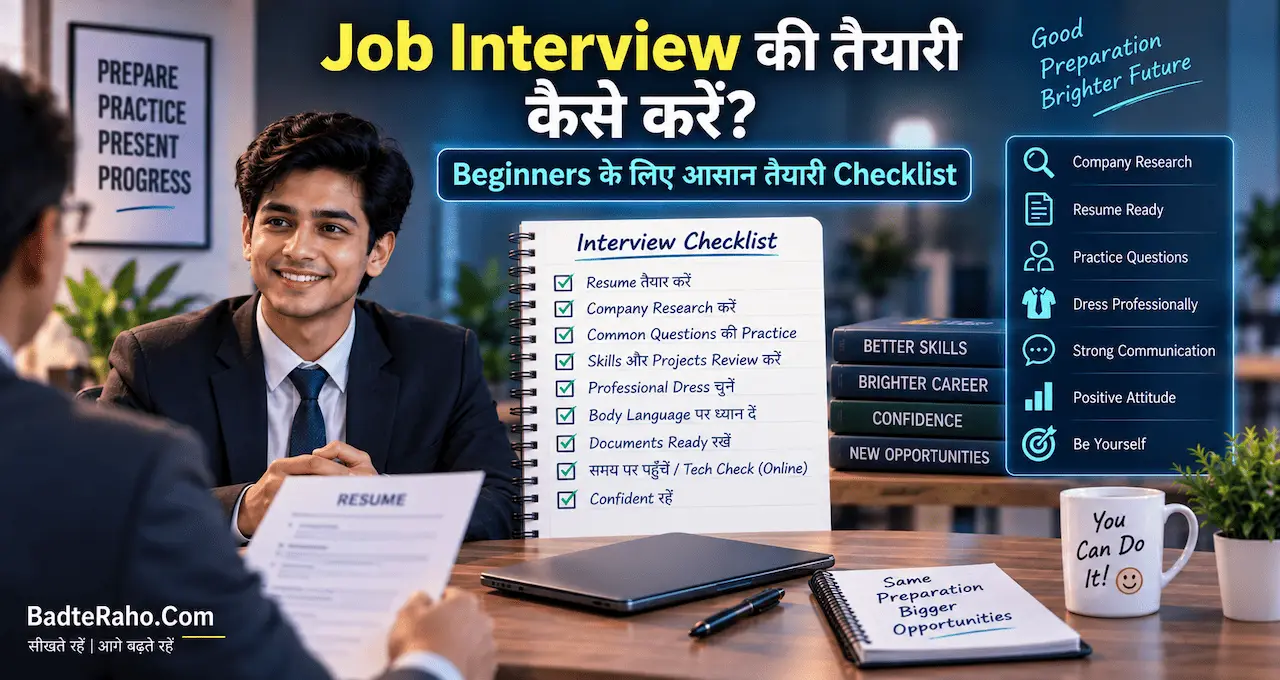
Final Job Interview Checklist
Interview से पहले एक बार यह checklist देखें:
- Job Description पढ़ी?
- Company का business समझा?
- Resume की important lines explain कर सकते हैं?
- Tell Me About Yourself practice किया?
- Genuine STAR examples तैयार हैं?
- Role-specific basics revise किए?
- Salary expectation का broad idea है?
- Interviewer के लिए questions तैयार हैं?
- Documents या portfolio ready हैं?
- Online/offline logistics confirm हैं?
- कोई fake claim नहीं है?
अगर इनमें से ज्यादातर points clear हैं, तो preparation काफी structured है।
आख़िर में एक छोटी सी बात
Job Interview में goal हर सवाल का perfect answer देना नहीं है।
Interviewer यह समझना चाहता है कि आप role के लिए कितने relevant हैं, अपने काम को कितनी clarity से explain कर सकते हैं और unfamiliar situation में कैसे communicate करते हैं।
इसलिए 100 answers याद करने की जगह Job Description समझें, company के बारे में basic research करें, resume की हर important line के लिए तैयार रहें और अपने real projects या experiences से examples निकालें।
AI का इस्तेमाल mock interviewer और answer reviewer की तरह करें—fake experience बनाने के लिए नहीं।
Interview अच्छा न भी जाए तो उसे waste मत मानें। पूछे गए questions note करें, जहाँ अटके वहाँ सुधार करें और अगली interview preparation उसी data के आधार पर करें।
हर interview सिर्फ job पाने का chance नहीं होता। वह आपको यह भी दिखाता है कि अगली बार बेहतर candidate बनने के लिए कहाँ काम करना है।
आपके लिए Job Interview का सबसे मुश्किल हिस्सा क्या रहता है—Tell Me About Yourself, technical questions, salary discussion या confidence? अपना experience, feedback या interview से जुड़ा कोई सवाल comment में share कर सकते हैं।