

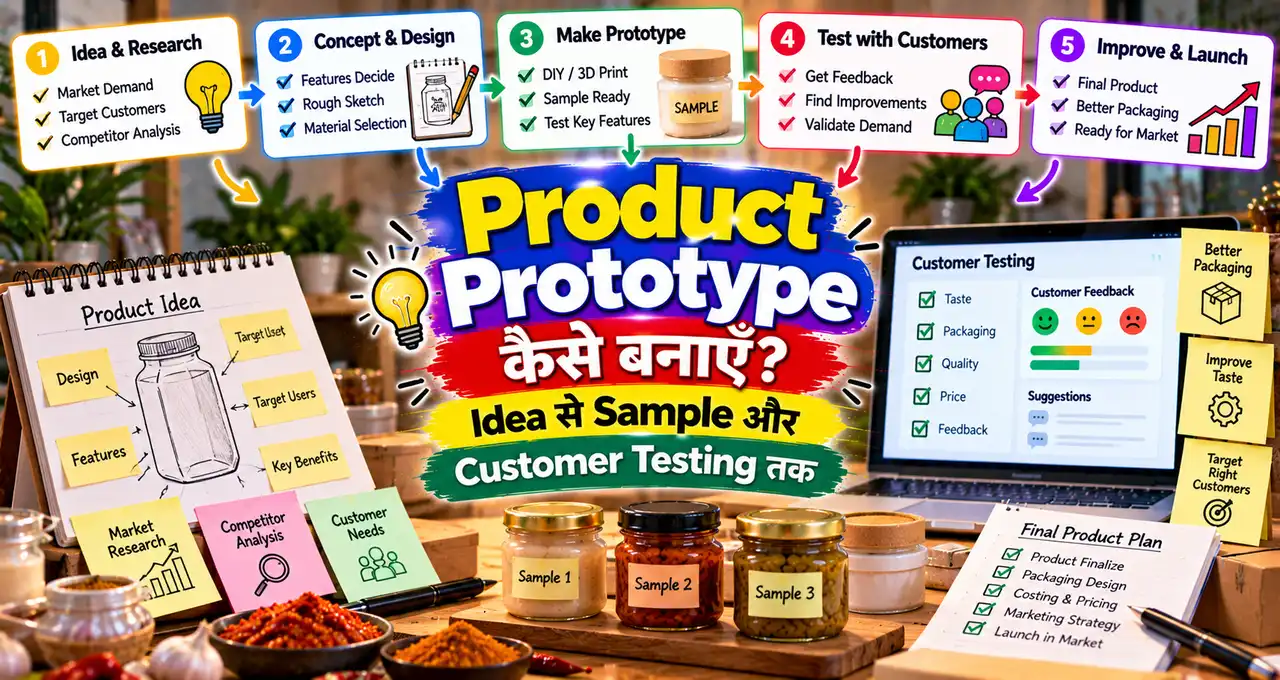

Business idea अच्छा लगना और customer के लिए useful product बनना दो अलग बातें हैं; prototype इन दोनों के बीच का practical test है, क्योंकि इससे आप full investment से पहले product का sample बनाकर देख सकते हैं कि design, use, price और customer response वास्तव में काम कर रहे हैं या नहीं।
Prototype हमेशा expensive factory sample नहीं होता। कई ideas paper sketch, cardboard model, digital mockup, handmade sample या basic functional version से test किए जा सकते हैं। Goal perfect product बनाना नहीं, सबसे important assumptions जल्दी check करना है।
इस guide में idea से prototype, customer testing, feedback और next version तक पूरा simple workflow समझेंगे।
इस लेख में आप क्या सीखेंगे?
- Prototype का सही मतलब
- Low-cost sample बनाना
- Testing questions तैयार करना
- Customer feedback लेना
- Mistakes जल्दी पकड़ना
- Next version decide करना
Product Prototype क्या होता है?
Prototype किसी product idea का test version होता है। यह final commercial product से simpler, cheaper या incomplete हो सकता है, लेकिन इसका purpose specific question का answer देना होता है।
उदाहरण:
अगर idea reusable lunch box है, तो पहला prototype सिर्फ़ shape, compartments और lid opening test कर सकता है। उसे final color, branding और premium packaging की जरूरत नहीं।
अगर idea mobile app है, तो prototype clickable screens हो सकते हैं। Backend पूरी तरह build होना जरूरी नहीं।
अगर idea handmade product है, तो एक sample actual material से बनाकर size, finish और customer response test किया जा सकता है।
Business की basic planning समझनी हो तो Business शुरू करने के 10 practical steps prototype से पहले useful foundation देते हैं।
Prototype और Final Product में क्या Difference है?
Prototype का goal learning है। Final product का goal reliable customer delivery है।
| Point | Prototype | Final Product |
|---|---|---|
| Purpose | Idea test करना | Customer को sell/deliver करना |
| Finish | Basic हो सकती है | Consistent होनी चाहिए |
| Quantity | 1–few samples | Repeatable production |
| Cost | Learning-focused | Margin-focused |
| Feedback | Change expected | Controlled improvement |
पहले prototype को final product जैसा दिखाने पर बहुत समय और पैसा खर्च करना common mistake है।
सबसे पहले कौन-सी Assumption Test करनी है?
Prototype बनाने से पहले एक sentence लिखें:
“इस prototype से मुझे क्या सीखना है?”
Possible questions:
- क्या product हाथ में comfortable है?
- क्या customer size समझ पा रहा है?
- क्या lid properly close होती है?
- क्या packaging transport में survive करती है?
- क्या user बिना explanation product use कर सकता है?
- क्या customer इस problem को important मानता है?
- क्या price range realistic लगती है?
एक prototype में 10 assumptions test करने की कोशिश न करें। पहले सबसे risky assumption चुनें।
Prototype के 5 Practical Types
Paper Prototype
Packaging layout, app screen, menu, instruction card या service flow paper पर test किया जा सकता है। Cost बहुत कम रहती है।
Visual Mockup
Product कैसा दिखेगा, यह digital design से दिखाया जा सकता है। यह appearance test करता है, functionality नहीं।
Handmade Sample
Food packaging, craft, clothing accessory, stationery, decor या utility product का basic physical sample बनाया जा सकता है।
Functional Prototype
यह product की मुख्य functionality test करता है। Finish rough हो सकती है, लेकिन core mechanism काम करना चाहिए।
Small Batch
5–20 units का controlled batch बनाकर production consistency, packaging, delivery और paid demand test की जा सकती है। Quantity business पर depend करेगी।
AI से idea से first customer तक planning समझनी हो तो AI की मदद से business शुरू करने की guide useful है।
Step 1: Problem को One-Line में लिखें
Product से पहले problem define करें।
Weak statement:
“मैं नया bottle design बनाना चाहता हूँ।”
Better statement:
“Office commute करने वाले users के लिए ऐसी bottle चाहिए जो bag में कम space ले और leak risk कम करे।”
अब prototype का purpose clearer है। आप looks के साथ size और leakage-related design test करेंगे।
Step 2: Must-Have Features चुनें
Features को तीन columns में बाँटें:
- Must Have: Core problem solve करने के लिए जरूरी.
- Useful Later: अच्छा है, लेकिन first test में जरूरी नहीं.
- Decoration: Branding, premium finish या cosmetic additions.
अगर first prototype में हर feature डालेंगे तो learning expensive हो जाएगी।
Step 3: Prototype Budget तय करें
Prototype budget final production budget नहीं है। इसका goal learning खरीदना है।
मान लीजिए final product बनाने के लिए mold, bulk material और packaging मिलाकर बड़ा investment चाहिए। पहले ₹500–₹2,000 के rough mockups से dimensions और user reaction test करना ज्यादा sensible हो सकता है—यह सिर्फ़ illustrative example है, हर product का actual cost अलग होगा।
Budget में लिखें:
- Material.
- Tools.
- Printing.
- Sample packaging.
- Transport.
- Testing cost.
Business cost planning में AI के uses समझने के लिए AI से हिसाब-किताब manage करने की guide भी relevant है।
Step 4: First Sample बनाएं
अब prototype बनाएं, लेकिन perfection chase न करें।
Physical product के लिए:
- Basic dimensions fix करें.
- Available material use करें.
- One core function test करें.
- Version number लिखें: V1.
- Photos लें.
- Known problems note करें.
Digital product के लिए screens या workflow sequence test किया जा सकता है। Service business में prototype एक sample deliverable भी हो सकता है—जैसे one-page social media plan या trial consultation flow।
Step 5: खुद Test करके Obvious Problems निकालें
Customer को दिखाने से पहले खुद basic test करें।
Checklist:
- Product intended काम करता है?
- कोई obvious safety issue है?
- Size practical है?
- Use instructions clear हैं?
- Packaging basic handling survive करती है?
- Photo और actual product match करते हैं?
Customer का समय ऐसे defect पर waste न करें जो आप पहले ही देख सकते हैं।
Step 6: सही Test Customers कैसे चुनें?
Feedback उन्हीं लोगों से लें जो actual target customer जैसे हों।
अगर school product है तो relevant parents/teachers। अगर kitchen product है तो regular users। अगर B2B product है तो retailer या business buyer।
Friends useful हैं, लेकिन सिर्फ़ friends का “बहुत अच्छा है” feedback demand proof नहीं है।
Test group छोटा हो तो भी useful हो सकता है, बशर्ते उसमें 5–10 ऐसे लोग हों जो target customer के करीब हों। अलग-अलग testers के feedback में repeated problem दिखे, तभी उसे priority change मानें।
Small-city या local demand समझने के लिए local demand देखकर business idea चुनने की guide भी useful context देती है।
Customer Testing में कौन-से Questions पूछें?
Leading questions avoid करें।
Weak:
“आपको यह अच्छा लगा ना?”
Better:
- पहली नज़र में आपको यह product किस काम का लगा?
- इसे use करते समय कहाँ confusion हुआ?
- कौन-सी चीज़ सबसे useful लगी?
- कौन-सी चीज़ unnecessary लगी?
- आप इसमें क्या बदलते?
- आप अभी कौन-सा alternative use करते हैं?
- इस product को खरीदने से पहले आपको कौन-सी information चाहिए?
- किस condition में आप इसे नहीं खरीदेंगे?
Price testing में “क्या ₹500 ठीक है?” की बजाय multiple options या willingness range explore करना ज्यादा useful हो सकता है।
Customer को Prototype कैसे दिखाएँ?
पहले product explain करके answer मत बताएं। देखें user खुद कितना समझता है।
Simple sequence:
Prototype दिखाएँ
↓
User को explore करने दें
↓
Observe करें
↓
Questions पूछें
↓
Notes लें
अगर हर user को long explanation चाहिए, तो product design या instructions में problem हो सकती है।
Feedback को कैसे Record करें?
एक simple sheet बनाएं:
| Tester | Problem | Liked | Confusing | Suggested Change | Priority |
|---|---|---|---|---|---|
| A | Lid hard | Size | Opening | Grip improve | High |
| B | None | Shape | Label | Bigger text | Medium |
एक person की preference को universal rule न बनाएं। Repeated pattern ज्यादा useful signal है।
Feedback में कौन-सी बात तुरंत बदलनी चाहिए?
हर suggestion implement करना जरूरी नहीं है। Feedback को तीन buckets में रखें:
Critical: Product काम नहीं कर रहा, safety issue, major confusion.
Repeated: कई testers same problem बता रहे हैं.
Personal Preference: Color या style जैसी individual पसंद.
Critical और repeated issues पहले fix करें। Personal preferences को data के साथ देख सकते हैं।
Step 7: Version 2 बनाएं और दोबारा Test करें
Prototype cycle linear नहीं, iterative होता है:
Idea
↓
V1 Prototype
↓
Test
↓
Feedback
↓
V2 Prototype
↓
Retest
Version notes रखें। इससे पता चलता है कि कौन-सा change किस feedback पर किया गया।
Free Feedback और Paid Demand में Difference
“मैं खरीदूँगा” और actual payment अलग signals हैं।
Prototype testing के बाद small paid test useful हो सकता है, अगर product sell करने के लिए legally और practically ready है।
Paid test के समय:
- Price clear रखें.
- Prototype/final status honest रखें.
- Delivery time बताएं.
- Return/replacement rule clear रखें.
- Limited batch सच में limited हो तो ही बताएं.
Sales process improve करने के लिए small business sales guide useful next step हो सकती है।
Prototype Test का Example
मान लीजिए आप compact desk organizer बनाना चाहते हैं।
Assumption: Work-from-home users को phone, pen और charging cable एक जगह रखने की जरूरत है।
V1: Cardboard mockup.
Test: 5 target users के desks पर 10 मिनट use.
Observed: Phone slot useful, लेकिन cable hole छोटा.
Feedback: 3 users ने wider cable opening माँगी.
V2: Wider slot + slightly deeper phone stand.
Next Test: 3D-printed/basic material sample.
इस example में expensive tooling से पहले core dimensions test हो गए।
Prototype बनाते समय AI कहाँ Help कर सकता है?
AI useful हो सकता है:
- Feature prioritization questions.
- Customer interview script.
- Test checklist.
- Feedback categories.
- Version-change log.
- Product description draft.
- Competitor comparison framework.
लेकिन AI physical strength, food safety, electrical safety, legal compliance या actual customer demand को सिर्फ़ text से verify नहीं कर सकता।
AI से small business marketing समझना हो तो AI small business marketing guide आगे useful होगी।
7-Day Prototype Action Plan
Day 1
Problem statement और target customer लिखें.
Day 2
Must-have features और सबसे risky assumption चुनें.
Day 3
Low-cost V1 prototype बनाएं.
Day 4
Self-test करें और obvious problems fix करें.
Day 5
3–5 relevant testers से observation-based feedback लें.
Day 6
Feedback categorize करें: critical, repeated, preference.
Day 7
V2 changes decide करें और next test define करें.
यह timeline हर product पर fit नहीं होगी, लेकिन fast learning mindset समझने के लिए useful framework है।
Common Prototype Mistakes
- पहले sample को final product बनाना.
- Logo और packaging पर core function से पहले खर्च करना.
- Friends की तारीफ को demand proof मानना.
- Leading questions पूछना.
- एक tester की preference पर पूरा design बदलना.
- Version notes न रखना.
- Paid test से पहले cost calculation ignore करना.
- Product legally/safely ready न होने पर sale शुरू करना.
Prototype से Production कब जाएँ?
Production तब consider करें जब core function stable हो, repeated feedback major issue न दिखा रहा हो, expected cost समझ आ गई हो और small demand signal मौजूद हो।
फिर भी bulk order से पहले supplier reliability, quality control, packaging, inventory और cash flow check करें।
Prototype pass होना business success guarantee नहीं है। यह सिर्फ़ uncertainty कम करता है।
आख़िर में एक छोटी सी बात
Prototype का काम आपके idea को prove करना नहीं, उसे challenge करना है। जितनी जल्दी weak assumption सामने आएगी, उतना कम पैसा गलत direction में लगेगा।
Perfect sample से शुरुआत करने की जरूरत नहीं है। सबसे risky question चुनें, simplest version बनाएं और real target users से observe करके सीखें।
आप किस product idea का prototype बनाना चाहते हैं—physical product, food item, app या service? Comments में idea बताइए, ताकि उसके लिए low-cost testing approach discuss की जा सके।