







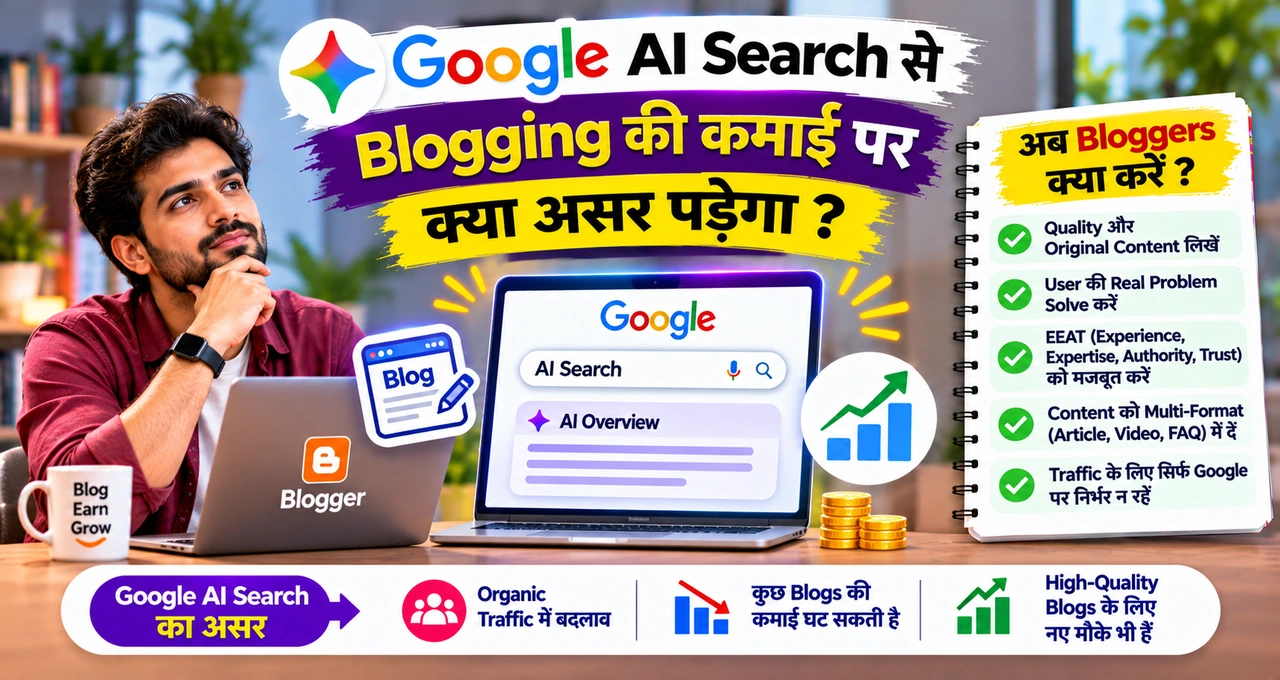


Search Console में impressions बढ़ रहे हैं, लेकिन blog की कमाई वहीं अटकी है। ऐसे में Google AI Search से blogging पर पड़ने वाला असर समझना और सही अगला कदम चुनना ज़रूरी है।
Google पर ज़्यादा searches होने का मतलब यह नहीं है कि हर blog को ज़्यादा visitors मिलेंगे। AI answer, website click और AdSense earning के बीच कई अलग पड़ाव हैं।
Alphabet के नए results इस बदलाव को समझने का मौका देते हैं। इस guide में हम खबर से आगे बढ़कर आपके traffic audit, content updates और अगले 30 दिनों का practical plan बनाएँगे।
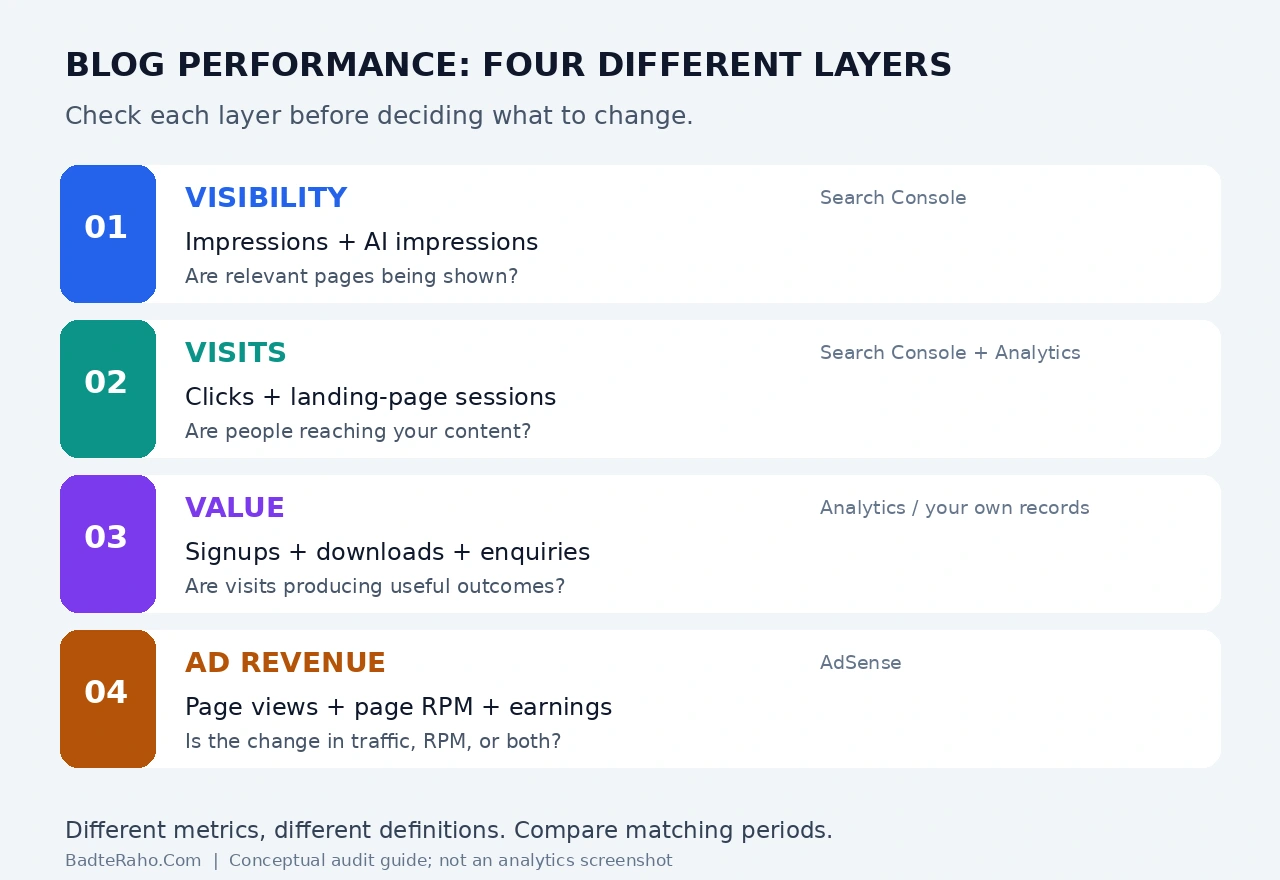
पहले यह पहचानें कि आपके blog में समस्या visibility की है, clicks की है या कमाई की है।
इस लेख में आप क्या सीखेंगे?
- नए आंकड़ों का मतलब
- Traffic और earning audit
- AI reporting की सीमाएँ
- बेहतर content की दिशा
- Audience बढ़ाने के रास्ते
- अगले महीने का plan
Google की growth धीमी हुई, लेकिन इसका सही मतलब क्या है?
Alphabet ने 28 अक्टूबर 2026 को तीसरी तिमाही के results जारी किए। Official financial release के मुताबिक, Google Search & other revenue सालाना 12% बढ़ा। कंपनी ने Search queries की सालाना growth को पिछले पाँच वर्षों में सबसे तेज़ बताया।
पिछली तिमाही में Search revenue की सालाना growth 17% थी। यानी growth की रफ्तार धीमी हुई है; revenue में सालाना गिरावट नहीं आई है।
Earnings call में management ने AI Mode की comparatively कम monetization को भी एक वजह बताया। लेकिन वह अकेली वजह नहीं थी। Foreign exchange और कुछ advertising sectors के बदलावों का भी असर था।
यहाँ तीन अलग बातें हैं: लोग कितना search कर रहे हैं, Google उन searches से कितना advertising revenue बना रहा है और publishers को कितने visitors मिल रहे हैं। इन्हें एक ही आंकड़ा मानना गलत होगा।
Google की Search ad growth, आपके blog की AdSense growth का report card नहीं है। इन results से सभी bloggers के traffic या earning में किसी एक जैसी गिरावट का प्रतिशत नहीं निकलता।
Google AI Search से blogging की कमाई कहाँ प्रभावित हो सकती है?
मान लीजिए कोई व्यक्ति search करता है, “CTR क्या है?” अगर उसे search page पर पर्याप्त जवाब मिल गया, तो website खोलने की ज़रूरत कम हो सकती है। यह एक संभावित user behaviour है, हर query का तय परिणाम नहीं है।
अब दूसरी query देखें: “मेरे Hindi blog का CTR कम क्यों हो रहा है?” यहाँ reader को अपना data समझना है। वह comparison, examples और troubleshooting के लिए detailed article खोल सकता है।
इसलिए जोखिम सिर्फ़ AI से नहीं, उस content से भी जुड़ा है जिसका पूरा काम एक सामान्य छोटा जवाब देना है। दूसरी तरफ, original research और उपयोगी resources reader को website पर आने की ठोस वजह देते हैं।
AI Overviews और AI Mode को भी बिल्कुल एक जैसा अनुभव न मानें। पहला search results में AI summary दे सकता है, जबकि AI Mode बातचीत के ज़रिए आगे खोजने का अनुभव देता है। इनके बारे में बुनियादी context के लिए AI से बदलते Google Search को समझना मददगार रहेगा।
आपका सवाल होना चाहिए: reader मेरे article पर आकर ऐसा क्या कर पाएगा जो केवल summary पढ़कर नहीं कर सकता?
पहला action: Search Console में सही तुलना करें
पूरी website का total देखकर तुरंत content strategy न बदलें। पहले Search Console में सही property खोलें। Search results performance में पिछले 28 पूरे दिनों की तुलना उससे पहले के 28 दिनों से करें।
Seasonal blog है, तो उपलब्ध होने पर पिछले साल की मिलती-जुलती अवधि भी देखें। किसी त्योहार के बाद traffic घटना और evergreen tutorial का traffic घटना अलग स्थितियाँ हैं।
- Clicks, impressions, average CTR और average position साथ चालू करें।
- Pages में जाकर clicks खोने वाले URLs की छोटी list बनाएँ।
- हर URL की queries देखें; केवल पूरी site की average position पर निर्भर न रहें।
- Country और device filters को comparison में एक जैसा रखें।
- पिछले updates, outages और content changes की तारीखें लिखें।
उदाहरण के लिए, mobile impressions बढ़े हों और desktop clicks घटे हों, तो total CTR तस्वीर अधूरी दिखा सकता है। Brand name वाली queries को generic queries से अलग देखने पर भी बेहतर context मिलता है।
ये patterns शुरुआती diagnosis हैं, पक्का कारण नहीं:
| क्या दिख रहा है? | पहले क्या जाँचें? |
|---|---|
| Impressions बढ़े, clicks घटे | Query mix, CTR, search layout और country/device mix |
| Clicks और position दोनों गिरे | Competition, content changes और technical issues |
| Impressions घटे, position लगभग स्थिर | Demand, seasonality और query coverage |
| Traffic स्थिर, revenue घटा | Page RPM, audience mix और ad delivery |
किसी एक search का screenshot पूरी audience का प्रतिनिधि नहीं है। Location, device और समय से results बदल सकते हैं। Screenshot को observation मानें, traffic loss का अंतिम प्रमाण नहीं।
AI visibility की अलग report देखें, लेकिन उसकी सीमा समझें
“Search Console में AI visibility का कोई अलग report नहीं मिलता” कहना अब सही नहीं होगा। Google की Generative AI performance report AI Overviews और AI Mode में impressions देखने देती है।
इसमें pages, countries, devices और dates के ज़रिए visibility समझी जा सकती है। Google के मुताबिक, अगस्त 2026 के अंत तक इन insights का worldwide rollout हो गया था।
Report नहीं दिख रही है, तो तुरंत penalty न मानें। पर्याप्त AI impressions न मिलना या generative AI inclusion settings भी वजह हो सकती हैं।
फिर भी यह AI से आए clicks और कमाई का पूरा अलग हिसाब नहीं है। Documented report का मुख्य metric impressions है। AI visibility दिखना, visitor का आना और visitor का subscribe करना अलग घटनाएँ हैं।
AI impressions को overall impressions से घटाकर “traditional search के exact clicks” न निकालें। अलग aggregation और reporting definitions ऐसा सीधा हिसाब गलत बना सकते हैं।
इसके बजाय matching pages और dates के trends के साथ देखें। GA4 में landing pages, engagement और अपने चुने हुए key events जोड़ें। Google Search से आया session हमेशा स्पष्ट नहीं बताता कि click AI Mode से था या दूसरी search surface से।
Search Console और Analytics में timezone, consent, tracking और processing के फर्क भी होते हैं। छोटे sample या एक-दो दिनों के data से बड़े फैसले न लें।
दूसरा action: Traffic से अलग AdSense earnings का audit करें
Search Console के clicks, Analytics के sessions और AdSense के page views अलग metrics हैं। इन्हें एक ही संख्या मानकर calculation करने से गलत diagnosis मिलेगा।
AdSense में समान अवधि के page views, estimated earnings और page RPM देखें। Google की page RPM definition के अनुसार, यह हर 1,000 page views पर estimated earnings का अनुपात है।
सरल formula: Page RPM = estimated earnings ÷ page views × 1,000.
एक काल्पनिक उदाहरण लें। पहले 50,000 page views पर ₹100 page RPM था। Estimated earning ₹5,000 हुई।
अगली अवधि में 40,000 page views और वही RPM रहे, तो earning ₹4,000 होगी। लेकिन 50,000 views रहते हुए RPM ₹80 हो जाए, तब भी earning ₹4,000 होगी।
नतीजा एक जैसा है, वजह अलग है। पहले मामले में visitors और content discovery पर काम चाहिए। दूसरे में audience geography, devices, content mix, advertiser demand और ad delivery देखने होंगे।
ये रकम केवल calculation समझाने के लिए हैं; किसी blog की सामान्य या guaranteed earning नहीं हैं। Finalized earnings में adjustments भी संभव हैं।
कमाई घटते ही ads बढ़ाना भी सही पहला कदम नहीं है। अगर पढ़ना मुश्किल हो गया, तो उपयोगी visitors और repeat visits दोनों प्रभावित हो सकते हैं।
तीसरा action: ऐसे articles बनाएँ जिनके लिए reader website खोले
Google AI Search से blogging का action plan केवल लंबे articles लिखना नहीं है। बेहतर सवाल है: आपकी जानकारी कहाँ से आई और reader उसे किस काम में लगा सकता है?
Original evidence को जगह दें
Technology blog में अपने वास्तविक screenshots, test conditions और observed limitations जोड़ें। DIY blog में material quantity, अपने process photos और असफल attempt से मिली सीख उपयोगी हो सकते हैं।
Original research के लिए बहुत बड़ा survey ज़रूरी नहीं है। सीमित sample का छोटा experiment भी उपयोगी है, अगर method और limitations स्पष्ट हों। दूसरों के data को अपना experiment बताकर न लिखें।
Definition से implementation तक जाएँ
“Newsletter क्या है?” के साथ signup form placement, welcome email example और weekly publishing checklist दें। “Excel formula क्या है?” के बजाय practice file और common error correction जोड़ें।
Reader को एक काम पूरा कराएँ। हर section में नया keyword जोड़ने से ज़्यादा उपयोगी है कि उसकी अगली practical अड़चन दूर हो।
AI को editor और assistant की तरह इस्तेमाल करें
AI से reader questions, missing steps और unclear explanations निकलवा सकते हैं। लेकिन screenshots, facts और अनुभव का दावा खुद verify करें। इस काम के लिए blogging research और editing के AI tools उपयोगी starting points हैं।
Content planning और पुराने pages का audit करना हो, तो blogging में AI के practical uses अपनाएँ। सिर्फ़ अधिक articles बनाना अपने आप में बेहतर strategy नहीं बनता।
चौथा action: पुराने content को priority के हिसाब से सुधारें
सभी पुराने articles को एक साथ rewrite करने की ज़रूरत नहीं है। पहले पाँच ऐसे pages चुनें जिनकी demand मौजूद है और जिनमें सुधार की साफ गुंजाइश है।
Priority तय करते समय चार सवाल पूछें: क्या relevant impressions मिल रहे हैं, क्या clicks घटे हैं, क्या content पुराना है और क्या यह audience के लिए अहम है?
हर चुने page पर यह छोटी checklist लगाएँ:
- Title उस सवाल का वादा करता है जिसे article वास्तव में पूरा करता है?
- Opening जल्दी बताती है कि reader को क्या मिलेगा?
- Steps वर्तमान interface और नियमों से मेल खाते हैं?
- कोई original example, resource या useful comparison गायब है?
- अगला relevant article internal link से मिल रहा है?
सिर्फ़ CTR देखकर title बार-बार न बदलें। Position या query mix बदला हो, तो नया title अकेला समस्या हल नहीं करेगा।
जिस चीज़ को बदला है, उसकी तारीख और वजह लिखें। Title, पूरा body, ads और layout साथ बदल देंगे, तो बाद में असर समझना मुश्किल होगा।
Google की current AI Search optimization guidance useful original content और foundational SEO पर ज़ोर देती है। किसी paid “secret AI ranking hack” को growth का प्रमाण न मानें।
पाँचवाँ action: Audience और income के दूसरे रास्ते बनाएँ
Organic Search पर काम जारी रखें, साथ में reader को वापस आने की वजह दें। शुरुआत में हर platform संभालने के बजाय एक additional channel चुनना व्यावहारिक रहेगा।
Visual craft या decor blog के लिए Pinterest test करें। Software tutorials में YouTube demonstrations मदद कर सकते हैं। किसी niche की नियमित updates हों, तो email newsletter बेहतर fit हो सकता है।
Pinterest audience-building की case study से ideas लें, लेकिन किसी दूसरे creator के numbers को अपना expected result न मानें। Niche और execution के फर्क मायने रखते हैं।
Signup के बदले उसी topic की checklist, worksheet या useful update दें। केवल subscribers की संख्या नहीं, meaningful clicks और repeat visits भी देखें। Campaign links में consistent UTM naming रखें।
Income diversification भी audience की ज़रूरत से शुरू होनी चाहिए। Relevant affiliate recommendation, useful template या service एक विकल्प हो सकता है। Affiliate relation साफ बताएँ और बिना इस्तेमाल किए personal review का दावा न करें।
हर blog को course बेचना ज़रूरी नहीं है। पहले देखें कि reader किस समस्या के समाधान के लिए आपकी website पर लौटता है।
अगले 30 दिनों में bloggers का action plan क्या हो?
इस plan का मकसद 30 दिनों में traffic recovery की guarantee देना नहीं है। मकसद है baseline बनाना, उपयोगी बदलाव करना और अगले फैसले के लिए बेहतर evidence जुटाना।
| अवधि | काम | क्या तैयार होगा? |
|---|---|---|
| दिन 1–3 | Search Console, GA4 और AdSense की matching-period reports देखें | पाँच priority pages और शुरुआती diagnosis |
| दिन 4–10 | दो pages में outdated steps और missing practical value सुधारें | दो verified updates और change log |
| दिन 11–17 | एक original tutorial या resource बनाएँ | अपना example, screenshot या reusable file |
| दिन 18–24 | एक additional audience channel test करें | एक focused campaign और tracking |
| दिन 25–30 | Early signals और implementation quality जाँचें | अगले महीने की तीन priorities |
Baseline में date range, page URL, clicks, impressions, CTR और position रखें। साथ में AI impressions, page views, page RPM, revenue और meaningful conversions उपलब्ध हों तो जोड़ें।
Data उपलब्ध नहीं है, तो खाली जगह को अनुमान से न भरें। किसी महीने में traffic बहुत कम हो, तो longer period का context लें।
आज शुरुआत करनी है, तो report export करें और केवल एक priority article चुनें। उसका सबसे बड़ा missing practical step पूरा करना दस generic posts publish करने से बेहतर प्रयोग हो सकता है।
आख़िर में एक छोटी सी बात
Google AI Search से blogging की कमाई पर असर हर website में एक जैसा नहीं होगा। फर्क आपके topics, audience और content की उपयोगिता से पड़ेगा।
इसलिए headline देखकर blog बंद करने या publishing बढ़ाने का फैसला न लें। पहले अपना data पढ़ें, फिर reader को लौटने की ठोस वजह दें।
अगला सही कदम शायद नया article नहीं, किसी पुराने page में अपना बेहतर example जोड़ना हो। छोटा बदलाव भी उपयोगी सीख दे सकता है।
आपके blog में अभी impressions, clicks या earning में कौन-सा बदलाव सबसे ज़्यादा दिख रहा है? अपना अनुभव बताएँ या यह guide उपयोगी लगी हो तो comment में अपनी राय दें।