













एक छोटे कारोबारी के पास अक्सर बड़ी company जैसी अलग marketing, sales, customer support और content team नहीं होती।
सुबह supplier से बात करनी है, दिन में customers संभालने हैं, WhatsApp messages का जवाब देना है, शाम को हिसाब देखना है और बीच में social media भी manage करना है।
ऐसी situation में AI का सबसे practical फायदा “insaan ki jagah lena” नहीं है।
फायदा यह है कि जो छोटे-छोटे काम आपका समय खा रहे हैं, उन्हें जल्दी और बेहतर तरीके से करने में AI मदद कर सकता है।
आइए ऐसे 10 practical uses समझते हैं।
इस लेख में आप क्या सीखेंगे?
- AI कहाँ काम आएगा
- Customer Replies जल्दी बनाना
- Marketing Content तैयार करना
- Sales Follow-up सुधारना
- Product Description लिखना
- Business Data समझना
- खर्च और समय बचाना
- AI की Limit समझना
छोटे Business को AI की जरूरत क्यों पड़ सकती है?
बड़ी company किसी एक काम के लिए specialist hire कर सकती है।
छोटे business में अक्सर owner ही कई roles निभाता है।
वही customer से बात करता है।
वही product खरीदता है।
वही pricing सोचता है।
वही WhatsApp status लगाता है।
वही payment check करता है।
वही complaints संभालता है।
इसलिए छोटे business में AI की value सिर्फ़ “advanced technology” होने में नहीं है।
Value है कम resources में काम को व्यवस्थित करने में।
लेकिन AI तभी useful होगा जब business owner को clear हो कि problem क्या है।
अगर customer ही नहीं आ रहे, तो AI से random Instagram captions बनवाने से business automatically नहीं बढ़ेगा।
पहले problem identify करें, फिर AI को सही जगह लगाएँ।
Business की basic foundation समझनी हो तो Business कैसे शुरू करें? Business के लिए 10 जरूरी कदम और Practical Roadmap useful रहेंगे।
1. Customer Messages का जल्दी Reply तैयार करें
छोटे businesses में बहुत समय repetitive enquiries में चला जाता है।
जैसे:
“Price क्या है?”
“Delivery होगी?”
“Shop कितने बजे बंद होती है?”
“Custom order लेते हैं?”
“Payment कैसे करना है?”
हर बार same जवाब manually type करने की जरूरत नहीं।
AI की मदद से common questions के ready replies बनाए जा सकते हैं।
Example prompt:
मेरी ladies boutique है। Customers WhatsApp पर price, size, delivery और exchange के बारे में बार-बार पूछते हैं। इन चार topics के लिए short, polite और simple Hindi-English replies बनाओ। Tone friendly रखें और ऐसी policy invent मत करना जो मैंने नहीं बताई।
इसके बाद अपनी actual policy के हिसाब से replies edit करें और WhatsApp quick replies या notes में save कर लें।
AI यहाँ customer से आपकी जगह relationship नहीं बना रहा है।
वह सिर्फ़ repetitive typing कम कर रहा है।
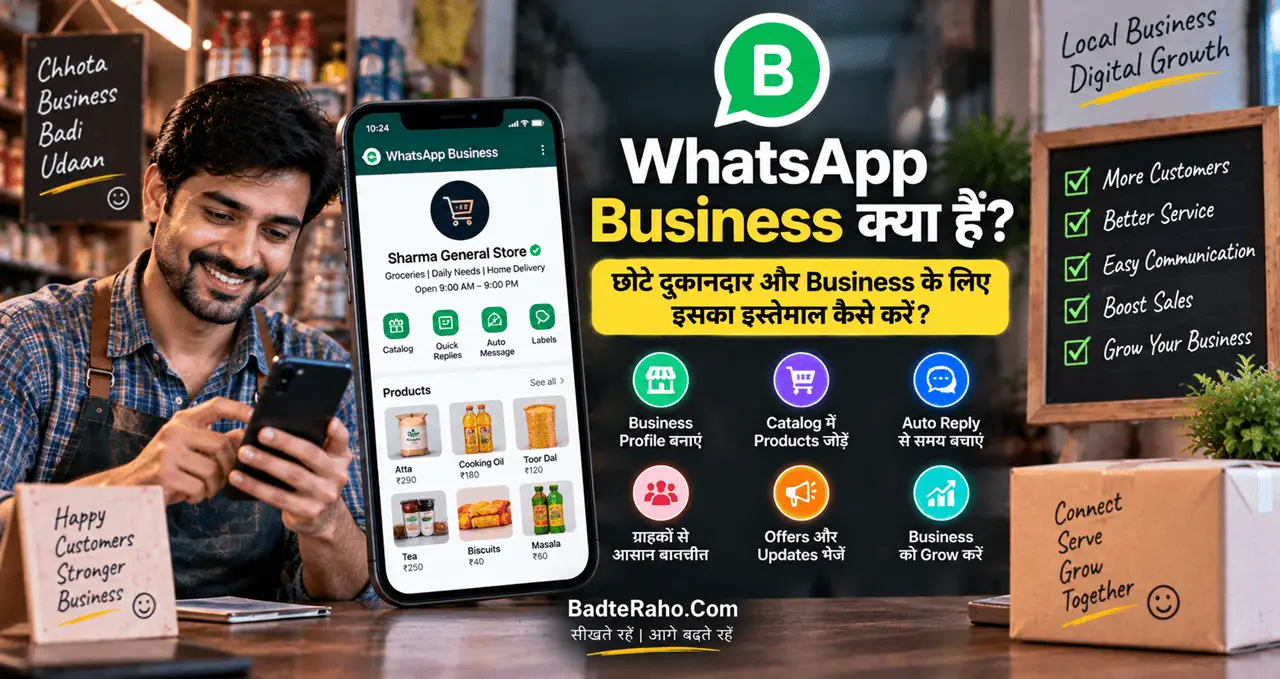
2. WhatsApp और Social Media Content बनाएं
बहुत से छोटे business owners जानते हैं कि social media पर active रहना चाहिए, लेकिन रोज़ सोचने में समय चला जाता है:
आज क्या post करें?
Caption क्या हो?
Offer कैसे लिखें?
Festival post कैसी हो?
AI आपको content ideas का starting point दे सकता है।
मान लीजिए आपकी bakery है।
आप पूछ सकते हैं:
मेरी home bakery के लिए 7 दिनों का WhatsApp Status plan बनाओ। इसमें birthday cakes, eggless cakes, custom orders, customer feedback और weekend orders को naturally cover करो। हर दिन के लिए एक short status idea और caption दो। Fake discount या fake urgency मत बनाना।
आप final content को local language, prices और photos के हिसाब से personalize कर सकते हैं।
याद रखें—AI content बना सकता है, लेकिन आपके customer को आपसे क्या चाहिए, यह knowledge आपके पास ज्यादा होती है।
3. Product Description बेहतर लिखें
मान लीजिए आप handmade products, clothes, jewellery, food products या home décor बेचते हैं।
Product photo अच्छी है लेकिन description सिर्फ़ इतना है:
“Beautiful handmade bag. Best quality.”
यह customer को decision लेने के लिए ज्यादा information नहीं देता।
AI आपकी raw details को clear description में बदल सकता है।
आप उसे बताएं:
Product क्या है.
Material क्या है.
Size क्या है.
किसके लिए useful है.
Care instructions क्या हैं.
क्या customisation available है.
Prompt:
नीचे दिए product details से WhatsApp catalogue के लिए 60–80 words की simple description लिखो। कोई feature invent मत करना। पहले product का use बताओ, फिर material और size, फिर care instruction।
Product Details: [अपनी जानकारी]
अगर product description useful होगी तो customer के repeated questions भी कम हो सकते हैं।
4. Sales Follow-up को व्यवस्थित करें
Customer ने पूछा:
“सोचकर बताऊँगी।”
फिर तीन दिन निकल गए।
छोटे business में बहुत सारी sales सिर्फ़ इसलिए miss हो सकती हैं क्योंकि follow-up नहीं हुआ।
AI follow-up message लिखने में मदद कर सकता है।
लेकिन follow-up और spam में फर्क रखें।
Example:
एक customer ने 3 दिन पहले handmade jewellery set का price पूछा था लेकिन order नहीं किया। उसके लिए एक short, polite WhatsApp follow-up लिखो। Pressure, fake scarcity और discount का झूठा claim मत करना।
Output कुछ ऐसा हो सकता है:
“Hi, आपने कुछ दिन पहले jewellery set के बारे में पूछा था। अगर size, colour या delivery को लेकर कोई question हो तो बताइए, मैं details share कर दूँगी।”
Simple.
No pressure.
No fake urgency.
Sales बढ़ाने के broader तरीकों के लिए Sales कैसे बढ़ाएं? छोटे Business के लिए 10 Practical तरीके और Customer Growth Guide भी देख सकते हैं।
5. Customer Feedback को समझें
मान लीजिए आपको एक महीने में 50 customer messages मिले।
कुछ लोग delivery से खुश हैं।
कुछ packing को लेकर शिकायत कर रहे हैं।
कुछ बार-बार same size की demand कर रहे हैं।
आप सारे messages पढ़ते हैं लेकिन कोई clear pattern नहीं निकाल पाते।
Personal information हटाकर feedback को AI से categories में organize करवाया जा सकता है।
Prompt:
नीचे दिए customer feedback को categories में organise करो: Product Quality, Delivery, Price, Packaging, Customer Service और Product Demand. फिर बताओ कि कौन-सी complaints बार-बार आ रही हैं। कोई conclusion ऐसा मत निकालना जो feedback में support नहीं होता।
Feedback: [Text]
इससे AI decision नहीं ले रहा है।
वह scattered feedback को देखने लायक pattern में बदल रहा है।
Final business decision फिर भी आपको लेना है।
6. रोज़ के Repetitive Office Work में मदद लें
Small business में कई repetitive tasks होते हैं:
Email draft करना.
Meeting notes summarize करना.
Quotation wording तैयार करना.
Supplier messages लिखना.
Product list clean करना.
Basic spreadsheet data organise करना.
FAQ बनाना.
Training instructions बनाना.
अगर कोई काम रोज़ 20 minutes लेता है और AI की मदद से 5–10 minutes में हो सकता है, तो महीने में considerable time बच सकता है।
लेकिन यहाँ एक rule जरूरी है:
AI को confidential business data blindly paste न करें।
Customer phone numbers, passwords, bank information, Aadhaar, confidential contracts या sensitive company information share करने से पहले tool की privacy policy और business requirements समझें।
7. Business Ideas और Offers को Test करें
AI किसी business idea की success guarantee नहीं कर सकता।
लेकिन सोचने के लिए questions दे सकता है।
मान लीजिए आपके पास tailoring shop है और आप “monthly alteration package” शुरू करने का सोच रहे हैं।
AI से पूछ सकते हैं:
मेरे पास local tailoring shop है। मैं monthly clothing alteration package शुरू करने का सोच रहा हूँ। Idea को support करने के बजाय पहले इसकी weaknesses identify करो। मुझे 10 questions दो जिनका answer launch से पहले पता होना चाहिए—customer demand, pricing, capacity, delivery time और repeat usage को cover करो।
यह approach “AI, मेरा idea अच्छा है?” से बेहतर है।
क्योंकि दूसरा question अक्सर सिर्फ़ encouragement दिलाएगा।
पहला question business thinking improve करेगा।
अगर आप low-investment शुरुआत देख रहे हैं, तो कम पैसे में घर से Business कैसे शुरू करें? Beginners के लिए Practical Step-by-Step Guide भी useful है।
8. Pricing सोचने में AI से मदद लें—लेकिन Final Price खुद तय करें
AI market price automatically नहीं जानता, खासकर local business में।
लेकिन pricing का structure समझने में मदद कर सकता है।
मान लीजिए आप handmade candles बनाते हैं।
आप उसे बता सकते हैं:
Raw material cost.
Packaging.
Delivery.
Labour time.
Platform commission.
Desired margin.
फिर पूछें:
मेरे handmade candle product की pricing समझने में मदद करो। नीचे cost details दी गई हैं। पहले per-unit total cost calculate करने का structure बताओ, फिर ऐसे खर्च identify करो जिन्हें मैं भूल सकता हूँ। Final selling price decide मत करो क्योंकि local market data मेरे पास है।
Cost Details: [Details]
इससे cost thinking बेहतर हो सकती है।
लेकिन competitor pricing, customer willingness और local demand आपको ground reality से ही समझनी होगी।
9. Basic Business Data को आसान भाषा में समझें
Small business owner के पास data होता है, लेकिन हमेशा analysis skill नहीं होती।
Example:
January sales ₹80,000.
February ₹74,000.
March ₹95,000.
लेकिन इतना देखकर business decision नहीं बनता।
अगर product-wise sales, repeat customers और expenses का basic record है, तो AI से analysis के questions पूछ सकते हैं।
जैसे:
नीचे तीन महीने की sales data है। पहले साफ़ summary दो। फिर बताओ:
- कौन-सा product सबसे ज्यादा revenue ला रहा है
- किस product की sales गिर रही है
- कौन-से patterns data से साफ़ दिखाई देते हैं
- कौन-सी information missing है जिसकी वजह से strong conclusion नहीं निकाला जा सकता
Data: [Data]
Last line important है।
AI को यह भी कहना चाहिए कि क्या नहीं पता।
यही responsible analysis है।
10. Daily Business Planning में AI Use करें
छोटे business owner की सबसे बड़ी problem कई बार information नहीं, priorities होती हैं।
10 काम pending हैं।
लेकिन पहले क्या करें?
AI daily planning में help कर सकता है।
Example:
आज मेरे business के ये tasks pending हैं:
- 5 customer orders pack करने हैं
- 2 complaints का reply देना है
- supplier payment confirm करनी है
- Instagram post बनानी है
- stock list update करनी है
- कल की delivery plan करनी है
इन्हें urgency और business impact के हिसाब से organise करो। कोई task खुद से add मत करना। अगर priority decide करने के लिए information कम है तो question पूछो।
AI आपके लिए business नहीं चलाएगा।
लेकिन cluttered task list को clear order में बदल सकता है।
AI से छोटे Business की कमाई कैसे बढ़ सकती है?
यहाँ एक important distinction है।
AI सीधे आपको income नहीं देता।
वह ऐसे काम improve कर सकता है जिनका business income पर असर पड़ता है।
जैसे:
Customer को जल्दी reply मिला.
Follow-up नहीं भूले.
Product description clearer हुई.
Marketing regular हुई.
Customer feedback समझ आया.
Owner का repetitive काम कम हुआ.
Decision लेने के लिए data साफ़ हुआ.
इन improvements से sales या efficiency बेहतर हो सकती है।
लेकिन outcome business, product, market और execution पर depend करेगा।
इसलिए “AI use करो और income double करो” जैसी claim practical नहीं है।
AI से खर्च कैसे बच सकता है?
Small business में AI का value सिर्फ़ sales में नहीं, cost side पर भी हो सकता है।
Example:
हर simple caption के लिए बाहरी help लेने की जरूरत कम हो सकती है.
Basic draft जल्दी बन सकता है.
Repetitive admin work कम समय ले सकता है.
FAQ से customer support load कम हो सकता है.
Simple research faster हो सकती है.
लेकिन यहाँ भी boundary रखें।
AI को lawyer, accountant, designer, doctor या experienced professional का automatic replacement न मानें।
High-stakes काम में expert की जरूरत बनी रह सकती है।
AI छोटे Business में कहाँ Use नहीं करना चाहिए?
हर चीज automate करने की जरूरत नहीं।
Customer के साथ Sensitive Dispute
Angry customer को बिना review AI-generated reply भेजना situation खराब कर सकता है।
Legal या Tax Decision
AI से concept समझ सकते हैं, लेकिन important compliance decision verified professional advice से लें।
Financial Transactions
AI output देखकर बिना checking payment या bank action न करें।
Confidential Data
Sensitive customer और business information सोच-समझकर handle करें।
Fake Reviews
AI से अपने business के लिए नकली customer reviews बनवाना गलत और trust-damaging practice है।
Technology business में trust की जगह नहीं ले सकती।
AI Prompt लिखते समय 5 चीजें बताएं
AI से बेहतर output चाहिए तो सिर्फ़ “कुछ अच्छा लिखो” न कहें।
Prompt में पाँच चीजें useful रहती हैं:
Context: आपका business क्या है?
Task: AI से क्या करवाना है?
Audience: किसके लिए output है?
Format: WhatsApp reply, caption, list या table?
Limits: क्या invent नहीं करना है?
Example:
मेरी Jaipur में home bakery है। मुझे regular customers के लिए Diwali pre-order WhatsApp message चाहिए। Audience existing local customers हैं। Message 80 words से कम रखें। Tone warm और simple हो। Fake discount, delivery promise या price invent मत करना।
Prompting की basic skill Prompt Engineering क्या है? AI से बेहतर जवाब पाने के लिए Prompt कैसे लिखें? में detail से समझ सकते हैं।
कौन-सा काम पहले AI को देना चाहिए?
पूरे business को AI-based बनाने की जरूरत नहीं।
एक छोटा repetitive task चुनें।
Example:
Customer FAQs.
Weekly content ideas.
Product descriptions.
Feedback summaries.
Daily task planning.
उस task का existing time note करें।
दो हफ्ते AI के साथ use करें।
फिर देखें:
Time बचा?
Quality better हुई?
Mistakes बढ़ीं या कम हुईं?
Customer response पर असर पड़ा?
अगर result useful है, तब दूसरा workflow चुनें।
यानी:
Problem चुनें → AI test करें → Result देखें → फिर expand करें
Random tools collect करना AI adoption नहीं है।
दुकानदार AI Use करे तो शुरुआत कहाँ से करे?
अगर आपकी physical shop है तो सबसे simple शुरुआत तीन जगह से हो सकती है:
Customer replies.
Festival/offer messages.
Frequently asked questions.
मान लीजिए mobile accessories shop है।
आप top 10 customer questions note करें।
फिर AI से उनके accurate drafts बनवाएँ।
Final answers में अपने prices, warranty और exchange policy खुद डालें।
इतने छोटे use case से भी daily typing कम हो सकती है।
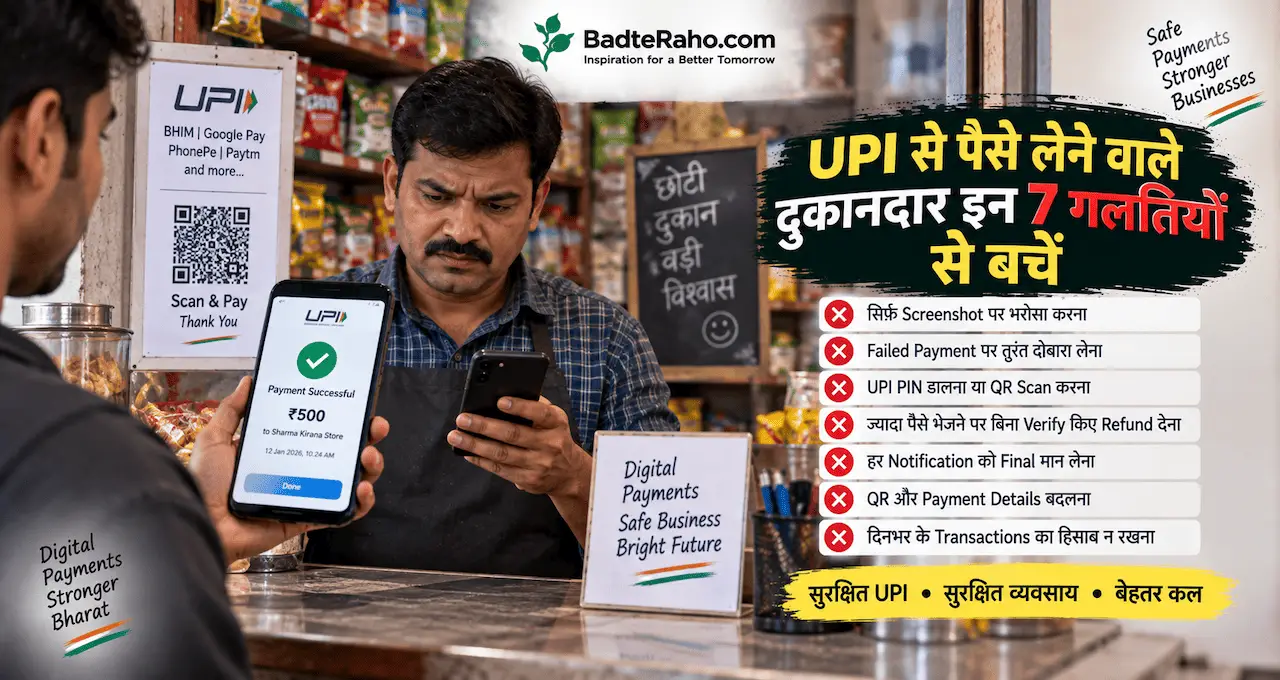
Payment लेने वाले दुकानदारों के लिए safety side पर UPI से पैसे लेने वाले दुकानदार इन 7 गलतियों से बचें: Payment Fraud से Safety Guide भी जरूर देखें।
AI Use करते समय Human Review क्यों जरूरी है?
Generative AI fluent answer देता है।
इसलिए गलती भी professional language में दिखाई दे सकती है।
AI:
गलत price लिख सकता है.
Policy invent कर सकता है.
Product feature add कर सकता है.
Customer का message गलत समझ सकता है.
Outdated information दे सकता है.
इसलिए customer-facing content में final review आपकी responsibility है।
AI गलत जवाब क्यों दे सकता है, यह AI Hallucination क्या है? ChatGPT गलत जवाब क्यों देता है और कैसे पहचानें? में detail से समझ सकते हैं।
7 दिनों का Simple AI Business Test
अगर अभी भी समझ नहीं आ रहा कि कहाँ से शुरू करें, तो अगले सात दिन सिर्फ़ एक experiment करें।
Day 1: तीन repetitive tasks लिखें
Day 2: एक task चुनें
Day 3: उसका अच्छा prompt बनाएं
Day 4: AI output को manually improve करें
Day 5: real work में use करें
Day 6: time और quality compare करें
Day 7: decide करें—continue, change या stop
इस experiment का goal “AI use करना” नहीं है।
Goal है:
Business में measurable usefulness देखना।
आख़िर में एक छोटी सी बात
छोटे कारोबारी के लिए AI की असली ताकत fancy technology में नहीं, रोज़ के काम को थोड़ा आसान करने में है।
अगर AI से customer reply 10 minutes की जगह 2 minutes में बन जाता है, weekly content planning आसान हो जाती है, follow-up miss नहीं होता और customer feedback जल्दी समझ आता है—तो technology practical value दे रही है।
लेकिन AI को ऐसा shortcut न बनाएं जहाँ business owner customer, product और numbers को समझना ही बंद कर दे।
सबसे बेहतर combination वही है:
आपका business experience + customer की understanding + AI की speed
पहले एक छोटा काम चुनें, result देखें और उसके बाद ही AI को दूसरे workflows में बढ़ाएँ।
आप अपने business में सबसे पहले AI किस काम में use करना चाहेंगे—customer replies, marketing, sales follow-up, product description, planning या data analysis? अपना सवाल या experience comment में जरूर share करें।