






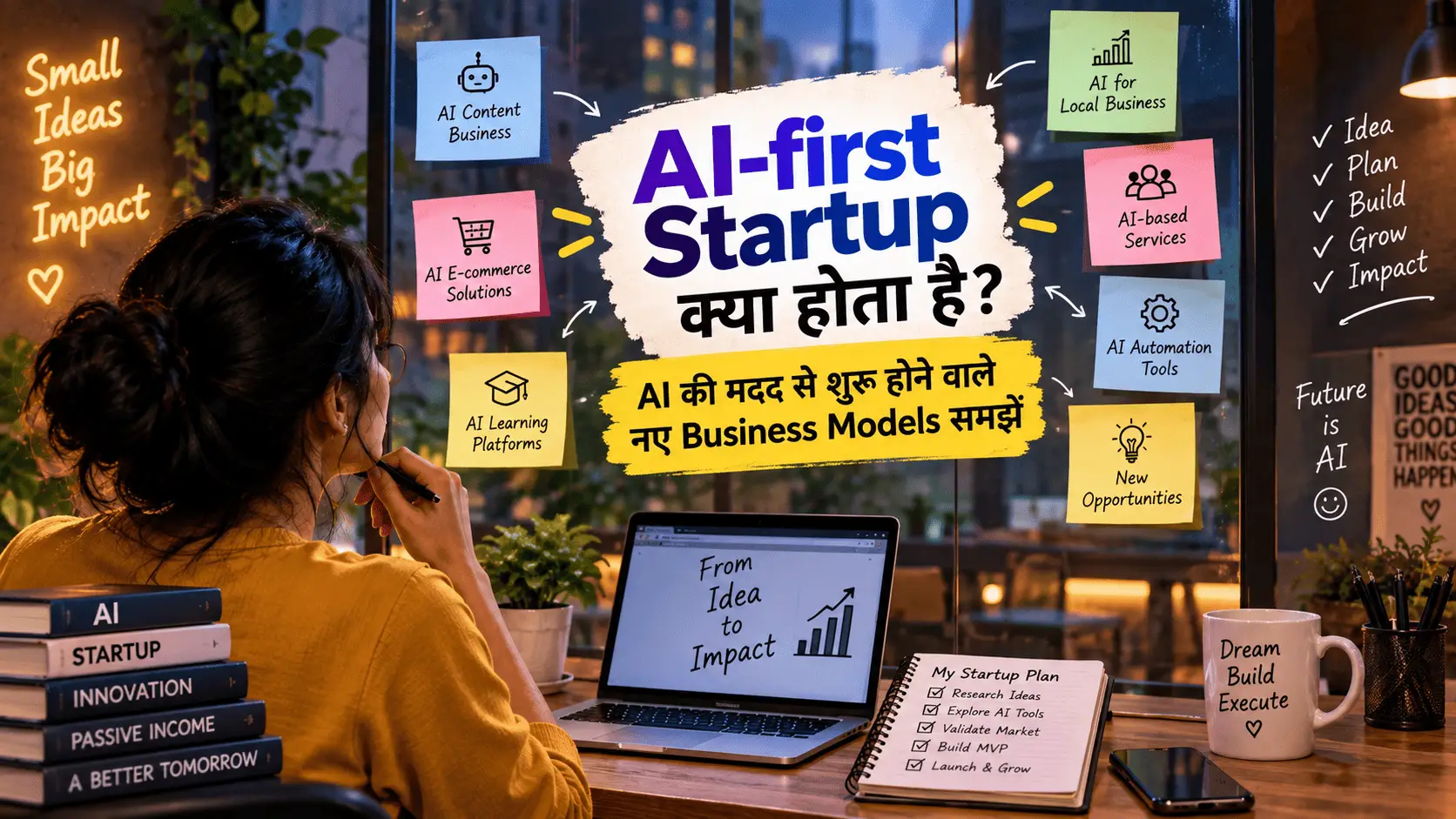


कुछ businesses AI को अपने existing काम में एक extra tool की तरह इस्तेमाल करते हैं। वहीं कुछ नए startups ऐसे बन रहे हैं जिनका product, workflow और customer value शुरुआत से ही AI के आसपास design किए जाते हैं।
यही difference AI-first startup को interesting बनाता है।
लेकिन इसका मतलब यह नहीं कि ChatGPT API लगाकर कोई भी app AI-first startup बन जाएगा। असली सवाल यह है कि अगर AI हटा दिया जाए, तो क्या business का core product फिर भी लगभग वैसा ही रहेगा? अगर जवाब हाँ है, तो शायद वह AI-enabled business है। अगर पूरा product experience ही बदल जाए, तो वह AI-first model के ज्यादा करीब हो सकता है।
आगे इसे simple examples और practical business models के साथ समझते हैं।
इस लेख में आप क्या सीखेंगे?
- AI-first Startup का मतलब
- AI-enabled से difference
- नए business models
- revenue model कैसे चुनें
- MVP कैसे शुरू करें
- risks कहाँ आते हैं
AI-first Startup क्या होता है?
AI-first Startup ऐसा business होता है जिसमें Artificial Intelligence सिर्फ़ support tool नहीं, बल्कि product या service की core capability का हिस्सा होता है।
उदाहरण के लिए, किसी normal accounting software में बाद में AI chatbot जोड़ दिया जाए, तो सिर्फ़ chatbot के कारण वह automatically AI-first नहीं हो जाता।
लेकिन अगर पूरा accounting product इस तरह बनाया गया हो कि AI:
- invoices समझे
- expenses categorize करे
- unusual transactions flag करे
- financial data summarize करे
- user के सवालों के context में reports explain करे
तो product की core value AI-driven हो सकती है।
इसे simple formula से समझें:
Problem + AI Capability + Workflow + Human Trust = AI-first Product
अगर AI की basic working समझनी है, तो Generative AI क्या है? ChatGPT और दूसरे AI Tools कैसे काम करते हैं? पहले पढ़ सकते हैं।
AI-first और AI-enabled Business में क्या Difference है?
दोनों शब्दों का अक्सर एक जैसा use किया जाता है, लेकिन practical difference समझना useful है।
AI-enabled Business
Existing business में AI से कुछ काम faster किए जाते हैं।
उदाहरण:
एक digital marketing agency पहले से clients के लिए content बनाती थी।
अब वही agency AI से:
- headline ideas
- first drafts
- research summaries
- image concepts
तैयार करने लगी।
Business वही है। AI efficiency बढ़ा रहा है।
AI-first Business
Business का core offer ही AI capability के आसपास design होता है।
उदाहरण:
एक platform local दुकानदार की sales data, inventory और customer history देखकर automatically:
- repeat customer opportunities identify करे
- follow-up suggestions बनाए
- slow-moving products detect करे
- campaign ideas recommend करे
यहाँ AI सिर्फ़ team का internal tool नहीं, product का हिस्सा है।
इस difference को समझना जरूरी है क्योंकि सिर्फ़ “AI use करना” startup idea नहीं होता।
छोटे businesses में AI कहाँ practical value दे सकता है? इसके examples AI छोटे दुकानदारों और कारोबारियों का Business कैसे बदल सकता है? 10 Practical Uses में देख सकते हैं।
हर AI Startup को अपना AI Model बनाना जरूरी है?
नहीं।
यह beginners की common misunderstanding है।
AI startup शुरू करने का मतलब यह नहीं कि आपको अपना Large Language Model train करना ही पड़ेगा।
कई products existing AI models, APIs, open-source models या third-party services के ऊपर भी build किए जा सकते हैं।
Startup की value कई दूसरी चीजों से बन सकती है:
- customer problem की deep understanding
- सही workflow
- proprietary data
- integrations
- user experience
- reliability
- industry-specific logic
- customer support
- distribution
मान लीजिए दो startups same underlying AI model use करते हैं।
पहला सिर्फ़ generic chat interface देता है।
दूसरा doctors के लिए structured workflow बनाता है जिसमें documents organize करना, information retrieve करना और administrative tasks handle करना आसान होता है।
Underlying model similar हो सकता है, लेकिन business value बहुत अलग हो सकती है।
इसलिए model ही moat नहीं है।
कई बार workflow और customer understanding ज्यादा important होते हैं।
AI-first Startup Idea कहाँ से आता है?
AI से क्या-क्या किया जा सकता है, इसकी list बनाकर startup शुरू करना उल्टा approach हो सकता है।
Better approach है:
पहले problem खोजें, फिर देखें AI उसे बेहतर तरीके से solve कर सकता है या नहीं।
अपने आसपास के काम observe करें।
लोग कौन-सा repetitive काम बार-बार करते हैं?
कहाँ बहुत documents पढ़ने पड़ते हैं?
कहाँ customer को same सवालों के जवाब repeatedly देने पड़ते हैं?
कहाँ information scattered है?
कहाँ manual data entry ज्यादा है?
कहाँ decision लेने से पहले बहुत unstructured information समझनी पड़ती है?
यहीं AI opportunity मिल सकती है।
अगर general business foundation समझना चाहते हैं, तो Business कैसे शुरू करें? Business के लिए 10 जरूरी कदम और Practical Roadmap useful रहेगा।
AI-first Business Model 1: AI Copilot
Copilot ऐसा AI product हो सकता है जो किसी professional या worker को replace करने की बजाय उसका काम faster करे।
उदाहरण:
- salesperson के लिए follow-up assistant
- recruiter के लिए candidate screening assistant
- teacher के लिए lesson planning assistant
- accountant के लिए document review assistant
- customer support team के लिए response assistant
Copilot का main idea है:
Human काम करता रहे, AI उसकी speed और decision support improve करे।
यह model उन industries में useful हो सकता है जहाँ final judgement अभी भी human को करना चाहिए।
Revenue subscription-based रखा जा सकता है, जैसे per-user monthly plan.
लेकिन product तभी valuable होगा जब यह सिर्फ़ generic chatbot से ज्यादा useful workflow दे।
AI-first Business Model 2: Vertical AI Software
Vertical AI का मतलब किसी specific industry या profession के लिए AI product बनाना।
Generic AI सबके लिए होता है।
Vertical AI किसी एक category पर focus करता है।
उदाहरण:
- real estate brokers
- clinics
- law firms
- coaching institutes
- restaurants
- local retailers
- logistics companies
मान लीजिए आप salons के लिए AI software बनाते हैं।
वह:
customer history देखे,
repeat visit reminders suggest करे,
appointment messages बनाए,
offers plan करे,
और customer feedback summarize करें।
यह generic AI से अलग है क्योंकि इसमें salon workflow पहले से समझा गया है।
Niche छोटा लग सकता है, लेकिन specific problem solve करने के कारण customer value ज्यादा clear हो सकती है।
AI-first Business Model 3: AI Automation Platform
कई businesses में काम अलग-अलग tools के बीच manually move होता है।
उदाहरण:
Enquiry आई
↓
Details spreadsheet में गईं
↓
Follow-up message भेजा
↓
Quotation बनाया
↓
Reminder भेजा
↓
Status update किया
AI-first automation product इस workflow के कुछ हिस्सों को automate कर सकता है।
लेकिन यहाँ सबसे बड़ी गलती है:
Automation और autonomy को same समझना।
हर task AI को independently नहीं देना चाहिए।
Payment, legal approval, pricing changes या sensitive customer communication जैसे कामों में human approval जरूरी हो सकता है।
Best system अक्सर होता है:
AI draft करे
↓
Rules check हों
↓
Human approve करे
↓
Action execute हो
AI-first Business Model 4: AI Agent Based Service
AI agents ऐसे systems हो सकते हैं जो सिर्फ़ एक जवाब देने की बजाय multiple steps perform करने की कोशिश करें।
उदाहरण:
Customer requirement समझना
↓
Relevant data collect करना
↓
Draft तैयार करना
↓
Checklist run करना
↓
Result user को देना
लेकिन “agent” word सुनकर यह assume नहीं करना चाहिए कि AI employee की तरह independently सब कुछ reliably कर सकता है।
Real-world tasks में:
- wrong assumptions
- permission issues
- hallucinations
- tool errors
- incomplete data
आ सकते हैं।
इसलिए successful AI agent product में guardrails, logging, approvals और fallback process बहुत important होते हैं।
AI-first Business Model 5: AI-enabled Service Business
हर AI-first opportunity SaaS app नहीं होती।
आप service भी build कर सकते हैं जहाँ AI backend में speed बढ़ाता है।
उदाहरण:
एक research service clients के लिए market reports बनाती है।
Traditional workflow में 10 घंटे लगते थे।
AI-assisted workflow:
research organize करे,
documents summarize करे,
themes identify करे,
draft structure बनाए।
Human researcher:
sources verify करे,
wrong claims हटाए,
insights लिखे,
final report deliver करे।
इससे team ज्यादा projects handle कर सकती है।
यह model software startup से आसान शुरुआत हो सकता है क्योंकि पहले service के जरिए customer की problem समझी जा सकती है।
कम budget में शुरुआत करनी हो तो कम पैसे में घर से Business कैसे शुरू करें? Beginners के लिए Practical Step-by-Step Guide भी useful रहेगा।
AI-first Business Model 6: Outcome-Based Product
Traditional software में customer tool के access के लिए pay करता है।
AI-first products में कुछ businesses output या outcome के आधार पर charge करने की कोशिश कर सकते हैं।
उदाहरण:
per processed document
per qualified lead
per generated report
per completed workflow
लेकिन outcome-based pricing तभी practical है जब “outcome” clearly define और measure किया जा सके।
अगर result आपकी control के बाहर कई factors पर depend करता है, तो guaranteed outcome promise करना risky है।
इसलिए pricing से पहले यह समझें:
आप software access बेच रहे हैं, usage बेच रहे हैं या measurable result?
AI-first Startup का Revenue Model क्या हो सकता है?
एक ही model हर startup पर fit नहीं होता।
Common options:
Subscription
Customer monthly या yearly fee देता है।
Useful for regular-use software.
Usage-Based
Customer जितना AI use करे, उतना pay करे।
उदाहरण:
documents processed, minutes analyzed या requests handled.
Per User
हर employee या seat के हिसाब से payment.
B2B products में common model हो सकता है।
Service + Software
Customer software भी use करता है और expert support भी मिलता है।
Early-stage AI businesses में यह practical model हो सकता है।
Enterprise Plan
Large customer के लिए custom integrations, security और support.
लेकिन pricing randomly decide न करें।
पहले customer की problem और willingness to pay validate करें।
AI Startup में Cost Structure क्यों अलग हो सकता है?
Traditional software में एक बार code run होने के बाद extra user की cost कई cases में low हो सकती है।
AI products में हर request की direct compute या API cost हो सकती है।
इसलिए सिर्फ़ revenue नहीं देखें।
मान लीजिए customer आपको ₹1,000 per month देता है लेकिन heavy AI usage के कारण backend cost ₹800 पड़ रही है।
तो business healthy नहीं होगा।
Track करें:
Revenue per customer
↓
AI/API cost
↓
Infrastructure
↓
Support cost
↓
Payment fees
↓
Remaining margin
इसे unit economics की basic thinking कह सकते हैं।
AI startup में “users बढ़ रहे हैं” अच्छी खबर तभी है जब हर नया user unsustainable cost न बना रहा हो।
सिर्फ़ Prompt लिखकर Product बन जाता है?
Prompt important है, लेकिन complete product नहीं है।
Strong AI product में prompt के साथ कई layers हो सकती हैं:
- user input validation
- relevant context
- structured data
- database
- retrieval
- tool integrations
- output checks
- user feedback
- permissions
- logs
Prompt quality improve करने के लिए Prompt Engineering क्या है? AI से बेहतर जवाब पाने के लिए Prompt कैसे लिखें? पढ़ सकते हैं।
लेकिन startup founder को यह समझना चाहिए:
Prompt product का हिस्सा हो सकता है, पूरा business नहीं।
AI-first Startup में Data की क्या Value है?
AI model generic knowledge दे सकता है।
लेकिन customer-specific product के लिए अक्सर relevant business data ज्यादा valuable होता है।
उदाहरण:
Retail AI product के लिए:
- inventory
- past sales
- customer purchases
- product categories
useful context हो सकता है।
लेकिन data collect करते समय privacy और permission important हैं।
हर data AI में feed नहीं करना चाहिए।
Particularly:
- passwords
- private financial details
- health data
- confidential client files
- identity documents
को casually third-party AI tools में upload करना risky हो सकता है।
Startup को शुरुआत से data handling policy clear रखनी चाहिए।
AI Output गलत हो तो Responsibility किसकी है?
यही AI-first startup का difficult हिस्सा है।
अगर product confidently गलत answer देता है, तो user का trust जल्दी खत्म हो सकता है।
इसलिए सिर्फ़ impressive demo काफी नहीं है।
आपको measure करना होगा:
- accuracy
- failure rate
- unsupported answers
- user corrections
- edge cases
High-risk use cases में AI output को human review के बिना final decision नहीं बनाना चाहिए।
उदाहरण:
medical diagnosis,
legal advice,
large financial decisions,
hiring rejection,
credit decisions
जैसे areas में extra safeguards जरूरी होते हैं।
Product design का rule रखें:
AI speed के लिए, इंसान judgement और trust के लिए।
AI-first Startup का MVP कैसे बनाएं?
MVP यानी Minimum Viable Product.
इसका मतलब खराब product नहीं।
मतलब है problem solve करने वाला सबसे छोटा usable version.
मान लीजिए idea है:
“Local दुकानदारों के customer follow-up को AI से आसान बनाना।”
पहले ही दिन:
CRM, billing, inventory, chatbot, analytics, WhatsApp automation और accounting
सब बनाने की जरूरत नहीं है।
पहला MVP हो सकता है:
Customer list upload
↓
Previous purchase देखें
↓
AI follow-up draft बनाए
↓
Shop owner approve करे
↓
Message copy/send किया जाए
बस।
अगर दुकानदार इसका लगातार use करते हैं, तभी आगे features add करें।
MVP से पहले Manual Service क्यों Useful हो सकती है?
Startup founders अक्सर जल्दी software build कर देते हैं।
लेकिन पहले manually service देना ज्यादा useful हो सकता है।
उदाहरण:
10 दुकानदारों से बात करें।
उनके customer follow-up manually AI की मदद से तैयार करें।
Observe करें:
वो कौन-सा data देते हैं?
किस तरह का message चाहिए?
कहाँ गलतियाँ होती हैं?
किस चीज़ के लिए pay करने को तैयार हैं?
यह information आपको software specification से ज्यादा valuable insight दे सकती है।
पहले:
Do it manually → Understand pattern → Then automate
यह approach unnecessary development बचा सकती है।
AI-first Startup Idea Validate कैसे करें?
Idea अच्छा लगना और customer का pay करना अलग चीजें हैं।
Validation के लिए संभावित users से पूछें:
अभी यह काम कैसे करते हैं?
इसमें कितना time जाता है?
सबसे irritating हिस्सा क्या है?
कौन-सी गलती सबसे costly है?
क्या इसके लिए पहले से software use करते हैं?
अगर solution काम करे तो कितना valuable होगा?
लेकिन सिर्फ़ पूछना:
“अगर ऐसा AI tool हो तो use करेंगे?”
weak validation है।
लोग polite होकर हाँ कह सकते हैं।
Strong validation है:
- demo use करना
- pilot चलाना
- real data देना
- repeat use
- payment करना
AI-first Idea Evaluate करने के लिए Reusable Prompt
अगर आपके पास startup idea है, तो AI से brainstorming के लिए यह prompt use कर सकते हैं:
मैं [Target Customer] के लिए [Problem] solve करने वाला AI-first business explore कर रहा/रही हूँ।
इस idea को startup validation perspective से analyze करें।
मुझे बताएं:
- customer का exact problem क्या हो सकता है
- existing manual workflow क्या होगा
- AI कहाँ genuinely useful हो सकता है
- कहाँ human approval जरूरी रहेगा
- minimum MVP में कौन-से features होने चाहिए
- कौन-से features शुरुआत में नहीं बनाने चाहिए
- revenue model के possible options क्या हो सकते हैं
- कौन-से assumptions real customers से verify करने होंगे
- privacy, accuracy और cost risks क्या हो सकते हैं
किसी market size, customer demand, pricing, revenue, legal rule या success probability को invent न करें। जहाँ actual research जरूरी हो, साफ बताएं कि verification needed है।
इस prompt का output final business decision नहीं है।
इसे thinking framework की तरह use करें।
AI-first Startup में सबसे Common गलतियाँ
AI को Problem से पहले रखना
“मेरे पास AI है, अब business idea क्या बनाऊँ?”
से शुरुआत कमजोर हो सकती है।
पहले customer problem देखें।
Generic Chatbot बना देना
हर business को एक और chatbot की जरूरत नहीं होती।
Specific workflow solve करें।
Accuracy Ignore करना
Demo अच्छा लगना और रोज़ reliable काम करना अलग बात है।
AI Cost Ignore करना
Revenue के साथ per-user cost track करें।
Human Review हटाना
High-impact actions में approval जरूरी हो सकता है।
Customer Data casually use करना
Privacy शुरुआत से product requirement होनी चाहिए।
Feature बहुत ज्यादा बनाना
पहले एक narrow problem solve करें।
आज से AI-first Startup Explore करना हो तो क्या करें?
पहला दिन coding में न लगाएं।
इन 5 steps से शुरुआत करें:
- एक specific customer group चुनें।
- उसका repetitive problem identify करें।
- current manual workflow लिखें।
- देखें AI किस एक step को dramatically बेहतर कर सकता है।
- एक छोटा manual या no-code prototype test करें।
Startup workflow कुछ ऐसा हो सकता है:
Customer Problem
↓
Manual Workflow
↓
AI Opportunity
↓
Simple Prototype
↓
Real User Test
↓
Payment Validation
↓
MVP
↓
Improve
यह approach “पहले पूरा app बनाओ, बाद में customer ढूँढो” से ज्यादा practical है।
आख़िर में एक छोटी सी बात
AI-first Startup का मतलब सिर्फ़ AI का label लगाकर नया business launch करना नहीं है।
Strong AI-first business वहाँ बनता है जहाँ AI किसी real customer problem को पहले से बेहतर, faster या ज्यादा scalable तरीके से solve करता है।
किसी startup को अपना AI model train करना जरूरी नहीं है। Existing models के ऊपर भी strong business बनाया जा सकता है—अगर workflow, customer understanding, data, user experience और trust मजबूत हों।
इसलिए AI-first founder का पहला सवाल यह नहीं होना चाहिए:
“कौन-सा AI model use करें?”
पहला सवाल होना चाहिए:
“Customer का ऐसा कौन-सा painful काम है जिसे AI genuinely बेहतर बना सकता है?”
उस problem को manually समझें, small MVP test करें, real user behaviour देखें और उसके बाद product को expand करें।
अगर आपको AI-first Startup शुरू करने का मौका मिले, तो आप किस problem को solve करना चाहेंगे? अपना startup idea या सवाल comments में जरूर share करें।