


















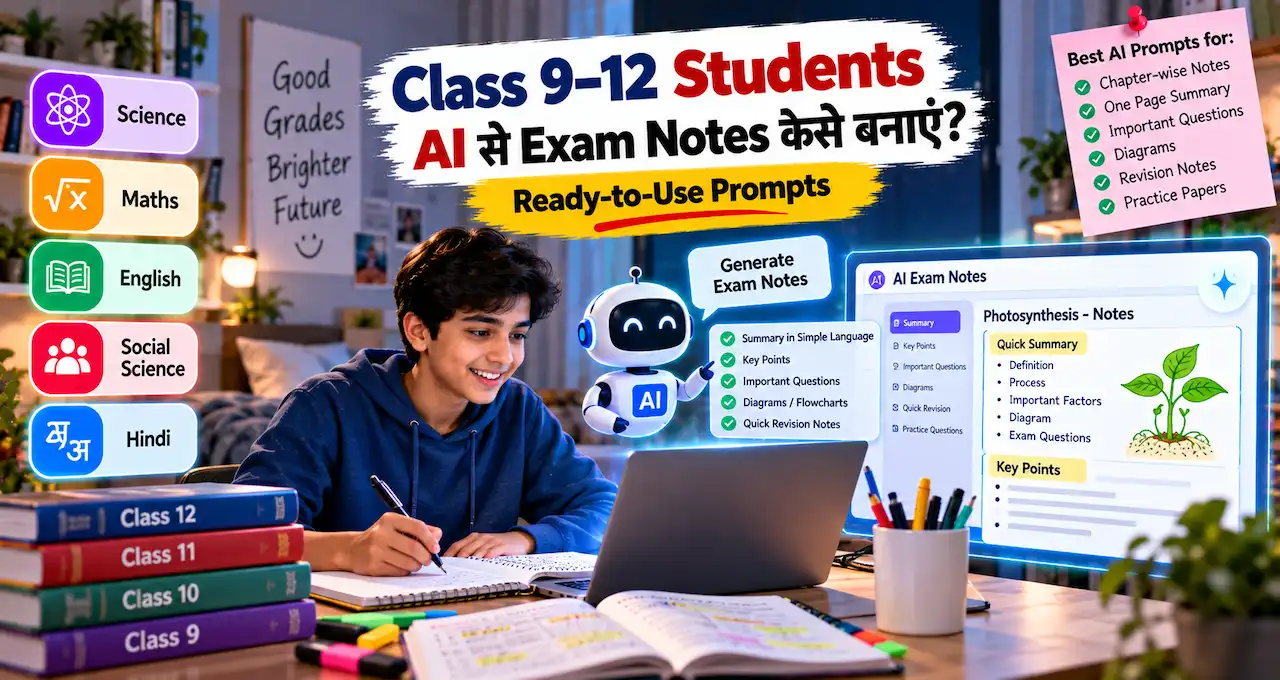
अगर आप Class 9, 10, 11 या 12 में हैं और exam के समय यह सोचकर परेशान होते हैं कि—
“इतना बड़ा chapter है, notes कहाँ से बनाना शुरू करूँ?”
तो AI आपकी मदद कर सकता है।
लेकिन इसका सही तरीका यह नहीं है कि AI से पूरे answers लिखवाकर उन्हें याद करना शुरू कर दें।
बेहतर तरीका है—
अपनी textbook, chapter या class material AI को दें → उससे structured notes बनवाएँ → notes को किताब से verify करें → फिर उन्हीं notes से revision और self-test करें।
इस guide में आपको इसी काम के लिए ready-to-use prompts भी मिलेंगे।
इस लेख में आप क्या सीखेंगे?
- AI से notes बनाना
- Chapter को short करना
- Important points निकालना
- Definitions और formulas
- Revision sheet बनाना
- Questions तैयार करना
- Ready-to-use AI prompts
- Notes verify करने का तरीका
सबसे पहले समझें: AI Notes क्यों Useful हो सकते हैं?
Exam के समय सबसे बड़ी problem हमेशा पढ़ाई की कमी नहीं होती।
कई बार problem होती है information की quantity.
एक chapter 20–30 pages का है।
उसमें definitions हैं।
Examples हैं।
Diagrams हैं।
Dates हैं।
Formulas हैं।
Important explanations हैं।
और आपको समझ नहीं आता कि exam के लिए इनमें से क्या लिखकर रखें।
AI यहाँ organizer की तरह मदद कर सकता है।
आप AI को chapter content देकर कह सकते हैं:
- important points अलग करो
- headings के हिसाब से notes बनाओ
- difficult language आसान करो
- definitions अलग list करो
- formulas अलग करो
- revision questions बनाओ
लेकिन एक rule शुरू से याद रखें:
AI से notes बनवाएँ, लेकिन final notes अपनी textbook और teacher से verify करें।
AI गलत information भी generate कर सकता है।
AI से Notes बनाने के लिए आपको क्या चाहिए?
बहुत complicated setup की जरूरत नहीं है।
आपके पास इनमें से कोई source हो सकता है:
- textbook chapter
- PDF notes
- class notes
- teacher handout
- chapter की photos
- copied text
- syllabus topic list
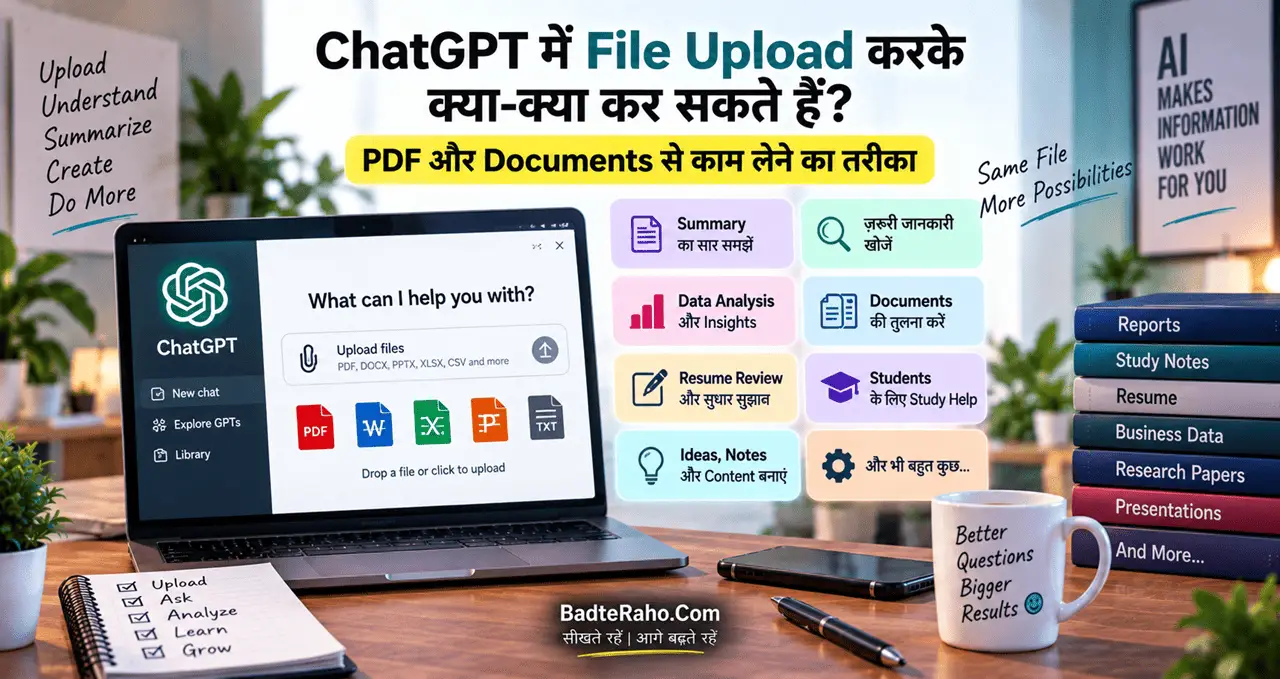
अगर आपका AI tool PDF, document या image upload support करता है, तो आप chapter directly upload कर सकते हैं।
अगर file upload available नहीं है, तो relevant text को छोटे हिस्सों में copy-paste करके भी काम किया जा सकता है।
सबसे important बात यह है कि AI को source material दें।
सिर्फ़ यह लिखना—
Class 10 Science Chapter 6 के notes बनाओ
काम कर सकता है, लेकिन AI उस chapter का exact edition, board या आपके school का syllabus assume कर सकता है।
बेहतर है कि आप actual material दें।
पूरा Chapter AI से Notes में कैसे बदलें?
मान लीजिए आपके पास Biology का एक chapter है।
आप chapter पढ़ते हैं और समझ आता है कि content काफी बड़ा है।
अब goal यह नहीं होना चाहिए कि AI उसे सिर्फ़ छोटा कर दे।
Goal होना चाहिए कि वह exam के लिए useful structure बनाए।
एक अच्छा note structure हो सकता है:
Chapter Name
Key Concepts
Important Definitions
Important Points
Processes / Steps
Examples
Formulas
Diagrams to Practice
Important Questions
Quick Revision
अब इसी structure के लिए prompt इस्तेमाल करें।
Ready-to-use Prompt 1: Complete Chapter Notes
मैं Class [9/10/11/12] का student हूँ। मेरा subject [Subject] है और यह chapter “[Chapter Name]” है।
मैं नीचे chapter का content दे रहा/रही हूँ।
सिर्फ़ इसी provided content के आधार पर exam-oriented notes बनाइए।
Notes को इन sections में organize करें:
- Chapter का short overview
- Important concepts
- Important definitions
- मुख्य facts और points
- Processes या steps
- Formulas, dates या terms, अगर source में हों
- Diagrams जिन्हें practice करना useful हो सकता है
- Exam revision के लिए important points
कोई ऐसी information add न करें जो मेरे दिए गए material में नहीं है। अगर किसी point पर uncertainty हो तो साफ़ बताएं।
Language simple Hindi/Hinglish रखें, लेकिन important academic terms को बदलें नहीं।
Chapter Content:
[यहाँ chapter text paste करें या file upload करें]
यह आपके लिए पूरे chapter के first notes का draft बना सकता है।
इसके बाद original chapter के साथ notes compare करना जरूरी है।
Notes को बहुत Short नहीं करना चाहिए
यह common mistake है।
Students AI से कहते हैं:
इस पूरे chapter को short कर दो।
AI chapter को इतना छोटा कर सकता है कि पढ़ने में अच्छा लगे, लेकिन exam के लिए जरूरी details गायब हो जाएँ।
Exam notes का मतलब सिर्फ़ summary नहीं है।
अच्छे exam notes में enough detail होनी चाहिए कि आपको concept दोबारा समझ आ सके।
इसलिए AI को note length और purpose बताएं।
2. Long Topic को Short Notes में बदलें
कई chapters में 2–3 pages का एक ही topic होता है।
उसे revision के लिए short format में बदल सकते हैं।
Ready-to-use Prompt 2: Short Notes
नीचे दिए गए topic को Class [Class] के exam revision के लिए short notes में बदलें।
Important concept या exam-relevant detail remove न करें।
Format:
- Topic meaning
- 5–10 key points
- Important terms
- Example, अगर source में दिया गया है
- एक line का quick revision summary
केवल provided text use करें और अपनी तरफ से facts add न करें।
Text:
[Topic paste करें]
अब आपको 2–3 pages की जगह quick revision notes मिल सकते हैं।
3. Important Definitions अलग निकालें
Science, Economics, Geography, Business Studies और कई दूसरे subjects में definitions important होती हैं।
पूरे chapter में अलग-अलग जगह definitions ढूँढने के बजाय AI से एक list बनवाई जा सकती है।
Ready-to-use Prompt 3: Definitions List
इस chapter content में जितनी important definitions और key terms दिए गए हैं, उन्हें अलग list में निकालें।
Format:
Term — Simple Explanation — Exam Definition
Exam definition source content के meaning के बहुत करीब रखें। अपनी तरफ से नई technical definition invent न करें।
अगर कोई term source में clearly define नहीं है, तो उसे “definition not clearly provided” लिखें।
Content:
[Chapter text]
यह खासकर revision से पहले useful हो सकता है।
4. Formulas की Revision Sheet बनाएं
Maths, Physics, Chemistry, Accountancy और Economics जैसे subjects में formulas अलग रखना useful होता है।
लेकिन AI को formula invent नहीं करने देना चाहिए।
Ready-to-use Prompt 4: Formula Sheet
नीचे दिए गए chapter content से केवल वही formulas निकालें जो source में मौजूद हैं।
हर formula के साथ लिखें:
- Formula
- Symbols का meaning
- Formula कब use होता है
- Unit, अगर source में दी गई है
- एक छोटा example, केवल तब जब source से सही तरीके से बनाया जा सके
कोई formula, constant या value खुद से add न करें।
Content:
[Chapter content]
इसके बाद formula को textbook से जरूर cross-check करें।
एक छोटा sign या value गलत होने से पूरा numerical गलत हो सकता है।
5. History या Political Science की Dates और Events निकालें
History जैसे subjects में content narrative form में होता है।
Problem यह होती है कि revision के समय events और dates mix होने लगते हैं।
AI से timeline बनवाई जा सकती है।
Ready-to-use Prompt 5: Timeline Notes
नीचे दिए गए chapter से important dates, events और उनके significance की timeline बनाएं।
Format:
Date/Period → Event → क्यों important है
केवल source में दिए गए events use करें।
कोई date या historical detail खुद से add या correct न करें।
अगर source में exact date नहीं है, तो अनुमान न लगाएं।
Content:
[Chapter text]
इस तरह chapter की पूरी story एक sequence में दिखाई देने लगती है।
6. Difficult Paragraph को आसान भाषा में समझें
Notes बनाने का फायदा तभी है जब आपको topic समझ भी आए।
किसी paragraph को बिना समझे short कर लेना सिर्फ़ information compression है—learning नहीं।
अगर कोई concept मुश्किल लग रहा है, पहले उसे समझें।
Ready-to-use Prompt 6: आसान Explanation
मैं Class [Class] में हूँ और नीचे दिया गया paragraph मुझे ठीक से समझ नहीं आ रहा।
इसे पहले बहुत simple Hindi/Hinglish में समझाइए।
फिर:
- इसका main concept बताएं
- एक simple example दें
- important academic keywords बताएं
- अंत में मुझसे 2 questions पूछें ताकि check हो सके कि मैं concept समझा या नहीं
Original paragraph का meaning न बदलें।
Paragraph:
[Text]
इस prompt का मकसद answer याद करवाना नहीं है।
मकसद है concept समझना।
7. Long Answer के लिए Structure बनाएं
कई students को answer आता है, लेकिन exam में structure नहीं बन पाता।
Introduction कहाँ हो?
कौन-से points पहले लिखें?
Example कहाँ आए?
Conclusion चाहिए या नहीं?
AI answer structure बनाने में मदद कर सकता है।
Ready-to-use Prompt 7: Long Answer Structure
Question:
[Question]
नीचे दिए गए study material के आधार पर इस question का exam-ready answer structure बनाएं।
पहले direct answer न लिखें।
मुझे यह बताएं:
- Introduction में क्या लिखना चाहिए
- Main headings कौन-सी हों
- हर heading में कौन-से key points आएँ
- Example या diagram कहाँ useful होगा
- Ending कैसे करें
इसके बाद एक model answer दें जिसे मैं समझने और practice करने के लिए use कर सकूँ।
केवल provided study material पर आधारित रहें।
Material:
[Text]
पहले structure समझना ज्यादा useful है।
इसके बाद answer खुद लिखने की कोशिश करें।
8. One-Page Revision Notes बनाएं
Exam से एक दिन पहले कोई भी पूरा chapter दोबारा नहीं पढ़ना चाहता।
यहाँ one-page revision sheet बहुत useful हो सकती है।
इसमें सिर्फ़ वही चीजें होनी चाहिए जो memory refresh करें।
Ready-to-use Prompt 8: One-Page Revision Sheet
नीचे दिए गए chapter notes को एक one-page quick revision sheet में बदलें।
इसमें केवल high-value revision points रखें:
- Key concepts
- Important definitions
- Important facts
- Formulas/dates अगर हों
- Common confusion points
- 5 things जो exam से पहले जरूर याद हों
नई information add न करें।
इसे ऐसा रखें कि मैं exam से पहले 5–10 minutes में पूरा revise कर सकूँ।
Notes:
[अपने verified notes paste करें]
ध्यान दें—इस prompt को ideally verified notes पर चलाएँ, raw AI notes पर नहीं।
9. Notes से Important Questions बनवाएं
Notes बन गए।
अब अगला सवाल है—
इनसे exam में क्या पूछा जा सकता है?
AI exact exam paper predict नहीं कर सकता।
लेकिन आपके notes के आधार पर practice questions बना सकता है।
Ready-to-use Prompt 9: Practice Questions
नीचे मेरे verified chapter notes हैं।
इन notes के आधार पर practice questions तैयार करें।
Sections:
- 5 very short questions
- 5 short-answer questions
- 4 long-answer questions
- 5 MCQs
- 3 application/reasoning questions
किसी question को “exam में जरूर आएगा” या “most expected” claim न करें।
Questions केवल मेरे notes के content से बनाएं।
Notes:
[Notes paste करें]
यही distinction important है।
AI से practice questions लें।
Paper prediction नहीं।
10. खुद का Test लें
Notes पढ़ते समय अक्सर लगता है—
“सब याद है।”
लेकिन जब किताब बंद होती है, तब पता चलता है कि वास्तव में कितना याद है।
इसलिए notes बनाने के बाद AI को examiner की तरह use किया जा सकता है।
Ready-to-use Prompt 10: AI Self-Test
मैं Class [Class] में [Subject] का “[Chapter]” revise कर रहा/रही हूँ।
नीचे मेरे verified notes हैं।
मेरा oral test लें।
एक समय में सिर्फ़ एक question पूछें।
पहले मेरा answer आने दें।
फिर:
- बताएं answer सही, partially correct या incorrect है
- missing point बताएं
- सही explanation दें
- उसके बाद अगला question पूछें
Questions आसान से मुश्किल level तक जाएँ।
Notes:
[Notes]
यह notes को active recall में बदल देता है।
सिर्फ़ पढ़ने के मुकाबले खुद से answer याद करने की कोशिश ज्यादा meaningful revision बन सकती है।
11. कमजोर Topics Identify करें
Self-test के बाद AI से पूछ सकते हैं कि आपकी mistakes किस pattern में हैं।
लेकिन उसके लिए अपनी mistakes या test responses दें।
Ready-to-use Prompt 11: Weak Topic Analysis
नीचे मेरे test answers और correct answers दिए गए हैं।
इन्हें देखकर मेरी mistakes को topics के हिसाब से organize करें।
मुझे student के रूप में label न करें।
सिर्फ़ यह बताएं:
- कौन-से concepts दोबारा revise करने चाहिए
- किस तरह की mistakes बार-बार हो रही हैं
- अगली 30-minute revision session में क्या पढ़ूँ
- हर weak topic के लिए 2 practice questions दें
मेरे marks या intelligence के बारे में judgement न दें।
Test:
[Responses paste करें]
यह “मैं Maths में कमजोर हूँ” जैसी vague सोच को बदलकर specific problem तक ला सकता है।
जैसे—
Quadratic equations नहीं।
बल्कि—
“sign change करते समय errors हो रही हैं।”
अब revision targeted हो सकता है।
12. पूरे Chapter का Final Revision Pack बनाएं
Exam से पहले आपको अलग-अलग चीजें चाहिए:
Notes.
Definitions.
Formula sheet.
Questions.
Self-test.
इन सबको एक final revision pack में organize किया जा सकता है।
Ready-to-use Prompt 12: Final Revision Pack
मैं Class [Class] का student हूँ और [Subject] का “[Chapter]” exam के लिए revise कर रहा/रही हूँ।
नीचे मेरे verified notes हैं।
इन्हें एक Final Revision Pack में organize करें:
Section 1: Chapter in 10 key points
Section 2: Important definitions
Section 3: Formula/date/fact sheet
Section 4: Common confusion points
Section 5: 10 quick revision questions
Section 6: 5 MCQs
Section 7: 3 long-answer practice questions
Section 8: 5-minute last revision checklistकोई नई information add न करें।
Notes:
[Verified notes]
यह आपका पूरा chapter compact revision format में ला सकता है।
Class 9–10 और Class 11–12 के Notes में क्या फर्क रखें?
सभी classes के लिए exactly same notes style जरूरी नहीं है।
Class 9–10 Students
Focus ज्यादा हो सकता है:
- clear concepts
- definitions
- important points
- diagrams
- examples
- basic application questions
- quick revision
Class 11–12 Students
यहाँ कई subjects में concepts ज्यादा detailed हो सकते हैं।
इसलिए notes में जरूरत के हिसाब से शामिल करें:
- deeper explanations
- derivations
- formulas
- exceptions
- case-based questions
- comparison points
- numerical practice
- terminology
AI को class level बताना इसलिए जरूरी है।
Maths के Notes AI से कैसे बनाएं?
Maths में traditional paragraph notes हमेशा सबसे useful format नहीं होते।
यहाँ notes में ज्यादा useful चीजें हो सकती हैं:
Concept
Formula
Method
Solved Example
Common Mistake
Practice Question
Ready-to-use Maths Prompt
मैं Class [Class] में Maths का “[Topic]” पढ़ रहा/रही हूँ।
मेरे दिए हुए material को exam revision notes में बदलें।
हर concept के लिए format रखें:
Concept → Formula/Rule → कब use करें → Step-by-step method → Example → Common mistake
कोई formula खुद से add न करें।
हर numerical calculation को दोबारा check करें।
Material:
[Content]
AI-generated calculations को खुद भी solve करके check करें।
Science के लिए Notes कैसे बनाएं?
Science में सिर्फ़ definitions काफी नहीं होतीं।
Processes, diagrams, causes, effects और differences भी important हो सकते हैं।
Ready-to-use Science Prompt
Class [Class] Science के “[Chapter]” के दिए गए content को exam-oriented notes में बदलें।
अलग sections बनाएं:
Key concepts
Definitions
Processes
Cause and effect
Differences/Comparisons
Important diagrams
Important equations/formulas
Application-based pointsकेवल source material use करें।
किसी scientific fact को खुद से add न करें।
Content:
[Text]
Social Science के लिए Notes कैसे बनाएं?
History, Geography, Economics और Political Science को एक जैसे notes में compress करना सही नहीं होगा।
History में timeline useful हो सकती है।
Geography में definitions + factors + processes + maps.
Political Science में concepts + institutions + differences.
Economics में definitions + relationships + examples.
इसलिए AI को subject साफ़ बताएं।
Languages के लिए AI Notes कैसे use करें?
Hindi और English जैसे subjects में AI की भूमिका थोड़ी अलग होगी।
आप AI से मदद ले सकते हैं:
- chapter summary
- character list
- theme
- difficult words
- grammar explanation
- answer structure
- practice questions
लेकिन literature में AI से कोई quote या line बनवाकर उसे textbook का exact text न मानें।
अगर exact wording exam के लिए important है, तो original book से verify करें।
सबसे बड़ी गलती: AI Notes को बिना पढ़े याद करना
कल्पना कीजिए AI ने 20-page chapter को 2 pages में बदल दिया।
आपने उसे print कर लिया।
और अब सिर्फ़ वही पढ़ रहे हैं।
Problem यह है कि आपको पता ही नहीं कि AI ने क्या छोड़ा।
इसलिए सही workflow यह है:
Chapter पहले Scan करें
↓
AI को Source दें
↓
Notes Generate करें
↓
Original से Compare करें
↓
Missing Points जोड़ें
↓
Teacher/Class Notes से Check करें
↓
Final Notes तैयार करें
↓
Revision करें
↓
Self-Test लें
AI-generated notes first draft हैं, final truth नहीं।
Notes Verify कैसे करें?
कम से कम ये 5 चीजें check करें:
1. Definitions
क्या meaning textbook के अनुसार है?
2. Formulas
क्या sign, symbol और value सही हैं?
3. Dates और Names
History और Social Science में खास तौर पर।
4. Diagrams
क्या labeling सही है?
5. Missing Topic
क्या AI ने कोई छोटा लेकिन syllabus-important section छोड़ दिया?
यह review 5–10 minutes extra ले सकता है।
लेकिन गलत notes से कई घंटे पढ़ने से बेहतर है।
AI का इस्तेमाल Cheating के लिए नहीं, Learning के लिए करें
AI से answer generate करना बहुत आसान है।
लेकिन exam hall में AI आपके साथ नहीं होगा।
अगर हर homework question का answer सीधे AI से copy किया जाए, तो notebook complete हो सकती है, लेकिन preparation weak रह सकती है।
बेहतर तरीका है:
पहले खुद Try करें
↓
जहाँ अटकें वहाँ AI से पूछें
↓
Explanation समझें
↓
Question फिर खुद Solve करें
↓
Answer Verify करें
AI का useful role है—
आपको समझने, organize करने, revise करने और practice करने में मदद करना।
आपकी जगह पढ़ना नहीं।
Personal Information Share करने से बचें
AI के साथ study material का use करते समय भी privacy का ध्यान रखें।
बिना जरूरत ऐसी information upload न करें:
- पूरा नाम और personal ID
- school login details
- phone number
- address
- private student record
- confidential school document
- किसी दूसरे student की personal information
Study material दें।
Personal data नहीं।
Class 9–12 Students के लिए Master AI Notes Prompt
अगर आपको ऊपर के सारे prompts अलग-अलग save नहीं करने हैं, तो आप यह Master Prompt अपने पास रख सकते हैं।
मैं Class [9/10/11/12] का student हूँ।
Board/School Curriculum: [अगर जरूरी हो तो लिखें]
Subject: [Subject]
Chapter: [Chapter Name]
Exam/Revision Goal: [Goal]मैं आपको अपने textbook, class notes या verified study material का content दूँगा/दूँगी।
आपकी role मेरी जगह पढ़ाई करना नहीं, बल्कि study assistant की तरह मेरी मदद करना है।
केवल मेरे provided material के आधार पर काम करें। कोई definition, formula, date, fact, example, syllabus point या quotation खुद से invent न करें।
पहले material को organize करके exam-oriented notes बनाएं।
जहाँ relevant हो, इन sections का इस्तेमाल करें:
- Key Concepts
- Important Definitions
- Important Points
- Formulas / Dates / Facts
- Processes / Steps
- Differences / Comparisons
- Diagrams to Practice
- Common Confusions
- Quick Revision
- Practice Questions
Language simple Hindi/Hinglish रखें, लेकिन important academic terminology को preserve करें।
अगर कोई information source में clear नहीं है, तो अनुमान लगाने के बजाय बताएं कि उसे textbook या teacher से verify करना चाहिए।
Notes के अंत में दो sections जरूर दें:
- मुझे original book में क्या verify करना चाहिए
- खुद को test करने के लिए 5 questions
Study Material:
[यहाँ text paste करें या supported होने पर file upload करें]
इस prompt को save कर लें।
हर chapter में सिर्फ़ Class, Subject, Chapter और material बदलना होगा।
Exam से पहले 30-Minute AI Revision Workflow
अगर आपके पास बहुत कम समय है, तो यह workflow use कर सकते हैं:
5 minutes — verified notes पढ़ें
↓
5 minutes — one-page revision sheet देखें
↓
10 minutes — AI self-test लें
↓
5 minutes — गलत answers revise करें
↓
5 minutes — definitions/formulas recall करें
लेकिन यह last-minute shortcut तभी useful है जब आपने chapter पहले पढ़ा हो।
बिना concept समझे सिर्फ़ AI-generated revision sheet पढ़ना exam preparation नहीं है।
आज से क्या करें?
अगर आप इस guide को पढ़ने के बाद AI से notes बनाना शुरू करना चाहते हैं, तो आज सिर्फ़ एक chapter चुनें।
- Chapter का material तैयार करें।
- Complete Chapter Notes वाला prompt use करें।
- AI notes को textbook से compare करें।
- Missing points खुद add करें।
- उसी content से self-test लें।
पहले सिर्फ़ एक chapter पर यह workflow test करें।
अगर useful लगे, तब बाकी chapters पर apply करें।
आपको शुरुआत से 10 अलग AI tools सीखने की जरूरत नहीं है।
एक सही workflow सीखना ज्यादा important है।
आख़िर में एक छोटी सी बात
AI से exam notes बनाना शायद पढ़ाई को थोड़ा आसान कर सकता है।
लेकिन अच्छे marks सिर्फ़ सुंदर notes से नहीं आते।
Notes का असली फायदा तब है जब आप उन्हें समझते हैं, revise करते हैं, questions solve करते हैं और अपनी mistakes identify करते हैं।
इसलिए AI से chapter को organize करवाइए।
Difficult concept समझिए।
Revision sheet बनाइए।
Practice questions लीजिए।
अपना test लीजिए।
लेकिन final responsibility अपने पास रखिए।
AI notes बना सकता है, exam आपको ही देना है।
अगर आप Class 9–12 के student हैं, तो ऊपर दिए गए prompts में से किसी एक को आज अपने किसी chapter पर try करें। कौन-सा prompt सबसे useful लगा, result कैसा रहा या notes बनाते समय कोई problem आई—comment में अपना experience या सवाल share कर सकते हैं।
Keywords: AI से Exam Notes कैसे बनाएं, AI Notes for Students, Class 9 AI Notes, Class 10 AI Notes, Class 11 AI Notes, Class 12 AI Notes, ChatGPT Study Notes, AI Study Prompts, Exam Notes with AI, AI for Students, AI Revision Notes, Student AI Prompts, AI Self Test, AI Study Assistant, Exam Preparation with AI