















Shreya Dalela की Pinterest Growth सिर्फ़ लाखों views पाने की कहानी नहीं है।
उन्होंने Pinterest audience को website traffic और फिर income में बदलने वाला पूरा system बनाया।
उनकी journey इसलिए interesting है क्योंकि इसमें कोई एक viral Pin या magic trick नहीं दिखती। The Creatives Hour के लिए content, Pinterest search intent, seasonal planning, regular pinning और website monetization साथ काम करते हैं।
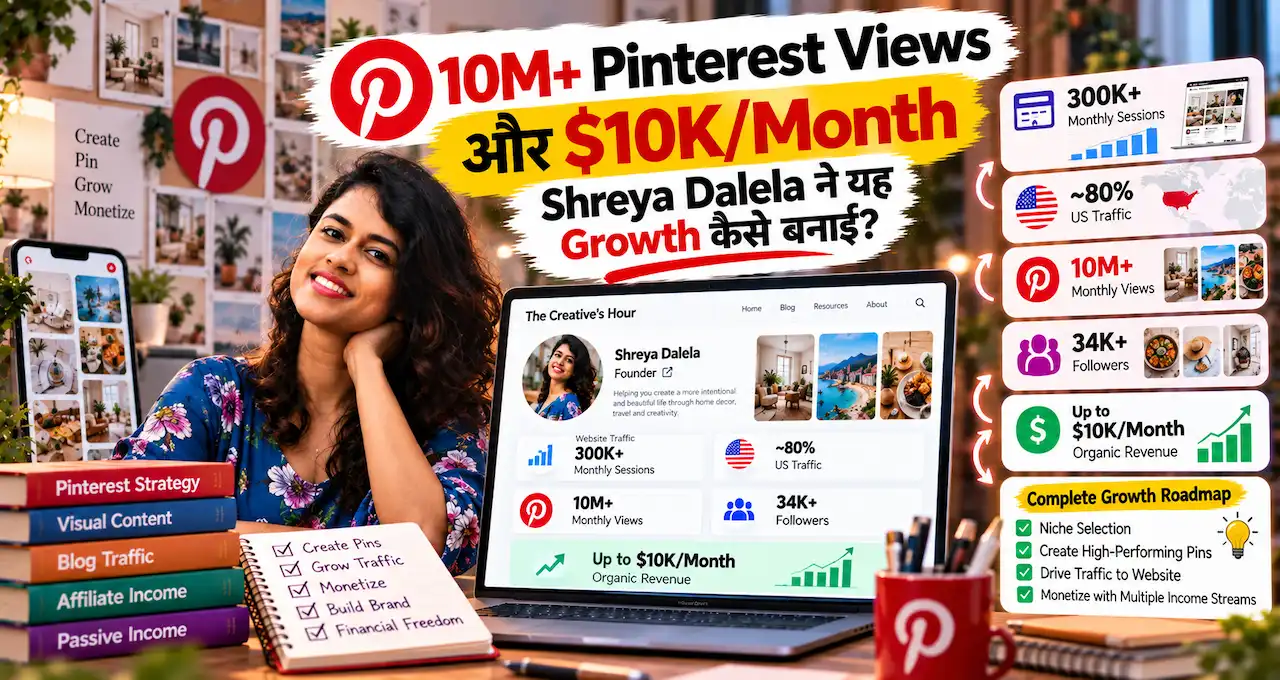
2024 में Shreya ने अपनी case study में 10M+ monthly Pinterest viewers, करीब 250,000 monthly website sessions और $10,000 per month तक की income self-report की थी। इन numbers को guarantee नहीं, बल्कि एक historical creator case study की तरह देखना चाहिए।
सबसे useful सवाल यही है—उनकी growth में कौन-सी चीज़ें genuinely repeatable थीं, और कौन-सी उनके scale, niche और timing का result थीं?
इस लेख में आप क्या सीखेंगे?
- Shreya की journey समझें
- 10M+ views का system
- Traffic कैसे monetize हुआ
- Seasonal strategy क्यों चली
- Repeatable tactics पहचानें
- गलत takeaways से बचें
Shreya Dalela कौन हैं और The Creatives Hour कैसे शुरू हुआ?
Shreya Dalela The Creatives Hour की founder हैं। उनका काम content strategy, creative ideas, visual storytelling और audience growth के आसपास रहा है।
अपनी original Pinterest case study में Shreya ने लिखा कि उन्होंने February 2021 में blog इस dream के साथ शुरू किया था कि एक दिन full-time artist बन सकें।
2023 तक वह अपने day job से निकलकर full-time creator बनने की position तक पहुँच गईं। धीरे-धीरे The Creatives Hour personal blog से एक content-led publishing business की तरह grow हुआ।
Site पर home decor, DIY, creative inspiration और seasonal ideas जैसे topics publish किए जाने लगे। यही content Pinterest जैसे visual-discovery platform के लिए natural fit भी बना।
अगर blogging को business में बदलने की अलग-अलग journeys समझनी हैं, तो Indian bloggers की growth stories भी useful perspective देती हैं।
Shreya Dalela की Pinterest Growth आखिर बनी कैसे?
उनकी story का सबसे important point यह है कि Pinterest ने सीधे उन्हें $10,000 नहीं दिए।
उनका basic model roughly ऐसा था:
Pinterest content → Website traffic → Display ads → Revenue
इसके बाद digital products जैसे additional monetization options भी explore किए गए।
Shreya के अनुसार Pinterest account 10M+ monthly viewers तक पहुँचा। वहाँ से करीब 250,000 monthly website sessions आने लगे।
जब website traffic बढ़ा, तो monetization system ने उस reach को revenue opportunity में बदलना शुरू किया।
यानी story का hero सिर्फ़ 10M views नहीं था। असली growth system था searchable content + consistent distribution + website ownership + monetization।
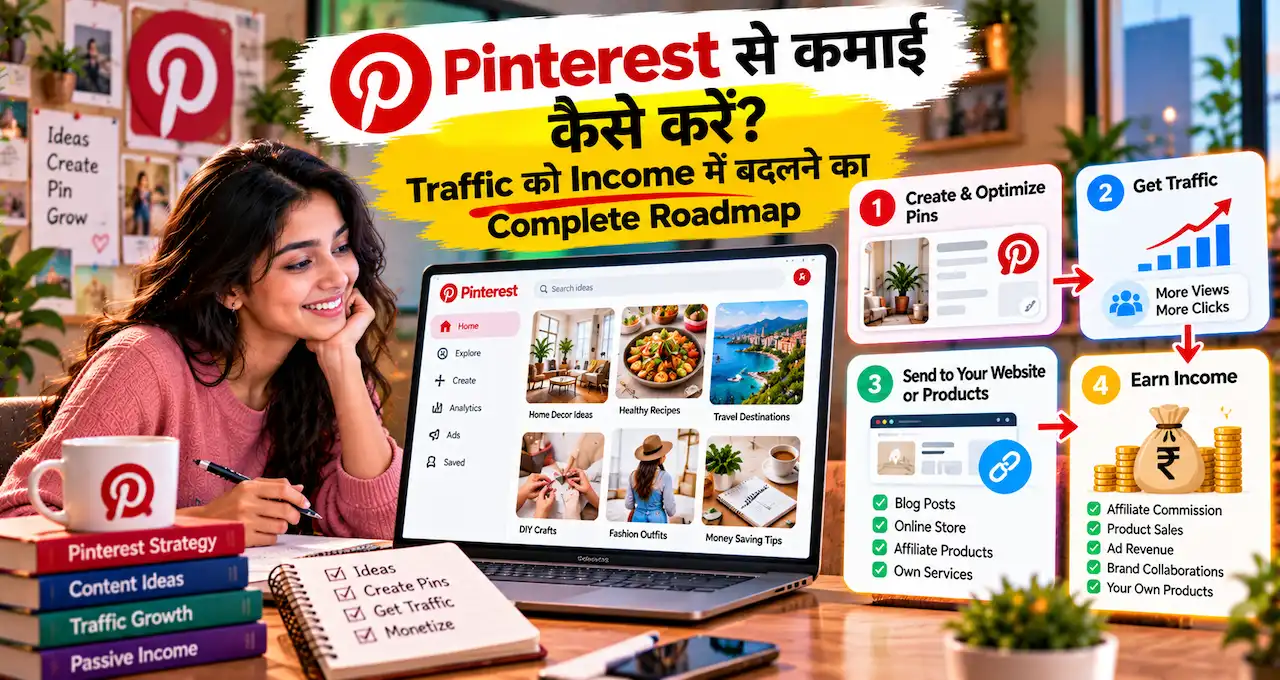
अगर आप इसी model को अपनी situation में practically लागू करना चाहते हैं, तो Pinterest traffic को income में बदलने वाला complete roadmap step-by-step execution समझाता है।
Growth hack 1: Seasonal content को trend आने के बाद नहीं, उससे पहले पकड़ना
Shreya की strategy में seasonal content एक important growth lever था।
उन्होंने seasons और recurring events के आसपास content तैयार किया। Pins में relevant seasonal keywords और उसी mood से match करने वाले visuals use किए गए।
Idea simple था: जब users किसी upcoming season या occasion के लिए planning शुरू करें, तब relevant content पहले से discover होने की position में हो।
यही Pinterest और normal social posting के बीच बड़ा difference है। कई Pinterest users सिर्फ़ “आज क्या हो रहा है?” नहीं देखते, बल्कि आने वाले event के लिए ideas save करते हैं।
इसलिए repeatable lesson “Christmas content इसी महीने publish करें” जैसी fixed date नहीं है।
बेहतर rule है:
Seasonal demand को पहले identify करें → content पहले तैयार करें → relevant search intent को target करें।
India-focused creator के लिए यही logic Diwali decor, wedding season, exam planning, summer recipes, monsoon gardening, gifting और New Year planning पर apply हो सकता है।
Trend तभी useful है जब वह आपके existing niche और monetization destination से fit करता हो।
Growth hack 2: Consistency को random posting नहीं, system बनाना
Shreya ने अपनी case study में लगभग 10 Pins per day publish करने की strategy describe की थी।
Scheduling के लिए Tailwind और visual creation के लिए Canva जैसे tools workflow का हिस्सा थे। Content calendar ने daily publishing को repeatable process बनाने में मदद की।
लेकिन यहाँ सबसे important distinction है: 10 Pins per day उनका operating system था, universal formula नहीं।
Beginner अगर सिर्फ़ यह number copy करे, तो content quality गिर सकती है। Consistency का मतलब maximum volume नहीं, बल्कि sustainable publishing rhythm है।
किसी creator के लिए 3–5 quality Pins per week भी सही starting point हो सकते हैं। Scale तभी करें जब destination content और visual quality maintain हो सके।
Pins के लिए हर visual zero se design करना भी ज़रूरी नहीं है। Own photos के साथ copyright-safe stock image resources useful हो सकते हैं, लेकिन licensing terms हमेशा check करनी चाहिए।
Shreya की strategy से repeatable lesson quantity नहीं, operational consistency है।
Growth hack 3: Monthly viewers से ज़्यादा website visitors पर focus करना
यह शायद Shreya की पूरी journey का सबसे valuable business lesson है।
10M monthly viewers impressive metric है। लेकिन business perspective से उसकी value तब बनी जब Pinterest users website तक पहुँचे।
इसके लिए Pins सिर्फ़ attractive नहीं होने चाहिए थे। उनका topic, keyword, visual और destination आपस में logically connected होना ज़रूरी था।
अगर कोई user “small apartment living room ideas” खोज रहा है, तो Pin को उसी intent का answer लगना चाहिए। Generic furniture advertisement comparatively कम relevant महसूस हो सकता है।
Creative businesses में यही principle और भी useful हो जाता है। उदाहरण के लिए, calligraphy business में Pinterest जैसे visual channels का use portfolio और discovery दोनों में मदद कर सकता है।
असल सवाल यह नहीं है कि Pin कितने लोगों को दिखा।
सवाल है: कितने relevant लोग Pin देखकर उस page तक पहुँचे जहाँ आपका business outcome बन सकता है?
यही reason है कि Shreya ने Pinterest को सिर्फ़ follower-building platform नहीं, distribution channel की तरह use किया।
Growth hack 4: Pinterest traffic को ads से monetize करना
Shreya की self-reported earning story यहाँ practical business model में बदलती है।
उनके अनुसार शुरुआत में website advertising के लिए Ezoic use किया गया। बाद में site required traffic level तक पहुँची तो Raptive जैसे ad network की तरफ move किया गया।
Case study में Shreya ने बताया कि Raptive acceptance के बाद monthly income लगभग $3,500 से बढ़कर $7,000 हुई। Traffic grow करने के बाद उन्होंने $10,000/month mark cross करने की भी बात कही।
इन numbers को सामान्य earning expectation नहीं मानना चाहिए।
Display-ad income niche, website traffic, visitor geography, ad demand, session quality और कई दूसरे factors से बदल सकती है। किसी दूसरे creator का traffic देखकर अपना expected income calculate करना misleading होगा।
यहाँ business model पर ध्यान देना ज़्यादा useful है:
Pinterest ने attention दिया → website ने traffic capture किया → ads ने traffic monetize किया।
और revenue दिखना profit होने के बराबर नहीं है। Online business में revenue, cost, profit और growth का फर्क समझना उतना ही important है जितना traffic बढ़ाना।
Growth hack 5: एक income source पर रुकने के बजाय digital products की तरफ बढ़ना
Shreya ने ads के बाद digital products को additional monetization layer के रूप में भी discuss किया।
Ebooks, online courses और printables जैसे formats possible options थे। उनके niche audience के लिए digital printable store जैसी direction भी explore की गई।
यह step important है क्योंकि ad revenue largely traffic और advertising economics पर depend कर सकता है।
Digital product में creator को product, price और offer पर comparatively ज़्यादा control मिलता है। लेकिन product तभी useful है जब existing audience को उसकी real need हो।
इसलिए repeatable lesson “हर blogger ebook बनाए” नहीं है।
बेहतर sequence है:
Audience समझें → useful traffic build करें → repeated needs identify करें → फिर suitable monetization layer add करें।
यानी monetization को content से अलग नहीं, audience journey के next step की तरह देखना चाहिए।
Shreya की पूरी strategy एक funnel में कैसी दिखती है?
उनकी journey को simplify करें तो system कुछ ऐसा दिखता है:
Searchable या seasonal idea
↓
Useful article/content asset
↓
Pinterest-friendly visual
↓
Consistent distribution
↓
Pinterest search/discovery
↓
Website click
↓
Website sessions
↓
Display-ad revenue
↓
Digital products से diversification
इस flow में Pinterest अकेला business नहीं है।
Pinterest traffic layer है। Website और उसके monetization methods earning engine हैं।
यही distinction इस case study को normal social-media success story से अलग करता है।
कौन-सी tactics repeatable हैं और कौन-सी नहीं?
| Shreya की tactic/result | क्या repeatable है? | क्या copy नहीं करना चाहिए? |
|---|---|---|
| Seasonal content | Demand cycles research करना | Exact same seasonal topics |
| Pinterest Trends | Search intent समझना | हर trending topic पर content बनाना |
| 10 Pins/day | Consistency का principle | Exact daily number |
| Tailwind scheduling | Workflow automate करना | Tool को growth guarantee मानना |
| Canva visuals | Clear visual communication | Same template repeatedly copy करना |
| Keyword optimisation | Search intent match करना | Keyword stuffing |
| Website traffic focus | Highly repeatable | Views को revenue मानना |
| Display ads | Traffic monetization model | Same income expect करना |
| Digital products | Income diversify करना | Audience fit के बिना product बनाना |
| $10K/month result | Case-study context | Income benchmark बनाना |
यह table पूरी journey का सबसे practical summary है।
Shreya के results copy नहीं किए जा सकते। लेकिन उनके decision system को समझकर अपने niche, resources और audience के अनुसार adapt किया जा सकता है।
इस case study का सबसे बड़ा lesson क्या है?
Shreya की journey को सिर्फ़ “Pinterest से $10K/month” headline तक सीमित करना शायद सबसे important सीख miss करना होगा।
असल lesson Pinterest से भी बड़ा है: जिस platform से attention मिल रहा है, उस attention का destination क्या है?
अगर सारी audience किसी third-party platform पर ही रहती है, तो creator के पास monetization और customer relationship पर limited control हो सकता है।
Website, email list, product catalogue या service page जैसे owned assets इस gap को कम कर सकते हैं।
इसी वजह से Shreya का website-first model interesting है। Pinterest discovery देता था, लेकिन actual business infrastructure Pinterest के बाहर था।
Pinterest पर उनका approach normal social posting से अलग क्यों था?
Normal social media पर creator कई बार current moment, followers और engagement पर focus करता है।
Pinterest पर Shreya का model search intent और future planning के आसपास था। User अभी क्या देखना चाहता है, इसके साथ यह भी important है कि वह अगले महीने किस चीज़ की planning कर रहा है।
इसीलिए content topic product-centric होने के बजाय problem- या inspiration-centric हो सकता है।
उदाहरण:
“Wooden Chair”
की जगह:
“Small Reading Nook Ideas”
या:
“Small Apartment Living Room Ideas”
दूसरे examples हो सकते हैं:
- Budget wedding decor ideas
- Diwali entrance decoration
- Small balcony makeover
- Weekly meal planning ideas
- Printable study schedule
हर case में creator product या content को उस language से connect कर रहा है जिसे user naturally search कर सकता है।
यही approach pretty graphics को discoverable content assets में बदलता है।
Shreya की journey से Indian creators क्या सीख सकते हैं?
पहला lesson है कि Pinterest income को direct platform payment की तरह नहीं सोचना चाहिए।
Blog, ecommerce store, digital product, affiliate content या service website Pinterest traffic का destination बन सकते हैं।
दूसरा lesson owned asset का है।
Followers platform पर होते हैं। Website, products, portfolio और customer list आपके business infrastructure का हिस्सा बन सकते हैं।
तीसरा lesson patience का है।
Search-based और seasonal content कई बार instant result के बजाय समय के साथ traffic build करता है। हर Pin को दो दिन में success या failure declare करना useful नहीं होगा।
चौथा lesson measurement का है।
Views अच्छे लगते हैं, लेकिन earning-oriented creator को website visits, leads, sales और revenue भी track करना चाहिए।
अगर आप Pinterest के साथ दूसरे income options भी compare कर रहे हैं, तो AI और digital skills से कमाई के practical models broader starting point दे सकते हैं।
अगर आज कोई Shreya की strategy से शुरुआत करे तो क्या copy करे?
Exact 2024 routine copy करना ज़रूरी नहीं है। नीचे वाला framework ज़्यादा useful है।
1. Searchable niche चुनें
ऐसा topic useful हो सकता है जहाँ लोग ideas, inspiration, planning, solutions या products actively खोजते हों।
Niche सिर्फ़ popular नहीं, monetizable भी होना चाहिए।
2. Owned destination बनाएँ
Blog, product page, service page या store ऐसा destination देता है जहाँ Pinterest traffic के बाद अगला action हो सकता है।
Pin बनाने से पहले destination का purpose clear रखें।
3. Seasonal और evergreen content mix करें
Seasonal content demand spikes capture कर सकता है। Evergreen content पूरे साल recurring discovery ला सकता है।
दोनों का balance content calendar को stable बनाता है।
4. Sustainable publishing system बनाएँ
Shreya के 10 Pins/day को target बनाने की ज़रूरत नहीं है।
आपका system इतना realistic होना चाहिए कि कुछ weeks बाद भी quality के साथ continue किया जा सके।
5. Traffic के बाद का result measure करें
Impressions या views पहला layer हैं।
Website visits, enquiries, affiliate conversions, product sales और ad revenue वह data है जो बताएगा कि content business result दे रहा है या नहीं।
उनकी success को गलत तरीके से कैसे नहीं पढ़ना चाहिए?
पहली mistake होगी यह मानना कि 10M views = $10K/month का fixed formula है।
Shreya की income website traffic, content scale और monetization infrastructure के combination से बनी थी।
दूसरी mistake 10 Pins/day को magic number समझना है।
यह उनकी strategy का हिस्सा था, लेकिन growth का पूरा कारण नहीं था।
तीसरी mistake website या monetization destination के बिना सिर्फ़ account grow करना होगी।
अगर user click करने के बाद meaningful destination तक नहीं जाता, तो large reach का commercial value limited रह सकता है।
चौथी mistake historical case study को current guarantee समझना होगी।
Platforms evolve होते हैं, audience behaviour बदलता है और monetization economics भी बदल सकती है।
Case study का सही उपयोग result copy करना नहीं, growth mechanics समझना है।
आख़िर में एक छोटी सी बात
Shreya Dalela की Pinterest story दिखाती है कि बड़ी reach तभी business बनती है जब उसके पीछे content, search intent, distribution और monetization का system हो।
10M+ views headline है, लेकिन असली कहानी viewer को website visitor और फिर revenue opportunity में बदलने की है।
उनकी exact income, niche और publishing volume हर creator के लिए repeat नहीं होंगे। लेकिन seasonal planning, consistent publishing, owned website और diversified monetization जैसे principles useful सीख देते हैं।
Shreya की journey में आपको सबसे useful lesson कौन-सा लगा—seasonal content, consistency, website traffic या monetization?
अगर आप Pinterest को अपने blog या business के लिए use कर रहे हैं, तो अपना experience और current challenge comment में share करें।