














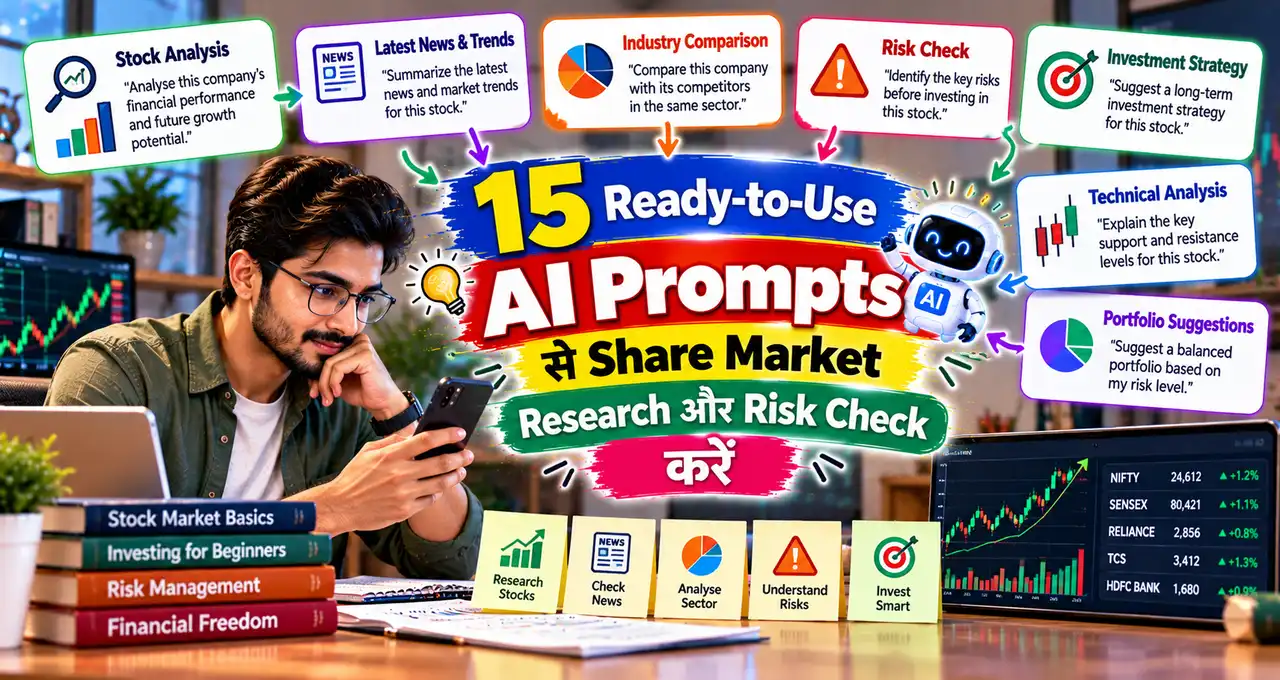






Share market research में AI useful assistant बन सकता है, लेकिन उसे “कौन-सा stock खरीदूँ?” पूछकर blind decision लेना सही तरीका नहीं है; बेहतर use यह है कि AI से company, financial statements, valuation questions, risks और missing information को structured तरीके से analyse करवाया जाए।
SEBI investor education material भी समझकर invest करने, regulated products चुनने और fraud से बचने पर जोर देता है। इसलिए इस guide के prompts buy/sell calls देने के बजाय research framework, verification और risk-checking पर focus करते हैं.
हर prompt में एक important rule रहेगा: AI को data invent नहीं करना है। अगर current number, filing या ratio verify नहीं है, तो उसे clearly “verify from official source” लिखना होगा.
इस लेख में आप क्या सीखेंगे?
- AI research सही करना
- 15 ready-to-use prompts
- Company fundamentals समझना
- Risk signals पहचानना
- Valuation questions बनाना
- Master Prompt customize करना
Share Market Research में AI की सही role क्या है?
AI का सबसे practical role decision support है, decision replacement नहीं.
आप AI से यह काम करवा सकते हैं:
- Annual report की जानकारी organize करना.
- Revenue, profit, debt और cash flow trends explain कराना.
- Business model के strengths और weaknesses list कराना.
- Competitor comparison का framework बनवाना.
- Valuation के लिए पूछने वाले questions तैयार कराना.
- Risk factors summarize कराना.
- Management commentary में changes identify कराना.
- Research checklist बनवाना.
लेकिन AI से “इस stock में पैसा लगाना चाहिए या नहीं?” जैसा final personalized decision नहीं लेना चाहिए.
SEBI की investor website investors को समझकर निवेश करने और investment fraud से सावधान रहने की सलाह देती है. Guaranteed return या “sure-shot profit” जैसी भाषा red flag हो सकती है. इसलिए इस article में किसी भी prompt को guaranteed-return tool की तरह use नहीं किया गया है.
Personal finance की basic foundation clear रखना भी जरूरी है. अगर income, expenses, savings और investing का broader framework समझना हो, तो Personal Finance की practical guide useful रहेगी.
AI Prompt में कौन-सा Data देना चाहिए?
Research output की quality input पर depend करती है. Company का सिर्फ़ नाम देकर analysis माँगेंगे तो AI पुराने data, assumptions या incomplete context पर जवाब दे सकता है.
जहाँ possible हो, prompt के साथ verified source data दें:
- Latest annual report.
- Quarterly results.
- Exchange filing.
- Investor presentation.
- Balance sheet.
- Profit and loss statement.
- Cash flow statement.
- Management commentary.
- Official shareholding data.
अगर AI live web access नहीं रखता, तो current price, latest results या latest corporate action खुद verify करें.
AI कभी confident tone में गलत answer दे सकता है. इस problem को समझने के लिए AI Hallucination क्या है वाली guide useful है.
Research शुरू करने से पहले 6 Rules
- Rule 1: AI output को source नहीं, analysis draft मानें.
- Rule 2: Current numbers official filings से verify करें.
- Rule 3: One-year growth देखकर long-term quality assume न करें.
- Rule 4: Profit और cash flow दोनों देखें.
- Rule 5: Debt, dilution और contingent liabilities ignore न करें.
- Rule 6: Social-media tips को research का substitute न बनाएं.
Emergency money को volatile assets में लगाने से पहले liquidity का अलग buffer होना practical है. Emergency Fund guide इस basic financial safety layer को समझाती है.
15 Ready-to-Use AI Prompts for Share Market Research
नीचे prompts का goal research को systematic बनाना है. ये investment advice, target price या guaranteed-return calls नहीं हैं. जहाँ [DATA] लिखा है, वहाँ preferably official/verified information paste करें.
Prompt 1: Company Business Model समझें
Use when: किसी company को पहली बार research कर रहे हों.
मैं [COMPANY NAME] को investment research के लिए समझना चाहता/चाहती हूँ.
नीचे company की verified information/annual-report notes हैं:
[PASTE VERIFIED BUSINESS DESCRIPTION]इसे simple Hindi-English में analyse करें.
Output:
1. Company क्या बेचती है?
2. Main customers कौन हैं?
3. Revenue किन products/services/geographies से आता है?
4. Business recurring है या cyclical?
5. Revenue growth के possible drivers क्या हैं?
6. Business model की 5 strengths.
7. Business model की 5 risks.
8. ऐसी कौन-सी information अभी missing है जिसे official source से verify करना चाहिए?Important:
– कोई revenue number, market share, customer name या growth rate invent न करें.
– Latest data unavailable हो तो clearly “current filing से verify करें” लिखें.
– Buy, sell, hold या target price recommendation न दें.Editable fields:
Company: [COMPANY]
Source period: [FY/QUARTER]
Source text: [PASTE DATA]
यह prompt research का starting point है. पहले business समझें, फिर ratios पर जाएँ.
Prompt 2: Revenue और Profit Trend Analyse करें
Use when: 3–5 साल का financial trend समझना हो.
नीचे [COMPANY] के verified yearly financial numbers दिए हैं.
Data:
[PASTE REVENUE, OPERATING PROFIT, NET PROFIT FOR 3–5 YEARS]इन numbers को बिना extra data invent किए analyse करें.
Output:
1. Revenue trend.
2. Net profit trend.
3. Growth consistent है या volatile?
4. Revenue और profit की direction same है या diverge कर रही है?
5. किस year में unusual change दिखता है?
6. उस unusual change को समझने के लिए कौन-सी filing/management note check करनी चाहिए?
7. 5 follow-up research questions.अगर data insufficient है तो exact missing field बताएं.
Do not:
– Future profit forecast invent करें.
– Target price दें.
– One-time item को recurring earning मान लें.
– सिर्फ़ percentage growth देखकर company को “good investment” declare करें.Editable fields:
Company: [COMPANY]
Period: [YEARS]
Financial data: [PASTE VERIFIED DATA]
Trend analysis direction दिखाता है, certainty नहीं. एक unusual year के पीछे acquisition, commodity price, accounting item या base effect हो सकता है.
Prompt 3: Debt Risk Check करें
Use when: Borrowing और balance-sheet pressure समझना हो.
मैं [COMPANY] का debt risk समझना चाहता/चाहती हूँ.
Verified data:
Total debt: [DATA]
Cash/cash equivalents: [DATA]
Equity/net worth: [DATA]
Finance cost: [DATA]
Operating profit/EBIT: [DATA]
Cash flow from operations: [DATA]
Period: [PERIOD]Analyse:
1. Debt level किस direction में जा रहा है?
2. Debt-to-equity ratio calculate करें, अगर data sufficient है.
3. Interest burden समझने के लिए कौन-से ratios useful हैं?
4. Operating cash flow debt servicing को support करता दिखता है या नहीं?
5. Refinancing, interest-rate या maturity risk समझने के लिए कौन-सी extra information चाहिए?
6. 5 red flags और 5 reassuring signals की checklist दें.हर calculation formula दिखाकर करें.
Missing data invent न करें.
Final investment recommendation न दें.
Debt कम होना automatically अच्छा और debt ज्यादा होना automatically खराब नहीं है. Industry, cash flow और borrowing purpose context देते हैं.
Prompt 4: Cash Flow vs Profit Check
Use when: Accounting profit cash में convert हो रहा है या नहीं, यह समझना हो.
[COMPANY] के नीचे दिए verified numbers compare करें:
Net profit:
[DATA]Cash flow from operations:
[DATA]Capital expenditure:
[DATA]Receivables:
[DATA]Inventory:
[DATA]Period:
[PERIOD]Analyse:
1. Profit और operating cash flow का relation.
2. क्या cash conversion consistent है?
3. Receivables तेजी से बढ़ रहे हों तो इसका possible meaning क्या हो सकता है?
4. Inventory growth किन business situations में normal या risky हो सकती है?
5. Free cash flow समझने के लिए कौन-से steps चाहिए?
6. 7 questions बनाएं जो annual report/notes में check करने चाहिए.Do not accuse the company of accounting manipulation without evidence.
Do not invent missing balance-sheet figures.
Clearly separate observation, possible explanation and verified fact.
यह prompt especially useful है क्योंकि सिर्फ़ net profit देखकर business quality का complete picture नहीं मिलता.
Prompt 5: Balance Sheet Quick Health Check
Use when: Assets, liabilities और liquidity को structured तरीके से देखना हो.
नीचे [COMPANY] की verified balance-sheet summary है:
[PASTE DATA]एक beginner-friendly balance-sheet health check बनाएं.
Review:
1. Total assets trend.
2. Total liabilities trend.
3. Debt trend.
4. Cash position.
5. Receivables.
6. Inventory.
7. Working capital.
8. Equity/net worth trend.हर point में:
– Data क्या दिखाता है?
– कौन-सा interpretation possible है?
– कौन-सी extra information verify करनी चाहिए?फिर:
– 5 positive indicators.
– 5 caution indicators.
– 5 questions for deeper research.No buy/sell recommendation.
No missing number invention.
No “safe company” label सिर्फ़ balance sheet देखकर.
Balance sheet snapshot है. उसे cash flow और business cycle के साथ पढ़ना बेहतर होता है.
Prompt 6: ROE और ROCE को सही Context में समझें
Use when: Return ratios compare करने हों.
मैं [COMPANY] के ROE और ROCE को समझना चाहता/चाहती हूँ.
Verified inputs:
ROE: [DATA]
ROCE: [DATA]
Debt: [DATA]
Equity: [DATA]
EBIT/operating profit: [DATA]
Industry context: [IF VERIFIED]
Period: [PERIOD]Explain:
1. ROE क्या बताता है?
2. ROCE क्या बताता है?
3. High ROE debt की वजह से artificially boosted हो सकता है या नहीं—इस data में क्या check करना चाहिए?
4. 3–5 year trend क्यों useful है?
5. Same-industry comparison कैसे करें?
6. किन cases में high ROE/ROCE misleading हो सकता है?अगर formula inputs available हों तो calculation दिखाएं.
Industry average invent न करें.
High ratio देखकर investment recommendation न दें.
Ratio अकेले answer नहीं है. उसका source, trend और capital structure context देते हैं.
Prompt 7: Company vs Competitor Comparison
Use when: दो companies का neutral comparison चाहिए.
[COMPANY A] और [COMPANY B] का research comparison करें.
मैं नीचे verified comparable data दे रहा/रही हूँ:
[PASTE SAME-PERIOD DATA FOR BOTH]Compare only on fields where both companies have comparable data.
Create a table with:
– Revenue growth.
– Profit trend.
– Operating margin.
– Debt.
– Operating cash flow.
– ROE/ROCE if supplied.
– Valuation metrics if supplied.
– Major business segment exposure.
– Key risks.Then explain:
1. कहाँ Company A stronger दिखती है?
2. कहाँ Company B stronger दिखती है?
3. Comparison में कौन-से data gaps हैं?
4. Different business mix की वजह से कौन-से ratios सीधे compare नहीं करने चाहिए?Do not declare a winner unless criteria are explicitly defined.
Do not invent industry data or latest market price.
Do not give personalized investment advice.
Comparison तभी fair है जब periods और accounting context similar हों.
Prompt 8: Valuation Questions तैयार करें
Use when: P/E या दूसरे valuation ratios को blindly follow नहीं करना चाहते.
मैं [COMPANY] की valuation को समझना चाहता/चाहती हूँ, लेकिन direct target price नहीं चाहिए.
Verified data:
Current price/date: [DATA]
EPS: [DATA]
P/E: [DATA]
Book value/PB: [IF AVAILABLE]
EV/EBITDA: [IF AVAILABLE]
Growth history: [DATA]
Debt: [DATA]
Peer data: [IF VERIFIED]Create a valuation research checklist.
Explain:
1. P/E किस context में useful है?
2. High P/E किन reasons से हो सकता है?
3. Low P/E किन risks की वजह से हो सकता है?
4. Cyclical company में current earnings misleading क्यों हो सकती हैं?
5. कौन-से peer comparisons meaningful होंगे?
6. Growth assumptions verify करने के लिए कौन-से questions पूछने चाहिए?
7. 3 valuation scenarios बनाएं: conservative, base, optimistic—but बिना target price calculate किए.Do not invent peer multiples or growth rates.
Do not call a stock cheap/expensive without defined assumptions.
Valuation number से पहले assumptions समझना ज्यादा useful है.
Prompt 9: Management Commentary Analyse करें
Use when: Annual report, earnings call या investor presentation पढ़ रहे हों.
नीचे [COMPANY] management commentary का verified text है:
[PASTE TEXT]इसे neutral तरीके से analyse करें.
Output:
1. Management किन growth drivers पर जोर दे रहा है?
2. किन risks/challenges को acknowledge किया गया है?
3. कौन-से statements measurable हैं?
4. कौन-से statements broad/promotional हैं?
5. पिछले period से tone या priorities में क्या बदलाव दिखता है—सिर्फ़ supplied text के आधार पर?
6. कौन-से promises/targets future filing में verify करने चाहिए?
7. 10 follow-up questions investor को पूछने चाहिए.Do not assume management claims are true सिर्फ़ इसलिए कि वे stated हैं.
Do not accuse management of misleading behavior without evidence.
Separate quote-derived fact, interpretation and question.
Management language research input है, guarantee नहीं.
Prompt 10: Annual Report Risk Factors Summarize करें
Use when: Risk section बहुत लंबा हो.
नीचे [COMPANY] annual report का risk-factor section दिया है:
[PASTE VERIFIED TEXT]इसे summarize करें.
Create categories:
– Demand risk.
– Competition risk.
– Regulatory risk.
– Debt/liquidity risk.
– Raw material/input-cost risk.
– Customer concentration.
– Geographic risk.
– Technology/disruption risk.
– Governance-related risk if explicitly stated.
– Other company-specific risks.For each risk:
1. Exact issue क्या है?
2. Company ने mitigation क्या बताया है?
3. Mitigation claim को verify करने के लिए कौन-सा data चाहिए?
4. Risk short-term है या structural हो सकता है?Do not add risks that are not supported unless clearly labelled “general research question”.
Do not minimize risks सिर्फ़ company ने mitigation लिखा है इसलिए.
Risk section को skip करना research की common mistake है.
Prompt 11: Promoter और Shareholding Questions
Use when: Ownership structure समझनी हो.
[COMPANY] की verified shareholding information नीचे है:
[PASTE SHAREHOLDING DATA]Analyse:
1. Promoter holding trend.
2. Institutional holding trend, if supplied.
3. Public holding trend.
4. Pledged shares data, if supplied.
5. Significant change कहाँ दिखता है?
6. उस change के possible reasons verify करने के लिए कौन-सी filing देखनी चाहिए?
7. Ownership structure से जुड़े 8 research questions बनाएं.Important:
– Promoter holding घटने का reason invent न करें.
– Institutional buying को automatic positive signal न मानें.
– Pledge होने या न होने पर final investment verdict न दें.
– Only supplied/verified data use करें.
Shareholding change signal हो सकता है, explanation नहीं. Reason official disclosure से verify करें.
Prompt 12: Red-Flag Checklist
Use when: Research में caution signals systematically देखना चाहते हों.
[COMPANY] के नीचे verified data और notes के आधार पर red-flag checklist बनाएं:
[PASTE DATA/NOTES]Check only where evidence exists:
– Persistent negative operating cash flow.
– Rapid receivables growth.
– Frequent equity dilution.
– Rising debt.
– Large related-party transactions.
– Auditor qualification or resignation.
– Promoter pledge.
– Repeated guidance misses, if documented.
– Sudden margin changes.
– Contingent liabilities.
– Regulatory actions, if verified.
– Unusual one-time gains.For every item classify:
Green = no issue visible in supplied data.
Amber = needs deeper verification.
Red = clear concern supported by supplied evidence.
Unknown = data missing.Do not label fraud without verified evidence.
Do not invent regulatory cases.
List exact source/document to verify each Amber/Unknown item.
Checklist का काम suspicion बढ़ाना नहीं, disciplined verification कराना है.
Prompt 13: Bull Case vs Bear Case
Use when: Confirmation bias कम करना हो.
मैं [COMPANY] पर balanced research करना चाहता/चाहती हूँ.
Verified research notes:
[PASTE NOTES]दो separate cases बनाएं:
Bull Case:
– कौन-सी 5 चीजें सही जाएँ तो business improve हो सकता है?
– इन claims को support करने वाला supplied evidence क्या है?Bear Case:
– कौन-सी 5 चीजें खराब जाएँ तो business performance कमजोर हो सकता है?
– इन risks को support करने वाला supplied evidence क्या है?Then create:
– 5 indicators जो bull case को strengthen करेंगे.
– 5 indicators जो bear case को strengthen करेंगे.
– 5 neutral data points जिन्हें next result में monitor करना चाहिए.Do not favor one side.
Do not add price target.
Do not treat assumptions as facts.
Clearly label every assumption.
यह prompt “मुझे यह company पसंद है, इसलिए सिर्फ़ positive points दिखाओ” वाली bias कम करने में मदद कर सकता है.
Prompt 14: Quarterly Result Review
Use when: नया result आया हो.
[COMPANY] का latest quarterly result नीचे verified data के साथ दिया है:
[PASTE QUARTER DATA]Previous comparable quarter:
[PASTE COMPARABLE DATA]Analyse:
1. Revenue change.
2. Operating profit/margin change.
3. Net profit change.
4. Cash-flow data available हो तो उसका context.
5. Debt/working-capital change if supplied.
6. One-time items.
7. Management commentary changes.
8. कौन-सी चीजें temporary हो सकती हैं?
9. कौन-सी चीजें structural trend बन सकती हैं?
10. Next quarter में monitor करने के 7 metrics.Use year-on-year and quarter-on-quarter comparison only when periods are comparable.
Seasonal business में seasonality note करें.
No target price or buy/sell call.
एक quarter से long-term conclusion निकालना risky हो सकता है. Trend context जरूरी है.
Prompt 15: Final Research Summary Before Decision
Use when: Research notes बहुत फैल गए हों और एक final checklist चाहिए.
मैंने [COMPANY] पर नीचे research notes collect किए हैं:
[PASTE ALL VERIFIED NOTES]इन notes को decision-ready research summary में organize करें—but मेरे लिए buy/sell decision न लें.
Sections:
1. Business model.
2. Growth drivers.
3. Financial trend.
4. Balance-sheet quality.
5. Cash-flow quality.
6. Debt.
7. Management/governance questions.
8. Valuation questions.
9. Key risks.
10. Bull case.
11. Bear case.
12. Missing information.
13. Next official documents to verify.
14. “What could prove my current thesis wrong?” section.At the end, create a 10-point checklist where every item is marked:
Verified / Needs Verification / Not Available.Do not invent any missing information.
Do not provide guaranteed returns, target price or personalized investment recommendation.
Final summary का best use यह है कि decision लेने से पहले gaps साफ़ दिखाई दें.
AI Research करते समय कौन-सी Information Share न करें?
Research के लिए company public data काफी होता है. अपने demat login, broker password, OTP, PAN image, bank details या private portfolio identifiers AI chat में paste करने की जरूरत नहीं है.
Personal data और AI tools के बारे में practical precautions के लिए AI Privacy guide useful है.
Trading account security के लिए strong password, official app/site और alerts important हैं. Broader fraud-safety habits Online Banking safety guide में भी समझाई गई हैं.
AI Output Verify करने का 3-Layer System
Layer 1: Numbers
Revenue, profit, debt, EPS, shareholding और valuation inputs official source से match करें.
Layer 2: Context
One-time gain, merger, demerger, seasonality, accounting change या exceptional item तो नहीं?
Layer 3: Interpretation
AI ने fact और inference को mix तो नहीं किया?
Simple rule:
AI Observation
↓
Official Source Check
↓
Your Interpretation
↓
Decision
Prompt design improve करने के लिए Prompt Engineering guide useful foundation है.
Share Market Research में Diversification क्यों Important है?
एक अच्छी company research भी market risk खत्म नहीं करती. Business risk, valuation risk, sector risk और unexpected events रह सकते हैं.
SEBI investor education material risk mitigation में diversification और asset allocation जैसे concepts को explain करता है. इसका मतलब यह नहीं कि diversification loss impossible बना देता है, बल्कि concentration risk को manage करने में मदद कर सकता है.
अगर आपकी basic financial foundation कमजोर है, तो पहले emergency fund, insurance needs, debt obligations और short-term goals समझना ज्यादा practical हो सकता है.
Credit use का broader context समझना हो तो Credit Card guide और savings planning के लिए Emergency Fund guide relevant हैं.
Reusable Master Prompt: किसी भी Company की Research करें
जब आप ऊपर के अलग-अलग prompts की बजाय एक structured end-to-end research workflow चाहते हों, यह Master Prompt use करें.
You are my research assistant for educational stock-market analysis.
Your job is to organize and analyse verified information, not to give personalized investment advice.
Company: [COMPANY]
Research date: [DATE]
Research period: [PERIOD]
My verified source material:
[PASTE ANNUAL REPORT / RESULTS / FILINGS / NOTES]Rules:
– Use only supplied data for company-specific numbers unless I explicitly allow current web research.
– Never invent revenue, profit, debt, price, ratios, market share, promoter holding, peer data or management statements.
– When data is missing, write “Needs Verification”.
– Separate Fact, Calculation, Interpretation and Assumption.
– Show formulas for every calculated ratio.
– Flag one-time items.
– Compare periods only when comparable.
– Do not make guaranteed-return claims.
– Do not provide target price unless I explicitly ask for a valuation exercise and supply assumptions.
– Do not issue a personalized buy/sell/hold call.
– Highlight both positive and negative evidence.
– Add a “What could make this view wrong?” section.
– End with a verification checklist and official-source checklist.Output structure:
1. Business model.
2. Revenue drivers.
3. Profitability trend.
4. Balance sheet.
5. Cash flow.
6. Debt and liquidity.
7. Return ratios.
8. Shareholding/governance questions.
9. Valuation questions.
10. Bull case.
11. Bear case.
12. Key risks.
13. Missing information.
14. Documents to verify next.
15. Final research checklist.Editable fields:
Company: [COMPANY]
Date: [DATE]
Period: [PERIOD]
Source documents: [PASTE/LINK]
Peer companies: [OPTIONAL]
Specific concern: [OPTIONAL]
Master Prompt research को organize कर सकता है, लेकिन final financial decision आपकी risk capacity, goals और verified information पर depend करेगा.
इन Prompts का गलत इस्तेमाल कैसे हो सकता है?
- AI से fake latest price पूछकर उसे current मान लेना.
- Unverified WhatsApp/Telegram tip को prompt में “fact” लिख देना.
- Only positive case बनवाना.
- AI-generated target price को certainty मानना.
- One quarter की growth को permanent trend मानना.
- Guaranteed profit language पर भरोसा करना.
- Unregistered “guru” की advice को due diligence का substitute बनाना.
- Private account details AI tool में share करना.
SEBI investor resources social media “stock market guru” scams, guaranteed-profit claims और unregistered advisory से सावधान रहने पर जोर देते हैं.
आख़िर में एक छोटी सी बात
AI share market research को तेज़ और organized बना सकता है, खासकर जब annual report, results और financial numbers बहुत ज्यादा हों. लेकिन speed और accuracy एक ही चीज़ नहीं हैं.
Best workflow यह है कि AI से questions, summaries और comparisons बनवाएँ, फिर हर important number और claim official source से verify करें. Research का goal “AI से stock pick करवाना” नहीं, बल्कि अपने decision process को disciplined बनाना है.
आप अगली बार किस तरह का research prompt use करना चाहेंगे—financial statement analysis, valuation या quarterly result review? Comments में बताइए, और अगर यह framework useful लगा तो इसे उस investor के साथ share करें जो tips की बजाय research करना चाहता है.