















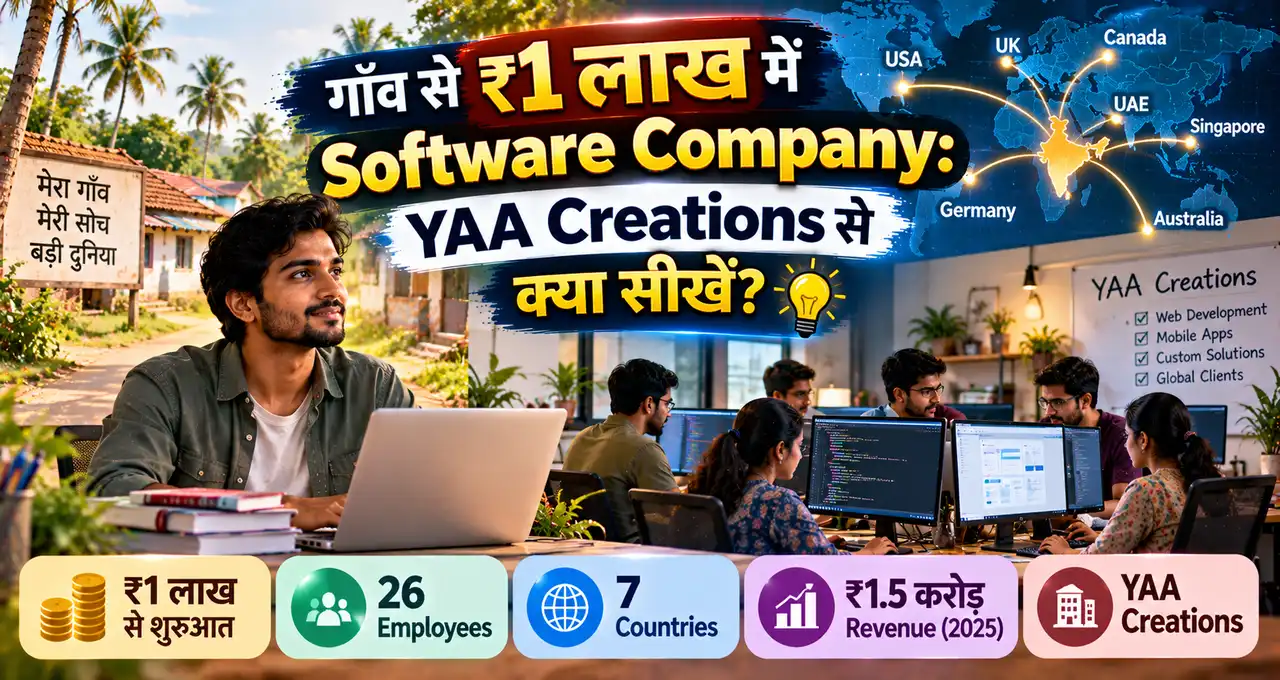





क्या एक छोटे गांव से software company शुरू करके international clients तक पहुँचा जा सकता है? Tamil Nadu की YAA Creations की reported journey इसी सवाल का एक दिलचस्प example देती है।
Founder Eswaran ने कई साल software development में काम किया, फिर परिवार से मिले लगभग ₹1 lakh और एक project के सहारे company शुरू की। शुरुआत में orders की कमी और lockdown जैसी मुश्किलें आईं, लेकिन business धीरे-धीरे बढ़ा।
यह कहानी सिर्फ़ बड़ी revenue headline के लिए नहीं, बल्कि skill, cash flow और client delivery की practical lessons के लिए पढ़ने लायक है।
इस लेख में आप क्या सीखेंगे?
- YAA Creations की शुरुआत
- Founder की software career journey
- शुरुआती investment और मुश्किलें
- Reported revenue और team growth
- Software company की practical lessons
- Low-budget startup planning framework
YAA Creations क्या है और इसकी शुरुआत कहाँ से हुई?
YAA Creations एक custom software development company है, जो अपने official website पर healthcare, finance और AI-driven software solutions जैसी services बताती है।
Founder Eswaran का संबंध तमिलनाडु के Namakkal district के Pallipatti गांव से बताया गया है।
कंपनी की कहानी यह दिखाती है कि technical expertise और client-focused delivery के आधार पर छोटे स्थान से भी professional services business विकसित किया जा सकता है।
सितंबर 2026 में YourStory की प्रकाशित रिपोर्ट में Eswaran ने अपने शुरुआती career, financial challenges और company के विस्तार के बारे में बात की।
इसलिए इस case study के revenue, employee और growth figures को reported claims के रूप में पढ़ना चाहिए, independent audited financial statements के रूप में नहीं।
यह कहानी सिर्फ़ कम investment वाले startup की नहीं है।
इसमें कई वर्षों की skill-building और मुश्किल समय में business को दोबारा खड़ा करने की कोशिश शामिल है।
Founder Eswaran की शुरुआती professional journey
रिपोर्ट के अनुसार Eswaran ने B.Sc और MCA की पढ़ाई की।
2011 में Chennai के एक software startup में उन्होंने Junior Software Developer के रूप में काम शुरू किया और शुरुआती monthly salary ₹3,500 बताई।
लगभग नौ वर्षों के अनुभव में developer से Technical Lead तक पहुँचना उनकी बाद की entrepreneurship journey के लिए महत्त्वपूर्ण रहा।
इससे एक practical सीख मिलती है: software services business शुरू करने से पहले सिर्फ़ programming language जानना पर्याप्त नहीं होता।
Client requirements समझना, timelines plan करना, bugs troubleshoot करना और team के साथ delivery करना भी सीखना पड़ता है।
बाद में health-related वजहों से उन्हें Chennai छोड़कर hometown लौटना पड़ा।
परिवार से बातचीत में अपने technical experience को business में बदलने का विचार उभरा।
यह किसी overnight startup idea का उदाहरण नहीं, बल्कि existing professional capability के नए उपयोग की कहानी है।
₹1 लाख का शुरुआती investment कहाँ लगा?
Published reporting के अनुसार एक software development order मिलने के बाद Eswaran ने भाई से लगभग ₹1 lakh लिया।
Chennai में ₹10,000 monthly rent वाला co-working space चुना, laptops खरीदे और काम शुरू किया।
उन्होंने एक महिला developer को ₹30,000 salary पर hire करने की भी बात कही।
यहाँ शुरुआती capital और running expense का फर्क महत्वपूर्ण है।
₹1 lakh सुनकर यह मान लेना गलत होगा कि उससे कई महीनों तक team salary, office rent, software subscriptions और client delivery आराम से चल सकती है।
शुरुआती business में cash flow बहुत जल्दी दबाव डाल सकता है।
एक beginner को investment के साथ तीन अलग plans बनाने चाहिए: initial setup cost, monthly operating expenses और client payments देर से मिलने की स्थिति में emergency reserve।
Product/service development में पैसा लगाने के साथ business survival का भी हिसाब रखें।
Lockdown और order की कमी से क्या चुनौती आई?
रिपोर्ट में बताया गया है कि company को शुरुआती project से सीमित revenue मिला।
फिर नए orders नहीं आए और COVID-related lockdown disruption भी सामने आया।
Eswaran को अपने क्षेत्र लौटना पड़ा; शुरुआत में hired employee को salary जारी रखना कठिन हो गया।
Founder के मुताबिक 2021 में पूरे साल में लगभग ₹3 lakh का project work हुआ।
यह किसी venture-backed hypergrowth कहानी जैसी शुरुआत नहीं थी।
Revenue बहुत सीमित था, जबकि fixed expenses और uncertainty लगातार बनी रही।
छोटे service business के लिए यही एक महत्त्वपूर्ण lesson है: client pipeline, payment milestones और expense control पर शुरू से ध्यान देना चाहिए।
एक बड़े project की उम्मीद से permanent cost बढ़ाना जोखिम पैदा कर सकता है।
फिर team और revenue कैसे बढ़े?
YourStory की रिपोर्ट के अनुसार company ने शुरुआती सीमित scale से आगे बढ़ते हुए 2022 में लगभग सात लोगों की team बनाई।
बाद के वर्षों में दस, पंद्रह और बीस लोगों तक विस्तार हुआ और reporting के समय 26-member team का दावा किया गया।
Eswaran ने reported annual revenue progression में ₹3 lakh, ₹7 lakh, ₹10 lakh और आगे लगभग ₹30 lakh जैसे milestones बताए।
वहीं 2025 के लिए ₹1.5 crore revenue और सात देशों में clients या business reach की बात प्रकाशित हुई है।
Revenue को profit न समझें। Revenue वह business income है जो services/projects से आती है; employees, infrastructure, taxes और दूसरी costs चुकाने के बाद बची रकम अलग होती है।
रिपोर्ट में founder ने profit share के बारे में भी दावा किया है, लेकिन उसे verified financial audit की तरह प्रस्तुत करना सही नहीं होगा।
इसी तरह 2026 के लिए ₹3 crore तक पहुँचने की उनकी उम्मीद reporting में आई थी।
यह target या forecast है, confirmed result नहीं।
YAA Creations किस तरह के projects पर काम करती है?
कंपनी की official website AI-driven custom software, automation और business-specific solutions पर जोर देती है।
प्रकाशित founder interview में healthcare, e-commerce, website development, mobile apps और survey-related काम का उल्लेख मिलता है।
एक reported example Salem Medical College Hospital के लिए QR-based attendant identity system का है।
ऐसे system में visitor/attendant management और entry tracking जैसी operational जरूरतें सामने आती हैं।
यह बताता है कि software services की demand सिर्फ़ consumer app बनाने तक सीमित नहीं है।
किसी local developer के लिए relevant lesson है: पहले customer की वास्तविक operational problem ढूँढें।
फिर simple website, booking workflow, inventory interface, reporting dashboard या sector-specific automation में से सही solution चुनें।
Technology चुनने से पहले problem definition ज़रूरी है।
एक छोटे project से company बनने तक क्या बदलता है?
पहला client मिलना और एक sustainable software company बनाना दो अलग बातें हैं।
पहले project में founder स्वयं requirements, coding, testing और delivery सँभाल सकता है।
लेकिन कई simultaneous projects होने पर roles, deadlines और quality control अलग तरीके से plan करने पड़ते हैं।
YAA Creations की story को इसी lens से देखिए। शुरुआत में founder के पास professional experience और एक order था।
समय के साथ team बढ़ी, लेकिन शुरुआती phase में client pipeline अनिश्चित रही।
इसका अर्थ है कि revenue के साथ काम करने का system भी बनाना पड़ा होगा।
यह operational interpretation है, company के verified internal process का दावा नहीं।
आप अपनी service company में तीन basic documents से शुरुआत कर सकते हैं: client requirement brief, project milestone tracker और delivery acceptance checklist।
पहला काम का scope स्पष्ट करेगा।
दूसरा deadlines और responsibility दिखाएगा। तीसरा final deliverables पर client का approval दर्ज करेगा।
इस तरह service quality किसी एक developer की याददाश्त पर निर्भर नहीं रहेगी।
छोटे business के लिए यह discipline महंगे project-management software से भी अधिक काम आ सकता है।
Revenue milestones से क्या सीखें और क्या नहीं?
Reported ₹1.5 crore annual revenue को लगभग ₹12.5 lakh प्रति month का simple arithmetic average मान सकते हैं।
लेकिन इसका मतलब हर महीने बराबर billing, cash collection या profit हुआ हो, ऐसा नहीं है।
Project services में invoices और collections अलग-अलग समय पर हो सकते हैं।
इसी तरह 26 employees के reported team size से per-employee profit निकालना उचित नहीं है।
Salaries, contractors, software tools, taxes, business development और infrastructure सहित वास्तविक costs का complete audited breakdown यहाँ उपलब्ध नहीं है।
युवा founders के लिए बेहतर measurement तीन हैं: कितने qualified enquiries आए, कितने projects agreed scope के भीतर पूरे हुए, और कितने clients दोबारा आए।
Revenue headline तभी useful है जब उसके पीछे delivery quality और cash collection भी समझ आए।
YAA Creations की success को प्रेरणा की तरह पढ़ें, ready-made formula की तरह नहीं।
Experience, support system, location और customer demand हर founder के लिए अलग होंगे।
इस success story की सबसे बड़ी practical सीख
YAA Creations की journey का एक हिस्सा ₹1 lakh investment है, लेकिन पूरी कहानी उस रकम से शुरू नहीं होती।
पहले कई साल का software experience आया, फिर शुरुआती client, financial struggle, small team delivery और धीरे-धीरे business expansion।
जो पाठक आज अपना software business शुरू करना चाहता है, उसके लिए सही takeaway है: पहले real skill और customer problem, फिर dependable service, उसके बाद repeatable client acquisition।
Scale और global reach आगे की possibilities हैं, immediate promises नहीं।
अगर आप career transition plan कर रहे हैं तो AI के दौर में career planning और घर से low-investment business पर practical resources भी देख सकते हैं।
गांव से global clients तक पहुँचने का business model
Software services location-independent हो सकती हैं, लेकिन client trust अपने-आप नहीं बनता।
Portfolio, references, project specification, security practices और timely communication के बिना international client पाना कठिन है।
YAA Creations की reported multi-country reach इस संभावना को दिखाती है कि काम की delivery और specialization सही हो तो office का location ही business का अंतिम निर्णय नहीं करता।
फिर भी हर ग्रामीण software startup को global orders मिलेंगे, ऐसा अनुमान नहीं लगाया जा सकता।
यदि आपकी team local town से काम करती है तो पहले reliable internet, project communication, version control, backups और contractual terms पर ध्यान दें।
Client feedback collect करें और completed projects को permission लेकर portfolio में दिखाएँ।
Remote working का मतलब quality standards कम होना नहीं है।
शुरुआती अवसर समझने के लिए गाँव में business ideas को भी देख सकते हैं।
Startup शुरू करने से पहले अपना 90-day plan बनाएँ
पहले 30 दिनों में अपनी एक core service चुनें। उदाहरण के लिए clinic appointment website या inventory report dashboard।
उसी service का simple working demo तैयार करें और दो real use cases लिखें।
साथ में pricing assumptions और deployment costs भी नोट करें।
अगले 30 दिनों में 15 संभावित clients से उनकी existing process के बारे में बात करें।
पहले sales pitch देने के बजाय problems समझें।
कौन-सा manual काम repeat होता है? कहाँ data खोता है?
किस report को बनाने में समय लगता है? फिर सबसे स्पष्ट problem के लिए छोटा paid pilot propose करें।
आखिरी 30 दिनों में pilot deliver करें और written feedback लें।
Client का काम वास्तव में बेहतर हुआ या नहीं, यह verify करें।
अगर customer को useful result मिला है तो maintenance arrangement या next feature development पर चर्चा करें।
इस roadmap का मकसद 90 दिनों में निश्चित revenue या successful company बनाने की guarantee देना नहीं है।
यह तय करने की practical process है कि आपकी technical skill के लिए real paying demand मौजूद है या नहीं।
आप idea से पहले customer तक का roadmap भी देख सकते हैं।
Client project का quotation और payment plan कैसे तय करें?
मान लीजिए एक local clinic appointment booking interface बनवाना चाहता है।
सबसे पहले confirm करें कि क्या उसे केवल enquiry form चाहिए या staff login, appointment calendar, notifications और patient data storage भी चाहिए।
ये सभी अलग scope और security requirements बनाते हैं।
Quotation में discovery, UI, development, testing, deployment और support को स्पष्ट करें।
उदाहरण के लिए 30% advance, 40% accepted milestone पर और 30% final delivery पर रखने का arrangement client की सहमति से बन सकता है।
यह केवल illustrative payment structure है, universal rule नहीं।
Scope change का लिखित process रखें।
अगर initial agreement में सिर्फ़ booking calendar था और बाद में billing module जुड़ता है, तो नया estimate बनना चाहिए।
Otherwise छोटी company बहुत काम करके भी cash-flow pressure में आ सकती है।
Data privacy और access control को quote से बाहर की unnecessary luxury न समझें।
विशेषकर healthcare project में sensitive personal information शामिल हो सकती है।
Applicable law, confidentiality और technical safeguards पर appropriate specialist advice लेना ज़रूरी हो सकता है।
नई Software Company शुरू करने वाले क्या सीखें?
पहला कदम skill inventory बनाना है।
आप backend development, mobile apps, UI/UX, automation या website maintenance में क्या अच्छी quality से deliver कर सकते हैं?
दूसरा कदम narrow target client चुनना है, जैसे clinics, local retailers या coaching centres।
तीसरा कदम दो sample projects और clear quotation तैयार करना है।
चौथे चरण में client requirements लिखित रूप में लें।
Scope, milestones, revisions, payment terms, intellectual property और support responsibilities तय करें।
पाँचवाँ कदम operating runway समझना है।
नए business में office decoration से पहले stable connectivity, dependable equipment, backups और software licences का plan बेहतर है।
शुरुआत में हर service देने का promise न करें; एक service reliably deliver करना अधिक उपयोगी हो सकता है।
business शुरू करने का practical roadmap planning में मदद कर सकता है।
एक छोटे software service project का illustrative budget
मान लीजिए दो developers स्थानीय businesses के लिए basic custom website service शुरू कर रहे हैं।
पहले month का illustrative setup: existing laptops ₹0 अतिरिक्त cost, internet ₹1,500, essential paid tools ₹2,000, travel/customer meeting ₹2,500 और emergency reserve ₹15,000।
Total planned allocation ₹21,000 होगा।
यह कोई universal market cost नहीं है; computer availability, project scope और location के अनुसार काफी बदलाव संभव है।
Client के project से ₹25,000 billing होने का अर्थ ₹25,000 profit नहीं होगा।
इसमें development time, testing, revisions और maintenance support की opportunity cost भी जोड़ें।
Software service में सबसे जरूरी asset सिर्फ़ computer नहीं, delivery discipline होता है।
Contract के भीतर requested work पूरा करना और customer की operational जरूरत समझना long-term growth के लिए निर्णायक हो सकता है।
Growth के समय कौन-सी गलतियों से बचें?
छोटे IT businesses अक्सर हर enquiry पर yes कह देते हैं।
इससे team overload, missed deadlines और refunds जैसे risks बढ़ सकते हैं।
दूसरा खतरा एक ही बड़े client पर निर्भर रहना है। तीसरा है बिना written scope के अनगिनत changes स्वीकार करना।
Eswaran की reported journey में consistent skill development और team learning पर जोर है।
लेकिन यह सीख हर business में अपने context से लागू करनी होगी।
सिर्फ़ रोज़ technology पढ़ने से paid orders नहीं मिलते; sales, delivery और retention बराबर महत्त्व रखते हैं।
Growth के समय documented processes बनाएँ: code review, testing checklist, project handover, support response और data security।
Quality problems scale होने पर और महँगी हो सकती हैं।
छोटी team के लिए customer support workflow से भी सीख ली जा सकती है।
आख़िर में एक छोटी सी बात
YAA Creations की कहानी यह नहीं कहती कि कम पैसे लगाकर हर कोई तुरंत करोड़ों का business बना सकता है।
यह दिखाती है कि professional experience और client delivery से छोटे स्तर की शुरुआत को आगे बढ़ाया जा सकता है।
नई company शुरू करते समय headline figures से ज़्यादा अपनी skill, cash flow और first-customer plan पर ध्यान दें।
क्या आप गांव या छोटे शहर से software service शुरू करना चाहेंगे? Comments में बताएँ कि आपके लिए सबसे बड़ी challenge skill, clients या investment में से कौन-सी है।