








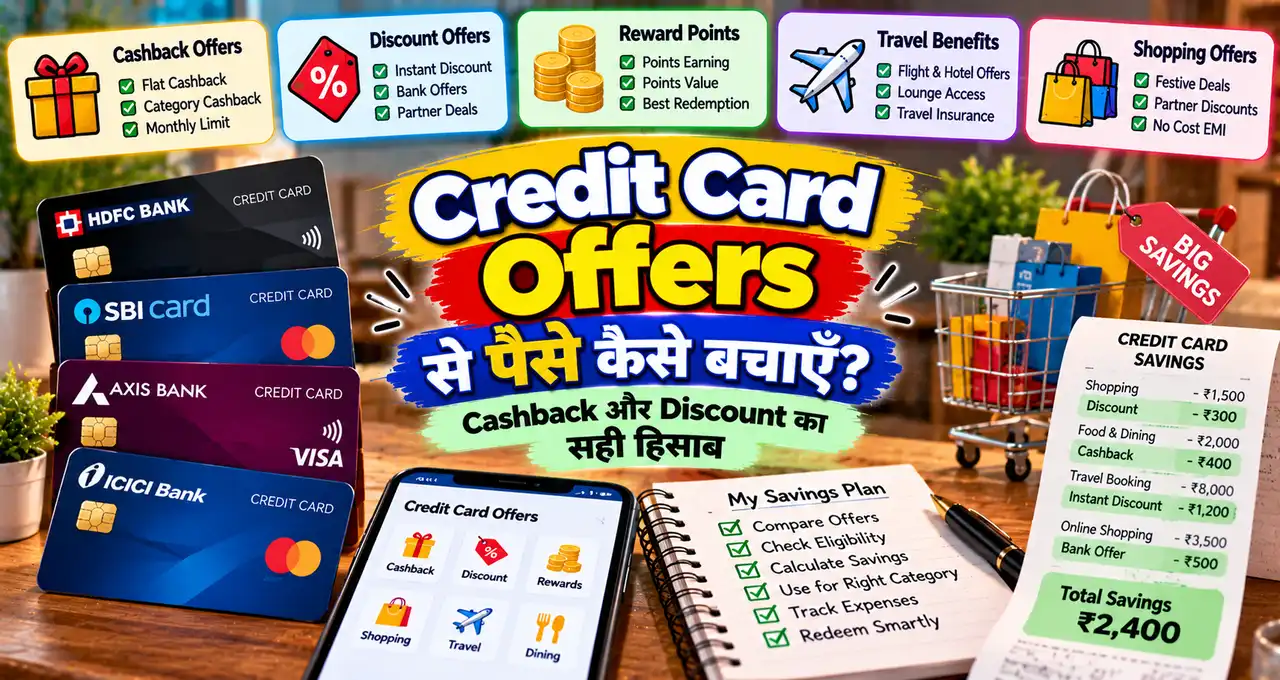




Credit card offer तभी saving है जब discount के बाद भी आप जरूरत से ज्यादा खर्च न करें और bill time पर पूरा चुका सकें।
“10% cashback” या “₹1,000 off” attractive लगता है, लेकिन हर offer के पीछे minimum spend, maximum cap, selected merchant, EMI condition, annual fee या reward expiry जैसी terms हो सकती हैं। अगर offer समझे बिना खर्च किया जाए, तो बचत से ज्यादा extra cost हो सकती है।
इस guide में cashback, instant discount, reward points, annual fee, minimum spend और bill-payment impact को simple examples के साथ समझेंगे।
इस लेख में आप क्या सीखेंगे?
- Cashback का सही हिसाब
- Discount cap समझना
- Minimum spend check करना
- Fees compare करना
- Interest risk समझना
- Offer trap से बचना
Credit Card Offer के 4 Common Types
Instant Discount
Checkout के समय amount तुरंत कम हो जाता है। Example: ₹10,000 की purchase पर 10% instant discount, लेकिन maximum discount ₹750 है। ऐसी स्थिति में saving ₹1,000 नहीं, ₹750 होगी।
Cashback
Cashback तुरंत या बाद में card account/statement में credit हो सकता है। Timing और eligibility issuer terms पर depend करती हैं।
Reward Points
Transaction पर points मिलते हैं, जिन्हें बाद में vouchers, travel, products या statement credit में use किया जा सकता है। Point का actual value redemption method पर depend कर सकता है।
Merchant Offer
Specific website, app, store, travel portal या category पर extra discount मिल सकता है। कई बार selected cards या transaction modes ही eligible होते हैं।
Credit card basic working समझनी हो तो Credit Card क्या है और कैसे काम करता है guide useful foundation है।
Headline Discount नहीं, Maximum Cap देखें
Offer लिखा है:
10% instant discount, maximum ₹750.
अगर purchase ₹5,000 है:
10% = ₹500
Cap = ₹750
Actual discount = ₹500
अगर purchase ₹10,000 है:
10% = ₹1,000
लेकिन cap = ₹750
Actual discount = ₹750
इसलिए सिर्फ़ percentage देखकर saving estimate न करें। Formula रखें:
Actual Discount = Lower of Percentage Discount or Maximum Cap
Monthly या Quarterly Cap अलग हो सकती है
कुछ cards category-wise cashback देते हैं, लेकिन cap transaction पर नहीं, बल्कि month या billing cycle पर लागू हो सकती है।
Example:
5% cashback on online spends
Monthly cashback cap = ₹500
अगर पहले ही महीने में ₹500 cashback earn हो चुका है, तो बाद की eligible transaction पर extra cashback नहीं मिल सकता, even if headline offer still 5% दिख रहा हो।
इसलिए offer evaluate करते समय तीन caps check करें:
- Per-transaction cap.
- Monthly/billing-cycle cap.
- Overall campaign cap, अगर terms में दिया हो.
Issuer app या statement में earned cashback track करना useful है, क्योंकि “eligible spend” और “cashback received” हमेशा same month में दिखाई नहीं देते।
Minimum Spend Offer को कैसे Evaluate करें?
Offer: “₹5,000 spend पर ₹500 off.”
अगर आपकी planned purchase ₹4,200 की है, तो सिर्फ़ ₹500 discount पाने के लिए ₹800 का unnecessary item add करना saving नहीं है। आपने extra ₹800 spend करके ₹500 discount लिया—net cash outflow ₹300 ज्यादा हुआ।
पहले purchase तय करें, फिर offer देखें। Offer देखकर purchase न बढ़ाएँ।
Cashback का Effective Percentage कैसे Calculate करें?
मान लीजिए ₹8,000 spend पर ₹600 cashback मिलता है।
Effective cashback:
₹600 ÷ ₹8,000 × 100 = 7.5%
अगर cashback cap ₹600 है और आप ₹15,000 spend करते हैं:
₹600 ÷ ₹15,000 × 100 = 4%
Headline में offer “up to 10%” हो सकता है, लेकिन आपके transaction पर actual effective saving अलग हो सकती है।
Merchant Eligibility और MCC क्यों matter करते हैं?
Card offer कभी-कभी merchant category पर depend करता है। Transaction merchant के नाम से नहीं, उसकी category classification से process हो सकती है। इसलिए कोई purchase “grocery” जैसा दिखने के बावजूद issuer के system में अलग category में coded हो सकती है।
इसी वजह से cashback category eligibility को सिर्फ़ store type देखकर assume न करें। Terms में merchant category, excluded merchants या transaction types check करें।
अगर high-value purchase सिर्फ़ offer के भरोसे कर रहे हैं, तो issuer की current terms या customer support से eligibility confirm करना safer है।
Annual Fee को Saving में शामिल करना जरूरी है
मान लीजिए card की annual fee ₹999 + applicable tax है। पूरे साल offers और cashback से आपने ₹2,000 की value ली।
Rough net benefit:
Offer/Cashback Value
− Annual Fee and Taxes
− Paid Add-on Charges
=
Net Benefit
अगर fee waiver spending threshold पर मिलता है, तो threshold पूरा करने के लिए unnecessary spending न करें। Waiver तभी meaningful है जब normal spending से naturally qualify हो।
Reward Points का Rupee Value कैसे समझें?
“5 reward points per ₹100” सुनने में अच्छा लग सकता है, लेकिन 1 point की value कितनी है?
Example:
₹10,000 spend = 500 points
अगर redemption में 1 point = ₹0.25 value देता है:
500 × ₹0.25 = ₹125 equivalent value
Effective reward = 1.25%
लेकिन redemption fee, expiry, category exclusions या different conversion rates हों तो actual value बदल सकती है। Current issuer terms verify करें।
Reward Redemption में Hidden Friction क्या हो सकती है?
Reward points useful तभी हैं जब आप उन्हें realistically redeem कर सकें। Check करें:
- Minimum points required.
- Reward expiry.
- Redemption fee.
- Voucher restrictions.
- Statement-credit conversion rate.
- Travel redemption availability.
अगर 10,000 points earn हुए लेकिन आप usable redemption तक पहुँच ही नहीं पाते, तो headline reward rate practical value को overstate कर सकती है।
Simple tracking रखें: points earned नहीं, rupee value actually redeemed।
Cashback और Reward Points में क्या बेहतर है?
कोई universal winner नहीं है। Cashback simple हो सकता है क्योंकि value rupees में clear रहती है। Reward points कुछ cards में specific redemption पर ज्यादा value दे सकते हैं, लेकिन complexity भी बढ़ सकती है।
आपके लिए useful option वही है जिसे आप normal spending पर बिना extra purchase के earn और realistically redeem कर सकें।
Offer में Exclusions क्यों पढ़ने चाहिए?
कई offers सभी transactions पर लागू नहीं होते। Terms में categories exclude हो सकती हैं, जैसे wallet loading, rent payments, fuel, government payments, education fees, EMI transactions, gift cards या specific merchant categories।
Exact exclusions issuer और offer पर depend करती हैं। इसलिए purchase करने से पहले current offer terms पढ़ें।
Refund या Cancellation पर Cashback क्या होता है?
अगर transaction cancel या refund होती है, तो related cashback, reward points या instant-discount benefit reverse हो सकता है। Exact treatment card और offer terms पर depend करता है।
Example:
Purchase = ₹10,000
Cashback earned = ₹500
Later full refund
Issuer ₹500 cashback reverse कर सकता है या reward balance adjust कर सकता है। इसलिए refund के बाद statement check करें और “cashback अभी दिख रहा है” को final benefit न मानें।
EMI Offer में सिर्फ़ Discount मत देखें
“No-cost EMI” या EMI-linked discount के साथ processing fee, GST on interest component, foreclosure rules या lost cashback जैसी conditions हो सकती हैं।
Compare करें:
Full payment final cost
vs
EMI total payable + fees − genuine discount
अगर product बिना EMI के afford नहीं होता, तो सिर्फ़ offer देखकर purchase करना personal-finance decision नहीं होना चाहिए।
Monthly budget planning समझने के लिए Personal Finance guide useful रहेगी।
Minimum Amount Due क्यों Dangerous हो सकता है?
RBI credit card issuers को cardholders को यह clearly बताने को कहती है कि सिर्फ़ minimum amount due pay करने से repayment months/years तक stretch हो सकता है और compounded interest cost बढ़ सकती है। Interest-free credit period भी previous balance outstanding रहने पर प्रभावित हो सकता है।
इसलिए ₹700 cashback बचाकर ₹3,000 interest pay करना saving नहीं है।
Credit card को short-term loan नहीं, payment tool की तरह use करें और total amount due time पर pay करने की planning रखें।
Offer लेने से पहले 8-Point Checklist
- क्या purchase पहले से planned थी?
- Minimum spend कितना है?
- Maximum discount/cashback cap कितना है?
- कौन-से card variants eligible हैं?
- EMI जरूरी है या normal payment भी eligible है?
- Excluded categories कौन-सी हैं?
- Cashback कब credit होगा?
- Return/cancellation पर offer reverse होगा?
Example 1: बड़ा Percentage, छोटा Cap
Offer A: 15% cashback, max ₹500 on ₹5,000+ spend.
Purchase = ₹8,000
15% = ₹1,200
Cap = ₹500
Actual cashback = ₹500
Effective saving = 6.25%
Example 2: Lower Discount लेकिन Better Value
Offer B: 8% instant discount, max ₹1,000.
Purchase = ₹10,000
8% = ₹800
Cap = ₹1,000
Actual discount = ₹800
Offer A की headline 15% थी लेकिन same-size purchase पर cap की वजह से Offer B ज्यादा useful हो सकता है।
Example 3: Annual Fee वाला Card
Annual fee + tax = ₹1,180
Yearly cashback = ₹1,500
Reward value = ₹400
Extra paid charges = ₹200
Net benefit:
₹1,500 + ₹400 − ₹1,180 − ₹200 = ₹520
अगर यही cashback पाने के लिए unnecessary spending की गई, तो real benefit और कम हो सकता है।
दो Offers में कौन-सा Choose करें?
Step 1: क्या purchase planned है?
Step 2: दोनों offers पर final payable amount calculate करें.
Step 3: Cashback cap और credit timing add करें.
Step 4: EMI/processing/redemption fees subtract करें.
Step 5: Annual fee तभी allocate करें जब card सिर्फ़ offers के लिए रखा जा रहा हो.
Step 6: अगर दोनों options बहुत close हैं, simpler payment choose करें rather than extra complexity.
Best offer वह नहीं जो banner पर बड़ा percentage दिखाए; best वह है जिसमें आपके planned purchase पर lowest real cost और manageable payment हो।
Multiple Cards रखने से Saving बढ़ती है?
कई cards अलग merchant offers दे सकते हैं, लेकिन multiple due dates, annual fees, reward expiry, different terms, overspending temptation और missed-payment risk भी बढ़ते हैं।
अगर आप offers track नहीं कर पा रहे, तो fewer cards financially simpler हो सकते हैं। Offer optimization का फायदा late fee या interest से बहुत जल्दी खत्म हो सकता है।
Sale Season में Price History भी देखें
Card discount देखकर product “cheap” मानना जरूरी नहीं।
Normal price = ₹9,500
Sale price = ₹10,000
Card discount = ₹700
Final price = ₹9,300
Actual saving normal price से सिर्फ़ ₹200 है। इसलिए final payable price compare करें, सिर्फ़ banner discount नहीं।
Credit Card Offers Track करने का Simple Sheet
| Card | Fee | Offer | Cap | Expiry | Actual Saving |
|---|---|---|---|---|---|
| Card A | ₹X | 10% cashback | ₹Y | Date | ₹Z |
| Card B | ₹X | Instant discount | ₹Y | Date | ₹Z |
30-Day Offer Tracking Experiment
एक महीने ये fields track करें: purchase date, planned amount, final paid amount, offer type, cashback expected, cashback received, extra fee और offer-driven unplanned spend।
Gross Saving: Discount + cashback + redeemed reward value.
Net Saving: Gross saving − fees − offer-driven unnecessary spending.
यह exercise जल्दी दिखा देती है कि card वास्तव में money-saving tool है या सिर्फ़ spending को “rewarded” feel करा रहा है।
Common Mistakes
- Maximum cap ignore करना.
- Minimum spend पूरा करने के लिए extra item खरीदना.
- Annual fee भूल जाना.
- Reward point को ₹1 मान लेना.
- Cashback credit होने से पहले उसे received मानना.
- EMI fees ignore करना.
- Offer के लिए balance carry करना.
- Return पर reversed cashback भूल जाना.
- Sale price को regular price से compare किए बिना खरीदना.
Emergency खर्च के लिए card पर depend करने से पहले Emergency Fund guide भी useful context देती है।
आख़िर में एक छोटी सी बात
Credit card offers से genuine savings हो सकती है, लेकिन सिर्फ़ तब जब purchase planned हो, terms clear हों और total bill payment आपके budget में comfortably fit हो। Percentage देखकर excited होने की बजाय cap, fee, exclusions और final payable amount का हिसाब करें।
अगली बार offer दिखे तो checkout से पहले actual saving calculate करें और annual fee भी याद रखें। अगर यह guide useful लगी, तो इसे उस व्यक्ति के साथ share करें जो cashback देखकर अक्सर extra spend कर देता है।