


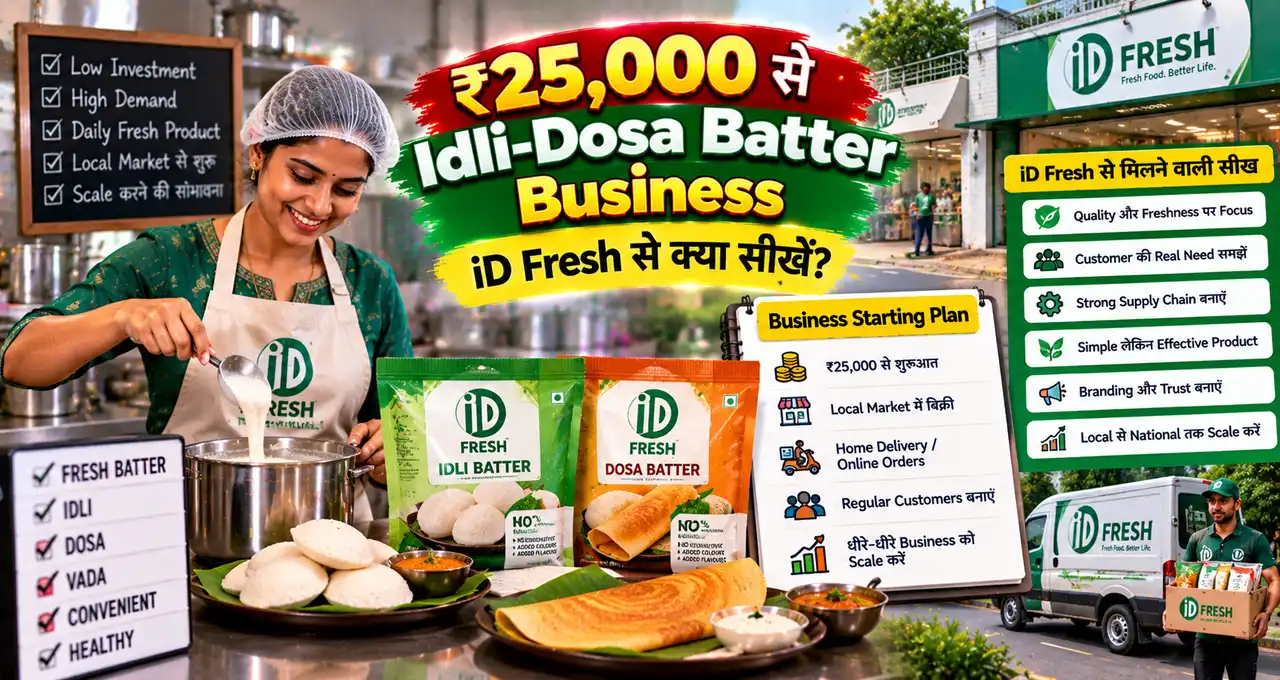


₹25,000 से शुरू हुई iD Fresh की कहानी में एक बड़ा business lesson छिपा है।Fresh idli-dosa batter जैसा रोज़ इस्तेमाल होने वाला product भी सही quality, packaging और distribution से भरोसेमंद brand बन सकता है। लेकिन शुरुआती निवेश और आज के costs को एक समान समझना गलत होगा।इस guide में iD Fresh के शुरुआती सफर, repeat demand, hygiene, delivery और unit economics से सीख निकालेंगे। फिर देखेंगे कि कोई छोटा food business इन्हें बिना बड़े दावों या जल्दबाज़ी के कैसे test कर सकता है।कहानी के आकर्षक आंकड़े नहीं, छोटे प्रयोग से मिलने वाले actionable lessons सबसे उपयोगी हैं।
इस लेख में आप क्या सीखेंगे?
- iD Fresh शुरुआत समझें
- Repeat demand की पहचान
- Food quality checks सीखें
- Small trial cost समझें
- Packaging और distribution देखें
- Business lessons लागू करें
शुरुआत कहाँ से हुई?
P.C. Musthafa Kerala के Wayanad से आते हैं। उनका शुरुआती जीवन आर्थिक मुश्किलों से भरा था; बाद में उन्होंने engineering और IIM Bangalore से management education पूरी की और corporate career के बाद entrepreneurship की तरफ आए।2005 के आसपास Bengaluru में उन्होंने अपने cousins के साथ fresh idli-dosa batter business शुरू किया। अलग-अलग reports शुरुआती setup को small kitchen operation बताती हैं। Recent reporting के अनुसार Musthafa ने लगभग ₹25,000 invest किए और total starting investment करीब ₹50,000 था।शुरुआत glamorous नहीं थी: basic grinders, mixer/sealing setup, limited production और local stores तक delivery। यही low-scale beginning इस story को useful बनाती है—क्योंकि company ने पहले demand validate की, फिर capacity बढ़ाई।अगर low-budget business stories पसंद हैं, तो ₹1,300 वाले chicken pickle business case और eCraftIndia handicraft journey भी अलग categories में similar learning angles देती हैं।
iD Fresh ने कौन-सी Problem Solve की?
Traditional idli-dosa batter घर पर बनाना time-consuming हो सकता है: rice और dal soak करना, सही ratio में grind करना और fermentation manage करना पड़ता है। Urban households के लिए ready fresh batter convenience देता है।लेकिन packaged batter सिर्फ़ convenience product नहीं है। Customer को taste, freshness, consistency और trust हर बार चाहिए। यही repeat-purchase category का core है।इस model में product रोज़ या frequently consumed हो सकता है, इसलिए repeat orders possible हैं—लेकिन खराब batch, inconsistent fermentation या delayed cold-chain handling customer को तुरंत खो भी सकती है।
Lesson 1: Simple Product में भी Strong Business बन सकता है
Startup का मतलब हमेशा app, AI या complex technology नहीं होता। Everyday recurring problem अगर large audience को affect करती है, तो simple product भी scalable business बन सकता है।iD Fresh का शुरुआती product basic था, लेकिन problem clear थी: fresh batter ready form में चाहिए। Small entrepreneur के लिए lesson है—“unique idea” के पीछे भागने से पहले daily inconvenience देखें।घर से practical business ideas explore करने हों तो कम investment वाले home-business ideas useful context दे सकते हैं।
Lesson 2: Fresh Food में Distribution Product जितना ही Important है
Fresh batter की shelf life limited होती है। इसका मतलब production, storage, transport और retail replenishment coordinated होना चाहिए। Packaged dry snack की तरह महीनों का stock store करना आसान नहीं होता।यही कारण है कि fresh-food business में “मैं अच्छा batter बना लेता हूँ” सिर्फ़ पहला step है। आपको यह भी तय करना पड़ता है कि कितनी quantity बनानी है, कितने stores तक पहुँचानी है और unsold/expired stock कैसे minimize करना है।Small scale पर आप 5–10 nearby stores या direct household delivery से शुरुआत कर सकते हैं, लेकिन daily production forecast और hygiene discipline जरूरी हैं। Inventory basics समझने के लिए बाद में dedicated stock-management process बनाना useful रहेगा।
Lesson 3: पहले 100 Customers, फिर 100 Cities
Business stories पढ़ते समय current scale देखकर शुरुआत भूल जाना आसान है। iD Fresh आज large distribution network में है, लेकिन शुरुआत local demand और small production से हुई थी।Small entrepreneur का practical target “national brand” नहीं होना चाहिए। पहले देखें:
- क्या 20–30 customers repeat orders देते हैं?
- क्या product quality हर batch में consistent है?
- क्या delivery cost margin खा रही है?
- क्या wastage controlled है?
- क्या customer complaints repeat हो रही हैं?
इन questions का answer clear हुए बिना scale करना risk बढ़ा सकता है।
Lesson 4: Packaging सिर्फ़ सुंदर Design नहीं है
Fresh food में packaging का काम branding से पहले product protection, hygiene और handling है। Leak-proof pack, clear date/batch information, storage instructions और usable quantity customer experience को affect करते हैं।Small food business के लिए packaging cost margin पर बड़ा असर डाल सकती है। इसलिए fancy packaging से पहले functional packaging test करें।Marketing और product presentation improve करने के लिए product photos और marketing creatives prompts useful हो सकते हैं, लेकिन food label पर legal/mandatory information AI से invent नहीं करवानी चाहिए।
Lesson 5: Repeat Purchase Category में Trust सबसे बड़ा Asset है
Batter, curd, paneer या other fresh foods बार-बार खरीदे जाते हैं। अगर customer को तीन बार अच्छा experience मिला, तो habit बन सकती है। अगर एक बार serious quality problem हुई, तो trust जल्दी टूट सकता है।इसलिए repeat-order business में complaints को feedback system की तरह treat करें। Customer किस चीज पर complain कर रहा है—sourness, consistency, delivery timing, packaging leak—इन patterns को track करें।Repeat customer strategy को broader level पर समझने के लिए customer follow-up और repeat orders वाली guide relevant है।
₹25,000 से आज की Scale तक Numbers क्या कहते हैं?
Recent financial reporting के अनुसार iD Fresh Food का FY25 revenue from operations ₹681.38 crore रहा, जो previous year के ₹557.85 crore से करीब 22% ज्यादा था। Reported net profit ₹50.75 crore था, लेकिन इसमें one-time deferred tax credit शामिल था; इसे हटाकर underlying profit लगभग ₹26 crore बताया गया।January 2026 में Apax Partners की minority stake deal से जुड़ी reporting में company valuation करीब ₹4,500 crore बताई गई। यह valuation है, annual revenue नहीं।इन numbers को देखकर small entrepreneur को यह नहीं मानना चाहिए कि fresh batter business automatically high-profit category है। Scale के साथ factories, cold logistics, employees, distribution, quality control, working capital और marketing costs भी बढ़ते हैं।
अगर आप Small Idli-Dosa Batter Business शुरू करना चाहें तो क्या Check करें?
iD Fresh की कहानी inspiration है, ready-made blueprint नहीं। Local level पर शुरुआत से पहले ये checks करें:
- Target area में fresh batter की real demand है?
- Customers किस pack size और price पर comfortable हैं?
- Daily production capacity क्या है?
- Cold storage और delivery कैसे manage होगी?
- Food licensing/registration requirements क्या हैं?
- Per-pack ingredient, packaging, labour और delivery cost कितना है?
- Unsold stock/wastage कितना हो सकता है?
- Direct-to-customer या retail-store model—कौन better है?
Business शुरू करने की broad planning के लिए low-investment business selection वाली guide useful framework देती है।
एक Simple Unit Economics Example
मान लें आप 1 kg का बैटर पैक बेचते हैं। Example सिर्फ़ calculation समझाने के लिए है:
- Ingredients: ₹28
- Packaging: ₹8
- Labour/electricity allocation: ₹7
- Delivery/wastage allocation: ₹12
- Total estimated cost: ₹55
अगर selling price ₹80 है, तो ₹25 gross contribution बचता दिख सकता है—but इसमें rent, equipment depreciation, marketing, licenses, returns, taxes और owner salary शामिल नहीं हो सकते। इसलिए “₹25 profit” कहना गलत होगा जब तक सभी costs account न हों।यही कारण है कि छोटे food business में पहले unit economics लिखना चाहिए, फिर scale plan करना चाहिए।
30-Day Local Validation Plan: iD Fresh की Scale नहीं, शुरुआती Discipline Copy करें
अगर कोई reader इस category को practically test करना चाहता है, तो सीधे machine, shop rent और large inventory पर पैसा लगाने से पहले small validation useful हो सकती है।Days 1–5: 20–30 target households से बात करें। पूछें कि वे batter घर पर बनाते हैं, local seller से लेते हैं या packaged brand use करते हैं। सिर्फ़ “खरीदेंगे?” न पूछें; current behavior समझें।Days 6–10: 2–3 pack sizes और realistic pricing calculate करें। Ingredient cost के साथ packaging, electricity, delivery और expected wastage जोड़ें।Days 11–15: Applicable food registration/licensing, labeling, storage और hygiene requirements official FSSAI resources से verify करें। Regulations location और scale के अनुसार बदल सकती हैं, इसलिए social media advice पर depend न करें।Days 16–20: Controlled pilot batch चलाएं। सिर्फ़ उतनी quantity बनाएं जितनी safely produce, store और deliver कर सकते हैं। Taste feedback के साथ fermentation consistency और packaging leakage भी track करें।Days 21–25: Repeat orders देखें। First-time trial discount से sale मिल सकती है, लेकिन real signal यह है कि कितने customers दूसरी बार बिना heavy discount के order करते हैं।Days 26–30: Numbers review करें—packs produced, packs sold, wastage, delivery cost, complaints, repeat orders और actual cash margin। तभी decide करें कि capacity बढ़ानी है, product बदलना है या idea stop करना है।
Fresh Food Business के 6 Risks जिन्हें Headline Stories अक्सर नहीं दिखातीं
- Spoilage: Unsold fresh inventory सीधे margin hit कर सकती है।
- Cold-chain failure: Temperature handling खराब होने पर product quality और safety दोनों प्रभावित हो सकते हैं।
- Consistency: Fermentation weather, ingredients और process से बदल सकती है।
- Returns: Retailers slow-moving stock वापस कर सकते हैं, agreement पर depend करता है।
- Working capital: Ingredients और packaging के लिए cash पहले निकल सकता है, payment बाद में मिल सकती है।
- Compliance: Food business में hygiene, registration/licensing और labeling को “बाद में देखेंगे” वाला area नहीं मानना चाहिए।
इसलिए startup story को motivation की तरह पढ़ें, shortcut की तरह नहीं। Strong brand के पीछे years of operational discipline होता है जो headline valuation में दिखाई नहीं देता।
Retail Store या Direct Delivery—शुरुआत में कौन-सा Model?
Direct delivery में customer feedback जल्दी मिलता है और retailer margin नहीं देना पड़ता, लेकिन delivery route और small orders cost बढ़ा सकते हैं।Retail stores volume और visibility दे सकते हैं, लेकिन margin sharing, shelf movement, returns और replenishment manage करना पड़ता है।Small pilot में दोनों models का limited test useful हो सकता है। Example: 20 direct households + 2 nearby stores। एक महीने के data से देखें कि कौन-सा channel better repeat rate और lower wastage देता है।Local selling और customer communication organize करने के लिए WhatsApp Business workflow भी practical हो सकता है।
iD Fresh से क्या copy नहीं करना चाहिए?
Scale नहीं: Large factory और multi-city distribution small startup का day-one goal नहीं होना चाहिए।Product list नहीं: iD Fresh आज कई products बेचती है; शुरुआत में 1–2 reliable products better हो सकते हैं।Valuation headline नहीं: Funding/valuation को profitability का substitute न मानें।Exact pricing नहीं: उनकी cost structure, scale और distribution आपके local business से अलग हैं।
iD Fresh से क्या जरूर सीख सकते हैं?
- Everyday problem को seriously लेना.
- Freshness और consistency को brand promise बनाना.
- Small geography में demand validate करना.
- Distribution process को product design का हिस्सा मानना.
- Repeat customer behavior track करना.
- Scale से पहले unit economics और wastage समझना.
Small business marketing के लिए AI marketing guide useful next step हो सकती है, लेकिन product quality और operations marketing से पहले आते हैं।
7-Day local food trial: सीख को काम में कैसे बदलें?
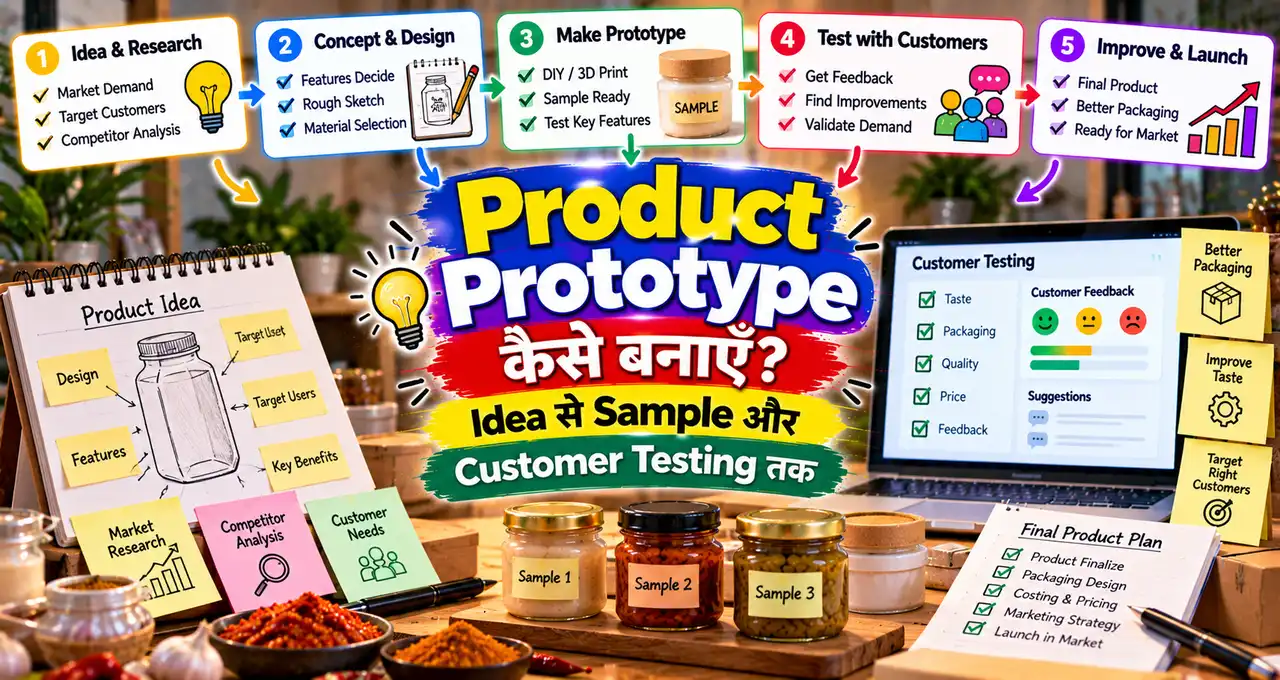
iD Fresh की कहानी से सबसे practical सीख है कि product को बड़े scale पर ले जाने से पहले छोटी demand verify करें। मान लें कोई व्यक्ति fresh batter बनाकर आसपास के households को sample देना चाहता है। उसे पहले hygiene, packaging, storage और food safety के नियमों का ध्यान रखना होगा।Day 1–2 में संभावित customers से पूछें कि वे किस quantity में batter खरीदते हैं, खरीदने में क्या समस्या आती है और price के अलावा कौन-सी बात महत्त्वपूर्ण है। Survey response को actual sale मत मानिए।Day 3–4 में छोटे controlled batch से consistency, taste, safe handling और packing की feasibility test करें। कोई shelf-life claim laboratory testing या applicable standards के बिना न बनाएं।Day 5–6 में realistic costs लिखें: raw material, packaging, refrigeration, transport, spoilage, labour और unsold stock। Example के लिए ₹1,000 total खर्च पर ₹1,200 की sales होने का मतलब ₹200 final profit जरूरी नहीं है; इसमें बाकी operating costs और taxes भी हो सकते हैं।Day 7 में feedback और actual repeat intent compare करें। अगर complaints high हों तो volume बढ़ाने के बजाय पहले process सुधारें। यह local experiment है, iD Fresh के original financial records या franchise cost का दावा नहीं।Decision rule: Repeat purchases, quality consistency और net unit economics साथ में समझ आएँ, तभी next production step तय करें।
आख़िर में एक छोटी सी बात
iD Fresh की सबसे useful सीख यह नहीं कि “₹25,000 लगाकर करोड़ों की company बन सकती है।” सही सीख यह है कि एक simple, repeat-use product को quality, process और distribution discipline के साथ वर्षों तक improve किया जाए तो scale बन सकती है।अगर आप fresh-food business शुरू करें, तो आपकी सबसे बड़ी चिंता क्या होगी—quality, delivery, pricing या customers? Comments में बताइए। यह story useful लगी हो तो किसी aspiring food entrepreneur के साथ share करें।आपको iD Fresh की शुरुआती यात्रा से कौन-सी business learning सबसे practical लगी? अपने small-scale product test का idea comments में बताएँ।