




















आज AI text लिख सकता है, image बना सकता है, code समझ सकता है और कई tools के साथ काम भी कर सकता है।
लेकिन यह power अचानक नहीं आई। इसके पीछे लगभग सात दशकों की research, failed experiments, hardware improvements, neural networks, massive data और नए model architectures की लंबी journey है।
अगर आप समझना चाहते हैं कि आज का Generative AI इतना capable कैसे बना, तो history को सिर्फ़ dates की list की तरह नहीं, बल्कि problems और breakthroughs की chain की तरह देखना होगा।
आगे हम AI history के milestones में 10 बड़े turning points देखेंगे और समझेंगे कि हर milestone ने आज के AI में क्या जोड़ा।
इस लेख में आप क्या सीखेंगे?
- AI की शुरुआती सोच
- Neural networks की शुरुआत
- Deep learning का breakthrough
- Transformers ने क्या बदला
- ChatGPT क्यों turning point
- आज AI powerful क्यों
AI अचानक powerful नहीं हुआ
जब हम आज किसी AI tool से सवाल पूछते हैं और कुछ seconds में detailed जवाब मिलता है, तो ऐसा लग सकता है कि technology ने अचानक jump किया है। असल में modern AI कई अलग-अलग breakthroughs का result है।
कुछ breakthroughs ने machines को rules follow करना सिखाया। कुछ ने data से patterns सीखना संभव बनाया। GPUs और large datasets ने training को practical बनाया। फिर Transformer architecture और large-scale pretraining ने language models की capability को तेजी से बढ़ाया।
अगर AI, Machine Learning और Generative AI के बीच basic difference अभी clear नहीं है, तो पहले AI कैसे काम करता है वाली guide useful रहेगी।
इस history को समझने का सबसे आसान तरीका है हर milestone से एक सवाल पूछना: इसने AI को कौन-सी नई capability दी?
AI history के milestones: 10 बड़े turning points
1. 1950: Alan Turing ने सवाल बदल दिया
1950 में mathematician Alan Turing ने “Computing Machinery and Intelligence” नाम का influential paper publish किया। उन्होंने सीधे “machine सच में सोचती है या नहीं?” पर अटकने के बजाय एक practical test जैसा idea दिया, जिसे बाद में Turing Test के नाम से जाना गया।
Core idea simple था: अगर machine text-based conversation में ऐसा behaviour दिखाए कि evaluator reliably यह न बता पाए कि सामने human है या machine, तो machine intelligence पर discussion को measurable बनाया जा सकता है।
यह modern AI नहीं था, लेकिन इसने एक foundational shift किया—intelligence को philosophy से निकालकर computing problem की तरह देखने का रास्ता खोला।
2. 1956: “Artificial Intelligence” को नाम मिला
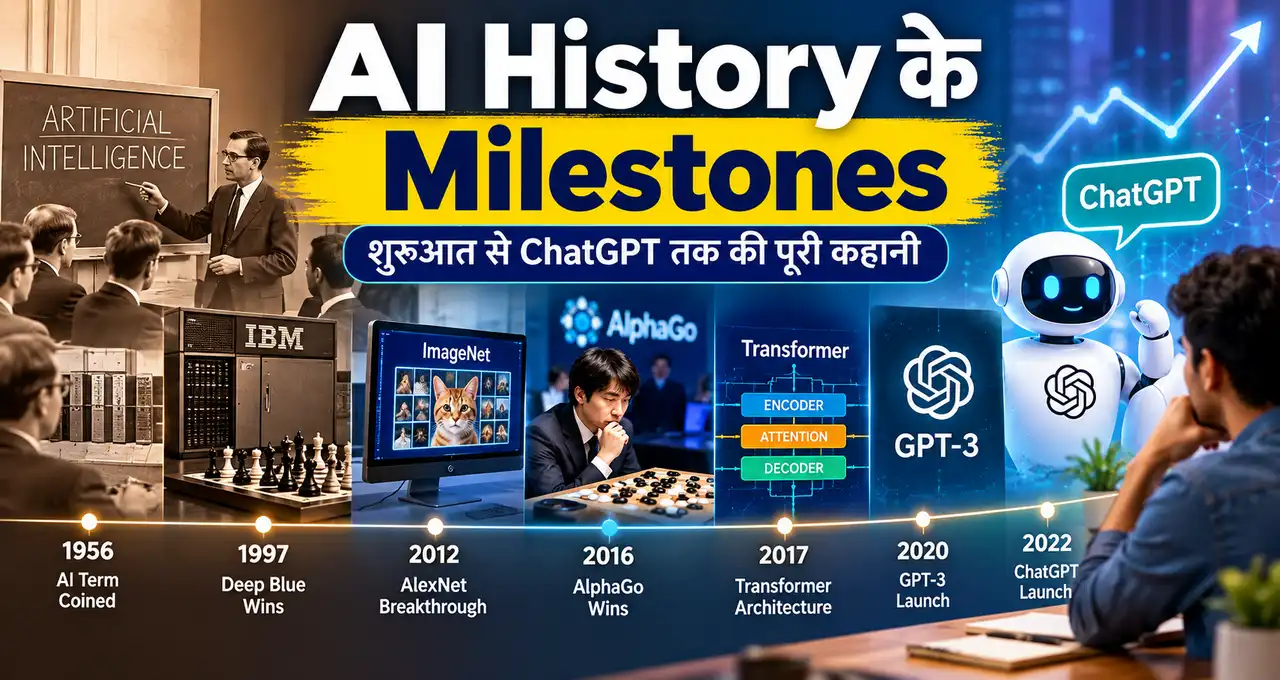
1956 के Dartmouth Summer Research Project को AI field की symbolic शुरुआत माना जाता है। John McCarthy और दूसरे researchers ने उस period में “artificial intelligence” term को formal research identity दी।
उस समय researchers का बड़ा assumption था कि learning और intelligence के कई aspects को इतनी precision से describe किया जा सकता है कि machines उन्हें simulate कर सकें। यह ambition बहुत बड़ा था, लेकिन इसी ने अलग-अलग universities और labs में AI research को एक common direction दी।
यहीं से AI एक scattered idea से dedicated scientific field बनना शुरू हुआ।
3. 1958: Perceptron ने machine learning की झलक दिखाई
Frank Rosenblatt का perceptron early neural-network systems में सबसे important milestones में से एक था। 1958 की demonstration में system examples से simple pattern classification सीख सकता था।
यह आज के deep neural network जैसा powerful नहीं था। फिर भी idea revolutionary था: हर behaviour को manually rule के रूप में program करने के बजाय machine examples देखकर अपने parameters adjust कर सकती है।
यही learning-from-data philosophy आगे चलकर modern Machine Learning की foundation बनी।
4. 1970s–1980s: Expert systems का boom और AI winters
Early AI में एक बड़ी direction rule-based systems थी। Researchers domain experts का knowledge “if-this-then-that” rules में encode करके machines से specialized decisions करवाने लगे। Medical diagnosis और industrial tasks जैसे areas में expert systems ने useful results दिखाए।
लेकिन problem भी clear हुई: real world बहुत messy है। हजारों rules maintain करना मुश्किल था, systems context समझने में कमजोर थे और expectations अक्सर capability से आगे निकल जाती थीं। Funding और excitement में गिरावट के periods को बाद में “AI winters” कहा गया।
यह failure बेकार नहीं गया। इससे field ने सीखा कि intelligence सिर्फ़ ज्यादा rules लिखने से नहीं बनेगी। Systems को data से सीखना और uncertainty handle करना भी आना चाहिए।
5. 1997: Deep Blue ने world chess champion को हराया
1997 में IBM Deep Blue ने reigning world chess champion Garry Kasparov को six-game match में हराया। यह public imagination के लिए बड़ा moment था क्योंकि chess लंबे समय से human strategic intelligence का symbol माना जाता था।
Deep Blue आज के learning models जैसा general AI नहीं था। उसकी strength massive search और specialised chess evaluation में थी। फिर भी इस milestone ने दिखाया कि enough computing power, smart search और domain-specific logic मिलकर ऐसी problem solve कर सकते हैं जो पहले machines की reach से बाहर लगती थी।
यह lesson आज भी relevant है: AI capability सिर्फ़ algorithm से नहीं, hardware और computation scale से भी आती है।
6. 2012: AlexNet ने deep learning को mainstream research में धकेला
2012 ImageNet competition में AlexNet नाम के deep convolutional neural network ने image classification में previous approaches पर बड़ा improvement दिखाया। Model ने large dataset, deeper neural network और GPU-based training का powerful combination use किया।
यह moment इसलिए important था क्योंकि neural networks कोई नया idea नहीं थे। नया था उनका scale पर practical होना। GPUs ने massive calculations तेजी से करना possible बनाया और large datasets ने models को पर्याप्त examples दिए।
इसके बाद computer vision से लेकर speech recognition तक deep learning adoption तेजी से बढ़ा। AI research का center of gravity hand-written features से learned representations की तरफ shift होने लगा।
7. 2016: AlphaGo ने learning + search की ताकत दिखाई
Go game chess से भी ज्यादा complex search space के लिए famous है। लंबे समय तक इसे computer AI के लिए बहुत कठिन challenge माना जाता था।
Google DeepMind के AlphaGo ने deep neural networks, search और reinforcement learning को combine किया। 2016 में उसने legendary player Lee Sedol को 4–1 से हराया। यह सिर्फ़ game जीतने का मामला नहीं था; system self-play से improve कर सकता था और positions की value सीख सकता था।
इस milestone ने research community को दिखाया कि machines सिर्फ़ historical examples imitate नहीं कर सकतीं, बल्कि repeated trial-and-error और planning से strategies भी develop कर सकती हैं।
8. 2017: Transformer architecture ने language AI बदल दिया
2017 में “Attention Is All You Need” paper ने Transformer architecture introduce किया। इसका central idea attention mechanism था, जिससे model sequence के अलग-अलग parts के relationships को efficiently process कर सकता था।
Previous language systems अक्सर recurrent networks पर depend करते थे, जिन्हें long sequences और parallel training में limitations आती थीं। Transformers training को ज्यादा parallelizable बनाते थे और large-scale models के लिए strong foundation बने।
आज के अधिकांश major language models इसी Transformer family से निकले हैं। अगर आप यह समझना चाहते हैं कि modern text AI words और context को कैसे process करता है, तो Large Language Model (LLM) की working समझना natural next step है।
9. 2020: GPT-3 ने scaling का असर दिखाया
2020 में GPT-3 ने large language models की scaling discussion को mainstream AI research में बहुत मजबूत किया। Model ने 175 billion parameters के साथ few-shot और prompt-based behaviour दिखाया—यानि कई tasks के लिए हर बार अलग task-specific training की ज़रूरत कम हो सकती थी।
यह perfect intelligence नहीं थी। Model factual mistakes कर सकता था और reasoning में fail भी होता था। लेकिन एक ही language model translation, summarisation, question answering, writing और कई दूसरे tasks handle कर सकता था।
यह shift important था: AI को हर task के लिए अलग narrow system बनाने के बजाय एक large pretrained model को instructions के जरिए कई jobs देने की direction मजबूत हुई।
10. 2022: ChatGPT ने AI को आम users तक पहुँचा दिया
30 November 2022 को OpenAI ने ChatGPT research preview launch किया। Underlying language-model research पहले से चल रही थी, लेकिन conversational interface ने AI को non-technical users के लिए बेहद accessible बना दिया।
अब user को API, coding या machine-learning knowledge की ज़रूरत नहीं थी। वह normal language में सवाल पूछ सकता था, follow-up कर सकता था और iterative conversation में result improve कर सकता था।
यहीं से Generative AI का public adoption dramatically तेज हुआ। अगर आपको यह समझना है कि Generative AI और ChatGPT जैसे tools output कैसे बनाते हैं, तो उस layer को अलग से समझना useful है।
2022 के बाद AI में क्या बदला?
ChatGPT के बाद competition सिर्फ़ “कौन बेहतर text लिखता है?” तक सीमित नहीं रही। Models text के साथ images, audio, files, code और tools handle करने लगे। इसे broadly multimodal direction कहा जा सकता है।
Multimodal AI का मतलब है system अलग-अलग input types को एक साथ process कर सके। उदाहरण के लिए text instruction के साथ image समझना, audio पर काम करना या visual output create करना। इस concept को detail में Multimodal AI की guide में समझाया गया है।
दूसरी direction tool use और agents की है। Traditional chatbot जवाब देता है। Agent-style system task को steps में तोड़ सकता है, tools use कर सकता है और workflow के अलग stages execute कर सकता है। AI Agent और chatbot का difference इसी shift को समझने में मदद करता है।
यानी AI की नई power सिर्फ़ “बड़ा model” नहीं है। Model + tools + memory/context + multimodal input + better interfaces मिलकर practical capability बढ़ाते हैं।
आज AI इतना powerful क्यों है? 5 असली कारण
1. ज्यादा computing power
Modern AI training में enormous matrix calculations होती हैं। GPUs और specialised accelerators ने इन calculations को scale पर possible बनाया। Better hardware का मतलब larger models और ज्यादा experiments।
2. बहुत बड़ा training data
Internet-scale text, images, code और दूसरे datasets ने models को diverse patterns सीखने का मौका दिया। Data की quantity के साथ quality, filtering और licensing भी increasingly important issues हैं।
3. Better model architectures
Perceptron से deep networks और फिर Transformers तक architecture improvements ने models की learning capacity बढ़ाई। सही architecture compute को ज्यादा effectively use कर सकता है।
4. Pretraining और scaling
Large models पहले broad data पर pretrain होते हैं, फिर instructions, feedback या specialised data से refine किए जा सकते हैं। इससे एक model कई tasks में useful बन सकता है।
5. Human feedback और tools
Modern systems सिर्फ़ raw next-word prediction पर नहीं रुकते। Human feedback, safety tuning, retrieval, search, calculators, code tools और external systems के साथ integration उनकी usefulness बढ़ाते हैं।
इसी combination की वजह से आज का AI 1990s के rule-based system या 2012 के image classifier से fundamentally ज्यादा flexible दिखाई देता है।
Powerful होने का मतलब perfect होना नहीं है
AI history का एक recurring lesson है: हर breakthrough के बाद expectations capability से आगे निकल सकती हैं। आज भी यही risk मौजूद है।
Large language models fluent जवाब दे सकते हैं, लेकिन fluency factual accuracy की guarantee नहीं है। Model confident tone में गलत जानकारी बना सकता है, जिसे AI hallucination कहा जाता है। अगर आप AI output पर practical decisions लेते हैं, तो AI Hallucination पहचानने की habit बहुत ज़रूरी है।
AI को powerful assistant समझना ज्यादा realistic है, universal truth machine नहीं। High-stakes finance, health, legal, safety या current information में verification अभी भी human responsibility है।
10 milestones एक नजर में
| Year | Milestone | AI में क्या बदला |
|---|---|---|
| 1950 | Turing paper | Machine intelligence को testable question बनाया |
| 1956 | Dartmouth workshop | Artificial Intelligence field को identity मिली |
| 1958 | Perceptron | Examples से learning का early model |
| 1970s–80s | Expert systems + AI winters | Rules की strength और limits दोनों clear हुईं |
| 1997 | Deep Blue | Compute + search की power दिखी |
| 2012 | AlexNet | GPU-based deep learning breakthrough |
| 2016 | AlphaGo | Deep learning + reinforcement learning |
| 2017 | Transformer | Modern language models की foundation |
| 2020 | GPT-3 | Scaling और few-shot capability |
| 2022 | ChatGPT | Generative AI mass users तक पहुँचा |
इस history से आगे के AI को कैसे समझें?
AI के अगले breakthrough का exact prediction करना मुश्किल है, लेकिन history एक useful pattern दिखाती है। Major jumps अक्सर सिर्फ़ एक invention से नहीं आते। नया algorithm, बेहतर hardware, ज्यादा data, usable interface और practical demand जब साथ आते हैं, तब capability अचानक बहुत तेज बढ़ती हुई दिखती है।
इसीलिए आने वाले AI को सिर्फ़ benchmark scores से नहीं देखना चाहिए। ज्यादा useful सवाल हैं: क्या system real task reliably पूरा करता है? क्या वह sources verify कर सकता है? क्या user control clear है? क्या errors detect और correct किए जा सकते हैं?
Technology तेज़ी से बदल सकती है, लेकिन यह evaluation framework काफी stable रहेगा।
आख़िर में एक छोटी सी बात
आज का AI किसी एक scientist, company या model की अचानक हुई discovery नहीं है। यह दशकों के experiments, failures, hardware progress और research ideas की cumulative journey है।
जब आप इस timeline को समझते हैं, तो AI hype और real progress के बीच फर्क करना आसान हो जाता है। हर नया model revolutionary नहीं होता, लेकिन कुछ breakthroughs पूरी direction बदल देते हैं।
इन 10 milestones में आपको सबसे बड़ा turning point कौन-सा लगता है—Perceptron, Deep Learning, Transformer या ChatGPT? Article useful लगा हो तो अपनी राय comment में बताइए और इसे AI history समझने वाले किसी learner के साथ share कर सकते हैं।