





















Recruiter ने “आपकी salary expectation?” पूछा और आपने जल्दबाज़ी में कम number बोल दिया?
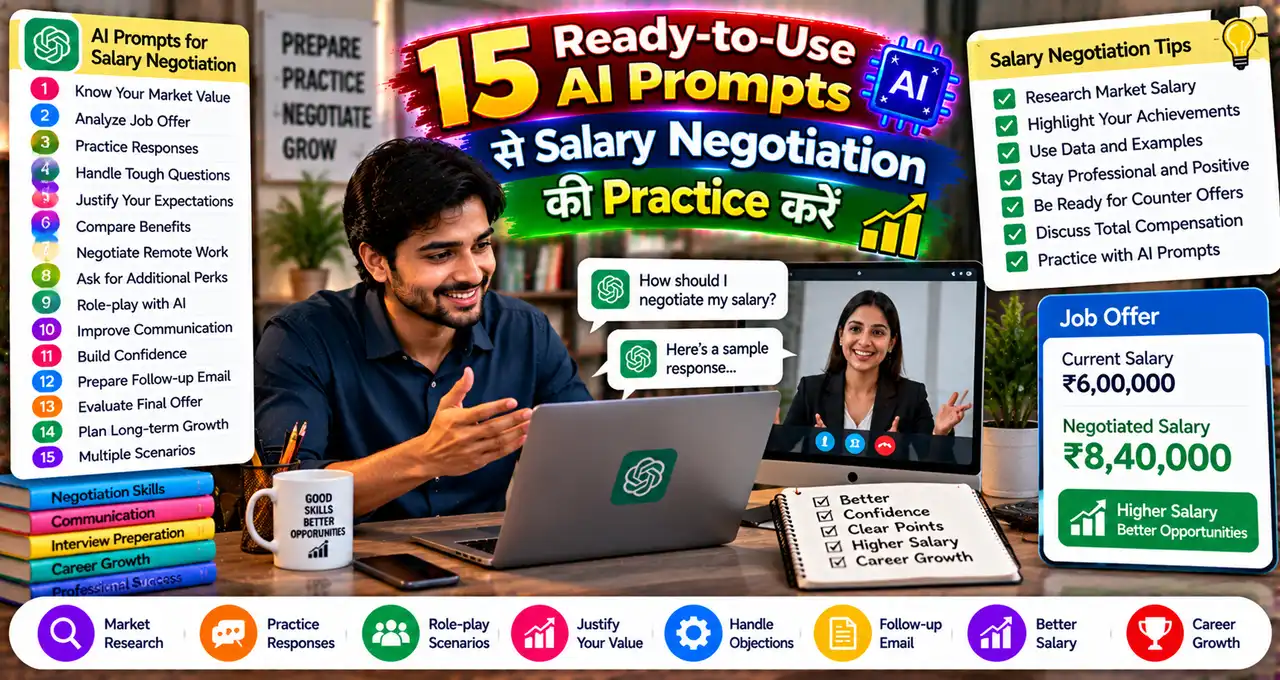
Salary की बात से पहले अपने evidence, range और जवाब तैयार करना उपयोगी है। AI के साथ role-play करके यह बातचीत बिना किसी real offer को जोखिम में डाले rehearse कर सकते हैं।
यहाँ 15 ready-to-use prompts हैं—नई job, counteroffer, appraisal और benefits की चर्चा के लिए। एक reusable Master Prompt से अपने role के अनुसार practice भी बना पाएँगे।
शुरुआत salary बढ़ने की guarantee से नहीं, अपने पक्ष की साफ तैयारी से करें।
इस लेख में आप क्या सीखेंगे?
- अपनी achievements की तैयारी
- Market range के checks
- Offer और CTC तुलना
- Recruiter के साथ role-play
- Counteroffer और follow-up drafts
- Final decision की checklist
AI salary negotiation prompts से क्या अपेक्षा रखें?
AI rehearsal partner हो सकता है, employer नहीं। वह आपके लिए compensation approve नहीं करता और बिना verified sources किसी role की सही market salary नहीं जानता।
Harvard Program on Negotiation की guidance तैयारी और realistic research की अहमियत बताती है। यहाँ का focus भी evidence और professional बातचीत है।
Offer letter, payslip या personal details upload करने से पहले identifiers हटाएँ। Confidential employer data, client names और private salary records साझा न करें।
यदि interview की तैयारी अभी बाकी है, तो interview preparation checklist से role understanding मजबूत करें। Salary practice उस तैयारी का अगला हिस्सा है।
Practice के लिए एक छोटा brief तैयार करें
Role, experience, location, proven achievements, offer structure और priorities लिखें। Number पता न हो, तो unknown लिखना गलत estimate भरने से बेहतर है।
एक hypothetical example लें: Offer A का CTC ₹9 लाख है—₹7.2 लाख fixed, ₹1.2 लाख variable और ₹0.6 लाख employer benefits. Offer B का CTC ₹9.6 लाख है—₹8.4 लाख fixed, ₹0.6 लाख variable और ₹0.6 लाख benefits.
CTC का बड़ा number ही पूरा निर्णय नहीं है। Variable की conditions, role, commute और benefits की usefulness भी देखें। Fixed amount को भी tax के बाद in-hand salary न मानें।
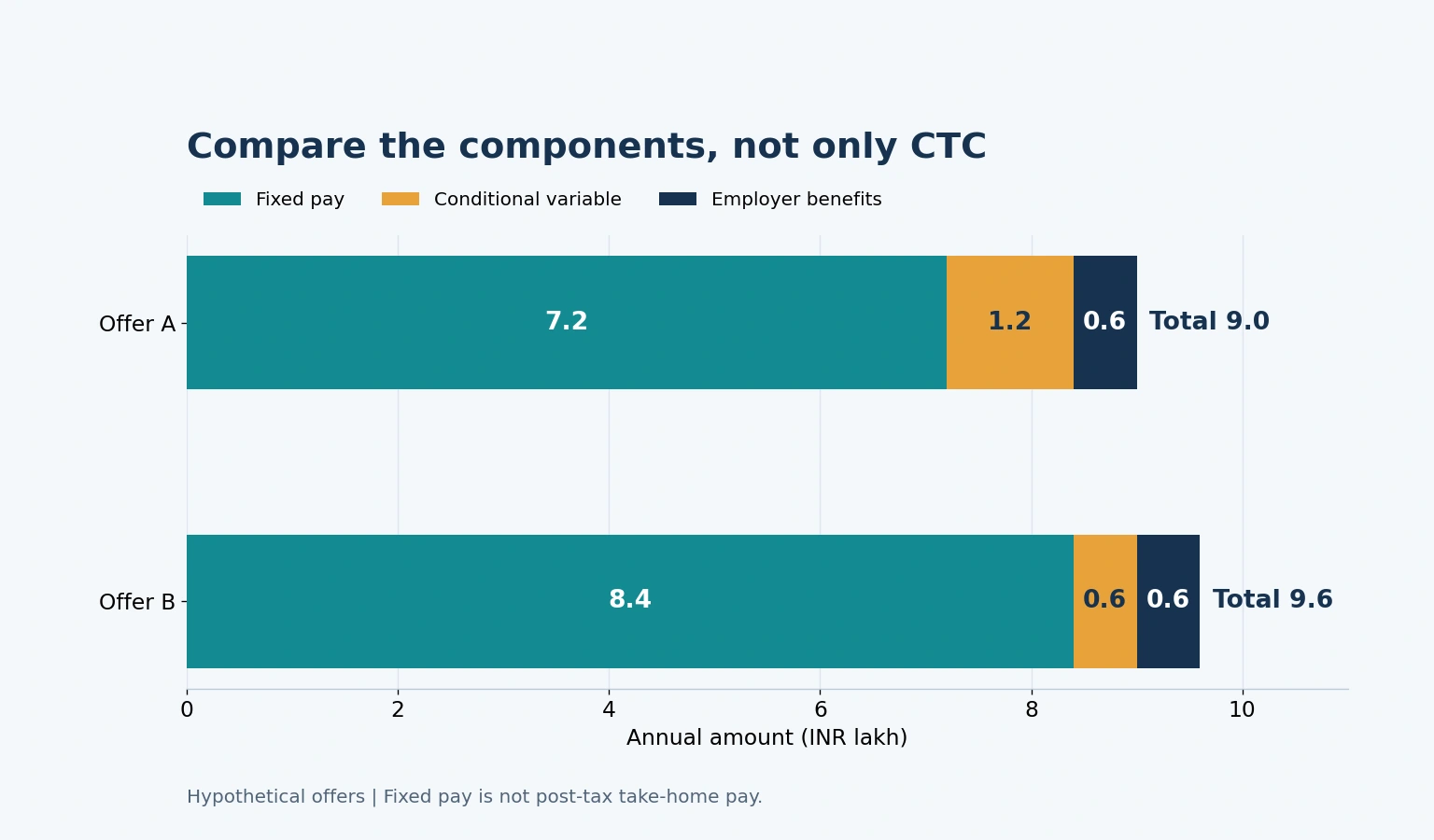
ये केवल practice numbers हैं, किसी role का market benchmark या negotiation के बाद मिलने वाला result नहीं। अपने actual offer की components HR से लिखित में confirm करें।
Prompt 1: अपनी value का evidence bank बनाएँ
Best for: बातचीत से पहले achievements चुनने में
Build an evidence bank for my salary discussion using the supplied achievements. Organize each achievement into the situation, my individual contribution, the observable outcome and the evidence available. Attribute team results accurately. Use percentages, savings or customer impact only when supplied. Where a measure is unknown, give one question or internal record that could verify it. Rank the three strongest examples by relevance to the role and write a 30-second spoken version for each. Make the language confident and specific. End with a short reminder of the evidence I should have ready if asked a follow-up.
Include one concise answer for a recruiter who asks what I personally did. Make the attribution clear enough to withstand a detailed follow-up.
Role: [Current or target role]
Experience: [Years and relevant scope]
Achievements: [Verified examples]
Evidence: [Redacted facts]
Response language: [Hindi / English / Mixed]
Evidence के बिना “मैंने productivity दोगुनी की” जैसे claims न रखें। छोटा लेकिन सत्य example अधिक विश्वसनीय है।
Prompt 2: Market salary research की योजना
Best for: Expected range तय करने में
Plan a market compensation comparison for the supplied role. Define the comparison group by location, level, industry, scope and date. Distinguish base pay, variable pay and total compensation. For each supplied source, record the publication date, sample or methodology where available, compensation definition and the scope it covers. Flag comparisons drawn from different levels or cities. Use a range only when the evidence supports one. Where current evidence is unavailable, give a search plan instead of estimating a figure. Finish with a short sentence I can use to explain how I formed my expectation.
Show where a source reports a midpoint, a range or an individual example. Explain why those figures should not be combined without checking their definitions.
Role and level: [Exact title and level]
Location: [City or market]
Industry: [Industry]
Scope: [Responsibilities]
Verified sources: [Links or supplied data]
दो समान titles में scope अलग हो सकता है। Research को केवल designation से match न करें।
Prompt 3: Offer letter का CTC breakdown समझें
Best for: दो packages की सही तुलना में
Compare the supplied offer letters component by component. Separate fixed annual cash, conditional bonus, employer contributions, one-time payments and non-cash benefits. Show which amounts are guaranteed and which depend on performance, vesting or a clawback. Put figures on the same annual basis and show the calculation. Use the stated currency. Flag missing terms and give a focused question for each. Explain which offer better fits the supplied priorities under the known conditions. Treat take-home pay as unknown when the required deductions or tax inputs are unavailable. End with an offer comparison table and a shortlist of items to confirm in writing.
Include one row for compensation payable in the first year and another for recurring compensation. Show which one-time items cause the two to differ.
Offer A: [Redacted components]
Offer B: [Redacted components]
Priorities: [What matters most]
Unknown terms: [Open questions]
कागज़ पर bonus जुड़ा हो, तो उसकी payout और वापसी की शर्तें भी उतनी ही महत्त्वपूर्ण हैं।
Prompt 4: “Salary expectation?” का जवाब तैयार करें
Best for: पहली recruiter conversation में
Prepare spoken answers to “What are your salary expectations?” Use my supplied range and connect it to the role scope, relevant evidence and compensation structure. Give one answer for an early screening call, one for a recruiter asking for a number and one for a conversation after the responsibilities are clear. Keep each answer short enough to say naturally. If no verified range is available, give an answer that asks for the budget and avoids inventing a figure. Include one likely follow-up question and a confident response. Keep any flexibility tied to the priorities I supplied.
Add a version for a recruiter who asks whether the range is flexible. Explain how the answer changes if responsibilities or benefits are still unclear.
Role: [Target role]
Research-based range: [Verified range or unknown]
Relevant strengths: [Verified evidence]
Priorities: [Fixed pay, scope or other]
Response language: [Hindi / English / Mixed]
Range नहीं तय है, तो model को number भरने न दें। पहले role की salary band और responsibilities स्पष्ट करें।
अपने अनुभव को सही शब्दों में रखने के लिए evidence-based resume prompts भी इस्तेमाल कर सकते हैं। वहाँ के facts और यहाँ की बातचीत consistent रखें।
Prompt 5: Recruiter के साथ live role-play करें
Best for: दबाव में शांत जवाब देने में
Run an interactive recruiter role-play based on the supplied offer context. Begin with one realistic opening question and wait for my reply. Ask one question at a time and introduce progressively harder but plausible pushback. Use the supplied target and offer components. Label any simulated scenario as hypothetical. After each response, comment briefly on clarity, evidence, tone and listening, then offer one improved line I can practice. Keep the exercise within the chosen number of rounds. At the end, summarize two strengths, one improvement and one realistic next question. Keep private identifiers out of the practice.
Before starting, tell me what counts as a successful round. In the final feedback, quote one specific response that improved and explain why it worked.
Candidate role: [Role and level]
Offer context: [Verified offer or hypothetical setup]
Target range: [Range or unknown]
Difficulty: [Easy / Medium / Hard]
Rounds: [Number]
Answer पढ़ने के बाद उसे बोलकर भी rehearse करें। लिखित response सहज लगे, यह ज़रूरी नहीं कि बातचीत में भी उतना सहज हो।

Prompt 6: Respectful counteroffer बनाएँ
Best for: लिखित offer आने के बाद
Draft a respectful counteroffer using the original offer and requested change. Start by acknowledging the offer and stating the role interest I supplied. Make one clear request and tie it to two relevant evidence points. Specify the component at issue and distinguish fixed pay from total compensation. Provide a short email and a spoken version with the same request. Give a fallback line that asks about flexibility when the target is unavailable. Use placeholders for recipient names and figures I have not supplied. Keep the tone collaborative and give the recruiter a clear next step.
Provide one shorter version for a messaging app. Keep the ask, supporting evidence and requested next step visible without repeating the full email.
Original offer: [Verified components]
Requested change: [Exact request]
Evidence: [Relevant achievements or comparables]
Interest in the role: [Reason]
Recipient: [Name or title]
Request साफ रखें। लंबी achievements list के पीछे असली counteroffer खोना नहीं चाहिए।
Prompt 7: “Budget fixed है” का जवाब दें
Best for: Pushback समझने में
Help me respond when a recruiter says the budget is fixed. First ask which component is fixed and whether other components are negotiable. Build three short responses: a clarification, a proposal for one acceptable alternative and a respectful close if the offer misses my requirements. Rank alternatives against my stated priority. For conditional items such as a review or bonus, identify what needs written confirmation, when it would apply and what criteria would govern it. Use the actual offer facts and avoid treating a possible future review as a confirmed raise. End with a short next-action checklist.
Include a response for the case where none of the alternatives are available. Let me preserve the relationship while asking for time to decide.
Role: [Role]
Current offer: [Verified offer]
Main priority: [Must-have condition]
Acceptable alternatives: [Options I can consider]
कभी budget सच में fixed होता है। अपनी acceptable conditions और backup option पहले समझें।
Prompt 8: Current job में increment की तैयारी
Best for: Appraisal conversation में
Prepare a raise discussion for my current role. Compare the responsibilities at the start of the review period with the scope I now handle. Link the strongest verified results to that expanded scope. Separate a recurring contribution from a one-time result. Build a short agenda with an opening, two evidence points, one clear request and a question about the review process. Give a response for a manager who needs more evidence or time. Suggest measurable milestones and a follow-up date if the request cannot be decided now. Keep all figures and company policies tied to supplied facts.
Show how to answer if my manager cites the timing of the review cycle. Keep the proposed follow-up tied to the actual process I supplied.
Current role: [Role and level]
Review period: [Dates]
Added scope: [New responsibilities]
Results: [Verified achievements]
Request: [Specific change or review]
Meeting का उद्देश्य केवल शिकायत दर्ज करना नहीं है। स्पष्ट request और follow-up date लेकर जाएँ।
Prompt 9: Promotion और pay अलग समझें
Best for: जिम्मेदारियाँ बढ़ने पर
Prepare a conversation that separates promotion readiness from compensation. Compare my current responsibilities and evidence with the supplied next-level criteria. Identify which requirements are supported, which need stronger examples and which are unknown. Write one request about role level and another about pay review, with separate reasons for each. Ask who owns each decision, what process applies and when I can expect a response. If the company treats the decisions separately, give a practical way to document the next milestone for each. Use the actual criteria and avoid promising a promotion or raise.
Give a short way to ask how progress against the next-level criteria will be measured. Distinguish evidence I can collect from decisions the company owns.
Current level: [Exact role level]
Next-level criteria: [Published or supplied criteria]
Evidence: [Verified examples]
Goal: [Promotion, pay review or both]
अधिक काम मिलने और officially next-level scope होने में अंतर हो सकता है। Criteria लिखित में समझना उपयोगी है।
अपने public profile में भी वही truthful scope रखें। LinkedIn profile की तैयारी में exaggerated titles जोड़ना समाधान नहीं है।
Prompt 10: Fresher के रूप में बातचीत करें
Best for: पहली job offer में
Help a fresher discuss compensation using genuine projects, internships and skills. Select two examples relevant to the role and turn them into short statements about my contribution and outcome. Draft an opening that asks about the compensation structure and a polite request for flexibility based on the verified offer. If the base amount is fixed, propose one acceptable question about training, joining support or a documented review. Give a brief role-play with a likely recruiter follow-up. Use only the experience I supplied and keep the requested response suitable for someone starting their career.
Suggest one question about the first six months of the role. Connect the answer to the compensation or training priority I provided.
Education: [Qualification]
Role: [Target role]
Projects and internships: [Verified examples]
Offer: [Actual components]
Priorities: [Must-haves and preferences]
पहली job में सीखने का scope भी देखें, लेकिन unclear payment terms को learning के नाम पर नज़रअंदाज़ न करें।
Prompt 11: Career break के बाद अपनी बात रखें
Best for: Work gap explain करने में
Prepare a salary discussion after a career break. Use only the break information I choose to share. Connect my earlier experience and recent preparation to the current role. Write a brief answer to a question about the break and a separate answer explaining my compensation expectations using the role scope and supplied evidence. Give a polite way to redirect intrusive questions to work readiness. Include one follow-up about current skills and a concise response I can rehearse. Avoid inferring health, family circumstances or willingness to accept a lower salary.
Keep the wording of the career-break explanation optional. Provide a shorter version that shares less detail and still answers the work-readiness question.
Previous experience: [Relevant work]
Break disclosure: [What I choose to share]
Recent preparation: [Verified learning or projects]
Target role: [Role and scope]
Privacy के लिए पूरा personal history बताना आवश्यक नहीं है। Role readiness को factual examples से दिखाएँ।
Prompt 12: Salary के अलावा benefits पर चर्चा
Best for: Package में दूसरी priorities होने पर
Identify useful benefits to negotiate when base pay has limited flexibility. Rank the supplied priorities and separate one-time benefits from recurring terms. For each realistic option, show what it would solve, what it could cost or require and which details should be confirmed in writing. Consider work location, leave, joining support, learning budget or review timing only when relevant to my priorities. Draft two short asks and one fallback. Treat unknown policies as questions for the employer. Keep guaranteed terms separate from conditional promises and explain how I can compare trade-offs.
Compare any proposed one-time payment with a recurring benefit over the period I specify. Identify conditions such as eligibility, repayment or expiry before comparing values.
Main constraints: [What the offer needs to address]
Offer details: [Verified terms]
Top priorities: [Ranked priorities]
Known policy: [Confirmed policy or unknown]
Verbal flexibility को permanent agreement न मानें। Offer या approved policy में wording confirm करें।
Market salary article पढ़ते समय role और date देखें। AI jobs की salary का संदर्भ अपने अलग role पर सीधे लागू न करें।
Prompt 13: दो offers पर honest conversation
Best for: Competing offer वास्तव में होने पर
Prepare an honest conversation about two genuine offers. Compare fixed and conditional compensation, role scope, deadlines and my stated priorities. Give a brief way to mention a competing offer only within the disclosure permission supplied. Use exact deadlines and verified terms. Write one request for alignment and one request for extra decision time if needed. If company names or figures should stay private, provide a version that describes the situation without disclosing them. End with two decision scenarios based on the response. Keep the tone factual and avoid invented leverage or implied threats.
Show what I can say if one deadline arrives before the other employer can respond. Use the actual dates and offer a clear request for timing.
Offer A: [Verified terms]
Offer B: [Verified terms]
Deadlines: [Actual dates]
Disclosure permission: [Details I may share]
Preference: [My current preference]
दूसरे offer की existence का दावा तभी करें जब वह वास्तविक हो। Trust बनाने के लिए भी factual accuracy ज़रूरी है।
Prompt 14: Follow-up email को बेहतर करें
Best for: Conversation के बाद summary भेजने में
Draft a follow-up email after the compensation discussion. Thank the recipient briefly and confirm the agreed items using the exact figures, component names and dates supplied. Put unresolved points in a separate list of questions. Ask for the updated offer or a timeline where appropriate. Give a clear subject and a version short enough to send without rewriting. Keep hypothetical or tentative items labelled as pending. Add placeholders where names or dates are missing and flag any wording that could accidentally turn a discussion into an acceptance. Match the requested language and tone.
Include a pre-send check for recipient, dates, compensation components and pending terms. Keep the draft ready for me to review before sending.
Discussion notes: [Redacted notes]
Agreed points: [Confirmed terms]
Pending questions: [Open items]
Follow-up date: [Date or unknown]
Response language: [Hindi / English / Mixed]
Email भेजने से पहले recipient और figures खुद जाँचें। AI का polished draft confirmation का प्रमाण नहीं है।
Prompt 15: Final offer पर सोच-समझकर निर्णय लें
Best for: Accept, clarify या decline तय करने में
Build a decision worksheet for the supplied offer. Separate must-haves, preferences and deal-breakers. Compare fixed pay, variable uncertainty, responsibilities, commute, notice terms and development opportunities using only supplied details. Mark missing terms and turn each into a question. Describe three paths: accept after confirmation, seek clarification or respectfully decline. Give the practical reason and next step for each path. Identify the smallest remaining check that could change the decision. Use my priorities rather than inferring my finances or risk tolerance. End with a concise checklist I can review before replying.
State what evidence would move a conditional acceptance to a definite decision. Provide a short clarification message for the most important unresolved term.
Offer: [Verified terms]
Must-haves: [Required conditions]
Preferences: [Ranked priorities]
Alternatives: [Actual options]
Unknowns: [Open questions]
Decision score उपयोगी prompt हो सकता है, लेकिन आपके लिए महत्त्वपूर्ण context किसी average score से नहीं बदलता।
Practice का result कैसे जाँचें?
हर rehearsal में चार बातें देखें: क्या request स्पष्ट थी, क्या evidence सही था, क्या आपने दूसरे व्यक्ति का सवाल सुना और क्या next step तय हुआ? केवल confident आवाज़ पर्याप्त नहीं है।
अपने answer को 45 seconds में बोलकर record करें। फिर सुनें कि unnecessary explanation, apology या threat कहाँ आ रही है। Recording में किसी real recruiter की private बात शामिल न करें।
job search की broader strategy में skill, portfolio और interview performance भी आते हैं। Negotiation उसी system का एक हिस्सा है।
Bonus: reusable Master Prompt
Coach me through a realistic salary negotiation practice session using the role, offer and priorities below. Ask only the clarifications needed to understand the situation. Distinguish an initial offer, a raise discussion and a promotion review. Build my position from verified achievements and relevant compensation evidence. Label any assumption and leave unsupported figures blank.
Start with a brief preparation sheet covering my strongest evidence, main request, fallback and a question to ask the employer. Then play the counterpart. Ask one question at a time and wait for my answer. Adjust pushback to the selected difficulty and keep it plausible. Give brief feedback on clarity, evidence, tone and listening. Offer a revised spoken line after each round without changing my facts.
Finish with a checklist of terms to confirm, a short follow-up message and the next decision I need to make. Do not invent salary figures, competing offers, achievements or company policies. Keep private identifiers out of the exercise and distinguish hypothetical practice from confirmed outcomes.
Role and level: [Exact title and level]
Experience: [Relevant experience]
Situation: [New offer / Raise / Promotion]
Verified offer: [Known components or unknown]
Evidence: [Verified achievements and sources]
Target and rationale: [Range and reason, or unknown]
Priorities: [Must-haves and fallback]
Response language: [Hindi / English / Mixed]
Difficulty: [Easy / Medium / Hard]
Rounds: [Number]
बातचीत से पहले छोटी checklist
- दो या तीन achievements का evidence तैयार है?
- Expected range का source और date पता है?
- Fixed, variable और CTC अलग समझ में आते हैं?
- अपनी minimum acceptable conditions स्पष्ट हैं?
- Unclear terms और next step के सवाल लिखे हैं?
- भेजने वाले email में figures और recipient जाँचे हैं?
आख़िर में एक छोटी सी बात
Salary discussion में अपनी बात रखने का अभ्यास किया जा सकता है। AI का उपयोग अपनी तैयारी स्पष्ट करने में करें, अपना अनुभव बड़ा दिखाने में नहीं।
एक prompt चुनें, पाँच rounds rehearse करें और feedback के आधार पर अगला answer सुधारें। असली बातचीत में listening और judgement आपके पास रहेंगे।
आप नई offer, increment या promotion में से किस बातचीत की तैयारी कर रहे हैं? अपना अनुभव बताएँ और prompts उपयोगी लगें, तो comments में अपनी राय दें।