










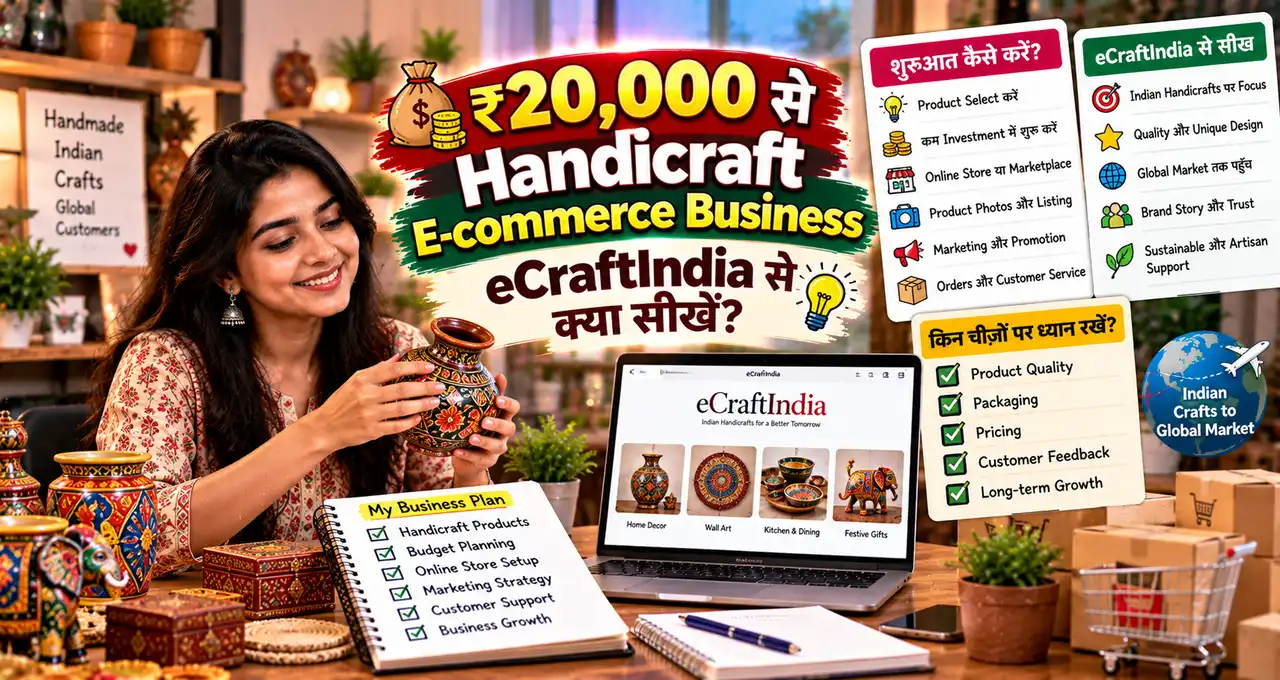



Mumbai के एक mall में Rajasthani handicraft की महँगी कीमत देखकर Jaipur के Rahul Jain को एक business opportunity दिखाई दी। क्या local artisans की सुंदर चीज़ें online सीधे buyers तक पहुँचाई जा सकती हैं?
इसी सोच से 2014 में Rahul Jain, Ankit Agarwal और Pawan Goyal ने करीब ₹20,000 की शुरुआती capital के साथ eCraftIndia शुरू किया। एक छोटे wooden elephant showpiece से शुरू हुई यह journey बाद में बड़े handicraft catalogue तक पहुँची।
इस case study में founder story के साथ product sourcing, pricing और customer trust की practical सीख समझेंगे।
इस लेख में आप क्या सीखेंगे?
- eCraftIndia की शुरुआत और सीख
- Handicraft business का selling model
- Sourcing और marketplace strategy समझें
- ₹20,000 budget planning example
- Pricing और customer trust
- 30-day practical action plan
₹20,000 वाले business idea की शुरुआत कहाँ हुई?
Rahul Jain Jaipur में पले-बढ़े थे, जहाँ Rajasthani handicrafts आसपास की जिंदगी का हिस्सा हैं। Engineering के बाद Mumbai में काम करते समय वे एक mall में gift देखने गए। वहाँ एक handicraft product का price उन्हें अपने परिचित local price से लगभग चार गुना लगा। इस अनुभव ने सवाल खड़ा किया: maker और buyer के बीच price gap इतना बड़ा क्यों है?
2019 में प्रकाशित YourStory/SMBStory interview के अनुसार Rahul ने artisans और customers के बीच बेहतर online connection बनाने का अवसर देखा। लक्ष्य सिर्फ़ cheap gifts बेचना नहीं था। वे अलग-अलग Indian crafts को ऐसी जगह लाना चाहते थे, जहाँ खरीदार product compare कर सके।
यह शुरुआती insight किसी भी small business के लिए उपयोगी है। Market में opportunity अक्सर नई चीज़ invent करने में नहीं, existing product को सही customer तक पहुँचाने में छिपी होती है।
लेकिन केवल price gap देखकर business profit assume नहीं करना चाहिए। Warehousing, shipping, customer support और returns की costs भी होती हैं।
2014 में eCraftIndia किसने और कैसे शुरू किया?
2014 में Rahul Jain ने Ankit Agarwal और Pawan Goyal के साथ eCraftIndia.com शुरू किया। 2019 की reporting में शुरुआती bootstrapped investment करीब ₹20,000 बताया गया था।
Company ने Jaipur के local artisans से sourcing शुरू की। पहला reported sale करीब ₹250 की wooden elephant showpiece था। शुरुआत छोटे catalogue से हुई, न कि हजारों products के विशाल warehouse से।
इस कहानी में investment और total lifetime business cost का फर्क समझना ज़रूरी है। ₹20,000 शुरुआती capital थी। बाद के stock, salaries, marketing या technology costs उसी राशि के अंदर हुई हों, ऐसा दावा उपलब्ध source नहीं करता।
पहले product से मिलने वाला customer feedback एक asset बन सकता है। Buyer को photo पसंद आई या नहीं? Delivery में damage हुआ? Price समझ आया? ये सवाल आगे की product strategy तय करते हैं।
Handicraft e-commerce का business model क्या था?
Handicraft makers अक्सर production में माहिर होते हैं। लेकिन product photography, listing, online promotion और customer service अलग skills हैं।
eCraftIndia ने artisan products को online buyers तक पहुँचाने का model अपनाया। इसमें selected goods source करना, customer को organised catalogue देना और purchase fulfilment संभालना शामिल हो सकता है।
इस model को समझते समय supplier, reseller और manufacturer की roles अलग रखें। Supplier product बनाता है। Reseller उसे buyer तक बेचता है। Manufacturer खुद production process सँभालता है।
हर model में margin और risk अलग हैं। अगर seller artisan से ₹250 में piece खरीदता है, तो shipping और platform fees जोड़ने के बाद ही actual pricing तय होगी।
Beginner को पहले यह तय करना चाहिए कि वह खुद crafts बनाएगा, artisans से approved inventory खरीदेगा या made-to-order arrangement करेगा। गाँव की चीज़ें online बेचने की guide इस decision में मदद कर सकती है।
पहले coupon sites, फिर marketplaces की strategy
Founder interview के अनुसार eCraftIndia ने शुरुआती orders के लिए coupon websites का उपयोग किया। Orders मिले, मगर volume सीमित था।
अपनी website की बड़े स्तर पर marketing करना महँगा पड़ सकता था। Flipkart की home decor category आने के बाद company को existing shoppers तक पहुँचने का नया channel मिला। बाद में Myntra जैसे platforms से भी विस्तार हुआ।
यहाँ सबसे उपयोगी lesson customer acquisition का है। एक नया store खोलना आसान हो सकता है, लेकिन customers को वहाँ लाने का recurring expense अलग है।
Marketplace पर traffic पहले से मिलता है, लेकिन commissions, product requirements, return rules और competition भी आते हैं। अपनी website पर control अधिक हो सकता है, पर discovery खुद बनानी पड़ती है।
शुरुआत में वही channel चुनें जहाँ आपकी category का buyer पहले से मौजूद है। किसी platform पर seller account बनाने से पहले उसकी current policies स्वयं verify करें।
Jaipur से दूसरे राज्यों के artisans तक विस्तार
YourStory की 2019 report के अनुसार sourcing पहले Jaipur में केंद्रित थी। बाद में Gujarat, Maharashtra, Karnataka, Madhya Pradesh, Delhi, Uttar Pradesh और Punjab जैसे क्षेत्रों के artisans तक network बढ़ा।
कई crafts जोड़ने से buyer को variety मिलती है। लेकिन हर नए material के लिए packaging, dimensions और quality check बदल सकते हैं।
उदाहरण के लिए wooden showpiece और glass decoration को समान तरीके से ship करना ठीक नहीं होगा। Handmade textile और ceramic product के photo standards भी अलग होंगे।
Company ने बाद में कुछ छोटे decor products के लिए manufacturing setup होने की बात भी कही थी। यह reported historical development है।
Beginner के लिए इस growth का मतलब एक साथ दस राज्यों से sourcing नहीं है। पहले दो reliable suppliers चुनें। उनकी product quality, replacement policy और delivery lead time को real orders से जाँचें।
₹12 crore turnover और 9,000 SKUs को सही context में समझें
1 November 2019 की YourStory/SMBStory report में company का annual turnover करीब ₹12 crore बताया गया। उसी interview में 9,000 से अधिक SKUs और लगभग 150 artisans के direct या indirect association का उल्लेख था।
ये 2019 के reported business figures हैं। इन्हें verified 2026 revenue, profit या वर्तमान employee count के रूप में नहीं पढ़ना चाहिए।
SKU का अर्थ stock-keeping unit है। एक design के अलग colours या sizes के अलग SKUs हो सकते हैं। इसलिए SKU count, distinct makers और orders की संख्या अलग-अलग metrics हैं।
**Turnover और profit एक नहीं हैं।** Revenue से product sourcing, shipping, packaging, employee payments, returns, advertising और दूसरे expenses घटते हैं।
कोई नया seller इन historical milestones से inspiration ले सकता है। लेकिन अपनी expected income calculation local demand और actual costs के आधार पर ही करनी चाहिए।
Growth के समय कौन-सी चुनौतियाँ सामने आईं?
2019 के interview में founder ने बड़े catalogue को manage करना एक महत्वपूर्ण challenge बताया। हजारों products की सही photos, current availability और dispatch information रखना आसान नहीं होता।
Customer preferences तेजी से बदलती हैं। Founder ने उस समय लगभग हर दो महीने में 200–300 नए products introduce करने की बात कही थी। यह company की reported practice थी, beginner के लिए target नहीं।
Copied product images और lookalike designs से भी buyer confusion बढ़ सकता है। सस्ती listing के पीछे कभी कम quality product छिपा होता है।
Seller की response quality और fulfilment भी brand का हिस्सा हैं। Customer के लिए product page पर dimensions और materials की accuracy उतनी ही महत्वपूर्ण है जितनी attractive photograph।
अगर order volume बढ़ रहा है, तो manual spreadsheets, stock checks और supplier communication को व्यवस्थित करना ज़रूरी होगा। Growth केवल नए products जोड़ने से नहीं आती।
₹20,000 में handicraft selling की illustrative planning
आज ₹20,000 लेकर business शुरू करने वाला beginner historical eCraftIndia setup की नकल नहीं कर सकता। Costs और marketplace conditions बदल चुके हैं।
फिर भी एक controlled market test का example बनाया जा सकता है। मान लें samples और initial stock पर ₹8,000, packaging पर ₹2,000, product photos/basic tools पर ₹1,500 और trial shipping पर ₹2,500 रखें।
इसके अतिरिक्त ₹2,000 marketing experiments और ₹4,000 returns या unexpected expenses के reserve में रखें। इस illustrative allocation का total ₹20,000 है।
यह published market price list नहीं है। Actual supplier quotations, transport distance, fragility और available equipment के अनुसार budget बदलना होगा।
पूरी राशि एक ही design के inventory में लगाने के बजाय कुछ sample pieces test करें। आपकी पहली priority यह जाँचना होनी चाहिए कि customers product और total delivered price पसंद करते हैं या नहीं।
Selling price और actual margin कैसे निकालें?
मान लीजिए एक handmade decorative piece की procurement cost ₹250 है। Packaging ₹35, shipping ₹75, payment/platform charges ₹40 और expected damage/return allowance ₹25 मानें।
इस illustrative calculation में direct cost ₹425 होगी। ₹549 में बेचने पर direct costs घटाने के बाद ₹124 का contribution बचेगा।
लेकिन इसे guaranteed net profit नहीं कह सकते। इसमें आपका working time, equipment, taxes where applicable और other overhead शामिल नहीं हैं।
Fragile products में breakage rate बढ़ जाए तो cash loss हो सकता है। Free delivery देने पर shipping cost seller को उठानी पड़ सकती है।
हर sale के लिए cost sheet बनाएँ। उसमें supplier price, packaging, dispatch, fees, refunds और actual cash received दर्ज करें।
Business और money planning समझना यहाँ काफी उपयोगी है।
पहले 10 products कैसे चुनें?
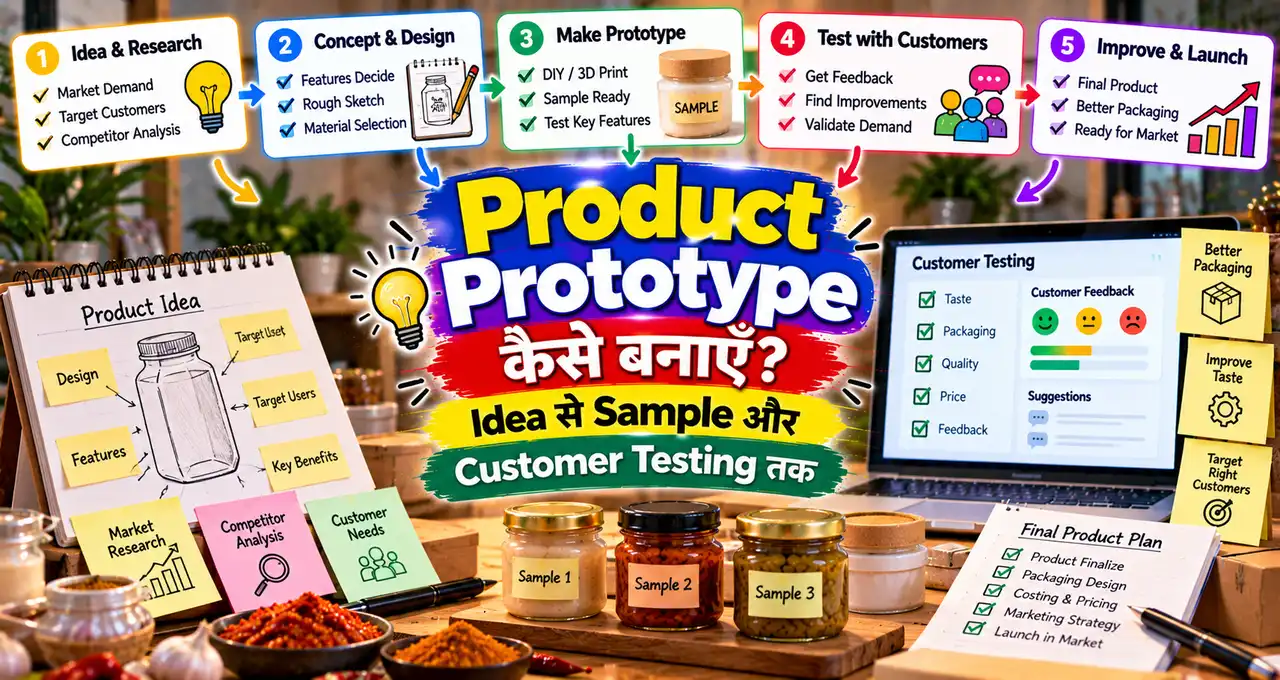
Large catalogue बनाने के बजाय दस संभावित items की shortlist से शुरुआत करें। प्रत्येक item का demand signal, supplier reliability, damage risk और expected margin अलग-अलग नोट करें।
Wooden key holder और textile wall hanging packaging में relatively manageable हो सकते हैं। लेकिन exact dimensions, finishing और colour accuracy फिर भी verify करनी होगी।
Ceramic vase आकर्षक दिख सकता है, पर courier damage के लिए stronger packaging चाहिए। Product selection में केवल photo का सुंदर होना पर्याप्त नहीं है।
Customer से पूछें कि वह home decor, gifting या festive use के लिए खरीद रहा है। इससे listing और seasonal inventory plan में मदद मिल सकती है।
तीन sample buyers को photos दिखाकर उनका feedback लें। उन्हें price, size और delivery timeline समझ आया या नहीं, यह पूछें।
Buyer feedback और small test orders के बाद ही दूसरी procurement करें।
Photos, listing और customer trust का workflow
Online buyer handicraft को हाथ लगाकर verify नहीं कर सकता। इसलिए actual product photos trust बनाने का महत्वपूर्ण हिस्सा हैं।
Main image में product साफ़ दिखाएँ। Additional photos में close-up, size comparison और packaging का view रखें। Handmade variation हो तो स्पष्ट लिखें।
Description में verified material, dimensions, quantity और care details दें। किसी artisan की technique या product origin के बारे में बिना confirmation के claim न करें।
AI से product description draft कर सकते हैं। लेकिन AI को facts invent करने न दें। Owner या artisan से हर specification approve कराएँ।
Packaging के लिए sample dispatch test करें। टूटने की संभावना है तो cost sheet में उचित allowance रखें।
Local promotion के लिए small business marketing workflow भी देख सकते हैं।
पहले buyers कहाँ मिल सकते हैं?
Craft exhibitions, local communities और existing customer contacts से शुरुआती feedback मिल सकता है। लेकिन हर positive comment को confirmed paid order न मानें।
WhatsApp Business पर approved sample catalogue बनाकर products समझाना आसान हो सकता है। Marketplace पर जाने से पहले seller eligibility और fees की current details देखें।
पहली दस enquiries की common questions list बनाएँ। अक्सर customer dimensions, delivery cost, gift packaging और return conditions पूछ सकता है।
ये questions आपकी product listing के weak points दिखाते हैं। Content को उन्हें हल करने के लिए सुधारें।
एक simple written order process रखें: item code, final price, customer confirmation, dispatch update और complaint contact।
यदि आप पहली बार business plan बना रहे हैं तो business शुरू करने की practical guide भी relevant है।
30 दिनों का practical action plan
Week 1: तीन suppliers से samples, rates और delivery terms लें। पाँच items की shortlist बनाएँ।
Week 2: Accurate photos, descriptions और product costing sheet तैयार करें। एक trial parcel ship करें।
Week 3: Potential customers से feedback लें। Appropriate channel पर verified listings और enquiry method तैयार करें।
Week 4: Paid orders, returns और fulfilment expenses दर्ज करें। Results देखकर next inventory तय करें।
हर week का deliverable पहले तय करें। Week 1 में sourcing list, Week 2 में product sheets, Week 3 में live listings और Week 4 में actual order review।
30 दिन में paid orders या net profit guaranteed नहीं हैं। यह roadmap कम खर्च में demand और process test करने का तरीका है।
कौन-सी गलतियाँ beginners को नुकसान पहुँचाती हैं?
पहली गलती attractive products देखकर बहुत inventory खरीदना है। Handmade categories में design और quality variation अधिक हो सकता है।
दूसरी गलती selling price और actual profit को एक ही मान लेना है। Shipping और return costs छोटे margin को खत्म कर सकते हैं।
तीसरी गलती supplier की photo या product story बिना permission के इस्तेमाल करना है। Authenticity और intellectual-property claims को गंभीरता से लें।
चौथी गलती delivery time का unrealistic promise करना है। Made-to-order product की lead time पहले confirm करें।
पाँचवीं गलती customer support की responsibility अस्पष्ट रखना है। Wrong product या damaged parcel की complaint किसे handle करनी है, यह पहले तय करें।
छोटे business की sales बढ़ाने के लिए reliable customer experience भी महत्वपूर्ण है।
eCraftIndia से मिलने वाली सबसे उपयोगी सीख
Rahul Jain ने एक everyday shopping experience में business problem पहचानी। Co-founders के साथ limited funding से online handicraft store की शुरुआत की।
पहले छोटा product, फिर marketplace distribution और उसके बाद artisan network का विस्तार—इस reported journey के अलग-अलग lessons हैं।
लेकिन हर business को इसी sequence में समान outcome मिलेगा, ऐसा नहीं है। आज marketplace competition, consumer demand और fulfilment economics अलग हैं।
आपके लिए practical takeaway है: पहले customer problem चुनें, फिर छोटी product range test करें। Reliable sourcing और clear costing के बाद ही expand करें।
यह disciplined शुरुआत किसी dramatic revenue target से अधिक उपयोगी हो सकती है।
आख़िर में एक छोटी सी बात
eCraftIndia की कहानी बताती है कि local product और customer के बीच gap एक practical business opportunity हो सकता है। लेकिन historical turnover को आज की guaranteed income न मानें।
अपने इलाके में पहले limited products और actual costs के साथ test करें। Feedback मिलने पर ही बड़ा investment करें।
आपके शहर या गाँव में कौन-सा handmade product online बिक सकता है? Comments में अपना idea या इस story से मिली सीख बताएँ।