

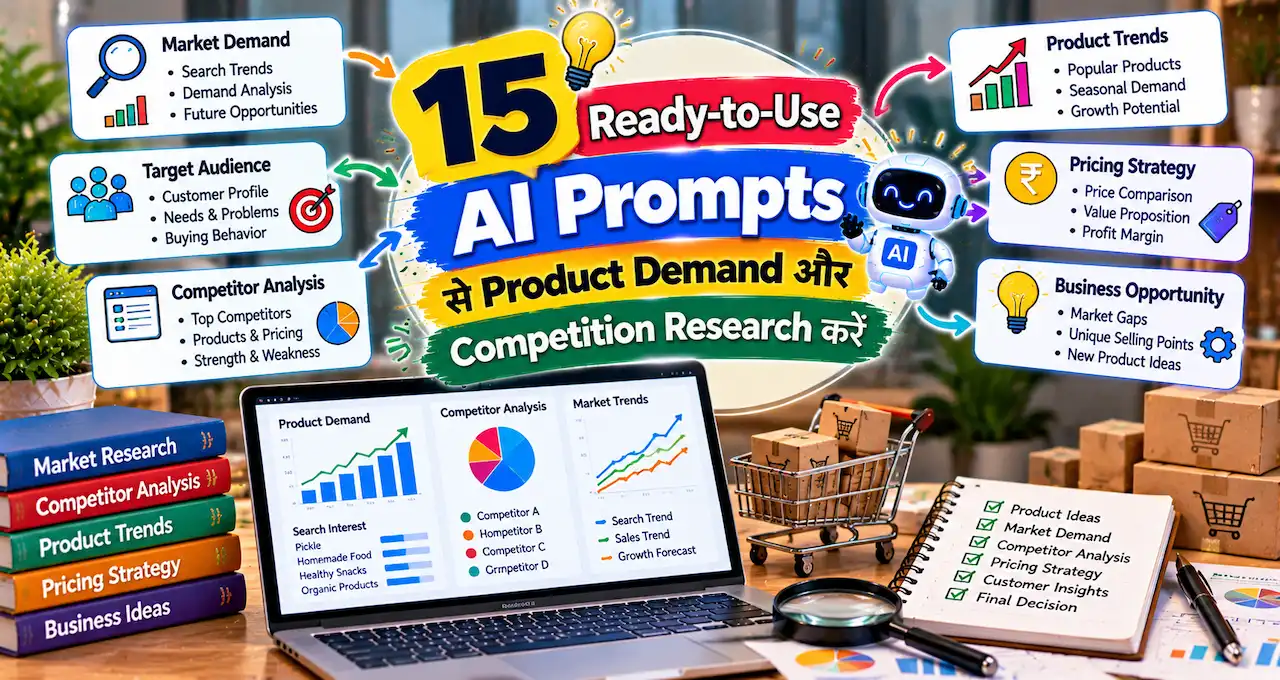

किसी product idea पर पैसा लगाने से पहले सबसे important सवाल यह नहीं है कि idea आपको कितना अच्छा लगता है, बल्कि यह है कि customer को उसकी जरूरत है या नहीं, वह अभी कौन-सा alternative use करता है, किस price range पर consider कर सकता है और competitors पहले से क्या offer कर रहे हैं।AI इस research को organize करने में काफी useful हो सकता है। लेकिन AI से “इस product की demand बहुत है?” पूछकर answer मान लेना सही तरीका नहीं है। Demand को search behaviour, customer interviews, competitor activity, reviews, enquiries और small paid tests जैसे real signals से verify करना पड़ता है।इस guide में 15 ready-to-use prompts हैं जो product demand और competition research को step-by-step structure देंगे।
इस लेख में आप क्या सीखेंगे?
- Demand signals पहचानना
- 15 ready-to-use prompts
- Competitors सही compare करना
- Price questions बनाना
- Customer objections समझना
- Master Prompt customize करना
AI Market Research में सबसे बड़ा Rule क्या है?
AI conclusion से पहले real evidence.AI useful है:
- Research questions बनाने में.
- Survey responses summarize करने में.
- Competitor information organize करने में.
- Reviews से repeated patterns निकालने में.
- Pricing scenarios compare करने में.
- Small demand test design करने में.
लेकिन AI खुद से current market demand नहीं जानता, जब तक उसके पास reliable current data या web access न हो। इसलिए prompt में source और date मांगना जरूरी है।अगर product idea अभी शुरुआती stage में है, तो Business शुरू करने का practical roadmap पहले overall planning clear कर सकता है।
Demand Research के 5 Real Signals
1. लोग problem describe कर रहे हैं?
Customer बार-बार किस परेशानी का mention करता है?
2. लोग current solution पर पैसा खर्च कर रहे हैं?
Existing alternatives का होना demand का signal हो सकता है। Competition हमेशा negative नहीं होती।
3. Search/interest दिखाई दे रहा है?
Search volume, Google Trends, marketplace searches या social questions useful directional signals हो सकते हैं, लेकिन अकेले purchase intent prove नहीं करते।
4. लोग enquiry कर रहे हैं?
Price, availability, delivery या size पूछना passive like से stronger signal हो सकता है।
5. लोग payment करने को ready हैं?
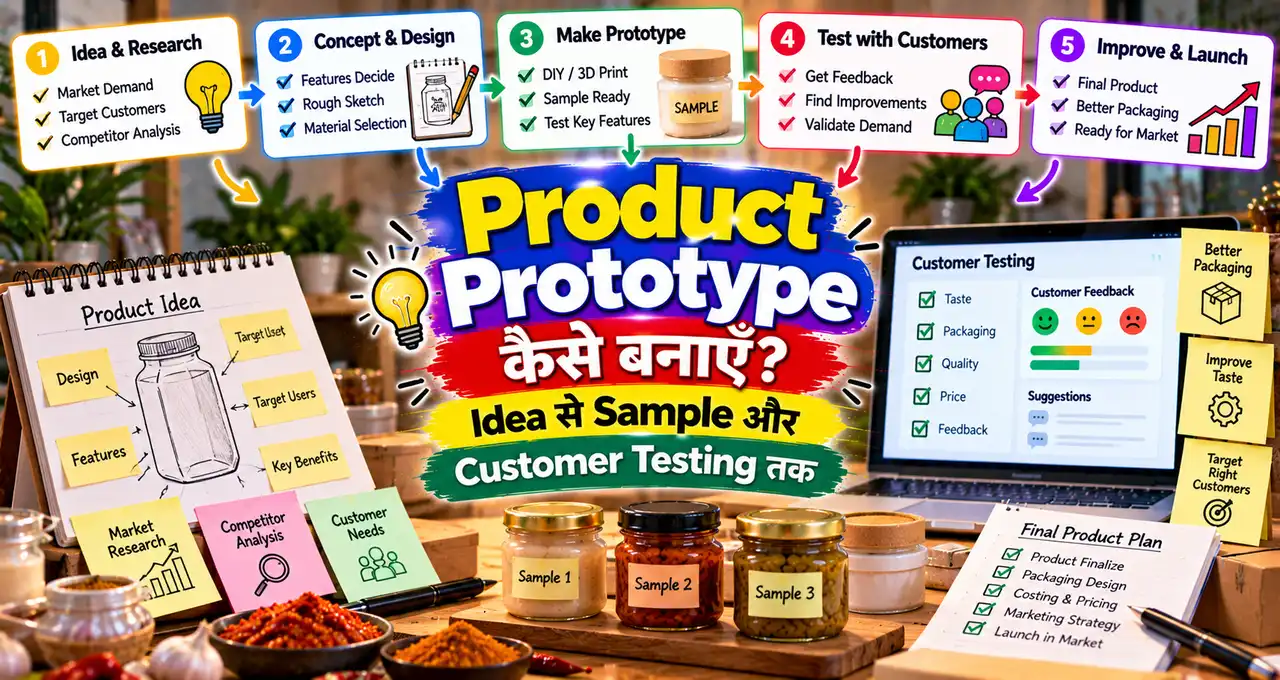
Paid pre-order, trial order या small batch sale सबसे strong practical signals में से हो सकती है—जब product legally और operationally ready हो।Prototype बनाकर learning करने का next step Product Prototype guide में समझाया गया है।
Research Source Hierarchy कैसे बनाएं?
हर source का weight बराबर नहीं होना चाहिए। Product research में एक simple hierarchy रखें ताकि AI viral post और official product page को एक जैसी credibility न दे।
Level 1: First-party verified sources
Official product pages, company pricing pages, published policies, official marketplace listings, government/regulatory information और आपके अपने sales/order data को primary evidence की तरह रखें। इनका screenshot या URL और check date save करें।
Level 2: Direct customer evidence
Interviews, paid orders, support messages, enquiry logs, return reasons और structured surveys useful first-hand signals हैं। लेकिन sample छोटा हो तो पूरे market पर generalize न करें।
Level 3: Public behavioural signals
Search suggestions, trend tools, marketplace reviews, community discussions और social comments demand clues दे सकते हैं। इनका context जरूरी है क्योंकि high discussion हमेशा high purchase intent नहीं दिखाती।
Level 4: Opinion and commentary
Creator videos, blogs, AI summaries और “industry expert” opinions research direction दे सकते हैं, लेकिन इन्हें verification के बिना core evidence न बनाएं।अपने notes में हर claim के साथ Source + Date + Evidence Strength लिखें। इसके बाद में AI summary बनाते समय weak signal accidentally fact नहीं बनेगा।
Market Size को Fake Number के बिना कैसे Estimate करें?
AI अक्सर broad prompt मिलने पर impressive-looking market-size numbers दे सकता है। अगर source current और credible नहीं है, तो ऐसा number decision में use नहीं करना चाहिए।Small business के लिए top-down “पूरा India market कितने करोड़ का है?” से पहले bottom-up estimate ज्यादा practical हो सकता है।Example framework:Reachable customers in target area×Realistic purchase frequency×Average expected order value=Testable local opportunityमान लीजिए आप सिर्फ़ एक neighbourhood में service test कर रहे हैं। पहले यह जानना ज्यादा useful है कि अगले 30 days में 20 paying customers मिल सकते हैं या नहीं, बजाय ऐसे national TAM number के जो आपकी current capacity से unrelated हो।AI से कहें कि numbers invent न करे। अगर inputs missing हों तो formula और required data fields दे।Market-size estimate में तीन scenarios useful हो सकते हैं:
- Conservative: Low adoption assumption.
- Base: Evidence-backed reasonable assumption.
- Stretch: Strong execution case, clearly labelled assumption.
इन scenarios को prediction की तरह नहीं, planning range की तरह use करें।
15 Ready-to-Use AI Prompts for Product Demand Research
हर prompt में bracket fields को अपने verified data से भरें। अगर AI current web research करता है, तो source links और dates जरूर मांगे।
Prompt 1: Customer Problem Map
मैं [PRODUCT IDEA] launch करने पर विचार कर रहा/रही हूँ।Target customer:[CUSTOMER]Problem I think it solves:[PROBLEM]इस idea को validate करने के लिए customer problem map बनाएं।Output:1. Main problem.2. Problem कब और कहाँ होता है?3. Existing workaround क्या हो सकते हैं?4. Customer को इस problem की कितनी urgency हो सकती है—Low/Medium/High, लेकिन इसे assumption label करें.5. 10 questions जो real customer से पूछने चाहिए.6. 5 observations जो interview में note करने चाहिए.7. कौन-सी बातें मेरे assumption को गलत prove कर सकती हैं?Do not claim demand exists without evidence.Do not invent customer statistics.Every uncertain point को Assumption label करें.
Research की शुरुआत “customer क्या चाहता है?” से नहीं, “customer अभी क्या करता है?” से करना ज्यादा useful हो सकता है।
Prompt 2: Customer Interview Script
[PRODUCT IDEA] के लिए neutral customer interview script बनाएं।Target customer: [CUSTOMER]Research goal: [GOAL]Interview duration: [10/15/20 MINUTES]Questions ऐसे हों जो leading न हों।Include:- Current behaviour.- Current alternative.- Biggest frustration.- Frequency of problem.- Money/time currently spent.- What they tried before.- Decision criteria.- Purchase blockers.- Last time problem happened.- What would make them switch.Avoid:“क्या आप यह product खरीदेंगे?”“क्या यह idea अच्छा है?”“₹X ठीक price है ना?”At end, create a note-taking template and 5 patterns to look for across interviews.
Future promise से ज्यादा past behaviour useful evidence दे सकता है।
Prompt 3: Search Demand Research Plan
मुझे [PRODUCT] के लिए online search demand research करनी है।Target market: [LOCATION]Customer: [CUSTOMER]Research plan बनाएं using:- Google search suggestions.- Google Trends if available.- Related searches.- YouTube search suggestions.- Marketplace search suggestions.- Relevant forums/Q&A.- Social media search.For each source बताएं:What to searchWhat signal to recordWhat signal NOT to over-interpretHow to save evidenceDate to recordIf you have live web access, current sources use करें and links/date दें.If you do not have live access, current volume or trend invent न करें.
Search interest demand का clue है, guaranteed sales नहीं।
Prompt 4: Competitor Mapping
मेरे product idea [PRODUCT] के competitors map करने में मदद करें।My market: [LOCATION]Customer: [CUSTOMER]मैं competitor list/data provide करूँगा/करूँगी:[PASTE VERIFIED DATA]Competitors को categories में divide करें:Direct competitorIndirect competitorSubstituteDo-it-yourself alternativeNo-purchase alternativeCreate a table:CompetitorTarget customerProduct/offerPrice if verifiedKey featureDelivery/channelVisible strengthVisible limitationData source/dateDo not invent sales, profit, customer count or market share.Public observation को internal company fact की तरह present न करें.
Competition का मतलब सिर्फ़ same product बेचने वाली company नहीं। Customer “कुछ न खरीदना” भी alternative हो सकता है।
Prompt 5: Competitor Offer Comparison
नीचे competitors के verified product pages/offers से notes दिए हैं:[PASTE NOTES]इनका neutral comparison करें।Compare:Product sizeFeaturesPriceBundleShippingWarranty/return if verifiedTarget customerMessagingProof/trust elementsUpsell/cross-sellThen identify:1. कौन-से features common हैं?2. कौन-से features rare हैं?3. कौन-सी customer information अक्सर missing है?4. कौन-से gaps मेरे product के लिए opportunity हो सकते हैं?5. कौन-से “gaps” सिर्फ़ assumptions हैं और customer validation मांगते हैं?Competitor को “bad” या “low quality” न कहें बिना evidence.
Gap दिखना opportunity तभी बनता है जब customer उस gap को important माने।
Prompt 6: Review Mining
मैं [PRODUCT CATEGORY] के public customer reviews analyse करना चाहता/चाहती हूँ।Reviews:[PASTE REVIEW TEXT]इन reviews को themes में classify करें:Liked featuresComplaintsQuality issuesDelivery issuesSize/fit issuesPrice/value commentsMissing featuresRepeat-purchase reasonsReasons for return/refundFor each theme:Frequency in supplied sampleExample wording—short paraphrase onlyPossible product implicationResearch questionDo not claim this sample represents the whole market.Fake review create न करें.Review में personal information हो तो उसे output में repeat न करें.
20 reviews एक signal हो सकते हैं, market truth नहीं। Sample bias note करना जरूरी है।
Prompt 7: Price Range Research
[PRODUCT] के price landscape को समझने में मदद करें।Verified competitor prices:[PASTE PRICES WITH SIZE/VARIANT]My estimated cost:[MY COST IF KNOWN]Create:1. Low, mid and premium observed price bands.2. Pack/feature differences.3. Price-per-unit comparison जहाँ meaningful हो.4. Cheapest option के trade-offs.5. Premium option किन verified features पर premium charge कर रहा है?6. Customer willingness-to-pay test के लिए 8 questions.7. मेरी pricing में कौन-सी costs include होनी चाहिए?Do not recommend a price सिर्फ़ competitor average देखकर.Margin data missing हो तो profit claim न करें.
Price research में product size और quality difference normalize किए बिना comparison misleading हो सकता है।
Prompt 8: Customer Segment Research
[PRODUCT] के संभावित customer segments identify करें।My current evidence:[PASTE INTERVIEW/ENQUIRY/SALES NOTES]Segments केवल evidence-based बनाएं.For each segment:ProblemCurrent alternativeBuying triggerMain objectionPreferred channelPossible price sensitivityEvidence availableMissing evidenceThen rank segments by:Evidence strengthProblem frequencyEase of reaching customerAbility to run low-cost testDo not invent demographics.Do not assume age, gender, income or location without evidence.
Target customer जितना specific होगा, product और message उतने testable होंगे।
Prompt 9: Local Demand Research
मैं [CITY/TOWN/AREA] में [PRODUCT/SERVICE] की local demand test करना चाहता/चाहती हूँ।Create a 7-day local research plan using:- Local Google search.- Google Maps/business listings.- Local WhatsApp/community groups where appropriate.- Nearby shops/service providers.- Short customer interviews.- Small enquiry test.For each day:TaskWho to contactQuestionEvidence to collectWhat not to assumeDo not suggest spam.Do not fabricate local business counts.If live search is unavailable, tell me exactly what I should manually check.
छोटे शहर में demand समझने का broader framework Local Demand देखकर business idea चुनने की guide में भी useful है।
Prompt 10: Feature Priority Research
मेरे [PRODUCT] के possible features नीचे हैं:[FEATURE LIST]Customer evidence:[PASTE INTERVIEW/REVIEW DATA]हर feature को score करने का framework बनाएं:Customer problem relevanceFrequency of requestCost/complexityCompetitive differentiationRiskEase of testingThen classify:Must test nowUseful laterLow evidenceProbably unnecessaryImportant:Score evidence से derive करें.अगर evidence नहीं है तो “Unknown” रखें.Feature सिर्फ़ competitor के पास है इसलिए जरूरी मानकर rank न करें.
Prototype में पहले वही features test करें जो core problem solve करते हैं।
Prompt 11: Landing Page Demand Test
[PRODUCT IDEA] के लिए honest demand-test landing page structure बनाएं।Product status: [CONCEPT / PROTOTYPE / READY]Target customer: [CUSTOMER]Verified benefits: [BENEFITS]Expected price/range: [PRICE]Availability date: [IF VERIFIED]Create:HeadlineProblem statementProduct conceptVerified benefitsHow it worksPrice/range sectionInterest CTAFAQDisclosure that product is [CONCEPT/PROTOTYPE] if not yet availableDo not pretend product is launched if it is not.Do not show fake reviews.Do not show fake stock counters.Do not collect payment unless product/pre-order process is actually ready and compliant.
Interest form, waitlist या enquiry page useful test हो सकता है, लेकिन fake launch नहीं होना चाहिए।
Prompt 12: Willingness-to-Pay Questions
[PRODUCT] के लिए customer willingness-to-pay research questions बनाएं।Product concept:[DESCRIPTION]Current alternatives:[ALTERNATIVES]Avoid directly asking only:“आप कितना pay करेंगे?”Instead create questions around:Current spendAlternative costExpected qualityMust-have featuresToo-cheap concernToo-expensive thresholdTrial pack preferenceSubscription/repeat frequency if relevantThen create a simple interview recording sheet.Do not convert 5–10 interviews into a precise market price.Explain how to treat answers as directional evidence.
Price question context के बिना misleading हो सकता है। Customer actual purchase situation में अलग decision ले सकता है।
Prompt 13: Sales Channel Research
[PRODUCT] बेचने के possible channels compare करें।Channels:[WHATSAPP / INSTAGRAM / MARKETPLACE / WEBSITE / LOCAL RETAIL / DISTRIBUTOR / OTHER]My constraints:Budget: [BUDGET]Location: [LOCATION]Product type: [TYPE]Average price: [PRICE]Shipping needs: [DETAIL]Team capacity: [DETAIL]Create comparison:Setup effortCustomer reachTrust requirementFees/cost categoriesOrder handlingReturn complexityContent requirementBest testDo not invent platform fees or current policies.Mark every changing fee/policy as “verify current terms”.Recommend one low-cost test based on supplied constraints, not a permanent channel decision.
Channel selection product economics बदल सकता है। Platform fee, shipping और returns को pricing में include करना चाहिए।
Prompt 14: False Demand Signals Audit
मेरे product idea के demand signals नीचे हैं:[PASTE SIGNALS]इन signals को strength के हिसाब से classify करें:Weak:LikesPoll votesFriends saying “nice idea”Medium:Detailed enquiriesPrice questionsWaitlist signupsRepeat website visits if verifiedStrong:Paid trial ordersRepeat ordersDeposits/pre-orders where appropriateRetailer trial orderहर signal के लिए बताएं:What it provesWhat it does not provePossible biasNext stronger testDo not overstate evidence.Create a “What would make me stop?” checklist.
Demand validation का goal idea से emotional attachment कम करना है।
Prompt 15: Final Market Research Summary
मेरे [PRODUCT] की पूरी research नीचे है:[PASTE INTERVIEWS, COMPETITOR NOTES, PRICE DATA, DEMAND TEST RESULTS]इसे decision-ready summary में organize करें.Sections:Customer problemTarget segmentsCurrent alternativesDemand evidenceCompetitor landscapePrice observationsFeature prioritiesSales channelsMain objectionsRisksUnknownsNext testThen create:1. Evidence-backed reasons to continue.2. Evidence-backed reasons to pause.3. Assumptions still untested.4. Cheapest next experiment.5. Clear stop/continue criteria.Do not tell me “launch जरूर करें”.Do not invent market size.Separate Evidence, Assumption and Recommendation.
Research का useful result हमेशा “yes” नहीं होता। कभी सही answer “अभी और test चाहिए” भी हो सकता है।
Evidence Scorecard कैसे बनाएं?
Research notes को सिर्फ़ paragraph में रखने से strong और weak signals mix हो सकते हैं। एक scorecard बनाएं:
| Signal | Evidence | Strength | Bias Risk | Next Test |
|---|---|---|---|---|
| Problem frequent | 8 customer interviews | Medium | Small sample | More segment interviews |
| Price accepted | 3 paid orders | Medium-High | Known contacts | Cold audience test |
| Feature wanted | Social poll | Low | Low commitment | Prototype test |
आप simple 1–4 scale use कर सकते हैं:
- 1 — Assumption: कोई direct evidence नहीं.
- 2 — Weak Signal: Likes, casual comments, small poll.
- 3 — Behaviour Signal: Detailed enquiry, repeated problem, waitlist action.
- 4 — Payment Signal: Paid order, repeat order या business buyer trial.
यह universal scientific score नहीं है। यह सिर्फ़ आपकी research discipline के लिए internal framework है।
Competition ज्यादा हो तो Idea खराब है?
जरूरी नहीं। Competition दो बातें दिखा सकती है:पहली, category में demand मौजूद हो सकती है.दूसरी, customer के पास choices हैं, इसलिए differentiation और execution important होंगे.Low competition भी automatic good sign नहीं। शायद demand ही कम हो।इसलिए सिर्फ़ competitor count नहीं, customer behaviour देखें।AI small business marketing के practical uses AI Marketing guide में आगे काम आएंगे, लेकिन marketing से पहले demand evidence होना ज्यादा useful है।
Research Notes के लिए Simple Evidence Table
| Claim | Evidence | Strength | Source Date | Next Check |
|---|---|---|---|---|
| Customers need smaller pack | 7/10 interviews | Medium | Current test | Paid trial |
| Competitors charge premium | 3 public listings | Low-Medium | Check date | Normalize size |
| Repeat demand exists | No sales yet | Unknown | — | Small batch |
यह table आपको AI-generated narrative के बजाय evidence देखना सिखाती है।
Demand Test का एक Practical Example
मान लीजिए idea है: local office workers के लिए compact healthy-snack box subscription.Initial assumption: लोगों के पास शाम को healthy snack option नहीं है।Weak evidence: Instagram poll में 70% लोगों ने “interested” चुना। यह useful है, लेकिन payment intent prove नहीं करता।Customer interviews: 12 office workers से बात की। 8 ने कहा कि शाम को वे tea के साथ packaged snack लेते हैं। 5 ने price sensitivity mention की। 3 ने subscription से ज्यादा on-demand order prefer किया।Competitor check: Nearby food sellers snacks offer कर रहे हैं, लेकिन weekly subscription visibly common नहीं मिला। यह opportunity हो सकती है, लेकिन “competition नहीं” conclusion नहीं है।Prototype: तीन sample boxes बनाकर taste, quantity और packaging test किए गए।Paid test: 10 लोगों को actual price के साथ offer भेजा। 4 paid orders मिले।अब evidence पहले से stronger है, लेकिन अभी भी scale proof नहीं है। Next test strangers/second office location और repeat order होगा।इस example का lesson है कि हर step previous assumption को stronger या weaker बनाता है। AI इन notes को organize कर सकता है; evidence users और transactions से आता है।
7-Day Product Demand Test Plan
Day 1: Problem
10 interview questions तैयार करें और target customer define करें.
Day 2: Interviews
कम से कम कुछ relevant users से actual behaviour पूछें। Quality quantity से ज्यादा important है.
Day 3: Competitors
Direct, indirect और substitutes map करें.
Day 4: Reviews
Public reviews से repeated complaints और liked features निकालें.
Day 5: Price
Comparable products का price/size normalize करें.
Day 6: Prototype/Offer
Simple prototype या honest concept page दिखाकर enquiry test करें.
Day 7: Decision
Evidence table बनाएं और सबसे important unknown चुनें।Prototype stage पर पहुँचने के बाद idea से sample और customer testing guide next logical step है।
Reusable Master Prompt: Product Demand Research Assistant
You are helping me research a product idea before I invest heavily.Product idea: [PRODUCT]Target customer: [CUSTOMER]Location/market: [LOCATION]My evidence so far: [PASTE DATA]Competitor data: [PASTE DATA]Customer interviews: [PASTE DATA]Price observations: [PASTE DATA]Rules:- Never invent market size, demand, sales, competitor revenue, customer count, search volume or current prices.- If live research is used, provide source and date.- Separate Evidence, Assumption and Hypothesis.- Treat likes/poll votes as weak demand signals.- Do not treat competitor presence as proof of opportunity.- Do not treat low competition as proof of opportunity.- Highlight contradictory evidence.- Ask for missing data before making strong conclusions.- Suggest low-cost experiments before large investment.- Do not create fake testimonials, fake waitlists, fake scarcity or fake sales.- If product has legal, safety, food, financial or health implications, flag the need for specialist/current compliance verification.Output:1. Customer problem.2. Evidence quality.3. Demand signals.4. Competitor map.5. Price observations.6. Product gaps.7. Feature priorities.8. Risks.9. Unknowns.10. Cheapest next test.11. Stop/continue criteria.12. Research checklist.Editable fields:Product: [PRODUCT]Customer: [CUSTOMER]Market: [LOCATION]Budget: [BUDGET]Research data: [PASTE]Specific question: [QUESTION]
Prompt को बार-बार updated evidence दें। Old assumptions को verified facts बनाकर carry forward न करें।
Common Market Research Mistakes
- Friends की तारीफ को demand मानना.
- Search trend को sales guarantee मानना.
- Competitor price देखकर अपनी cost ignore करना.
- Only positive reviews पढ़ना.
- Customer interview में leading questions पूछना.
- One city का data पूरे India पर apply करना.
- AI से fake market-size number लेना.
- Prototype से पहले bulk inventory खरीदना.
- Paid test के बिना “high demand” लिख देना.
Better prompts लिखने की foundation के लिए Prompt Engineering guide useful है।
आख़िर में एक छोटी सी बात
Product research का goal अपने idea को सही prove करना नहीं है। Goal यह जानना है कि कौन-सी assumptions real evidence से support होती हैं और कौन-सी सिर्फ़ हमारी उम्मीदें हैं।AI research को तेज़ कर सकता है, लेकिन demand customer behaviour से verify होगी। छोटे interviews, competitor observation और low-cost tests के बाद ही बड़ा inventory या marketing investment करना ज्यादा sensible होगा।आप किस product idea की demand test करना चाहते हैं? Comments में product और target customer बताइए, ताकि उसके लिए सबसे useful first research test identify किया जा सके।