






















₹10,000 की शुरुआती पूँजी वाली कहानी में सबसे काम की बात रकम नहीं, शुरुआत का तरीका है। Online clothing business की इस कहानी में product sourcing और छोटे tests से सीख मिलती है।
यह Tirupur के Zubair Rahman और The Fashion Factory पर 2019 में प्रकाशित reporting का विश्लेषण है। इसे आज की verified company performance या हर व्यक्ति के लिए समान सफलता का formula न मानें।
हम पहले reported facts समझेंगे। फिर अलग hypothetical examples से inventory, returns, margin और customer feedback के फैसले देखेंगे।
असली सवाल है: कपड़े बेचने से पहले आप कौन-सा छोटा test कर सकते हैं?
इस लेख में आप क्या सीखेंगे?
- पुरानी कहानी का संदर्भ
- Local sourcing का फायदा
- कम stock का test
- Order margin की गणना
- Returns और cash planning
- अपना pilot तय करना
Online clothing business की शुरुआत: reported facts
YourStory की 24 सितंबर 2019 की report के अनुसार, Zubair Rahman Tirupur में CCTV installation का काम करते थे। Ecommerce company का काम देखकर उनकी रुचि online selling में बढ़ी।
Report बताती है कि उन्होंने करीब दो महीने sourcing की तैयारी की। Local textile manufacturers से मिले और उपलब्ध कपड़ों को समझा। फिर 2015 में घर से ₹10,000 लगाकर The Fashion Factory शुरू की।
कहानी में शुरुआती छोटी quantities, online marketplaces और बच्चों के कपड़ों के combo packs का उल्लेख है। बाद में manufacturing की दिशा में बढ़ने की बात भी आती है।
यह ऐतिहासिक reporting है। इसमें दिए पुराने revenue claims को हमने वर्तमान कमाई के प्रमाण की तरह नहीं लिया है। यहाँ कोई नया founder interview या company accounts audit नहीं किया गया।
इस case का नाम समान नाम वाले दूसरे businesses से न मिलाएँ। नीचे के business calculations हमारे illustrative examples हैं, कंपनी के actual margins या खर्च नहीं।
अपनी पहली clothing listing तैयार करें
पहली सीख: अपने शहर की supply समझें
Tirupur textile ecosystem तक पहुँच कहानी का महत्वपूर्ण context है। किसी दूसरे शहर में रहने वाला व्यक्ति वही sourcing advantage मानकर योजना बनाए, तो लागत और quality बदल सकती हैं।
अपने आसपास देखें कि किस product की supply आसानी से मिलती है। क्या आप fabric, stitching और size consistency स्वयं जाँच सकते हैं?
Supplier तक वापस जाना कितना आसान है? यही जानकारी online listing से पहले चाहिए।
सिर्फ cheapest quotation न चुनें। Sample quality, minimum order, repeat availability और defective pieces की replacement conditions लिखकर तुलना करें। Low purchase price के साथ high defect rate अच्छा सौदा नहीं है।
पहले supplier से पूछें कि अगली supply में वही design और fabric मिलेंगे या नहीं। Listing का product बदल जाए, तो पुरानी reviews और नई delivery में mismatch हो सकता है।
Local advantage ढूँढने के लिए स्थानीय products online बेचने की guide से भी idea ले सकते हैं। Product का चुनाव अपनी जाँच और demand पर रखें।
दूसरी सीख: एक customer और एक category चुनें
“सभी के लिए सभी कपड़े” वाला catalogue शुरुआत में मुश्किल बन सकता है। हर नई category के साथ sizes, photography, packaging और returns की अलग समस्याएँ आती हैं।
एक छोटे segment से शुरू करने का उदाहरण है: बच्चों के everyday cotton t-shirts के limited-size packs। यह केवल planning example है, आज का verified bestselling niche नहीं।
Customer interview में पूछें कि वे अभी क्या खरीदते हैं। कपड़े की comfort, wash के बाद shrinkage और size clarity में कौन-सी शिकायत है? पसंद का colour पूछने से अधिक उपयोगी real buying experience होता है।
Combo pack तभी उपयोगी है, जब buyer को उसका स्पष्ट benefit समझ आए। केवल कई unwanted designs बाँध देने से value नहीं बनती। हर piece की quality और size consistent होनी चाहिए।
एक-page test brief बनाएँ: buyer कौन है, product क्या है, budget कितना है और किस result पर आगे stock लेंगे। बाकी designs को अभी backlog में रखें।
Sample से listing तक: quality की छोटी checklist
Sample garment को केवल फोटो देखकर approve न करें। Actual chest width, length और sleeve मापें। Supplier के size label और आपके measured chart में फर्क हो, तो listing से पहले समझें।
Wash-care instructions लें और sample पर उचित wash test करें। Colour bleed, shrinkage या stitch opening दिखे, तो उन्हें customer order से पहले सुलझाएँ। बिना test कोई fabric claim न लिखें।
Photographs में front, back, fabric close-up और size chart उपयोगी हैं। Editing से shade या print न बदलें। AI से background साफ करें, तो product की असली पहचान सुरक्षित रखें।
जो भेजेंगे, वही दिखाएँ। “Premium” और “best quality” जैसे vague शब्दों के बजाय composition और measurements की confirmed जानकारी दें। Unverified brand name या certification न जोड़ें।
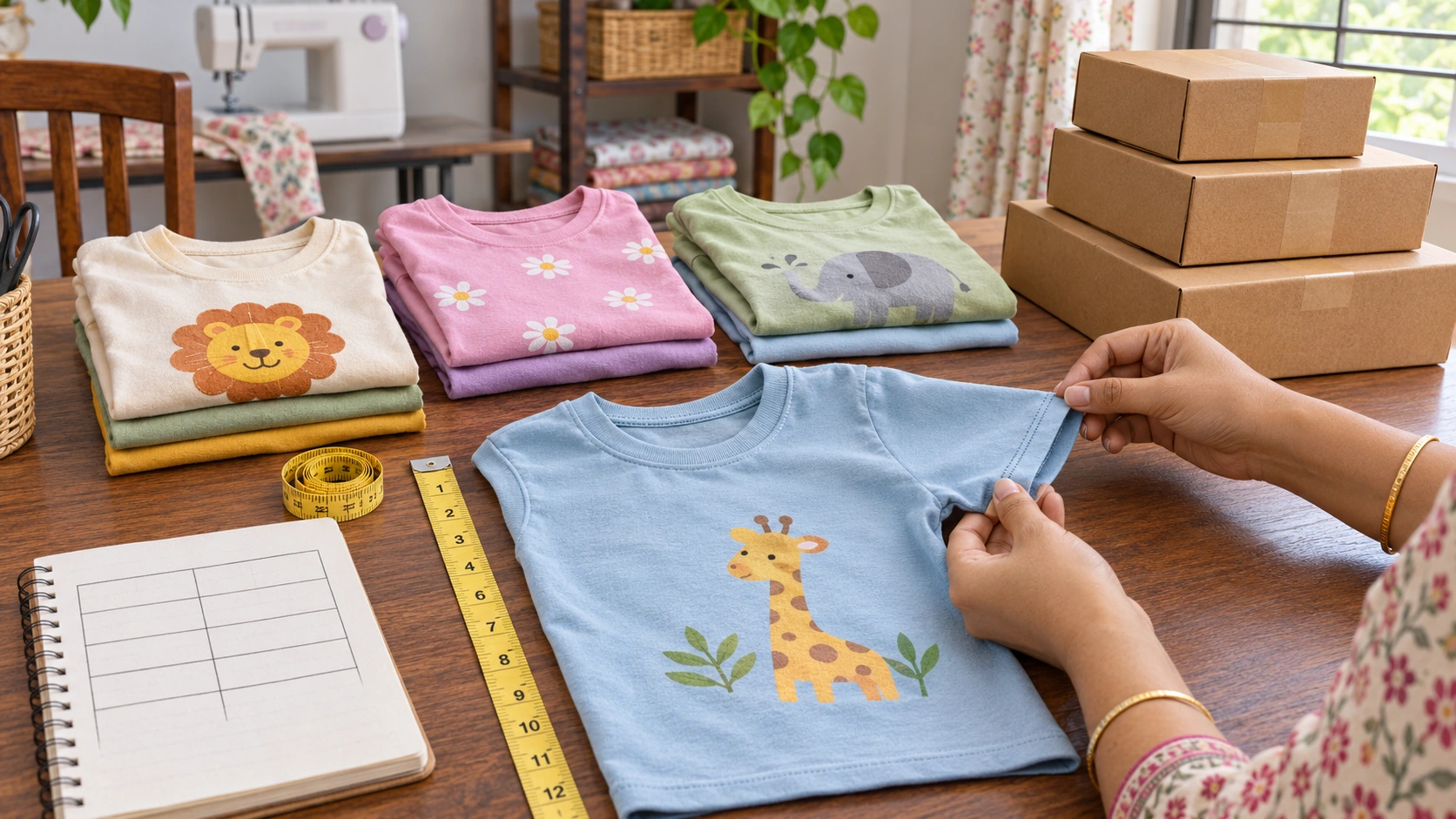
यह illustration छोटे stock की quality check समझाता है। यह founder, उनके वास्तविक घर या company inventory की photograph नहीं है। Product-specific checking का यही अभ्यास अपने sample पर करें।
Budget, प्रति order खर्च और returns
₹10,000 का आज वाला budget कैसे सोचें?
पुरानी कहानी की शुरुआती रकम आज पूरी business setup cost की guarantee नहीं है। Registration, seller eligibility, packaging और shipping requirements आपके channel तथा location के अनुसार बदलेंगी।
अगर आपके पास ₹10,000 का disposable experiment budget है, तो उसे पूरा stock में बाँधना आवश्यक नहीं। Samples, photos, packaging trials और returns buffer के लिए पैसा अलग रखना पड़ सकता है।
नीचे allocation केवल hypothetical planning example है। Existing phone, घर की जगह और अपने समय की opportunity cost इसमें अलग है। Actual supplier quotes लेकर ही खर्च तय करें।
| खर्च का bucket | Illustrative रकम | किस बात की जाँच करें |
|---|---|---|
| Samples और wash checks | ₹1,500 | Fabric, size, defects |
| Limited sellable stock | ₹4,500 | Demand और size mix |
| Packaging trial | ₹700 | Safe और सही packing |
| Photography/transport | ₹800 | Actual जरूरत के अनुसार |
| Returns/cash buffer | ₹2,500 | Stock में खर्च न करें |
| कुल | ₹10,000 | यह complete setup quotation नहीं |
Pilot budget छोटा हो, तो SKU count भी छोटा रखें। दस designs की एक-एक photo बनाने से बेहतर हो सकता है कि दो designs की सही जानकारी और availability रखें।
एक order में कितना बचता है? यह calculation करें
Revenue को profit न समझें। मान लें एक pack का realised selling amount ₹699 है। यह किसी marketplace की current fee quotation नहीं, unit-economics समझाने का artificial case है।
| मद | Illustrative amount |
|---|---|
| Realised sale amount | ₹699 |
| Garment sourcing | ₹320 |
| Packaging | ₹25 |
| Channel + shipping allocation | ₹130 |
| Marketing allocation | ₹40 |
| Return/defect allowance | ₹60 |
| Contribution before fixed costs | ₹124 |
गणना है: ₹699 − ₹320 − ₹25 − ₹130 − ₹40 − ₹60 = ₹124। यह contribution है, net profit नहीं। अपने labour, overheads और applicable taxes के बाद बचत अलग होगी।
अब sensitivity जाँचें। Return allowance ₹60 से ₹120 हो जाए, तो contribution ₹64 बचेगा।
₹100 extra discount देने पर वही case loss में जा सकता है। इसलिए offer तय करने से पहले खर्च लिखें।
Channel चुनते समय official seller fee और settlement pages देखें। Amazon India seller pricing जैसे primary pages पर अपनी category की current conditions जाँचें। किसी पुराने blog की flat fee पर पूरा model न बनाएँ।
Return आया, तो cash cycle कैसे बदलेगा?
Return का असर cash पर भी पड़ता है।
Customer order मिलना और पैसा उपयोग के लिए उपलब्ध होना अलग घटनाएँ हैं। Payment settlement, shipping, return window और replacement cash को अलग समय पर प्रभावित कर सकते हैं।
एक simple order tracker रखें: order date, dispatched, delivered, returned, refund, settlement और final contribution। Pending settlement को cash-in-bank न मानें।
अगर ₹4,500 का stock धीमे बिकता है, तो अगले supplier order के पैसे कहाँ से आएँगे? Reorder point demand और cash दोनों से तय करें। केवल gross sales बढ़ना पर्याप्त नहीं है।
Pre-order लें, तो availability और delivery date साफ बताएँ। Uncertain supply को “ready stock” न लिखें। Delay हो, तो customer को update और clear resolution दें।
दुकान के हिसाब-किताब की planning में sales और cash अलग रखने का अभ्यास उपयोगी है। छोटी शुरुआत में भी यह फर्क समझें।
Marketplace या अपना direct channel?
Marketplace में existing buying intent मिल सकता है, लेकिन fees, listing rules और platform dependence भी होते हैं। Direct channel में customer relationship आपका होता है, पर trust और traffic खुद बनाना होता है।
पहले एक primary channel चुनें। Product fit साबित होने से पहले website, कई marketplaces और हर social platform एक साथ संभालना ज़रूरी नहीं।
WhatsApp catalogue तभी उपयोगी होगा, जब customer permission और timely replies हों। Bulk unsolicited messages से trust नहीं बनता। WhatsApp Business की practical guide से setup समझें।
पहले orders के लिए discount ही एकमात्र कारण न बनाएँ। Clear measurements, honest photographs और easy-to-understand delivery terms भी buyer का risk कम करते हैं।
14 दिन का pilot और उसकी समीक्षा
अपना 14-day clothing pilot लिखें
पहले तीन दिन customer conversations और supplier samples पर लगाएँ। Days 4–6 में measurement, quality check और cost sheet पूरी करें। कोई critical issue बाकी हो, तो listing रोकें।
Days 7–9 में सीमित catalogue और order process test करें। एक friend को pretend checkout करवाकर missing information पकड़ें। इसे actual paid sale के रूप में report न करें।
Days 10–14 में छोटा launch करें और objections नोट करें। कितने लोग पूछते हैं, किस size की demand है और कितनों ने payment किया? Likes और orders अलग metrics हैं।
Pilot के अंत में तीन decisions हैं: same product छोटा reorder, offer सुधारकर दूसरा test, या category रोकना। Unsold stock को success story साबित करने के लिए और खरीदना नुकसान बढ़ा सकता है।
Market validation का यह तरीका शुरुआती enthusiasm को evidence से जोड़ने में मदद करता है। Test का काम सीख देना भी है, केवल sales screenshot बनाना नहीं।
Growth से पहले अपने numbers की छोटी review
हर week तीन questions देखें: कौन-सा size बिक रहा है, किस कारण returns आ रहे हैं और कौन-सा pack actual contribution दे रहा है? Total orders इन questions का उत्तर नहीं देता।
अगर medium size stock खत्म है और बाकी sizes रुके हैं, तो पूरे mix का समान reorder न करें। Supplier की minimum quantity देखकर buyer demand से मिलाएँ।
Return reason को “customer issue” लिखकर बंद न करें। Measurement mismatch, shade difference, damaged packing और late delivery अलग problems हैं। हर एक का fix अलग होगा।
Customer feedback के आधार पर listing बदलें, लेकिन पुराने promise का record रखें। Description सुधारना helpful है; पहले गलत बताए product को सही बताया हुआ दिखाना नहीं।
Growth के लिए additional money लगाना हो, तो best-case sales के साथ slow-sales case भी बनाएँ। Essential household money और experimental stock budget अलग रखना decision आसान करेगा।
इस तरह case study का practical उपयोग होता है। आप founder की historical journey की नकल नहीं कर रहे; अपनी category में measurable learning process बना रहे हैं।
आख़िर में एक छोटी सी बात
The Fashion Factory की पुरानी कहानी sourcing, छोटे stock और customer fit पर सोचने का अवसर देती है। इसे देखकर सबसे उपयोगी सवाल “वह कितना कमाते थे?” नहीं, “मैं कौन-सा assumption पहले जाँचूँ?” है।
अपनी category, supplier access और cash buffer लिखें। फिर limited pilot के लिए साफ stop-or-reorder rule तय करें। शुरुआत की रकम से अधिक आपकी feedback लेने और mistakes जल्दी पहचानने की क्षमता काम आएगी।
आप clothing business में किस product का छोटा test करना चाहेंगे, comments में लिखें। यह analysis उपयोगी लगा हो, तो business शुरू करने की सोच रहे किसी परिचित से share करें।