












एक teacher की class शायद 40 minutes की हो, लेकिन उस class के पीछे का काम 40 minutes तक सीमित नहीं रहता।
Lesson तैयार करना है। Examples ढूँढने हैं। Worksheet बनानी है। कमजोर students के लिए concept आसान करना है। Test के questions तैयार करने हैं। Copies check करनी हैं। Parents के लिए message भी लिखना है।
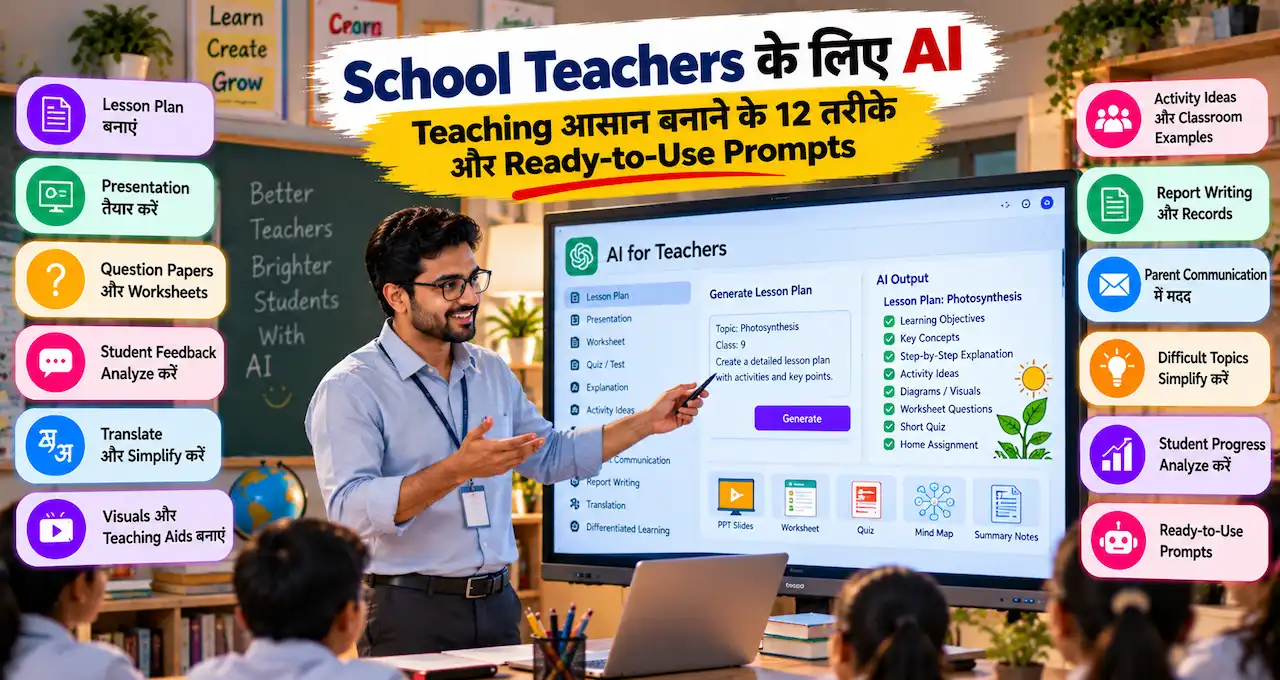
AI इनमें से कई काम teacher की जगह नहीं, बल्कि teacher के assistant की तरह आसान कर सकता है।
सही इस्तेमाल में AI का मकसद teaching को automated बनाना नहीं है। मकसद है repetitive preparation में समय बचाना, ताकि teacher students और actual learning पर ज़्यादा ध्यान दे सके।
अब समझते हैं कि school teachers AI को lesson planning से लेकर quizzes और student feedback तक किन practical तरीकों से इस्तेमाल कर सकते हैं।
इस लेख में आप क्या सीखेंगे?
- Teachers के AI uses
- Lesson planning की मदद
- Worksheets जल्दी बनाना
- Assessment में AI
- Personalized learning support
- Parent communication आसान करना
- Ready-to-use teacher prompts
- AI की जरूरी सावधानियाँ
Teacher के लिए AI का सही role क्या होना चाहिए?
AI को ऐसा tool नहीं समझना चाहिए जो teacher से बेहतर जानता हो कि class को क्या पढ़ाना है।
Teacher के पास वह context होता है जो AI के पास नहीं होता।
Teacher जानता है:
कौन-सा chapter चल रहा है?
बच्चों को पहले से क्या आता है?
किस concept पर class अटक रही है?
किस student को extra support चाहिए।
School में कौन-से resources available हैं।
और syllabus के हिसाब से किस level तक पढ़ाना है।
AI इन decisions को support कर सकता है।
एक useful formula यह हो सकता है:
Teacher Learning Goal तय करे
↓
AI Preparation में मदद करे
↓
Teacher Output Review करे
↓
Class के अनुसार Customize करे
↓
Students के साथ Implement करे
↓
Result देखकर Improve करे
इसलिए पूरे article में एक principle याद रखें:
AI speed के लिए, teacher judgement और trust के लिए।
1. Lesson Planning में AI की मदद
हर lesson से पहले सिर्फ़ chapter का नाम जानना काफी नहीं होता।
Teacher को decide करना पड़ता है:
- learning objective क्या होगा
- class कैसे शुरू होगी
- concept कैसे explain होगा
- कौन-सा example दिया जाएगा
- activity क्या होगी
- understanding कैसे check करेंगे
- homework क्या होगा
AI इस planning का first draft तैयार कर सकता है।
मान लीजिए Class 5 में Fractions पढ़ाना है और period 40 minutes का है।
AI को सिर्फ़ “Fractions का lesson plan बनाओ” कहना बहुत generic होगा।
इसके बजाय पूरा context दें।
Ready-to-use Prompt: Lesson Plan
मैं Class [Class] में [Subject] पढ़ाता/पढ़ाती हूँ। आज का topic “[Topic]” है। Class duration [Time] minutes है। Students को पहले से [Existing Knowledge] आता है। मेरा learning objective है: [Objective]।
एक practical classroom lesson plan बनाइए जिसमें warm-up, simple explanation, daily-life example, teacher activity, student activity, practice questions और end में 3-minute understanding check शामिल हो।
Class level से बाहर की information न जोड़ें। कोई syllabus detail खुद से assume न करें। अगर जरूरी information missing हो तो पहले मुझसे पूछें।
AI से मिला lesson plan सीधे class में use करने के बजाय पहले review करें।
कई बार AI ऐसी activity suggest कर सकता है जिसके लिए projector, internet या material चाहिए, जबकि आपकी class में वह available ही न हो।
2. मुश्किल Concept को आसान भाषा में समझाना
Teacher को concept पता होता है।
लेकिन कई बार challenge यह होता है कि बच्चे को वही बात किस example से समझाई जाए।
मान लीजिए Class 6 में Ratio पढ़ाते समय कुछ students textbook definition समझ नहीं पा रहे हैं।
AI से एक ही concept को अलग तरीके से explain करवाया जा सकता है:
- बहुत आसान language में
- story के जरिए
- daily-life example से
- analogy के जरिए
- step-by-step
Ready-to-use Prompt: आसान Explanation
मुझे Class [Class] के students को “[Topic]” समझाना है। इसे simple Hindi/Hinglish में ऐसे समझाइए कि beginner student भी समझ सके।
पहले 4–5 lines में concept बताइए। फिर एक Indian daily-life example दीजिए। उसके बाद एक simple analogy दीजिए।
अंत में 3 questions दें जिनसे मैं check कर सकूँ कि student ने concept वास्तव में समझा है या सिर्फ़ definition याद की है।
Technical accuracy बनाए रखें और कोई fact खुद से invent न करें।
यह prompt Maths, Science, Social Science, Computer और कई दूसरे subjects में useful हो सकता है।
3. अलग-अलग Learning Levels के लिए Material बनाना
एक classroom में सभी students एक level पर नहीं होते।
एक बच्चा question पहली बार में solve कर लेता है।
दूसरे को hint चाहिए।
तीसरे को वही concept और आसान example से समझाना पड़ता है।
इस situation में teacher एक ही topic के अलग difficulty levels तैयार करने के लिए AI का इस्तेमाल कर सकता है।
उदाहरण:
Support Level → simpler instructions + hints
Standard Level → normal class exercise
Challenge Level → application और reasoning questions
Ready-to-use Prompt: तीन Difficulty Levels
यह Class [Class] के [Subject] का topic है: [Topic].
Learning objective: [Objective].
इसी objective को रखते हुए practice material के 3 versions बनाइए:
- Support Level — आसान language, छोटे steps और hints के साथ
- Standard Level — normal class level
- Challenge Level — reasoning और application-based questions
तीनों levels में core learning objective same रखें। Students को label न करें और उनकी ability के बारे में कोई assumption न बनाएं।
Teacher decide करेगा कि किस student को कौन-सा material देना सही रहेगा।
यह decision AI को नहीं छोड़ना चाहिए।
4. Worksheets जल्दी तैयार करना
Worksheet बनाना simple दिखता है, लेकिन अच्छी worksheet तैयार करने में समय लगता है।
एक useful worksheet में सिर्फ़ दस similar questions नहीं होने चाहिए।
उसमें अलग प्रकार की practice हो सकती है:
- MCQs
- fill in the blanks
- short answers
- application questions
- reasoning questions
- challenge question
AI इस variety को जल्दी तैयार करने में मदद कर सकता है।
Ready-to-use Prompt: Worksheet
Class [Class] के [Subject] में “[Topic]” पर एक worksheet तैयार करें।
इसमें रखें:
- 5 MCQs
- 4 short-answer questions
- 3 application-based questions
- 1 challenge question
Questions आसान से मुश्किल order में रखें।
इसके बाद teacher के लिए अलग answer key दें।
Questions केवल मेरे दिए गए topic और learning objective तक सीमित रखें। किसी textbook chapter या syllabus content को खुद से assume न करें।
Maths और Science जैसे subjects में answer key को manually check करना खास तौर पर ज़रूरी है।
AI confidently गलत answer भी दे सकता है।
5. Classroom Activities के Ideas लेना
किसी concept को सिर्फ़ बोलकर समझाने के बजाय activity से समझाना कई बार ज्यादा effective होता है।
लेकिन रोज़ नए classroom activity ideas सोचना आसान नहीं है।
AI को classroom की वास्तविक limitations बताकर activity suggestions ली जा सकती हैं।
उदाहरण:
Class में 40 students हैं।
Internet नहीं है।
Projector नहीं है।
Activity के लिए सिर्फ़ 15 minutes हैं।
ऐसी details AI को जरूर बताएं।
Ready-to-use Prompt: Classroom Activity
मुझे Class [Class] में “[Topic]” पढ़ाना है।
Class में लगभग [Number] students हैं। Activity के लिए [Time] minutes हैं। मेरे पास [Available Resources] available हैं और [Unavailable Resources] available नहीं हैं।
इस topic के लिए 3 practical classroom activities suggest करें।
हर activity के लिए:
- objective
- required material
- step-by-step process
- students क्या करेंगे
- teacher क्या observe करेगा
- final discussion question
Activity age-appropriate, low-cost और classroom में realistically possible होनी चाहिए।
अब answer में आपको “एक interesting activity कराएँ” जैसी vague advice के बजाय usable structure मिलने की संभावना बढ़ती है।
6. Quiz और Quick Revision तैयार करना
हर chapter के बाद long test जरूरी नहीं होता।
कई बार 5-minute quiz से ही teacher को पता चल सकता है कि class ने concept समझा या नहीं।
AI की मदद से आप बना सकते हैं:
- rapid-fire quiz
- true/false round
- MCQs
- misconception check
- oral questions
- exit ticket
Ready-to-use Prompt: Quick Revision Quiz
मैंने आज Class [Class] में “[Topic]” पढ़ाया है।
Learning objective था: [Objective].
5-minute revision quiz तैयार करें जिसमें:
- 3 easy recall questions
- 3 concept-understanding questions
- 2 application questions
- 1 common misconception question
शामिल हों।
Questions short रखें ताकि इन्हें classroom में orally या board पर quickly use किया जा सके।
ऐसे questions teacher को अगली class plan करने में भी मदद कर सकते हैं।
अगर बहुत से students एक ही question में गलती कर रहे हैं, तो शायद उस concept को दोबारा समझाने की ज़रूरत है।
7. Exit Ticket बनाना
Class के end में teacher अक्सर पूछता है:
“सबको समझ आया?”
और जवाब आता है—
“हाँ।”
लेकिन यह reliable assessment नहीं है।
Exit ticket में students class खत्म होने से पहले 2–3 छोटे questions answer कर सकते हैं।
इससे teacher को तुरंत feedback मिलता है।
Ready-to-use Prompt: Exit Ticket
आज की Class [Class], Subject [Subject] और Topic “[Topic]” के लिए 3-question exit ticket बनाइए।
Question 1 से basic understanding check हो।
Question 2 से concept apply करने की ability check हो।
Question 3 में student बताए कि उसे topic का कौन-सा हिस्सा अभी unclear है।
Questions इतने short रखें कि student 3–5 minutes में answer कर सके।
यह छोटा practice अगली class की planning को ज्यादा focused बना सकता है।
8. Question Paper का First Draft बनाना
AI teacher को question paper का first draft बनाने में भी मदद कर सकता है।
लेकिन यहाँ control और review बहुत जरूरी हैं।
AI को साफ़ बताएं:
- class
- subject
- chapters
- marks
- question types
- difficulty distribution
- exam duration
Ready-to-use Prompt: Question Paper
Class [Class] के [Subject] के लिए [Total Marks] marks का practice question paper तैयार करें।
केवल इन topics से questions लें:
[Topics]
Difficulty distribution:
Easy: [Percentage]%
Moderate: [Percentage]%
Challenging: [Percentage]%Question types: [MCQ/Short Answer/Long Answer/Numerical/etc.]
Paper के बाद अलग teacher answer key दें।
कोई chapter, formula, fact या syllabus point खुद से add न करें। Final paper publish करने से पहले teacher verification जरूरी मानें।
इसे सीधे official exam paper की तरह इस्तेमाल करना सही नहीं होगा।
हर question, answer और marks distribution manually review करें।
9. Student Feedback लिखने में मदद
Copy check करना सिर्फ़ सही और गलत mark करने का काम नहीं है।
Useful feedback student को बताता है:
उसने क्या अच्छा किया।
कहाँ improvement चाहिए।
अगली बार क्या करना चाहिए।
लेकिन 30–40 students के लिए बार-बार meaningful feedback लिखना time-consuming हो सकता है।
AI generic feedback templates तैयार करने में मदद कर सकता है।
Ready-to-use Prompt: Student Feedback
मैं Class [Class] में [Subject] पढ़ाता/पढ़ाती हूँ।
मुझे student work पर short और constructive feedback देने के लिए 12 reusable feedback templates बनाइए।
इन्हें 4 categories में divide करें:
- Excellent understanding
- Good but needs improvement
- Concept needs more practice
- Effort is good but answer incomplete
Language encouraging और specific रखें।
किसी student का final grade तय न करें और student के behaviour, intelligence या future ability के बारे में judgement न दें।
इन templates को copy-paste करने के बजाय student के actual work के अनुसार customize करना बेहतर होगा।
“Good work” से ज्यादा useful feedback है—
“Concept सही समझा है, लेकिन example को थोड़ा और clearly explain करें।”
10. Parent Communication आसान बनाना
Teacher को parents के लिए कई messages तैयार करने पड़ते हैं।
जैसे:
- PTM reminder
- homework notice
- project instruction
- exam preparation message
- class activity information
- general academic update
Information teacher के पास होती है।
AI उसे clear और polite message में बदल सकता है।
Ready-to-use Prompt: Parent Message
Parents के लिए एक short WhatsApp message तैयार करें।
Purpose: [Purpose]
जरूरी information:
[Details]
Message simple Hindi/Hinglish में हो। Tone respectful, warm और clear रखें। Message 100–120 words से ज्यादा न हो।
कोई date, deadline, fee, school rule, contact detail या promise खुद से add न करें। केवल मेरी दी हुई information का इस्तेमाल करें।
Send करने से पहले message की dates, instructions और school-related details जरूर check करें।
11. कहानी, Examples और Analogies बनाने में
Primary और middle-school teaching में storytelling काफी useful हो सकती है।
Teacher AI से concept के लिए छोटी story या analogy तैयार करवा सकता है।
लेकिन story का मकसद entertainment नहीं, concept समझाना होना चाहिए।
मान लीजिए बच्चों को saving और spending का basic idea समझाना है।
AI एक छोटी story बना सकता है जिसमें pocket money, stationery और बचत का example हो।
Ready-to-use Prompt: Learning Story
Class [Class] के students को “[Concept]” समझाने के लिए लगभग 250 शब्दों की एक simple learning story लिखें।
Story Indian school-going children के लिए relatable हो। Language simple रखें।
Story का मकसद [Learning Objective] समझाना है।
इसके बाद 4 discussion questions दें।
किसी community, profession, gender या background को stereotype न करें। कोई factual information खुद से invent न करें।
Teacher story को अपने classroom culture के अनुसार adjust कर सकता है।
12. Homework को ज्यादा Meaningful बनाना
Homework सिर्फ़ textbook के अगले 10 questions solve करना ही नहीं होना चाहिए।
AI teacher को अलग प्रकार के homework ideas सोचने में मदद कर सकता है।
जैसे:
Observation task.
Home interview.
Mini experiment.
Reflection question.
Real-life Maths problem.
Local environment activity.
Ready-to-use Prompt: Homework Ideas
Class [Class], Subject [Subject] और Topic “[Topic]” के लिए 5 meaningful homework ideas suggest करें।
Homework ऐसा हो जो students को concept को real life से connect करने में मदद करे।
Tasks low-cost हों और special equipment या paid apps की जरूरत न हो।
हर homework idea के साथ उसका learning purpose भी बताएं।
Student से ऐसी personal या family information collect करने को न कहें जो learning objective के लिए जरूरी नहीं है।
इस तरह homework सिर्फ़ repetition के बजाय observation और application पर भी focus कर सकता है।
AI से Student के लिए Personalized Support कैसे लें?
Personalization का मतलब यह नहीं कि AI हर student को automatically judge करे।
बेहतर तरीका है कि teacher problem identify करे और AI से support material तैयार करवाए।
उदाहरण:
एक student multiplication समझता है लेकिन word problems में अटक रहा है।
Teacher AI को यह नहीं कहे—
“यह बच्चा कमजोर है, इसे क्या पढ़ाऊँ?”
इसके बजाय task-based context दें।
Ready-to-use Prompt: Extra Practice
Class [Class] का student [Topic] की basic calculation कर सकता है, लेकिन [Specific Difficulty] में practice की जरूरत है।
इस skill के लिए 5 guided practice questions तैयार करें।
पहले 2 questions में hints दें, अगले 2 में कम hints दें और आखिरी question student को independently solve करने दें।
Student की intelligence या ability के बारे में कोई label या judgement न दें।
यही ज्यादा responsible use है।
क्या AI exam copies check कर सकता है?
Technically कई AI tools text analyze कर सकते हैं।
लेकिन इसका मतलब यह नहीं कि teacher पूरी grading AI को सौंप दे।
Assessment में कई ऐसी बातें होती हैं जिन्हें AI पूरी तरह नहीं समझ सकता:
Student की previous progress.
Teacher ने class में क्या instructions दी थीं।
Answer किस context में लिखा गया?
Rubric कैसे interpret की जानी है?
किस mistake को कितना weight देना है?
AI rubric के आधार पर feedback suggestion दे सकता है।
Final marks teacher को तय करने चाहिए।
एक practical approach हो सकता है:
Rubric तैयार करें
↓
AI से Feedback Draft लें
↓
Teacher Student Work देखें
↓
Feedback Correct करें
↓
Final Marks Teacher तय करे
High-stakes decisions—जैसे final grading, promotion या disciplinary action—AI output के भरोसे नहीं छोड़े जाने चाहिए।
Students को AI इस्तेमाल करने देना चाहिए या नहीं?
यह सिर्फ़ “हाँ” या “नहीं” वाला सवाल नहीं है।
इसका जवाब age, school policy, assignment और learning objective पर निर्भर करेगा।
अगर homework है—
“Photosynthesis पर 500 शब्द लिखो”
तो student AI से पूरा answer generate करके submit कर सकता है।
Assignment complete दिखेगा।
लेकिन learning कितनी हुई?
शायद बहुत कम।
Teacher task को बदल सकता है।
उदाहरण:
AI से Photosynthesis की explanation लो।
फिर student से कहें:
- explanation में 3 important facts identify करो
- textbook से verify करो
- एक unclear point बताओ
- AI explanation की एक weakness लिखो
- concept अपने words में समझाओ
अब AI shortcut नहीं रहा।
वह critical-thinking exercise का हिस्सा बन गया।
Teachers के लिए AI इस्तेमाल करने की 7 जरूरी सावधानियाँ
AI जितना useful है, school environment में उतना ही responsibly इस्तेमाल करना चाहिए।
1. Student की Private Details न डालें
Public AI tools में बिना जरूरत ऐसी information paste न करें:
- student का पूरा नाम
- phone number
- address
- ID details
- detailed marks record
- medical information
- disability-related private information
- disciplinary details
- family की confidential information
अगर school कोई approved AI platform देता है, तो उसकी policy follow करें।
2. AI के Facts Verify करें
AI गलत answer को भी बहुत confident तरीके से लिख सकता है।
इसलिए check करें:
- dates
- formulas
- historical facts
- scientific facts
- quotations
- statistics
- answer keys
3. Syllabus खुद से Assume न करने दें
Board और class के हिसाब से syllabus अलग हो सकता है।
इसलिए prompt में actual topic और learning objective दें।
4. Final Assessment Teacher करे
AI suggestions दे सकता है।
Marks और judgement teacher के पास रहने चाहिए।
5. Age-Appropriate Content Check करें
AI-generated example technically सही हो सकता है, लेकिन बच्चों के age level के लिए suitable नहीं।
Teacher review जरूरी है।
6. Bias और Stereotypes देखें
Stories और examples में gender, profession, region या community को लेकर stereotypes आ सकते हैं।
उन्हें remove करें।
7. School Policy Follow करें
AI use करने से पहले यह भी देखें कि school या institution की technology और student data policy क्या कहती है।
Teacher को अच्छा AI Prompt कैसे लिखना चाहिए?
अच्छा prompt बहुत complicated नहीं होता।
उसमें relevant context clear होना चाहिए।
एक useful structure है:
आप कौन हैं
↓
Class और Subject
↓
Topic
↓
Student Level
↓
Learning Objective
↓
Available Time
↓
Available Resources
↓
AI से Required Output
↓
क्या Assume नहीं करना
उदाहरण के लिए:
“Worksheet बनाओ”
के मुकाबले—
“Class 6 Science में Water Cycle के लिए 20-minute revision worksheet बनाओ। Students concept पहले पढ़ चुके हैं। 5 MCQs, 3 short answers और 2 application questions हों।”
दूसरा prompt ज्यादा useful output देगा।
Teachers के लिए Reusable Master AI Prompt
नीचे वाला prompt teacher save करके अलग-अलग tasks के लिए बार-बार customize कर सकता है।
मैं [Class/Grade] में [Subject] पढ़ाता/पढ़ाती हूँ।
Current topic: [Topic]
Students का existing knowledge: [Existing Knowledge]
Learning objective: [Objective]
Class duration: [Time]
Available resources: [Resources]
मुझे आपकी मदद चाहिए: [Lesson Plan / Worksheet / Quiz / Activity / Explanation / Homework / Feedback / Parent Message]Output practical, classroom-friendly और students की age के अनुसार रखें। Language simple Hindi/Hinglish हो।
किसी syllabus point, textbook content, student detail, school policy, date, fact या resource को खुद से assume न करें। अगर important information missing हो तो पहले सवाल पूछें।
Factual information और answer keys में accuracy पर खास ध्यान दें। अगर किसी fact को लेकर uncertainty हो तो साफ़ बताएं।
Student की intelligence, ability, behaviour या future performance के बारे में judgement न दें।
Final assessment या teaching decision मेरी जगह न लें।
Answer के अंत में दो sections दें:
- Teacher को क्या manually verify करना चाहिए
- इसे classroom के लिए और बेहतर कैसे customize किया जा सकता है
इस एक prompt को अलग-अलग situations के लिए edit किया जा सकता है।
क्या AI Teacher को replace कर सकता है?
अगर teaching का मतलब सिर्फ़ textbook की information बोलना होता, तो शायद यह सवाल अलग होता।
लेकिन teacher का काम information delivery से कहीं बड़ा है।
Teacher notice करता है:
कौन बच्चा confused है?
कौन answer जानता है लेकिन बोलने से डरता है?
किस student का confidence कम हो रहा है?
कब क्लास बोरिंग हो रही है?
कब explanation बदलने की जरूरत है?
कब discipline जरूरी है?
और कब student को सिर्फ़ encouragement चाहिए।
AI lesson plan बना सकता है।
लेकिन classroom relationship नहीं बना सकता।
AI feedback का draft दे सकता है।
लेकिन student की पूरी journey नहीं समझता।
AI activity suggest कर सकता है।
लेकिन class की energy और response teacher observe करता है।
इसलिए सही सवाल शायद यह नहीं है—
“क्या AI teacher को replace करेगा?”
बेहतर सवाल है—
“Teacher AI का इस्तेमाल करके अपना काम बेहतर कैसे कर सकता है?”
शुरुआत कैसे करें? 7 दिन का Practical Plan
AI को पहले दिन से हर teaching task में use करने की जरूरत नहीं है।
एक छोटा experiment करें।
Day 1: एक Task चुनें
Lesson planning या worksheet जैसे एक repetitive task से शुरुआत करें।
Day 2: Context वाला Prompt लिखें
Class, subject, topic और objective दें।
Day 3: AI Output Review करें
कम से कम 3 problems या improvements identify करें।
Day 4: Output Customize करें
अपनी class और students के अनुसार बदलें।
Day 5: Classroom में Use करें
छोटे level पर test करें।
Day 6: Result Observe करें
क्या वास्तव में time बचा?
Students को फायदा हुआ?
क्या AI ने कुछ गलत suggest किया?
Day 7: Prompt Save करें
जो prompt useful रहा, उसका reusable version बना लें।
एक सप्ताह बाद आपके पास सिर्फ़ AI के बारे में theory नहीं होगी।
आपके पास अपना practical experience होगा।
आज से क्या करें?
अगर आप school teacher हैं और AI use करना शुरू करना चाहते हैं, तो आज ये 5 काम कर सकते हैं:
- अगले हफ्ते का एक lesson चुनें।
- उसका learning objective लिखें।
- ऊपर वाला lesson-plan prompt use करें।
- AI output में कम से कम 3 चीज़ें खुद बदलें।
- देखें कि preparation में वास्तव में कितना समय बचा।
इसके बाद धीरे-धीरे worksheet, quiz, activities और feedback जैसे दूसरे tasks add करें।
मकसद हर काम AI से करवाना नहीं है।
मकसद है यह identify करना कि कहाँ AI आपका समय बचाता है और कहाँ human judgement ज्यादा important है।
आख़िर में एक छोटी सी बात
School Teachers के लिए AI का सबसे useful role शायद “teacher की जगह teaching करना” नहीं है।
उसकी असली value preparation के उन छोटे-छोटे कामों में हो सकती है जिनमें हर हफ्ते काफी समय चला जाता है।
Lesson plan का first draft.
Worksheet questions.
Quick revision quiz.
Activity ideas.
Feedback templates.
Parent messages.
इन कामों में AI speed दे सकता है।
लेकिन बच्चे को समझना, सही learning goal तय करना, output verify करना, classroom का माहौल संभालना और student का confidence build करना teacher का काम ही रहेगा।
इसीलिए AI को shortcut की तरह नहीं, teaching assistant की तरह देखना ज्यादा practical है।
अगर आप teacher हैं, तो इन ready-to-use prompts में से कौन-सा prompt आपके लिए सबसे useful लगा? Lesson planning, worksheet, assessment, activity या parent communication—अपना experience, feedback या कोई सवाल comment में share कर सकते हैं।