





















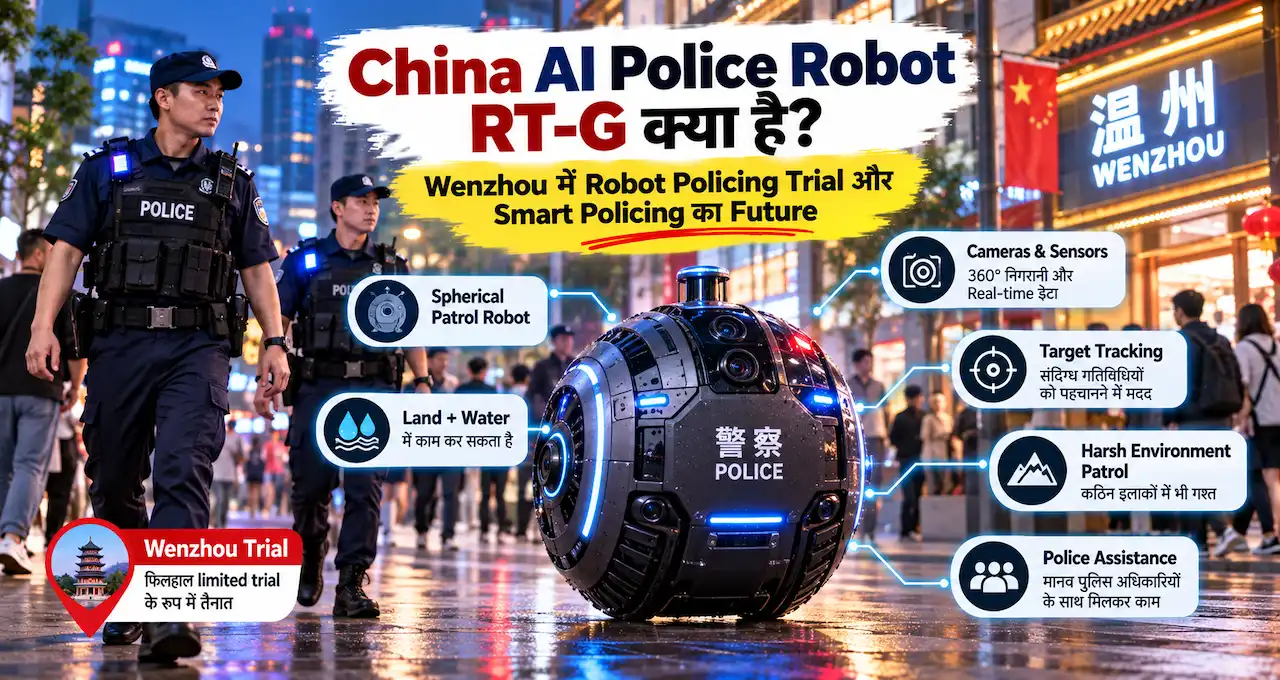
एक बड़ी काली फुटबॉल जैसी मशीन सड़क पर पुलिसकर्मियों के साथ चल रही है।
वह चार पैरों वाला रोबोट नहीं है।
Humanoid भी नहीं है।
बल्कि एक बड़ा spherical यानी गोल robot है, जो जमीन पर roll करते हुए patrol कर सकता है।
2024 के आखिर में चीन के Zhejiang province के Wenzhou शहर से ऐसी videos सामने आईं और देखते ही देखते “China AI Police Robot” की चर्चा शुरू हो गई।
कई headlines से ऐसा impression बना जैसे चीन ने पूरे देश में robot police deploy कर दी हो।
लेकिन reality थोड़ी अलग और ज्यादा interesting है।
Wenzhou में जिस robot को police के साथ देखा गया, वह RT-G नाम का intelligent spherical robot है, जिसे patrol, detection और difficult environments में काम करने जैसे use-cases के लिए develop किया गया। दिसंबर 2024 में इसे Wenzhou के Lucheng district में Special Patrol Police के साथ trial basis पर इस्तेमाल किया जा रहा था—यह nationwide robot-police deployment नहीं था।
इसके बाद भी इस technology पर काम जारी रहा और 2025 में spherical robots को China International Exhibition on Police Equipment जैसे events में police equipment के साथ demonstrate किया गया।
इसलिए इस updated article में सिर्फ़ “China ने AI police robot launch किया” कहकर बात खत्म नहीं करेंगे।
हम समझेंगे कि यह robot वास्तव में क्या है, इसमें AI कहाँ आता है, यह क्या कर सकता है, क्या नहीं कर सकता और ऐसी technology policing के future को किस तरह बदल सकती है।
इस लेख में आप क्या सीखेंगे?
- RT-G Police Robot क्या है
- Spherical design क्यों खास है
- Robot में AI कहाँ काम करता है
- Police को इससे क्या फायदा हो सकता है
- Privacy और security risks
- Human police की जगह ले सकता है या नहीं
- Future smart policing कैसी हो सकती है
पहले समझें: 2024 में वास्तव में क्या हुआ था?
December 2024 में Zhejiang province के Wenzhou शहर में local special police officers के साथ एक spherical robot patrol करते हुए दिखाई दिया।
यह robot देखने में किसी science-fiction movie की machine जैसा लगता है।
लेकिन यह कोई movie prop नहीं था।
RT-G को patrol, detection, search, rescue और difficult terrain जैसे environments के लिए develop किया गया है। Public reports के अनुसार यह जमीन और पानी दोनों में operate करने के लिए बनाया गया है और इसके development के पीछे Zhejiang University से जुड़े researchers तथा Hangzhou-based Rotunbot team का काम रहा है।
Important बात यह है कि उस समय robot trial stage में था।
यानी यह कहना ज्यादा accurate होगा:
“China के Wenzhou में police ने spherical intelligent robot का trial किया।”
इसके मुकाबले:
“China ने human police की जगह AI robots तैनात कर दिए”
काफी misleading statement होगी।
Technology news पढ़ते समय pilot, prototype, demonstration और full-scale deployment के बीच difference समझना बहुत जरूरी है।
RT-G Police Robot आखिर है क्या?
RT-G एक spherical यानी ball-shaped mobile robot है।
Traditional mobile robots में wheels, tracks या legs दिखाई देते हैं।
RT-G का outer body गोल है और पूरी machine roll करके move कर सकती है।
यह design सिर्फ़ दिखने के लिए unusual नहीं है।
इसके पीछे engineering logic भी है।
Traditional wheeled robot को:
सीढ़ियों,
rough terrain,
पानी,
कीचड़,
या physical impact
जैसी conditions में मुश्किल आ सकती है।
Spherical body अलग तरह की mobility और protection provide कर सकती है।
Reports में इसे amphibious robot बताया गया है, यानी इसे जमीन पर और पानी में भी operate करने के लिए बनाया गया है।
यह concept DeepTech क्या है और future technology किन क्षेत्रों को बदल सकती है का practical example भी माना जा सकता है, क्योंकि इसमें robotics, control systems, sensors, materials और intelligent software जैसी कई technologies एक साथ काम करती हैं।
इतना बड़ा Robot सिर्फ़ Roll कैसे करता है?
बाहर से देखने पर ऐसा लगता है जैसे एक बड़ी ball अपने आप घूम रही है।
लेकिन spherical robot को accurately control करना technically आसान नहीं है।
अगर पूरा body rotate कर रहा है, तो sensors को stable रखना, सही direction maintain करना और robot को desired path पर ले जाना engineering challenge बन जाता है।
इसीलिए ऐसे robots में internal control mechanisms, sensors और sophisticated motion-control systems की जरूरत होती है।
Simple तरीके से समझें:
Sensors environment समझते हैं
↓
Control system direction calculate करता है
↓
Internal mechanism movement generate करता है
↓
Robot desired direction में roll करता है
↓
Sensors लगातार position update करते हैं
यानी यह सिर्फ़ motor लगी हुई ball नहीं है।
यह robotics और control engineering का combination है।
क्या RT-G सच में AI Robot है?
यहाँ “AI” शब्द को थोड़ा carefully समझना जरूरी है।
हर autonomous robot ChatGPT जैसा Generative AI system नहीं होता।
Robot में intelligence कई forms में हो सकती है।
जैसे:
- environment sensing
- object detection
- navigation
- autonomous movement
- target tracking
- route adjustment
- sensor data processing
- decision-support
अगर कोई robot camera और दूसरे sensors की मदद से surroundings detect करता है, movement plan करता है और selected task को partly autonomously perform करता है, तो उसमें AI, computer vision, robotics और control technologies का combination हो सकता है।
लेकिन इसका मतलब यह नहीं कि robot इंसान की तरह “सोचता” है।
अगर AI की basic working अभी clear नहीं है, तो AI क्या है और कैसे काम करता है? से शुरुआत कर सकते हैं।
और AI में patterns सीखने वाली technology समझने के लिए Machine Learning क्या है? AI और Machine Learning में क्या अंतर है भी useful है।
RT-G क्या-क्या कर सकता है?
Public demonstrations और reports में RT-G के कुछ interesting use-cases सामने आए हैं।
Patrol करना
Robot police officers के साथ streets और public areas में move कर सकता है।
इसमें cameras और sensors जैसी equipment लगाई जा सकती है, जिससे surroundings monitor किए जा सकते हैं।
Autonomous Movement
Reports में robot के autonomous movement और navigation capabilities का demonstration किया गया है।
इससे robot हर second manual joystick control पर depend किए बिना movement कर सकता है।
लेकिन actual autonomy level mission, configuration और environment के हिसाब से अलग हो सकता है।
Target को Follow करना
Police-oriented demonstrations में tracking और pursuit जैसी capabilities दिखाई गई हैं।
यह potentially ऐसी situations में useful हो सकता है जहाँ officer को dangerous area में तुरंत भेजना risky हो।
Difficult Environment में जाना
Robot की spherical body और rugged design का goal harsh या complex environments में operate करना है।
इसका use सिर्फ़ urban street patrol तक limited नहीं माना जा रहा है।
Developers ने detection, rescue और industrial environments जैसे applications भी explore किए हैं।
Water में Operate करना
RT-G की notable characteristics में amphibious operation भी शामिल है।
यानी यह सिर्फ़ road पर चलने वाली patrol machine नहीं है।
Non-lethal Equipment Carry करना
Demonstrations में spherical robot के साथ net-launching equipment जैसी capability दिखाई गई है, जिसका concept suspect को distance से immobilize करने में मदद करना है।
लेकिन ऐसे equipment का real-world law-enforcement use local laws, operational rules और human authorization पर depend करना चाहिए।
पुराने Article की कुछ Claims को Update करना क्यों जरूरी था?
इस article के पुराने version में facial recognition, 24/7 automatic surveillance, crime-data analytics, traffic control और कई दूसरी capabilities RT-G के confirmed features की तरह लिखी गई थीं।
Technology article update करते समय हमें capability और assumption को अलग रखना चाहिए।
RT-G से जुड़ी reliable public reports patrol, autonomous movement, tracking, difficult environments, capture-related demonstrations और amphibious operation जैसी capabilities support करती हैं।
लेकिन किसी feature का theoretically possible होना और किसी specific robot में officially confirmed होना दो अलग बातें हैं।
इसलिए updated rule simple है:
जो verify हुआ है, उसे fact की तरह लिखें।
जो theoretically possible है, उसे possibility की तरह explain करें।
और जो verify नहीं हुआ, उसे सिर्फ़ इसलिए feature न बना दें क्योंकि “AI robot ऐसा कर सकता होगा।”
यह principle सिर्फ़ robotics पर नहीं, हर AI news पर लागू होता है।
AI confident-sounding लेकिन गलत information क्यों दे सकता है, इसे AI Hallucination क्या है? में detail से समझ सकते हैं।
Police को ऐसे Robot की जरूरत क्यों पड़ सकती है?
पहली नजर में सवाल आता है:
जब police officers पहले से हैं तो robot क्यों?
Answer human replacement से ज्यादा risk reduction और capability extension में है।
Dangerous Situation में पहले Robot भेजा जा सकता है
मान लीजिए police को ऐसी जगह जाना है जहाँ:
explosive का खतरा है,
armed suspect है,
toxic material है,
fire है,
या environment physically unsafe है।
अगर पहले robot जाकर camera और sensor data भेज सके, तो officers को situation समझने में मदद मिल सकती है।
Robot आगे जाए
↓
Environment scan करे
↓
Information control team तक पहुँचे
↓
Human officer situation evaluate करे
↓
फिर appropriate action लिया जाए
इस तरह robot human officer के लिए remote eyes और mobility platform की तरह काम कर सकता है।
Patrol में Robot क्या Benefit दे सकता है?
Police patrol physically demanding हो सकती है।
Robot repetitive surveillance और monitoring tasks में assistance दे सकता है।
Possible benefits:
- continuous sensor monitoring
- dangerous area inspection
- remote video feed
- night-time observation
- difficult terrain access
- emergency reconnaissance
लेकिन “continuous monitoring” का दूसरा side privacy है, जिस पर आगे बात करेंगे।
Technology किसी problem को solve करती है तो कई बार नई problem भी create करती है।
क्या AI Police Robot इंसानी Policeman की जगह ले सकता है?
Near term में इसे human police का complete replacement समझना practical नहीं है।
Police work सिर्फ़ patrol करने या camera से suspect देखने का काम नहीं है।
Human officers को:
context समझना होता है,
लोगों से बातचीत करनी होती है,
victims को handle करना होता है,
conflicting statements सुनने होते हैं,
law interpret करना होता है,
emergency judgement लेना होता है,
और कई बार empathy की जरूरत होती है।
Robot environment detect कर सकता है।
लेकिन social context और legal responsibility काफी complicated हैं।
इसलिए realistic model कुछ ऐसा है:
Human officer
↓
Robot और AI से information
↓
Human judgement
↓
Approved action
ना कि:
AI
↓
Automatic punishment
यह difference बहुत important है।
AI Agent और Police Robot में क्या Difference है?
आजकल AI Agent शब्द भी काफी popular है।
AI Agent ऐसा software-based system हो सकता है जो किसी goal को पूरा करने के लिए information समझे, steps plan करे और tools use करे।
Police robot एक physical machine है।
लेकिन future robotics में दोनों concepts overlap कर सकते हैं।
Sensors environment देखें
↓
AI situation analyse करे
↓
System action plan करे
↓
Robot physical action execute करे
↓
Human operator supervise करे
यानी software intelligence और physical robotics धीरे-धीरे combine हो रहे हैं।
इसे कई बार embodied AI की broader direction से भी जोड़ा जाता है।
अगर AI Agent का concept समझना है, तो AI Agent क्या है? Chatbot से कितना अलग है पढ़ सकते हैं।
AI Police Robot का सबसे बड़ा Concern: Privacy
Imagine कीजिए कि public place में हर तरफ intelligent cameras और autonomous robots patrol कर रहे हों।
Security बढ़ सकती है।
लेकिन सवाल भी पैदा होंगे।
Camera क्या record कर रहा है?
Data कहाँ store हो रहा है?
कितने समय तक रहेगा?
किस agency को access मिलेगा?
क्या innocent citizens भी automatically track होंगे?
क्या face recognition use हो रही है?
क्या व्यक्ति को पता होगा कि उसका data process हो रहा है?
Public safety और privacy के बीच balance आसान नहीं है।
Security system जितना powerful होता है, misuse रोकने के लिए rules उतने ही strong होने चाहिए।
Facial Recognition से जुड़ा Risk क्या है?
Facial recognition policing में सबसे debated technologies में से एक है।
क्योंकि अगर system किसी innocent व्यक्ति को गलत पहचान ले, तो consequences serious हो सकते हैं।
AI models perfect नहीं होते।
Accuracy environment, camera quality, training data और system design जैसे factors पर depend कर सकती है।
इसलिए किसी robot के पास camera होना और उसके पास reliable facial-recognition authority होना same चीज़ नहीं है।
अगर ऐसी capability future में use होती है, तो transparency, testing और human verification बहुत important होंगे।
Cybersecurity इतनी Important क्यों होगी?
Traditional police vehicle hack होना और autonomous intelligent robot hack होना दो अलग risk profiles हैं।
Connected robot में हो सकते हैं:
Cameras
Wireless communication
GPS
Control systems
Sensors
Remote access
Software
अगर attacker system compromise कर दे, तो वह theoretically:
video feed access,
control disruption,
false information,
location tracking,
या system shutdown
जैसी problems create कर सकता है।
इसलिए smart policing का मतलब सिर्फ़ smart robot नहीं है।
Secure robot भी चाहिए।
Hardware security
↓
Encrypted communication
↓
Strong authentication
↓
Software updates
↓
Access control
↓
Human monitoring
Cybersecurity बाद में add की जाने वाली optional feature नहीं होनी चाहिए।
अगर Robot गलत Decision ले तो जिम्मेदार कौन होगा?
यह सबसे difficult questions में से एक है।
मान लीजिए autonomous system ने किसी व्यक्ति को threat समझ लिया और गलत action recommend किया।
Responsibility किसकी होगी?
Robot manufacturer?
Software developer?
Police department?
Operator?
AI model?
यही वजह है कि high-risk systems में accountability framework बहुत important है।
“AI ने decision लिया था” legal responsibility से बचने का acceptable answer नहीं होना चाहिए।
Technology जितना ज्यादा decision-making के करीब जाएगी, governance उतना important होगा।
Use of Force को Fully Autonomous क्यों नहीं होना चाहिए?
Robot के पास physically किसी suspect को रोकने की capability होना serious matter है।
Law-enforcement action context-dependent होता है।
दो situations camera पर similar दिख सकती हैं लेकिन ground reality अलग हो सकती है।
इसलिए high-impact actions में human authorization और clear rules essential हैं।
AI identify कर सकता है।
Robot approach कर सकता है।
Sensor alert दे सकता है।
लेकिन force use जैसी decision को automatic बनाना ethical और legal questions पैदा करता है।
Human oversight कोई weakness नहीं है।
Safety feature है।
क्या Police Robot हमेशा ज्यादा Accurate होगा?
नहीं।
Machines fatigue नहीं महसूस करतीं, लेकिन machines दूसरी तरह fail कर सकती हैं।
उदाहरण:
Sensor blocked
Camera visibility खराब
Software bug
GPS issue
Network failure
Battery problem
Wrong classification
Mechanical damage
Robot को “machine है, इसलिए mistake नहीं करेगा” मानना गलत होगा।
Technology का practical test ideal lab में नहीं, messy real world में होता है।
Spherical Robot, Robot Dog और Humanoid Robot में क्या फर्क है?
Police और security applications में सिर्फ़ एक type का robot useful नहीं होगा।
Spherical Robot
फायदा:
protected outer body, rolling mobility और difficult environments.
Robot Dog
फायदा:
stairs, uneven terrain और narrow spaces में four-legged movement.
Wheeled Robot
फायदा:
comparatively simple, efficient और flat surfaces पर useful.
Humanoid Robot
Potential advantage:
human-designed environments में doors, tools और stairs के साथ interaction.
हर design का purpose अलग है।
Future police department में शायद “एक robot सब काम करेगा” model न हो।
अलग tasks के लिए अलग robots हो सकते हैं।
2026 की broader technology direction समझने के लिए Latest Technology Updates 2026 भी पढ़ सकते हैं।
2025 में इस Technology के साथ आगे क्या हुआ?
Wenzhou की viral patrol के बाद RT-G सिर्फ़ एक viral video बनकर गायब नहीं हुआ।
February 2025 की reporting में developer Rotunbot ने RT-G को patrol, detection और rescue applications के लिए position किया और इसके industrial तथा overseas use की दिशा में भी काम होने की बात सामने आई। Reports में airports, power facilities, oil fields और water conservation जैसे non-police applications का भी जिक्र हुआ।
May 2025 में Beijing में हुए China International Exhibition on Police Equipment में spherical robot, humanoid robot और robotic dog को police patrol drill में दिखाया गया।इससे एक broader trend दिखाई देता है:
Robotics research
↓
Public demonstration
↓
Pilot deployment
↓
Specialised use-cases
↓
Commercial/industrial adoption
लेकिन September 2026 तक publicly available information को देखकर इसे China-wide human-police replacement programme कहना सही नहीं होगा।
Pilot और nationwide deployment में बड़ा फर्क है।
Police Robot सिर्फ़ Policing तक Limited क्यों नहीं रहेगा?
Interesting बात यह है कि जिस technology का use police patrol में हुआ, वही basic robotic platform दूसरे dangerous environments में भी useful हो सकता है।
उदाहरण:
Industrial inspection
Disaster response
Fire zones
Oil and gas facilities
Flooded areas
Rescue operations
Remote infrastructure
Hazardous sites
Technology की value अक्सर एक ही use-case में नहीं होती।
अगर machine:
difficult terrain handle करती है,
sensors carry कर सकती है,
remote data भेज सकती है,
और human को dangerous environment से दूर रख सकती है,
तो industries भी उसमें interest लेंगी।
क्या भारत में भी ऐसे Police Robots आ सकते हैं?
Technically ऐसी possibility से इंकार नहीं किया जा सकता।
दुनिया के अलग-अलग देशों में law enforcement और security agencies पहले से drones, bomb-disposal robots, surveillance systems और robotic platforms का use करती रही हैं।
लेकिन India में किसी specific RT-G deployment का claim तभी करना चाहिए जब official information available हो।
Future adoption कई factors पर depend करेगा:
Cost
Local laws
Police requirements
Privacy rules
Infrastructure
Cybersecurity
Reliability
Public acceptance
सिर्फ़ technology available होना deployment के लिए पर्याप्त नहीं होता।
Smart Policing का Future सिर्फ़ Robots नहीं है
जब “AI Police” कहा जाता है तो imagination तुरंत humanoid robot की तरफ जाती है।
Reality में smart policing कई technologies का combination हो सकती है।
जैसे:
- drones
- body cameras
- data analytics
- computer vision
- cybercrime tools
- traffic systems
- emergency-response software
- robots
- communication networks
Robot सिर्फ़ visible हिस्सा है।
असल transformation data और decision-support systems में भी हो सकता है।
इसीलिए AI को सिर्फ़ ChatGPT या image generation तक सीमित समझना सही नहीं है।
Robotics AI की सबसे physical applications में से एक है।
Generative AI और Police Robot एक ही चीज़ नहीं हैं
आज “AI” शब्द इतना common हो गया है कि हर intelligent system को ChatGPT जैसी technology समझ लिया जाता है।
लेकिन Generative AI का main काम नया content generate करना हो सकता है:
Text
Image
Audio
Video
Code
Police robot का primary role physical environment में sensing, navigation और action है।
दोनों AI umbrella के अंदर technologies use कर सकते हैं, लेकिन use-case अलग है।
अगर दोनों का difference समझना है, तो Generative AI क्या है? ChatGPT और दूसरे AI Tools कैसे काम करते हैं useful है।
Viral Technology News को Verify कैसे करें?
RT-G की story एक अच्छा example है कि technology news पढ़ते समय headline से आगे क्यों जाना चाहिए।
Headline:
“China ने AI Robot Police Launch कर दी।”
अब verification करें।
Viral video देखें
↓
Original location identify करें
↓
Official या reliable reporting देखें
↓
Prototype, trial और deployment अलग करें
↓
Exact capabilities verify करें
↓
Current status check करें
↓
तभी conclusion निकालें
इसी method से बहुत सारी misleading AI news filter की जा सकती है।
अगर headline कहती है:
“AI ने doctors को replace कर दिया”
तो पूछें:
कहाँ?
किस hospital में?
Trial था या deployment?
AI ने diagnosis किया या doctor को assist किया?
कितने cases पर test हुआ?
Independent verification है?
Critical thinking नई technology समझने की सबसे जरूरी skills में से एक है।
Police Robots के Possible फायदे
Balanced view के लिए potential benefits को ignore नहीं करना चाहिए।
Human Life को Dangerous Situations से बचाना
Bomb threat, hazardous material या armed confrontation में robot पहले भेजा जा सकता है।
Difficult Terrain
ऐसी जगह जहाँ normal patrol vehicle नहीं पहुँच सकता, specialised robot useful हो सकता है।
Remote Observation
Officer को dangerous location में physically enter किए बिना visual और sensor data मिल सकता है।
Search और Rescue
Same robotic technology disaster या rescue operations में भी useful हो सकती है।
Repetitive Tasks
कुछ routine patrol और inspection tasks automate या assist किए जा सकते हैं।
लेकिन Possible नुकसान भी उतने ही Important हैं
Technology का evaluation सिर्फ़ benefits देखकर complete नहीं होता।
Mass Surveillance
हर movement track होने लगे तो privacy risk बढ़ सकता है।
Wrong Identification
AI system mistakes कर सकता है।
Bias
Training data या system design से unfair outcomes आ सकते हैं।
Cyberattack
Connected robot hack हो सकता है।
Excessive Automation
Human judgement की जगह blindly software पर भरोसा dangerous हो सकता है।
Accountability
गलत action होने पर responsibility clear होनी चाहिए।
Cost
Advanced robotics खरीदना, repair करना और maintain करना expensive हो सकता है।
इसलिए “high-tech” हमेशा “better policing” के बराबर नहीं है।
Outcome implementation पर depend करेगा।
क्या Future में Robot और Human Police साथ काम करेंगे?
यह ज्यादा realistic possibility लगती है।
Human police strengths:
Judgement
Communication
Empathy
Legal responsibility
Context understanding
Robot strengths:
Sensors
Dangerous environment
Repeatability
Remote observation
Physical durability
Future model शायद competition नहीं बल्कि combination हो।
Robot dangerous area में जाए
↓
Data collect करे
↓
AI patterns identify करे
↓
Officer information देखे
↓
Human final decision ले
यही human-in-the-loop approach high-risk technology में ज्यादा sensible है।
Students के लिए इस Technology में क्या Learning है?
अगर आपको robotics और AI interesting लगते हैं, तो RT-G जैसी machine के पीछे सिर्फ़ “AI” नहीं है।
इसमें कई career areas combine होते हैं:
- Mechanical Engineering
- Electronics
- Computer Science
- Artificial Intelligence
- Machine Learning
- Computer Vision
- Embedded Systems
- Control Engineering
- Cybersecurity
- Materials Science
यानी future technology interdisciplinary हो रही है।
एक अकेली skill से पूरा advanced robot नहीं बनता।
Different experts मिलकर system बनाते हैं।
2026 में इस Story को देखने का सही तरीका
2024 में यह story mainly futuristic police robot की novelty की वजह से viral हुई थी।
2026 में इसे थोड़ा अलग perspective से देखना चाहिए।
यह तीन broader trends दिखाती है।
Robotics Lab से Real World में जा रही है
Robots सिर्फ़ factory assembly lines तक limited नहीं हैं।
AI Physical Machines में आ रहा है
AI software के साथ robots को environment समझने में मदद मिल रही है।
Human Oversight और Governance ज्यादा Important होंगे
जैसे-जैसे machines real-world actions लेंगी, ethics और rules का importance बढ़ेगा।
यानी future सिर्फ़ “smart machines” का नहीं है।
“Responsible smart machines” का होना चाहिए।
Technology की सफलता Viral Video से Decide नहीं होती
RT-G की video impressive है।
लेकिन किसी technology का real success अलग questions से decide होगा।
क्या वह reliable है?
क्या वह affordable है?
क्या maintenance practical है?
क्या false alarms कम हैं?
क्या cyber secure है?
क्या operators उसे आसानी से use कर सकते हैं?
क्या law उसका responsible use allow करता है?
क्या वह human officers की safety genuinely improve करती है?
Demo
↓
Trial
↓
Real-world testing
↓
Performance data
↓
Rules और safeguards
↓
फिर wider deployment
यही mature technology adoption का रास्ता होना चाहिए।
आज से क्या करें?
अगली बार कोई futuristic AI या robot video viral दिखे, तुरंत उसे fake भी न मानें और तुरंत future reality भी न मानें।
पाँच चीज़ें check करें:
- Video कहाँ का है?
- Technology किसने बनाई?
- Trial है या actual deployment?
- Claimed feature officially verified है?
- Latest update क्या कहती है?
बस यह habit आपको technology news को ज्यादा intelligently समझने में मदद करेगी।
और अगर किसी article या social media post में “AI ने इंसानों को replace कर दिया” जैसी headline दिखे, तो headline share करने से पहले पूरा context जरूर देखें।
आख़िर में एक छोटी सी बात
China का RT-G spherical police robot इसलिए interesting नहीं है कि वह देखने में science-fiction machine जैसा लगता है।
Interesting बात यह है कि robotics धीरे-धीरे laboratory और factory से निकलकर real-world public environments तक पहुँच रही है।
लेकिन technology जितनी powerful होगी, responsibility भी उतनी बढ़ेगी।
अगर robot police officer को dangerous situation से बचाता है, तो यह बहुत useful application हो सकती है।
अगर वही technology बिना transparency के mass surveillance करने लगे, तो वही capability serious concern बन सकती है।
इसलिए future policing का असली सवाल यह नहीं है:
“क्या robots police बन जाएंगे?”
बेहतर सवाल है:
“Humans robots और AI का use कैसे करेंगे, और उनके ऊपर control तथा accountability किसके पास होगी?”
आपकी क्या राय है—ऐसे AI-powered police robots public safety बढ़ा सकते हैं, या privacy और surveillance का risk ज्यादा बड़ा है? अगर RT-G या future robot policing को लेकर आपका कोई सवाल है, तो comment में जरूर पूछें।