


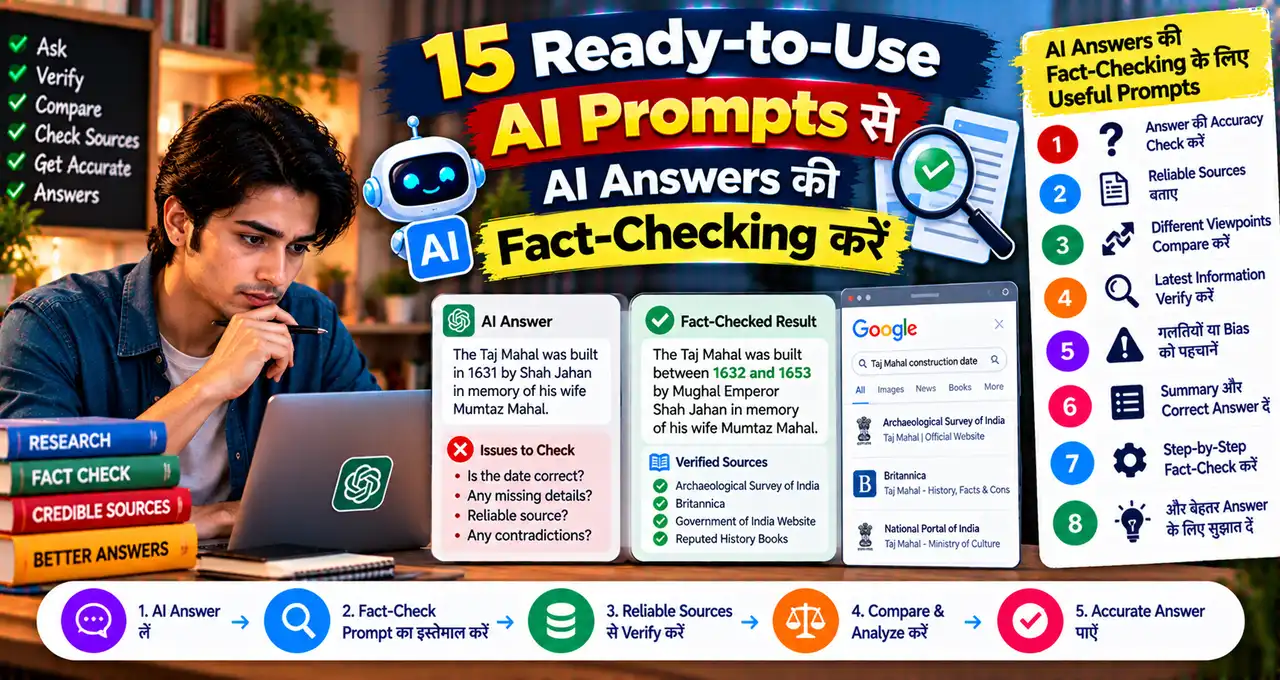
AI के जवाब में एक गलत तारीख पूरी खबर का मतलब बदल सकती है।
मान लें जवाब कहता है कि कोई सस्ता प्लान अब भारत में सबको मिलेगा। जाँच के लिए तीन सवाल हैं। घोषणा किसने की, कब की और प्लान किन लोगों के लिए है?
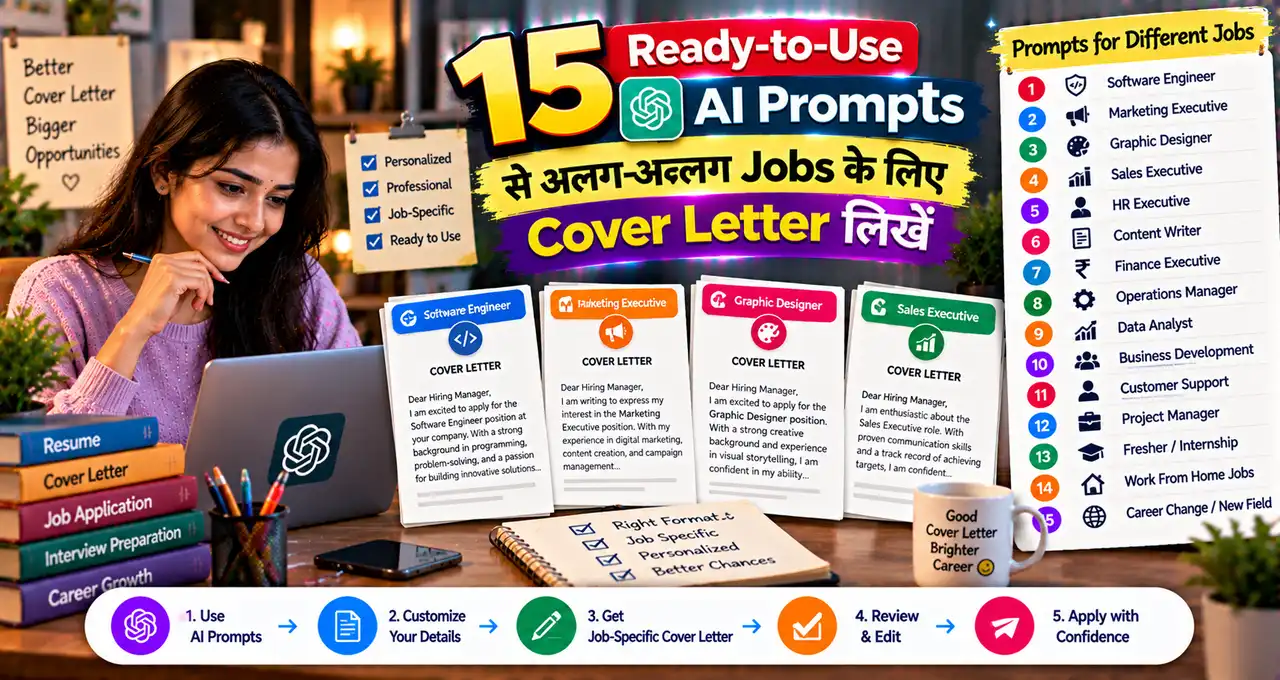
नीचे 15 आसान English prompts हैं। आखिर का master prompt अपनी अगली खबर की जाँच में भी इस्तेमाल कर सकते हैं।
पहले उस एक दावे को पकड़ें जिस पर पूरी खबर टिकी है।
इस लेख में आप क्या सीखेंगे?
- दावों की सूची बनाना
- असली स्रोत तक पहुँचना
- तारीख और दायरा जाँचना
- चार्ट का पैमाना पढ़ना
- गलत दावा सुधारना
अपनी जानकारी कैसे भरें?
पहले वह prompt चुनें जो आपके काम का है। कोष्ठक में अपनी जानकारी भरें। कुछ पता न हो तो वहाँ “not provided” लिख दें।
जवाब, स्रोत और तारीख जाँचने के prompts
1. एक जवाब से जाँचने योग्य दावे निकालें
Break the answer into single claims that a reader could check. Keep the original wording beside each claim. Separate opinions, advice and examples. Return this result: A list of claim IDs, exact wording, claim type and evidence needed. A claim gets its own row if it could be true even when the next claim is false.
Draft answer: [enter details]
claim to check: [enter details]
original source or link: [enter details]
audience: [enter details]
date checked: [enter details]
एक वाक्य में “मुफ्त” और “सभी देशों में” साथ आएँ तो दो अलग rows माँगें। एक सही होने पर दूसरा अपने आप सही नहीं होगा।
2. मूल घोषणा ढूँढें
Trace the announcement back to the organisation that made it. Distinguish the announcement date, start date and date someone reported the news. Return this result: A dated source trail ending with the original document or a clear missing-source note. Three news reports that copy one announcement count as one source.
Draft answer: [enter details]
claim to check: [enter details]
original source or link: [enter details]
audience: [enter details]
date checked: [enter details]
घोषणा करने वाली संस्था का नाम देखिए। उसी खबर की copy मूल घोषणा का स्वतंत्र विकल्प नहीं है।
3. तारीख और देश की सीमा जाँचें
Check where and when the statement applies. Read the date and region in the original terms. Compare both with the reader’s location and intended date. Return this result: A short verdict for this location and a note about any other region mentioned. A launch in one country cannot confirm availability in another.
Draft answer: [enter details]
claim to check: [enter details]
original source or link: [enter details]
audience: [enter details]
date checked: [enter details]
भारत में उपलब्धता जाँच रहे हैं तो दूसरे देश की pricing page को देश की पुष्टि न मानें।
4. उद्धरण का संदर्भ पढ़ें
Compare the quotation with the paragraph before and after it. Mark missing words, changed speakers and statements that were conditional. Return this result: Original speaker, short quote, context and corrected attribution. If the original transcript is missing, label the quotation unverified.
Draft answer: [enter details]
claim to check: [enter details]
original source or link: [enter details]
audience: [enter details]
date checked: [enter details]
जो शब्द उद्धरण चिह्नों में हैं, वे मूल वक्ता के शब्दों से मिलाएँ। सारांश को सीधा कोटेशन दिखाना गलत है।
गणना, चार्ट और नियम पढ़ने के prompts
5. प्रतिशत की गणना दोहराएँ
Find the numerator, denominator and comparison period. Recalculate using values shown in the source. Distinguish percentage points from percent change. Return this result: A visible calculation with units, followed by one sentence a beginner can reuse. A rise from 20% to 25% is five percentage points.
Draft answer: [enter details]
claim to check: [enter details]
original source or link: [enter details]
audience: [enter details]
date checked: [enter details]
पुराने 40 users से नए 50 users हुए तो वृद्धि 10 users और 25 प्रतिशत है। दोनों इकाइयाँ लिखें।
6. चार्ट की scale जाँचें
Read both axes, dates, units and legend. Describe the effect of a cropped or non-zero scale. Separate visible values from estimates. Return this result: List the exact values you can read and the conclusion the chart supports. If a label is too small, ask for the source table.
Draft answer: [enter details]
claim to check: [enter details]
original source or link: [enter details]
audience: [enter details]
date checked: [enter details]
अगर axis शून्य पर शुरू नहीं होती तो फर्क की दिशा और उसकी मात्रा अलग-अलग समझाएँ।
7. दो स्रोतों में अंतर समझें
Compare two sources about the same claim. Look for differences in audience, time, definition, sample and revision date before choosing a conclusion. Return this result: A comparison by claim and one reason for each apparent conflict. Do not settle a disagreement by counting websites.
Draft answer: [enter details]
claim to check: [enter details]
original source or link: [enter details]
audience: [enter details]
date checked: [enter details]
रिपोर्टों की अलग तारीख या अलग आबादी विरोध जैसा दिखा सकती है। दोनों का scope साथ लिखें।
8. नियम की मौजूदा स्थिति पहचानें
Read the issuing body’s notice. Separate proposed changes, approved rules and effective dates. Check for later amendments within the supplied sources. Return this result: A timeline with exact status and the reader action supported today. A consultation draft cannot be presented as a current obligation.
Draft answer: [enter details]
claim to check: [enter details]
original source or link: [enter details]
audience: [enter details]
date checked: [enter details]
Draft proposal और लागू नियम की स्थिति अलग दर्ज करें। दस्तावेज़ के नाम में “draft” भी एक जरूरी संकेत है।
मीडिया, रिसर्च और product claims जाँचें
9. फोटो के साथ जुड़े दावे की जाँच
Identify the claim made by the caption. Separate what is visible from claims about location, date or identity. Explain what original source is needed. Return this result: Verified observations, unverified caption details and a short search plan. Never identify a private person from the image.
Draft answer: [enter details]
claim to check: [enter details]
original source or link: [enter details]
audience: [enter details]
date checked: [enter details]
पुरानी तस्वीर नए caption के साथ घूम सकती है। दृश्य पहचान लेना उसकी जगह और तारीख साबित नहीं करता।
10. एक research study की सीमा पढ़ें
Check the sample, study design, comparison group and outcome. Explain what the study measured and whether the answer claims a broader result. Return this result: A plain-language summary and two limitations linked to the paper. An association alone does not establish a cause.
Draft answer: [enter details]
claim to check: [enter details]
original source or link: [enter details]
audience: [enter details]
date checked: [enter details]
किस पर अध्ययन हुआ था? थोड़े से लोगों के नतीजे को हर उम्र और हर देश के लोगों पर लागू करने से पहले यह देखें।
11. Product feature का access जाँचें
Read the official help and release pages. Compare device, account tier, country and rollout language with the claim in the draft. Return this result: An availability table plus a revised headline for eligible readers. Rolling out does not mean every user already sees the option.
Draft answer: [enter details]
claim to check: [enter details]
original source or link: [enter details]
audience: [enter details]
date checked: [enter details]
एक अकाउंट में button दिखना सभी users के rollout की पुष्टि नहीं करता।
12. दाम और plan की शर्तें जाँचें
Compare the billing period, currency, tax treatment and price date in two offers. Separate an introductory offer from the renewal price. Return this result: A like-for-like comparison with any missing cost visibly marked. Do not convert a monthly equivalent into a monthly payment promise.
Draft answer: [enter details]
claim to check: [enter details]
original source or link: [enter details]
audience: [enter details]
date checked: [enter details]
ट्रायल खत्म होने पर कितने पैसे कटेंगे और कब कटेंगे? खासकर सालाना ऑफर में ये दोनों बातें जाँचें।
अंतिम जाँच और सुधार
13. टूटा या असंबंधित citation पकड़ें
Open each supplied source if access is available. Match each claim to the actual passage. Flag inaccessible pages and citations that only mention the topic. Return this result: A claim-to-passage register with supported, partial and missing labels. Never invent a URL or page number to fill a gap.
Draft answer: [enter details]
claim to check: [enter details]
original source or link: [enter details]
audience: [enter details]
date checked: [enter details]
लिंक खुल गया, लेकिन पन्ने पर वह दावा नहीं मिला? अपने नोट में लिखें कि अभी इसका सबूत नहीं मिला है।
14. विपरीत प्रमाण खोजें
State what evidence would weaken each major claim. Look for exceptions, corrections or newer primary documents in the material available. Return this result: The strongest contrary evidence, its date and whether it changes the verdict. A single exception may narrow a claim without overturning the whole finding.
Draft answer: [enter details]
claim to check: [enter details]
original source or link: [enter details]
audience: [enter details]
date checked: [enter details]
अपनी पसंद के नतीजे के खिलाफ सबसे मजबूत स्रोत खोजें और उसकी तारीख भी जाँचें।
15. प्रकाशन के लिए संशोधन लिखें
Rewrite only sentences whose evidence is weak or outdated. Preserve checked numbers and original intent. Add brief source links where they support a decision. Return this result: Before and after wording with a reason and remaining verification tasks. Keep uncertain findings visible instead of turning them into firm facts.
Draft answer: [enter details]
claim to check: [enter details]
original source or link: [enter details]
audience: [enter details]
date checked: [enter details]
सुधरी हुई copy में सिर्फ शब्द बदलना काफी नहीं। जो पुराना दावा हटाया है उसका कारण editor को समझ आना चाहिए।
अपना काम दोहराने के लिए master prompt
Work as a careful research editor. Break my answer into claims. Check the most important ones first against the sources I give you. When you can access original material, point to the relevant passage and date. Label each claim supported, partly supported, unsupported or not checked. Recalculate any important number. Tell me what is missing and rewrite only the weak sentences. Never invent a source, quote or result.
Draft answer: [enter details]
claim to check: [enter details]
original source or link: [enter details]
audience: [enter details]
date checked: [enter details]
एक खबर की हेडलाइन लेकर दावे जाँचें
मान लें किसी ऐप के बारे में headline है कि “अब सभी ग्राहक यह सुविधा मुफ्त इस्तेमाल कर सकते हैं।” नीचे की घोषणा में लिखा है कि पहले महीने चुने हुए अकाउंट पर ट्रायल चल रहा है। इनमें चार अलग बातें हैं। किसे access है, कहाँ है, कितने समय के लिए है और भुगतान कब शुरू होगा?
पहला prompt इन चार दावों को अलग करे। तारीख वाले prompt में पूरी घोषणा दें और जो तारीख publication की है उसे rollout की तारीख से अलग कराएँ। अगर स्रोत “rolling out” कहता है तो “हर खाते में आ चुका है” लिखना मूल अर्थ बदल देता है।
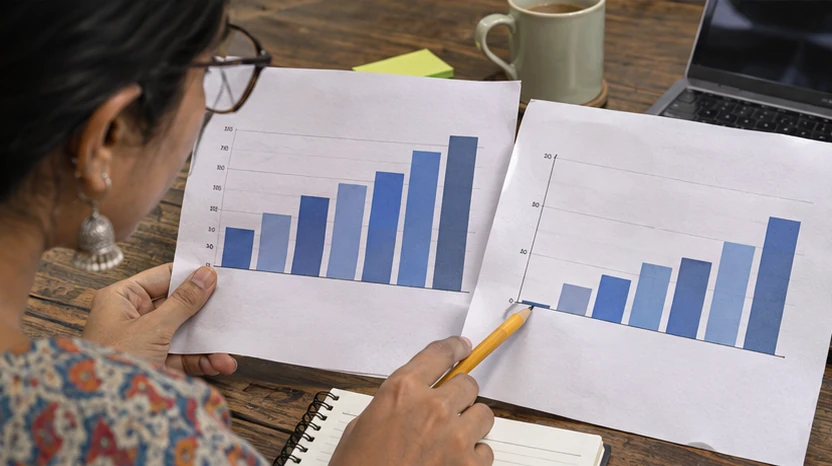
इसी खबर का चार्ट दिखाता है कि users 80 से 100 हुए। वृद्धि 20 users है और पहले वाले 80 के मुकाबले 25 प्रतिशत है।
उसे 20 प्रतिशत बताना गणना की गलती होगी। अगर चार्ट के बाईं तरफ गिनती शून्य की जगह 75 से शुरू हो, तो वही बढ़त तस्वीर में कहीं बड़ी दिख सकती है।
अंतिम copy किस तरह लिखें?
एक वाक्य में verified बदलाव लिखें। दूसरे में सीमा जोड़ें कि किसके लिए और कब तक जानकारी लागू है। जिस दावे का स्रोत नहीं मिला उसकी जगह “सभी” या “हमेशा” जोड़कर copy मत सँवारें। उसे रोकें या साफ़ बताएँ कि किन अकाउंट पर access की पुष्टि बाकी है।
इंटरव्यू में किसी व्यक्ति ने क्या कहा यह निकालने के लिए नोट्स से मुख्य बातें व्यवस्थित करें।
AI ने असली दिखने वाला लिंक दिया, फिर भी खबर गलत कैसे हुई?
Link खुलने से केवल पेज का अस्तित्व साबित होता है। मान लें पेज 2023 में लिखी गई एक पुरानी पॉलिसी है और जवाब उसे इस साल का बदलाव बता रहा है।
पेज की मूल तारीख, आखिरी update और लागू होने की तारीख अलग देखें। जिस वाक्य का सहारा लिया है उसे उसके पहले और बाद वाले paragraph के साथ पढ़ें।
अगर पेज दूसरी रिपोर्ट को उद्धृत करता है तो एक कदम और पीछे जाएँ। मूल release, dataset या इंटरव्यू उपलब्ध है तो उसी से दावा मिलाएँ।
हो सकता है पाँच वेबसाइटों ने एक ही प्रेस रिलीज़ से खबर ली हो। ऐसे में दावे का आधार अब भी वही एक रिलीज़ है। किसी गंभीर allegation को copy करने से पहले स्रोत, नाम और उस व्यक्ति या संस्था का पक्ष अलग जाँचें।
काम के हिसाब से सही prompt कैसे चुनें?
पढ़ाई के नोट्स में कोई परिभाषा जाँचनी है तो पहले और चौथे prompt से शुरुआत करें। सब्सक्रिप्शन के ऑफर पर लिख रहे हैं तो तारीख, प्लान और भुगतान करते समय दिखने वाली शर्तें जाँचें।
सारे पंद्रह prompts हर छोटे दावे पर चलाने से जाँच थकाऊ होती है। जितना बड़ा नुकसान गलत दावे से हो सकता है, उतनी गहरी पुष्टि रखें।
वित्तीय दावे पर काम करते हैं तो रिसर्च और जोखिम की जाँच के prompts भी देखें।
एक ही दावे के चार संभावित नतीजे
| स्थिति | सबूत में क्या मिला | कॉपी में क्या लिखें |
|---|---|---|
| पूरी पुष्टि | मूल दस्तावेज़, स्थान और समय मेल खाते हैं। | पाठक के उपयोग की सीमा के साथ दावा लिखें। |
| आंशिक पुष्टि | Feature मौजूद है लेकिन कुछ plans में। | योग्य plan या देश का नाम जोड़ें। |
| विरोधी प्रमाण | नवीन दस्तावेज़ ने पुरानी शर्त बदली। | दोनों तारीखें लिखकर लागू शर्त दिखाएँ। |
| स्रोत अनुपलब्ध | AI ने लिंक दिया लेकिन पेज पर दावा नहीं है। | दावे को रोकें और असली दस्तावेज़ माँगें। |
बार-बार जाँचे जाने वाले claims के लिए चीट शीट बनाने का तरीका उपयोगी रहेगा।
आख़िर में एक छोटी सी बात
अगली बार AI कोई चौंकाने वाली बात लिखे तो एक दावे से शुरुआत करें। जिस पन्ने का हवाला दिया है, उसे खोलें और तारीख, जगह और मूल वाक्य पढ़ें।
अगर दावे का सिर्फ आधा हिस्सा सही है, तो उतना ही लिखें जितना आप दिखा सकते हैं।
आपको सबसे ज़्यादा दिक्कत तारीख जाँचने, उद्धरण मिलाने या प्रतिशत समझने में होती है? कमेंट में एक उदाहरण दें।