













अगर आप blogging करते हैं, तो शायद आपने भी AI को सबसे पहले इसी काम के लिए use किया होगा:
“इस topic पर article लिख दो।”
AI article लिख देता है।
लेकिन AI का blogging में सबसे powerful use सिर्फ़ article लिखवाना नहीं है।
Blog पर 100 articles होने के बाद भी traffic flat है, तो सिर्फ़ ज्यादा content लिखना solution नहीं है।
AI blogging को तेज़ कर सकता है, लेकिन growth तब आती है जब आप उसे research, planning, updating और quality control में सही जगह use करें। सिर्फ़ “पूरा article लिख दो” वाला workflow अक्सर generic content बनाता है।
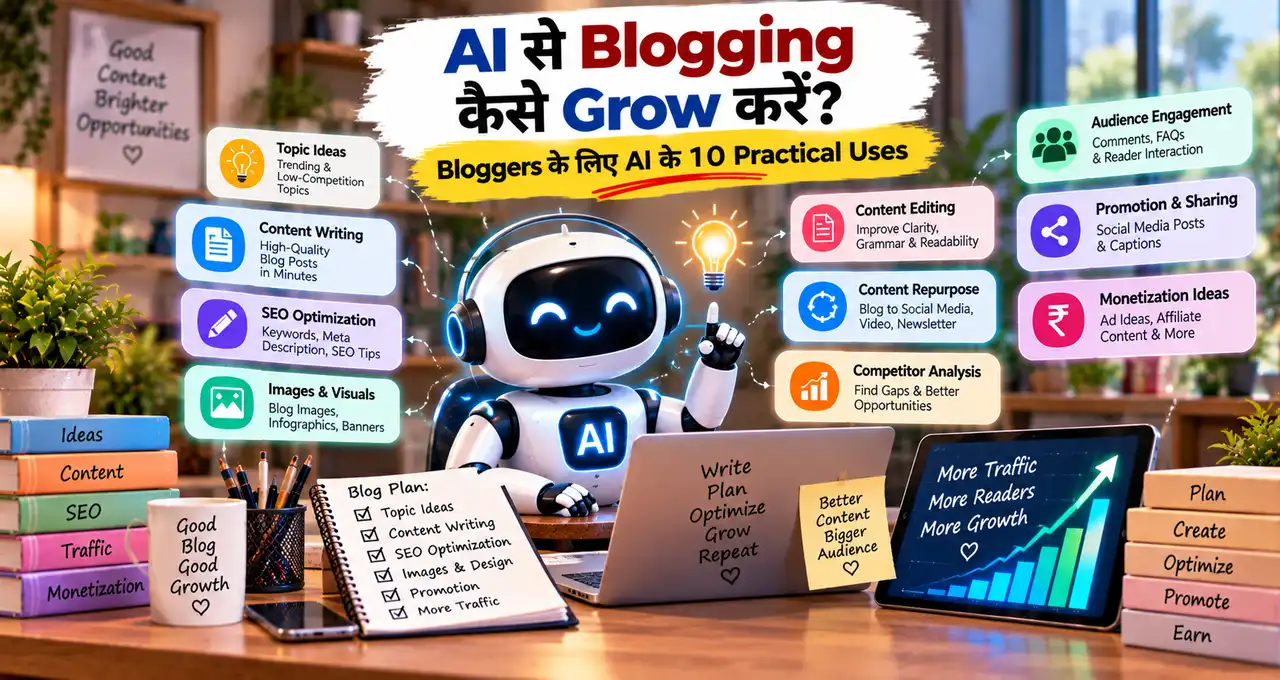
इस guide में हम AI से blogging grow करने के 10 practical uses देखेंगे। Focus quantity पर नहीं, better decisions पर रहेगा—कौन-सा topic लिखना है, कहाँ content gap है, पुराने posts कैसे improve करने हैं और readers को useful experience कैसे देना है।
सबसे बड़ा फायदा speed नहीं है—बेहतर editorial system है।
इस लेख में आप क्या सीखेंगे?
- सही topics चुनना
- Search intent समझना
- Research तेज़ करना
- Draft quality सुधारना
- पुराने posts update करना
- Blog workflow organize करना
AI blogging में कहाँ useful है और कहाँ नहीं?
AI को writer का replacement मानना गलत starting point है।
Blogging में तीन अलग layers होती हैं:
Decision: किस topic पर लिखना है, किस audience के लिए और क्यों।
Production: outline, draft, headings, examples और formatting तैयार करना।
Verification: facts, sources, links, claims और final usefulness check करना।
AI production layer में सबसे तेज़ मदद करता है। Decision और verification में वह support दे सकता है, लेकिन final judgment blogger को रखना चाहिए।
Google की current guidance भी people-first, reliable और original value वाले content पर जोर देती है। Automation या generative AI का use अपने आप problem नहीं है। Problem तब होती है, जब large-scale content primarily search ranking manipulate करने के लिए बनाया जाए और users के लिए meaningful value न हो। Google for Developers
यानी goal होना चाहिए:
AI से ज्यादा pages नहीं, बेहतर pages।
अगर AI-generated गलत जानकारी का risk समझना है, तो AI Hallucination क्या है? ChatGPT गलत जवाब क्यों देता है और कैसे पहचानें? useful रहेगा।
1. Topic ideas नहीं, topic opportunities खोजें
AI से “10 blog ideas दो” पूछना आसान है। लेकिन random ideas traffic strategy नहीं बनाते।
Better approach है कि आप अपनी existing categories, audience problems और published posts का context दें।
मान लें आपका blog personal finance, career और AI पर है। AI से यह पूछ सकते हैं:
मेरी blog categories [Categories] हैं। Existing posts की यह list है: [Titles]. Audience [Audience] है। इन topics को repeat किए बिना 15 topic opportunities identify करें। हर idea के साथ search intent, reader problem, angle और existing content से difference बताएं। Generic ideas avoid करें।
यह prompt तीन काम करता है:
- Duplication कम करता है;
- Search intent clear करता है;
- हर topic के पीछे reader problem जोड़ता है।
Topic selection में AI से ज्यादा useful output तब मिलता है, जब उसे आपकी existing library पता हो।
सिर्फ़ trend देखकर post लिखना जरूरी नहीं है। Evergreen, seasonal और problem-solving content का balance रखें।
2. Search intent समझने के लिए AI को “reader simulator” बनाएं
Keyword दिखने से intent हमेशा clear नहीं होता।
उदाहरण:
“AI resume”
Reader क्या चाहता है?
- AI से resume बनाना?
- AI resume tool?
- Prompt?
- Template?
- Resume review?
एक keyword के पीछे कई possible intents हो सकते हैं।
AI से यह prompt use कर सकते हैं:
Focus keyphrase [Keyword] है। इस query के पीछे 3–5 possible user intents identify करें। फिर बताएं कि beginner reader के लिए सबसे likely primary intent क्या है। हर intent के लिए expected questions, useful sections और content format suggest करें। किसी search-volume number को invent न करें।
इससे article का angle sharpen होता है।
Intent clear हो तो title, intro और headings naturally improve होते हैं।
AI यहाँ search engine data का substitute नहीं है। वह semantic thinking में मदद कर रहा है।
3. Outline बनाने से पहले content gap identify करें
बहुत से AI-written articles इसलिए weak लगते हैं, क्योंकि outline सीधे generate कर ली जाती है।
पहले यह पूछना बेहतर है:
Reader को decision लेने या task पूरा करने के लिए क्या जानना जरूरी है?
मान लें topic है:
“घर से freelancing कैसे शुरू करें?”
Weak outline:
- Freelancing क्या है;
- Benefits;
- Skills;
- Platforms;
- Conclusion।
Better outline में reader journey आएगी:
- कौन-सी skill चुनें;
- Sample कैसे बनाएं;
- First client कहाँ मिले;
- Pricing कैसे सोचें;
- Payment safety;
- Scam risk;
- First 30-day plan।
AI को use करें:
Topic [Topic] है। Beginner reader article पढ़कर [Desired Outcome] तक पहुँचना चाहता है। पहले 10 important questions लिखें, जिनका answer article में होना चाहिए। फिर उन questions को logical H2 structure में organize करें। Duplicate sections हटाएं और generic filler headings avoid करें।
इससे outline keyword-based नहीं, task-based बनती है।
4. Research को summarize नहीं, organize कराएं
AI research में useful हो सकता है, लेकिन source verification के बिना risky भी हो सकता है।
Best workflow:
- पहले official या reliable sources collect करें।
- उनकी key information note करें।
- फिर AI से comparison या synthesis कराएं।
- Final claim source से verify करें।
Example:
आपके पास तीन official sources हैं। AI को उनका text या verified notes देकर कहें:
इन sources में दिए facts को topic-wise organize करें। कौन-सी information सभी sources में consistent है, कौन-सी source-specific है और कहाँ date-sensitive claim है, अलग दिखाएं। कोई नया fact add न करें।
इससे research notes clean हो जाते हैं।
AI को “latest statistics बताओ” कहकर बिना source के publish करना खराब workflow है।
Current prices, policy, eligibility, salary, software features, tax, government scheme या cyber-safety जैसी information में fresh verification जरूरी है।
5. First draft लिखवाने की जगह section-by-section co-writing करें
पूरा 2,500-word article एक prompt में generate कराने से repetition और generic language बढ़ सकती है।
Better workflow:
Step 1: Article brief बनाएं
Audience, intent, angle और key takeaways तय करें।
Step 2: Outline final करें
हर H2 का purpose clear करें।
Step 3: Section-by-section draft करें
एक बार में एक major section लिखवाएं।
Step 4: Human examples जोड़ें
Real scenario, calculation, decision framework या local context add करें।
Step 5: Full draft consistency check करें
Repeated ideas और tone mismatch हटाएं।
AI content writing को service perspective से समझना हो, तो AI Content Writing से कमाई कैसे करें? useful है।
Blog के लिए खास rule रखें:
AI first draft दे सकता है। Final article आपकी editorial responsibility है।
6. Intro और headings को ज्यादा engaging बनाएं
कई useful articles weak opening की वजह से reader खो देते हैं।
AI से intro rewrite कराते समय सिर्फ़ “engaging बनाओ” न कहें।
Specific instruction दें:
इस intro की पहली line 20 words से कम रखें। Generic statement से शुरू न करें। Reader की concrete problem, missed opportunity या desired result से opening करें। Clickbait avoid करें। अगले 2–3 sentences में article का clear promise दें।
Headings के लिए भी यही logic useful है।
Weak:
AI और Blogging
Better:
AI से topic research तेज़ कैसे करें?
Heading खुद reader को benefit या question बताए।
AI से heading audit कराएं:
इन headings को review करें। जिन headings से section का practical outcome clear नहीं है, उन्हें rewrite करें। Meaning न बदलें और keyword stuffing न करें।
7. SEO में AI को checklist assistant बनाएं, ranking machine नहीं
AI title, meta description, slug ideas और internal-link opportunities suggest कर सकता है।
लेकिन SEO का मतलब keyword को हर paragraph में डालना नहीं है।
Useful AI tasks:
- Title variations;
- Meta description options;
- Search-intent alignment;
- Heading hierarchy check;
- Related internal-link ideas;
- Image alt-text draft;
- Duplicate topic detection;
- Content cannibalization questions.
Google की current Search guidance के अनुसार foundational SEO practices generative AI search experiences में भी relevant रहती हैं। Helpful content, crawlability, internal linking और clear technical structure अभी भी important हैं। Google for Developers
AI SEO prompt:
इस article का focus keyphrase [Keyphrase] है। Title, intro, headings और meta description का alignment review करें। Keyword stuffing identify करें। 5 natural internal-link opportunities suggest करें, लेकिन URLs invent न करें। सिर्फ़ anchor context बताएं।
Last line important है।
AI को URLs invent करने देंगे, तो broken links बन सकते हैं।
8. पुराने articles update करने में AI सबसे ज्यादा value दे सकता है
Blog growth सिर्फ़ नए posts से नहीं आती।
पुराने content में अक्सर ये problems होती हैं:
- Outdated facts;
- Weak intro;
- Missing sections;
- Old screenshots;
- Broken links;
- Outdated tool names;
- Repetitive paragraphs;
- Weak internal linking;
- Outdated examples।
AI से “article rewrite” कहने से पहले audit कराएं।
Useful prompt:
नीचे पुराने article का text है। पहले rewrite मत करें। Audit करें और चार buckets दें: outdated information, missing reader questions, repetitive sections और improvement opportunities. हर suggestion के साथ बताएं कि change क्यों useful है। जिन facts के लिए fresh verification चाहिए, उन्हें “Verify” label करें।
फिर सिर्फ़ required sections update करें।
इससे valuable old content unnecessarily पूरी तरह बदलने से बचता है।
अगर आपके blog में कई पुराने posts हैं, तो update priority score भी बना सकते हैं:
Traffic potential + outdatedness + business relevance + update effort
हर article को same urgency नहीं चाहिए।
9. Internal linking के लिए AI से context map बनवाएं
Internal links सिर्फ़ SEO trick नहीं हैं। सही link reader को next useful step तक ले जाता है।
AI को existing titles की list दें।
Example:
यह current article [Topic] पर है। नीचे मेरी published posts की list है। सिर्फ़ उन posts को recommend करें जो reader journey में genuinely next step या supporting explanation देती हैं। Suggested anchor text natural रखें। Maximum 5 links दें। कोई नया URL या title invent न करें।
इस approach से “Related Articles” dump करने की जरूरत कम होती है।
मान लें current article AI blogging पर है।
Useful internal links हो सकते हैं:
- Prompt engineering;
- AI hallucination;
- Stock photo resources;
- AI content writing;
- Blogging journeys।
लेकिन हर available link डालना जरूरी नहीं है।
Natural placement ज्यादा useful है।
Free visuals चाहिए हों, तो फ्री स्टॉक फोटो वेबसाइट: Bloggers, YouTubers और Projects के लिए 2026 की Best Websites relevant resources हैं।
10. Analytics review में AI से “what happened?” नहीं, “what should I investigate?” पूछें
Analytics data देखकर AI quick summary बना सकता है।
लेकिन traffic drop का कारण guess करवाना risky है।
मान लें आपके पास यह data है:
| Metric | Previous month | Current month |
|---|---|---|
| Clicks | 12,000 | 10,300 |
| Impressions | 180,000 | 195,000 |
| CTR | 6.7% | 5.3% |
| Average position | 8.4 | 8.7 |
AI को सीधे न पूछें:
“Traffic क्यों गिरा?”
Better prompt:
इस data के आधार पर final cause declare मत करें। पहले observable changes बताएं। फिर 5 hypotheses दें जिन्हें Search Console data से verify किया जा सकता है। हर hypothesis के साथ कौन-सी report या comparison देखना चाहिए, बताएं।
इससे AI diagnosis assistant बनता है, fortune teller नहीं।
Google Search Console और Analytics जैसे first-party data sources को priority दें।
AI से blogging grow करने का practical weekly workflow
AI का फायदा तब बढ़ता है, जब use random नहीं होता।
एक simple weekly system:
Monday: Topic review
Existing content, search questions और editorial priorities देखें।
AI से topic gaps organize कराएं।
Tuesday: Research और outline
Reliable sources collect करें।
AI से source notes और reader questions organize कराएं।
Wednesday: Draft
Section-by-section article draft करें।
Examples और practical value manually add करें।
Thursday: Editorial review
Repetition, sentence length, factual claims और tone check करें।
Friday: SEO और internal linking
Title, meta, headings, links और image requirements review करें।
Saturday: Old content update
कम से कम एक high-value old article audit करें।
Sunday: Performance review
Search Console या analytics trends देखें।
Next week के लिए 2–3 priorities तय करें।
यह schedule fixed rule नहीं है। Idea यह है कि AI को workflow में जगह दें, पूरे workflow की जगह नहीं।
Bloggers के लिए एक reusable AI article brief
हर article शुरू करने से पहले यह short brief fill कर सकते हैं:
Topic:
Primary reader:
Search intent:
Reader problem:
Article outcome:
What makes this article different:
Current sources needed:
Internal links available:
Original value elements:
CTA:
फिर AI को दें:
इस editorial brief के आधार पर article outline बनाएं। पहले identify करें कि reader को कौन-से decisions, examples या checks की जरूरत होगी। Generic sections avoid करें। हर H2 के साथ उसका purpose एक line में बताएं। कोई factual claim invent न करें।
इस brief से output ज्यादा consistent होगा।
AI-generated content और Google Search को लेकर क्या समझें?
2026 में भी core principle simple है।
Google Search की official guidance के अनुसार generative AI का use content creation में हो सकता है। लेकिन content का purpose users की मदद करना होना चाहिए। Search rankings manipulate करने के लिए large-scale low-value pages बनाना spam policy के खिलाफ हो सकता है। Google ने 1 October 2026 को generative-AI content guidance भी update की थी। Google for Developers
Google यह भी कहता है कि AI-powered Search experiences के लिए कोई magic “special optimization” जरूरी नहीं है। Foundational SEO, crawlability, internal linking, useful content और clear page experience relevant रहते हैं।
इसका practical मतलब:
- AI use कोई ranking shortcut नहीं है;
- सिर्फ़ ज्यादा articles publish करना strategy नहीं है;
- generic summaries से differentiation कम होगा;
- first-hand examples और original analysis ज्यादा valuable हो सकते हैं;
- content quality review जरूरी है।
AI से article बनाना आसान हुआ है। इसलिए original value की importance कम नहीं, ज्यादा हुई है।
AI blogging में 7 common mistakes
1. हर topic पर article बनाना
Topic fit और reader need check किए बिना publishing बढ़ जाती है।
2. One-click full article publish करना
Generic structure और factual mistakes आसानी से बच सकती हैं।
3. Sources verify न करना
Current claims जल्दी outdated हो सकते हैं।
4. Same prompt हर article पर use करना
हर topic का search intent और structure अलग होता है।
5. Original examples न जोड़ना
Article internet summary जैसा लग सकता है।
6. Old content ignore करना
नई publishing के साथ existing library weak रह जाती है।
7. Analytics में cause assume करना
Correlation को reason मान लेना गलत decision दे सकता है।
Blog growth के लिए AI कहाँ सबसे ज्यादा ROI दे सकता है?
अगर time limited है, तो priority यह रखें:
| Priority | AI use | क्यों useful |
|---|---|---|
| High | Old-content audit | Existing pages improve होते हैं |
| High | Research organization | Time बचता है |
| High | Outline/content gap | Article direction better होती है |
| High | Editorial review | Repetition और gaps दिखते हैं |
| Medium | Meta/title variations | Faster iteration |
| Medium | Repurposing | Distribution आसान होती है |
| Low | One-click mass articles | Quality risk ज्यादा |
हर blogger की situation अलग होगी। लेकिन mass generation आम तौर पर सबसे weak use case है।
Final AI blogging checklist
Article publish करने से पहले check करें:
- Topic existing content को duplicate तो नहीं करता?
- Search intent clear है?
- First line engaging है?
- Article reader problem solve करता है?
- Current facts verify हुए हैं?
- Official sources जहाँ जरूरी हैं, वहाँ use हुए हैं?
- AI ने कोई statistic invent तो नहीं किया?
- Examples generic तो नहीं हैं?
- Original value मौजूद है?
- Internal links useful हैं?
- External links trustworthy हैं?
- Title और meta natural हैं?
- Image relevant है?
- Alt text actual image describe करता है?
- Repetition हटाई गई है?
- CTA topic-specific है?
- Article सिर्फ़ search engine के लिए नहीं, reader के लिए useful है?
अगर last question का answer weak है, तो publish करने से पहले article revise करें।
आख़िर में एक छोटी सी बात
AI blogging को तेज़ बना सकता है, लेकिन blog grow editorial judgement से होता है, automation से नहीं।
पहले एक area चुनें—topic research, old-content update या editorial review। उसे दो हफ्ते workflow में use करें और देखें कि quality और time दोनों में क्या फर्क पड़ा।
आप blogging में AI सबसे ज्यादा कहाँ use करना चाहते हैं—topic research, writing, SEO, old-post updates या analytics? Comments में अपना current workflow बताएं।