


















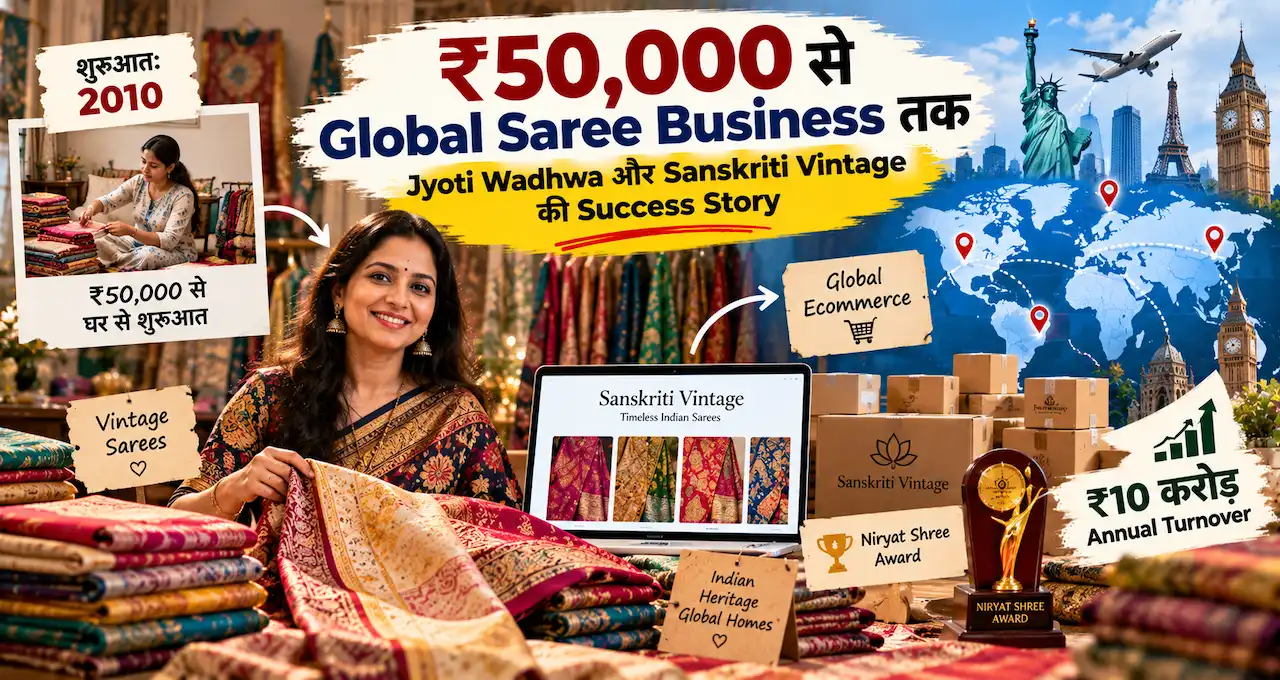
₹50,000 की पूंजी, घर में दो साल की बच्ची और family income को लेकर uncertainty.
ऐसी situation में बहुत से लोग शायद stable नौकरी ढूँढते। Jyoti Wadhwa ने घर से vintage sarees बेचने का experiment शुरू किया।
उन्होंने market समझने में कई घंटे लगाए, eBay पर products list करना सीखा, खुद shipping संभाली और धीरे-धीरे product presentation को अपनी strength बनाया।
कुछ साल बाद यही business Sanskriti Vintage के रूप में करोड़ों के annual turnover तक पहुँचा। लेकिन इस कहानी की असली सीख ₹10 करोड़ का figure नहीं—बल्कि research, positioning, execution और समय पर business बदलने की ability है।
इस लेख में आप क्या सीखेंगे?
- Jyoti Wadhwa की शुरुआत
- ₹50,000 का पहला निवेश
- Sanskriti Vintage की नींव
- eBay पर शुरुआती growth
- Premium positioning की strategy
- Business pivot की कहानी
- आज का Sanskriti Vintage
- Entrepreneurs के practical lessons
घर से शुरू हुई Sanskriti Vintage की कहानी
2010 में Family Situation ने बदल दी Direction
साल 2010 में Jyoti Wadhwa Delhi में homemaker थीं और उनकी बेटी करीब दो साल की थी। इससे पहले वह शादी से पहले लगभग तीन साल एक multinational company के HR और administration department में काम कर चुकी थीं।
उस समय उनके husband Anshul Bansal family के मुख्य earning member थे। उन्होंने investment banking की नौकरी छोड़कर अपना काम शुरू करने का फैसला किया।
Jyoti के सामने अब एक practical सवाल था—क्या वह family income में contribute कर सकती हैं, लेकिन ऐसा काम करते हुए जिसमें छोटी बेटी की देखभाल भी हो सके?
इसलिए उनकी पहली condition clear थी: काम ideally घर से शुरू होना चाहिए।
आज भी बहुत-सी महिलाएँ इसी तरह flexibility के साथ earning option तलाशती हैं। अलग-अलग possibilities explore करनी हों तो महिलाओं के लिए सबसे बेहतर कारोबार: 15 Small Business Ideas में कई practical options देख सकते हैं।
Idea मिला, लेकिन तुरंत Business शुरू नहीं किया
Relatives से Jyoti को online business और vintage sarees बेचने का idea मिला।
लेकिन interesting बात यह है कि उन्होंने idea मिलते ही stock खरीदना शुरू नहीं किया।
Published interviews के अनुसार वह करीब 5–6 घंटे रोज़ market research में लगाती थीं। वह समझने की कोशिश करती थीं:
लोग क्या खरीद रहे हैं?
कहाँ खरीद रहे हैं?
किस तरह के fabrics की demand है?
और कम available capital को कहाँ लगाया जाए?
Research के दौरान उनकी नज़र printed pure silk fabrics और handcrafted sarees पर गई। उन्हें लगा कि यहाँ एक ऐसी product category हो सकती है जिसे online customers तक पहुँचाया जा सकता है।
यही उनकी story का पहला strong business lesson है:
Business idea से पहले customer और market को समझना जरूरी है।
₹50,000 से हुई शुरुआत
Anshul के पास उस समय लगभग ₹1 lakh की savings थीं। Reported account के अनुसार इस amount को दोनों के business experiments के लिए ₹50,000-₹50,000 में divide किया गया।
Jyoti के पास इसलिए शुरुआत के लिए करीब ₹50,000 थे।
यह बहुत बड़ा startup fund नहीं था।
इसलिए उन्हें inventory बहुत सोच-समझकर चुननी थी।
उन्होंने कुछ suitable sarees select कीं और उन्हें eBay पर list करना शुरू किया। इसी experiment से Sanskriti Vintage की शुरुआत हुई।
अगर कोई आज इसी तरह छोटा business शुरू करना चाहता है, तो यह समझना जरूरी है कि कम capital का मतलब zero planning नहीं होता। कम पैसे में घर से Business कैसे शुरू करें? Beginners के लिए Practical Step-by-Step Guide इसी शुरुआती planning को समझने में useful रहेगा।
Product बेचने से पहले Online Selling सीखनी पड़ी
आज marketplace पर seller account बनाना relatively familiar process लग सकता है।
लेकिन Jyoti के लिए शुरुआत में product listing, description, pricing और online selling सब नया था।
उन्हें सीखना पड़ा कि:
product को online कैसे present करें,
description कैसे लिखें,
customer को product की quality कैसे समझाएँ,
और international order को ship कैसे करें?
शुरुआती दिनों में staff नहीं था। Reports के अनुसार orders आने पर Jyoti खुद अपनी छोटी बेटी के साथ postal service की queues में कई घंटे खड़ी होकर parcels ship करती थीं।
यह हिस्सा success stories में अक्सर headline के पीछे छिप जाता है।
₹50,000 से ₹10 crore सुनना आसान है।
लेकिन बीच में product sourcing, photos, listings, packaging, shipping और customer handling जैसे repetitive operations होते हैं।
Business growth अक्सर glamorous idea से कम और boring काम consistently करने से ज्यादा बनती है।
Price Competition के बजाय Premium Positioning
Sanskriti Vintage की growth में एक interesting decision था—सिर्फ़ cheapest seller बनने की कोशिश न करना।
Jyoti ने उस समय observe किया कि कई sellers low-cost products को basic photographs के साथ list कर रहे थे।
उन्होंने दूसरी direction चुनी।
बेहतर products.
बेहतर presentation.
Photography में investment.
और ऐसी listings जिनमें product customer को visually attractive लगे।
Reported interview के अनुसार उन्होंने DSLR camera और proper lighting का इस्तेमाल उस समय शुरू किया जब कई competing sellers basic phone-camera photos पर depend कर रहे थे।
यह lesson saree business तक limited नहीं है।
Online customer product को physically touch नहीं कर सकता।
वह सबसे पहले देखता है:
photo कैसी है?
details clear हैं?
quality समझ में आ रही है?
seller trustworthy लगता है?
यानी presentation खुद product experience का हिस्सा बन जाती है।
बिना बड़े Marketing Budget के eBay पर Growth
Sanskriti Vintage ने शुरुआत eBay से की और शुरुआती phase में अलग marketing budget नहीं था।
इसलिए Jyoti ने marketplace के अंदर listings को बेहतर बनाने और visibility पर focus किया।
2019 के HerStory interview में reported figures के अनुसार business एक stage पर करीब 500–600 sarees per day, लगभग $15–$40 per item range में बेच रहा था और 10–15% net margin बताया गया था। eBay की 2021 India small-business report में भी 500–600 sarees daily और इसी approximate price range का उल्लेख मिलता है। ये historical reported figures हैं, current daily sales नहीं। इसीलिए success story पढ़ते समय एक distinction जरूरी है:
historical sales figure ≠ आज guaranteed earning
और
turnover ≠ profit
किसी भी business story में headline number देखकर same result expect करना सही नहीं होगा।
जब Growth रुकने लगी, Business ने Direction बदली
कई businesses की कहानी growth तक पहुँचकर खत्म कर दी जाती है।
असल business challenge अक्सर उसके बाद शुरू होता है।
करीब तीन से चार साल बाद Jyoti के अनुसार eBay channel की growth plateau होने लगी।
उन्होंने 2013 में Amazon.com पर experiment किया, लेकिन existing saree range वहाँ उसी तरह perform नहीं कर रही थी।
यहाँ दो possibilities थीं:
पहली—पुराने मॉडल पर और जोर लगाते रहें।
दूसरी—market signal को accept करके product strategy बदलें।
उन्होंने दूसरी direction ली।
Business ने apparel और fashion jewellery जैसे नए products explore किए। बाद में Amazon India के आने पर Zephyrr नाम से fashion jewellery line शुरू की गई, जिसे उस समय platform पर bestseller status मिलने की बात report की गई।
यह story का शायद सबसे important entrepreneurial moment है।
क्योंकि success सिर्फ़ “जो चल रहा है वही करते रहो” से नहीं आती।
कई बार आपको यह पहचानना पड़ता है कि पुराना channel या product अपनी limit तक पहुँच चुका है।
₹10 करोड़ का Turnover और Niryat Shree Award
2019 की reporting के अनुसार Sanskriti Vintage ने first year में break-even achieve किया था और बाद में annual turnover लगभग ₹10 crore तक पहुँचने की बात बताई गई। उस समय company की team करीब 30 लोगों की थी, जिनमें अधिकांश महिलाएँ थीं। eBay की 2021 India report ने भी annual turnover करीब ₹10 crore और 30-member team का उल्लेख किया।
2015 में Jyoti को Niryat Shree Award से सम्मानित किया गया। Sanskriti Vintage की current official website इसे women-led e-commerce export achievement के रूप में highlight करती है और बताती है कि award President of India द्वारा FIEO ceremony में दिया गया था।
लेकिन ₹10 crore को personal income समझना गलत होगा।
यह reported annual business turnover था।
Revenue, profit और founder की personal income अलग-अलग चीज़ें हैं।
2026 में Sanskriti Vintage कहाँ है?
यह पुराने article को update करते समय सबसे important सवाल है।
क्या Sanskriti Vintage सिर्फ़ पुरानी success story बनकर रह गया?
Current official website के अनुसार business अभी भी active है और vintage Indian sarees, fabrics, trims तथा upcycled textile products को international customers तक बेच रहा है।
Sanskriti Vintage की website सितंबर 2026 में खुद को 2010 से operating business बताती है और 50+ countries reached, 20,000+ positive reviews across platforms और 30,000+ vintage sarees/fabrics जैसे figures display करती है। Company अब sustainability, textile reuse और vintage fabrics के second life पर भी काफी जोर देती है। ये figures company के अपने current website claims हैं।
यह development interesting है।
शुरुआत में business का central proposition था:
Vintage Indian textiles को online global customers तक पहुँचाना।
आज उसी proposition में sustainability और upcycling का angle ज्यादा prominent दिखाई देता है।
यानी product category वही heritage textiles है, लेकिन brand story समय के साथ evolve हुई है।
Jyoti Wadhwa की Story से Business की Practical सीख
1. पहले Research, फिर Investment
Jyoti ने ₹50,000 होने के बावजूद सीधे stock नहीं खरीदा।
पहले market समझा।
आज beginner के लिए भी यही principle useful है।
Product खरीदने से पहले देखें:
कौन खरीदेगा?
कहाँ खरीदेगा?
Competitors क्या बेच रहे हैं?
किस price range में बेच रहे हैं?
आपका difference क्या होगा?
Market research business plan का optional हिस्सा नहीं है।
2. कम पैसे में Focus ज्यादा जरूरी है
Limited capital का एक फायदा भी हो सकता है—वह आपको selective बनने पर मजबूर करता है।
अगर ₹50,000 है, तो हर product खरीदना possible नहीं।
आपको decide करना पड़ता है:
कौन-सा stock?
कितनी quantity?
किस customer के लिए?
किस platform पर?
किस price पर?
Small business में शुरुआत का goal बड़ी inventory बनाना नहीं होना चाहिए।
पहले demand prove करना ज्यादा important है।
3. Cheapest होना ही Strategy नहीं है
Jyoti की story में premium presentation बहुत important थी।
आज भी छोटा business सिर्फ़ price कम करके compete करे, तो margin जल्दी दब सकता है।
Difference किसी और जगह भी बनाया जा सकता है:
better quality,
unique design,
better photos,
faster response,
better packaging,
clear product information,
customisation,
या niche selection.
यही कारण है कि छोटा seller भी बड़े marketplace में अपनी अलग position बना सकता है।
4. Online Business में Photos बेचती हैं
Especially clothing, jewellery, craft और décor products में customer का पहला interaction photo से होता है।
Good photography का मतलब हर beginner को expensive DSLR खरीदना नहीं है।
आज एक decent smartphone, natural light और clean background भी अच्छी शुरुआत दे सकते हैं।
लेकिन principle वही है जो Sanskriti Vintage ने जल्दी समझ लिया था:
Product अच्छा होना चाहिए—और online customer को वह अच्छा दिखाई भी देना चाहिए।
आज छोटे कारोबार को digital tools के साथ grow करने के अलग तरीके भी हैं, लेकिन technology तभी useful होगी जब basic product और customer value clear हो।
5. एक Platform पर पूरी तरह Depend न रहें
Sanskriti Vintage की journey eBay से शुरू हुई।
जब उस channel की growth limit तक पहुँची, तो Amazon और नए product categories explore किए गए।
यह आज के sellers के लिए बड़ा lesson है।
अगर आपकी पूरी income सिर्फ़:
एक marketplace,
एक Instagram account,
एक reseller,
या एक traffic source
पर depend है, तो platform change business को प्रभावित कर सकता है।
धीरे-धीरे multiple channels build करना risk कम कर सकता है।
6. Profit को Growth में Reinvest करना पड़ सकता है
Reported story के अनुसार vintage saree business से generated margins को नए apparel और jewellery range में लगाया गया।
Business owner के लिए हर earning को personal spending मान लेना growth को रोक सकता है।
कुछ पैसा वापस business में जा सकता है:
inventory,
equipment,
packaging,
photography,
marketing,
technology,
या team में।
अगर business income और personal money को manage करना सीखना है, तो Personal Finance क्या है? कमाई, खर्च और बचत का सही तरीका useful foundation देता है।
अगर आप भी घर से Online Product Business शुरू करना चाहें
Jyoti Wadhwa की exact journey copy करना जरूरी नहीं है।
2026 का e-commerce environment 2010 से काफी अलग है।
लेकिन underlying process आज भी useful है:
एक Product Category चुनें
↓
Customer पहचानें
↓
Market Research करें
↓
छोटा Stock Test करें
↓
Quality और Presentation सुधारें
↓
एक Selling Channel चुनें
↓
पहले Orders से सीखें
↓
Customer Feedback लें
↓
Profit और Costs Track करें
↓
Demand मिलने पर Scale करें
अगर आप अभी सिर्फ़ business idea explore कर रही हैं, तो महिलाओं के लिए सबसे बेहतर कारोबार: 15 Small Business Ideas से अलग options compare कर सकती हैं।
ग्रामीण area में group-based entrepreneurship explore करना हो तो Self Help Group (SHG) क्या है और इससे कैसे जुड़ें? कहाँ संपर्क करें? भी useful रहेगा।
और एक दूसरा real example देखने के लिए दिलकश जहाँ की कहानी: गरीबी से आत्मनिर्भरता तक का सफर पढ़ सकते हैं।
आज से क्या करें?
अगर Jyoti Wadhwa की story पढ़कर आपको अपना online product business शुरू करने का idea आ रहा है, तो आज ये पाँच काम करें:
- एक product category लिखें जिसमें genuinely interest है।
- उसी category के 10 online sellers देखें।
- उनके price, photos और reviews compare करें।
- सोचें कि आपका clear difference क्या हो सकता है।
- बड़ी inventory से पहले छोटा market test plan बनाएं।
Business की शुरुआत logo से नहीं, customer और product की understanding से करें।
आख़िर में एक छोटी सी बात
Jyoti Wadhwa की कहानी को सिर्फ़ “₹50,000 से ₹10 crore” वाली inspirational headline की तरह पढ़ना आसान है।
लेकिन उसकी practical value कहीं ज्यादा है।
उन्होंने पहले research की।
Limited capital को carefully इस्तेमाल किया।
eBay सीखना पड़ा तो सीखा।
Shipping खुद करनी पड़ी तो की।
Price war में जाने के बजाय premium presentation चुना।
एक platform की growth रुकी तो नए products और channels explore किए।
और समय के साथ Sanskriti Vintage को सिर्फ़ saree-selling experiment से एक global vintage-textile business में बदलने की दिशा में आगे बढ़ाया। Current official website बताती है कि brand आज भी global customers को Indian vintage textiles बेच रहा है और sustainability तथा reuse को अपनी positioning का हिस्सा बना चुका है।
हर ₹50,000 का business ₹10 करोड़ तक नहीं पहुँचेगा।
लेकिन इस journey का principle हर छोटे entrepreneur के लिए useful है:
छोटा शुरू करें, market को ध्यान से देखें, product को बेहतर present करें और business बदल रहा हो तो खुद भी बदलने के लिए तैयार रहें।
Jyoti Wadhwa की journey में आपको सबसे practical lesson कौन-सा लगा—market research, कम investment से शुरुआत, premium positioning या समय पर business pivot करना? अपना experience, feedback या कोई सवाल comment में share कर सकते हैं।